
Jadeite Texture, Translucency and Color (Zhong, Shui, Se)
Updated
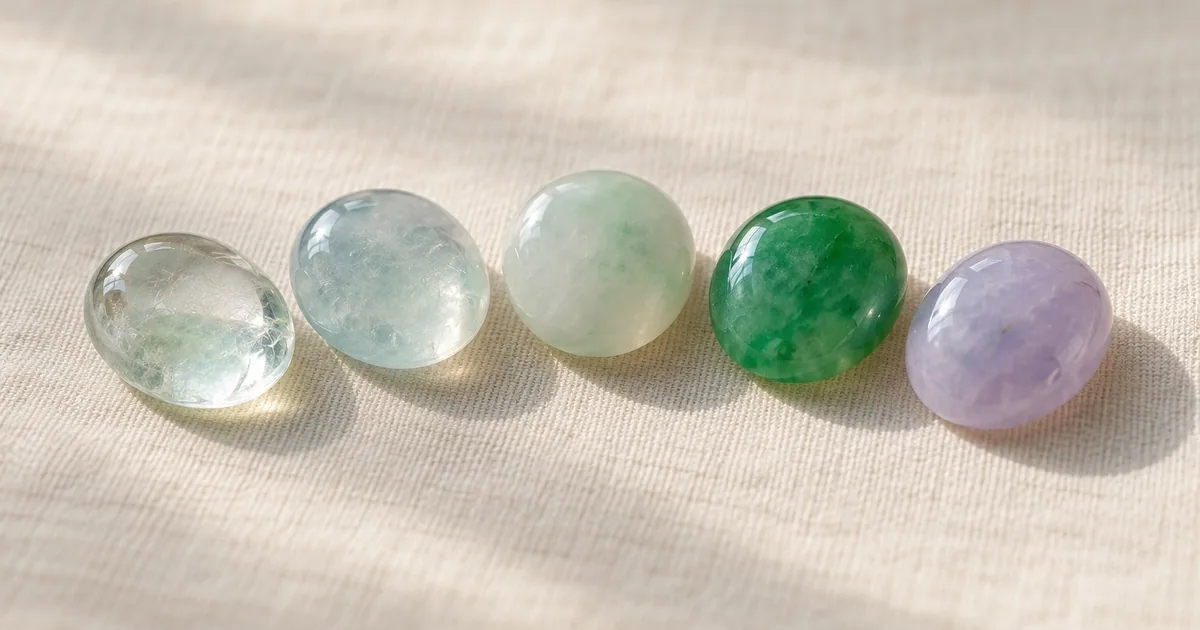
Jadeite quality is usually described with three Chinese trade words: zhong (种, texture — how fine and tight the crystals are), shui (水, translucency — how far light travels into the stone) and se (色, color — hue, saturation and evenness). Finer texture usually brings higher translucency, and the two together matter as much as color. None of these is fully standardized, so judge them from the actual piece under neutral light.
What do zhong, shui and se mean?
Chinese jadeite traders describe quality with three short words. You will see them in listings, videos and conversations with sellers, so it helps to know what each one refers to.
| Term | Meaning | What you look at |
|---|---|---|
| Zhong (种) | Texture: the size and tightness of the crystal grains | How fine, dense and "glassy" the material looks |
| Shui (水) | Translucency: how deep light penetrates the stone | Whether the stone glows from within or looks opaque |
| Se (色) | Color: hue, saturation and evenness | How strong, pure and evenly spread the color is |
These three are judged together. A piece with bright color but coarse texture and no translucency is usually worth far less than its color alone suggests.
What are the main texture (zhong) grades?
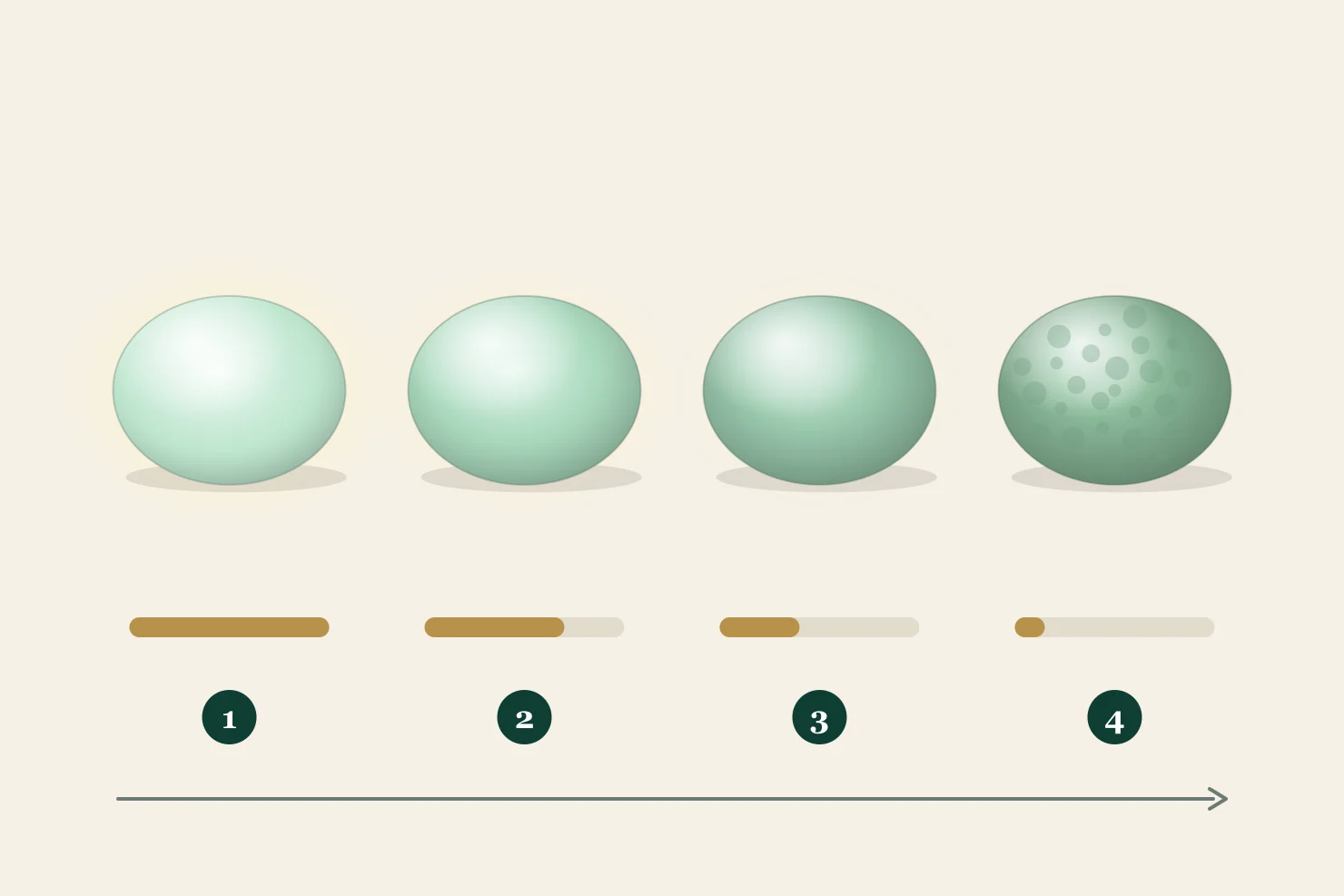
Jadeite is made of many interlocking crystal grains. The finer and tighter the grains, the smoother the surface looks after polishing and the more light can pass through. Traders describe this on a rough scale:
| Grade | Chinese | What it looks like |
|---|---|---|
| Glassy | 玻璃种 | Very fine, tight texture; highly transparent, glass-like clarity and a strong sheen |
| Icy | 冰种 | Fine texture; clear to semi-clear, like ice |
| Glutinous / icy-glutinous | 糯种 / 糯冰种 | Fine but softer look; semi-translucent, like cooked sticky rice |
| Bean | 豆种 | Coarser, visible grains; low translucency |
The boundaries between grades are not fixed, and sellers do not always use the words the same way. Treat a grade in a listing as a description, then check the photos and video yourself.
What is shui (translucency) and how is it judged?
Shui describes how far light travels into the stone. Traders say a stone with good translucency has "long water"; an opaque stone has "short water." Translucency is closely tied to texture: fine, tight grains let more light through.
When you look at a piece:
- See whether light seems to enter the stone and glow from inside, or stops at the surface.
- Check thicker areas as well as thin edges — thin edges always look more translucent.
- Be careful with strong flashlights held behind a stone. They make almost any jadeite look translucent and exaggerate color.
How is jadeite color (se) evaluated?
Color is judged on three points:
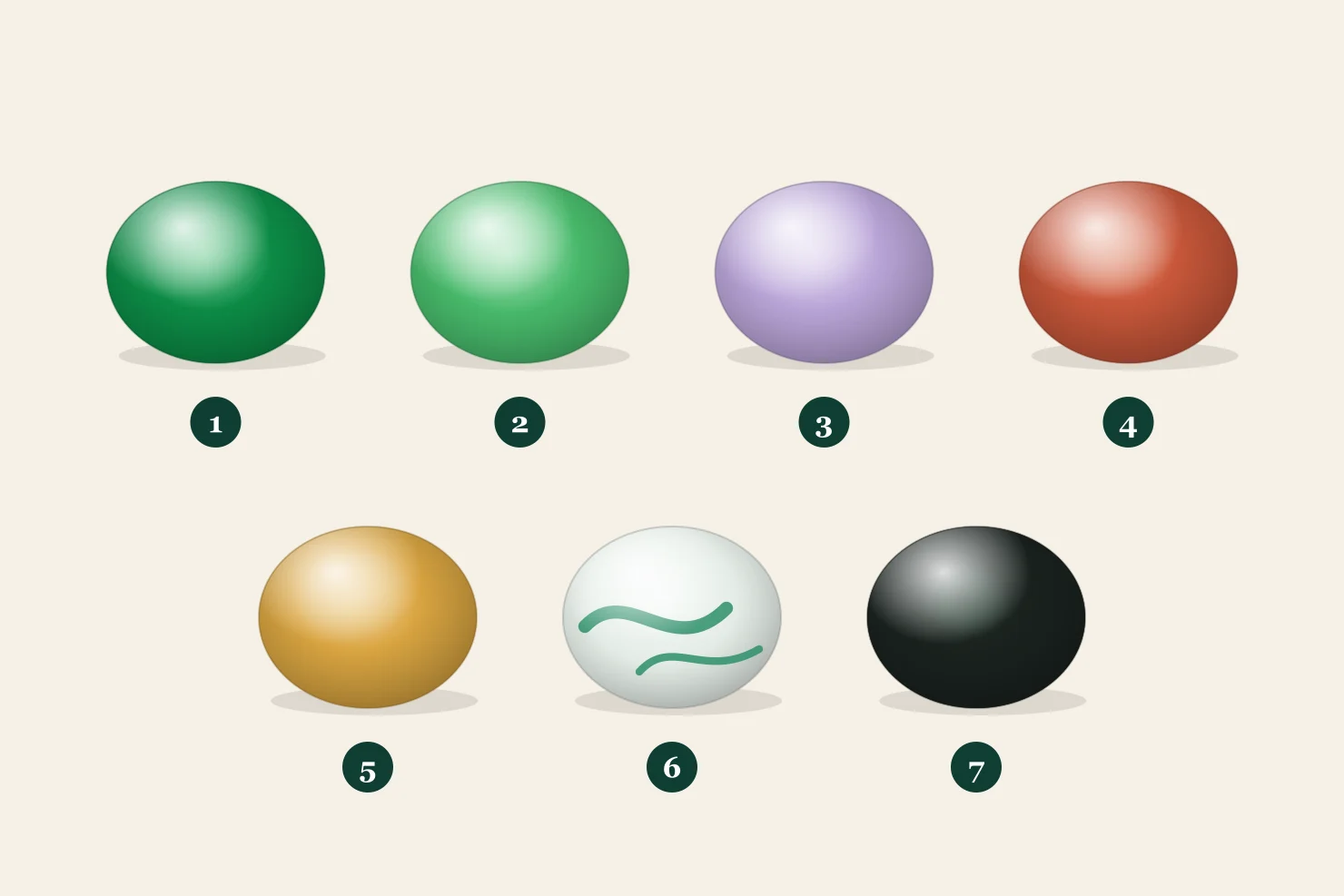
- Hue — green is the best known, but jadeite also comes in lavender, yellow, red, white and near-black.
- Saturation — how strong the color is, from pale to vivid.
- Evenness — whether the color is spread evenly or appears in patches, veins or "floating flowers" (飘花).
Common color names you may see:
| Name | Chinese | Description |
|---|---|---|
| Imperial green | 帝王绿 | Intense, pure, even green; the most prized color |
| Bright green | 阳绿 | Vivid, lively green |
| Lavender | 紫罗兰 | Light to medium purple |
| Red / yellow jadeite | 红翡 / 黄翡 | Red, orange or yellow tones |
| Floating flowers | 飘花 | Green or blue-green wisps inside a lighter body |
| Black jadeite | 墨翠 | Looks black, shows dark green with light behind it |
Color should always be judged under neutral, daylight-balanced light. Warm shop lights and edited photos can change how green a stone looks. For why natural color matters, see Type A vs Type B vs Type C jadeite — Type C jadeite has been dyed.
What else affects the look of a piece?
Two more features come up often:
- Cotton (棉) — white flecks or cloudy patches inside the stone. A little is normal in natural jadeite; heavy cotton reduces translucency.
- Lines and cracks (纹 / 裂) — natural growth lines are common, but cracks weaken a piece, especially a bangle. Ask the seller to show the piece under light from several angles.
Is there an official grading standard?
China does have a national grading standard for jadeite, but most certificates you will see only confirm what the material is and whether it has been treated. They usually do not assign a grade such as "icy" or "glassy." That is why terms like zhong and shui are best treated as descriptions, and why the certificate and your own look at the piece both matter. See how to verify a jadeite certificate.
How can I judge zhong, shui and se when buying online?
- Look at the listing photos and, where available, the video under neutral light.
- Compare the stone's translucency in thick and thin areas.
- Ask the seller to confirm what trade grade they are using, and why.
- Confirm the piece is natural Type A jadeite on its certificate before you pay.
On JadeiteHub, listings include the seller's own photos, and some also have video. Every sold piece is checked against its certificate before it ships.
FAQ
Which is better, icy or glassy jadeite?
Glassy (玻璃种) is generally ranked above icy (冰种) because it has finer texture and higher transparency. The difference between a top icy and a lower glassy piece can be small, so judge the actual stone.
Is translucency more important than color?
They are judged together. Strong color in coarse, opaque material is usually worth much less than the same color in fine, translucent material.
Do jadeite certificates state the texture grade?
Most certificates only identify the material and whether it has been treated. Trade grades like icy or glassy are usually descriptions from the seller, not from the lab.
Why does jadeite look different in photos?
Lighting changes both color and translucency. Warm lights and backlighting make jadeite look greener and clearer, so judge under neutral light.