Buying Jade in Thailand: Bangkok Tips, Prices and Scams
Updated
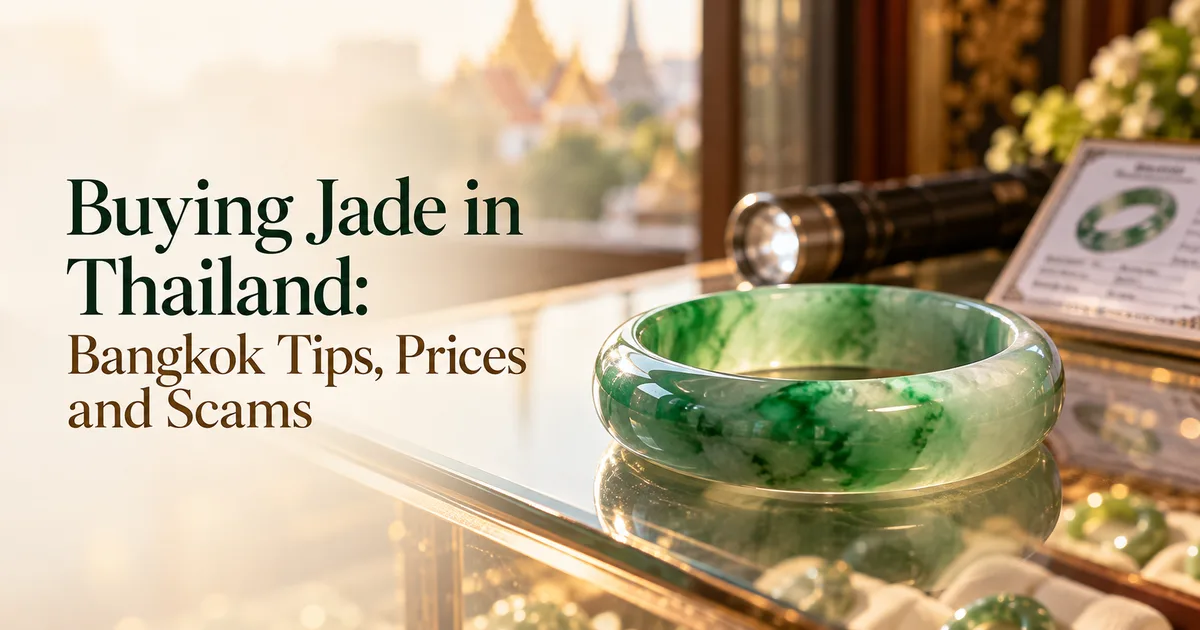
Thailand sells a lot of jade because it borders Myanmar, where most gem jadeite is mined. That does not make it cheaper: there is no fixed price list, and tourists often pay more. The main risks are treated Type B and C jadeite, look-alikes such as dyed quartz or glass sold as jade, and tourist gem scams. Before you pay, ask for a certificate from a recognized independent lab, verify it, get “Type A jadeite” written on the receipt and pay by card.
Why is there so much jade in Thailand?
Most of the world's gem-quality jadeite is mined in northern Myanmar (Burma). Thailand shares a long border with Myanmar, and jade has crossed it, like other gems, for generations. That is why Thai people call jadeite หยกพม่า, "Burmese jade", and why you see it in so many places:
- Northern border towns such as Mae Sai in Chiang Rai province, just across the river from Myanmar, have markets with many jade and gem stalls.
- Bangkok's Chinatown (Yaowarat) is the traditional center for gold shops and jewelers, and many of them also sell jade set in gold.
- Malls, department stores and hotel arcades have jewelry counters that include jade.
- Night markets and tourist streets sell bangles and pendants labelled "jade" at every price.
- Online shops and live streams on Facebook and TikTok sell jade to buyers all over Thailand.
Bangkok is also a major center of the gem trade, so the market is large and mixed. Untreated jadeite, treated jadeite and look-alikes are sold side by side, sometimes on the same tray.
Is jade cheaper in Thailand?
Not necessarily. Being close to the mines does not make finished jewelry cheap, and good jadeite is traded internationally, so sellers in Thailand know what it is worth elsewhere.
- There is no fixed price list. Jadeite price depends on color, translucency, texture, cracks and size, so two bangles that look alike can differ in price many times over. See what determines jadeite price.
- Prices in tourist areas are often set for tourists. Bargaining is normal in markets, but a big discount from a high starting price is not proof of a good deal.
- A low price for bright, even green is a warning sign, not a lucky find. Fine natural green jadeite is expensive everywhere.
The honest answer: you can find fair prices in Thailand, but only if you know exactly what you are buying. That depends on the checks below, not on the country.
Where can you buy jade in Bangkok and Thailand, and what should you watch for?
| Where | What you find | What to watch for |
|---|---|---|
| Border markets (such as Mae Sai) | Many stalls, every quality and price | Untreated, treated and look-alike pieces mixed together; certificates are rare; cash only; hard to return once you leave |
| Chinatown (Yaowarat) gold and jewelry shops | Long-running shops, jade set in gold | Ask how much of the price is for the gold and how much for the jade; get "Type A jadeite" on the receipt |
| Malls and department stores | Price tags, receipts, card payment | Higher prices; still ask what the material is and for a certificate |
| Night markets and tourist stalls | Low-priced bangles and pendants | Most cheap "jade" is not untreated jadeite; treat it as a souvenir |
| A shop a stranger, driver or tour takes you to | "Special sale", "today only", "export price" | A well-known scam pattern; walk away |
| Online shops and live streams | Huge choice, pieces shown under light | Filters and lighting flatter; ask for the certificate number and return terms before paying |
What are the main risks when buying jade in Thailand?
1. Treated jadeite (Type B and Type C). This is real jadeite that has been acid-bleached and filled with resin (Type B) or dyed (Type C). It can look excellent, but it is worth far less than untreated Type A, and resin can age and color can fade. A flashlight cannot reliably detect resin; a lab can. See how to spot treated (Type B) jadeite and Type A vs Type B vs Type C jadeite.
2. Look-alikes sold as jade. Dyed quartzite, aventurine, green glass, chalcedony and serpentine all appear in markets. Labels such as "Burma jade", "jade stone" or "natural jade" are used loosely on stalls, so the label alone proves nothing. Ask whether the piece is jadeite, and whether it is Type A. See jade look-alikes.
3. Tourist gem scams. The pattern is old and well known in Bangkok: a friendly stranger or a driver tells you an attraction is closed today, offers a cheap ride, and brings you to a jewelry shop with a "special sale" or a "government promotion". You may hear that you can resell the pieces at home for a profit. Stones bought this way are often worth much less than you paid, and refunds are difficult. Only buy in shops you chose yourself, and never buy jade as something to resell.
4. Certificates that do not match. A certificate can be fake, come from a "lab" nobody has heard of, or belong to a different piece. A certificate only helps if you check it, as described below.
How do you check jade before you pay?
Take your time. A real seller will wait while you check.
| Check | What to do | Red flag |
|---|---|---|
| 1. Ask what it is | Ask: "Is this jadeite, Type A, untreated?" | Vague answers such as "natural stone" or "real jade" without the word jadeite |
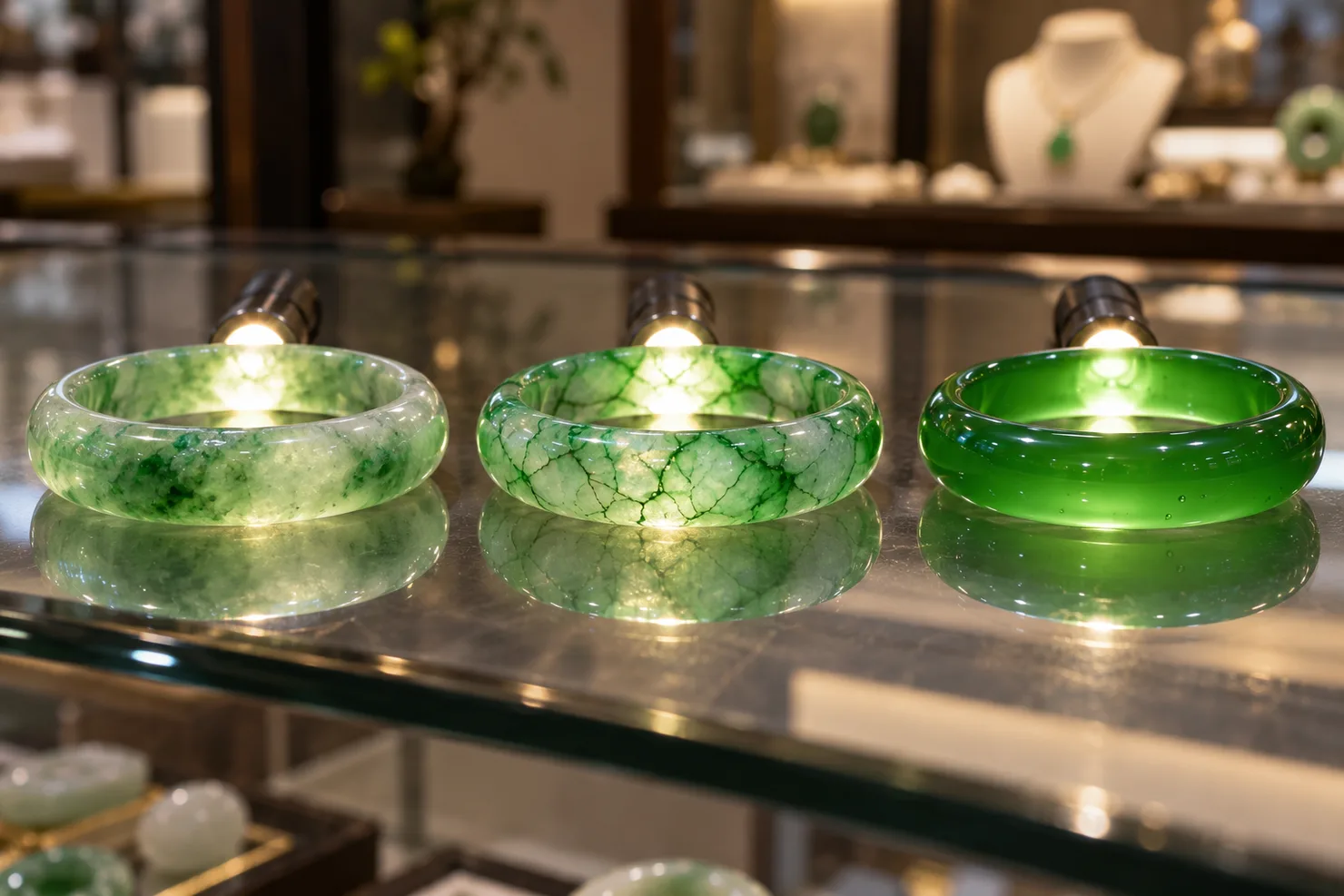
| 2. Look under a flashlight | Shine a small white light through the piece; look for a grainy structure and natural, uneven color | Perfectly even bright green, round bubbles, color in a net along cracks |
| 3. Ask for a certificate | It should come from a recognized independent lab | No certificate, "certificate later", or a report from the shop's own "lab" |
| 4. Verify the certificate | Look up the report number on the lab's own website; compare photo, size and weight with the piece | The number cannot be checked, or the details do not match |
| 5. Get it on the receipt | Shop name and address, "Type A jadeite", the price | The seller refuses to write "Type A" |
| 6. Pay by card | Keep the card slip with the receipt | Cash only for an expensive piece, or an extra discount for cash |
| 7. Refuse pressure | Say you will come back tomorrow | "Today only" prices |
If you are buying a bangle, know your size before you go, because many bangles cannot be resized: see how to choose a jadeite bangle size. Paying by card may give you a way to dispute the charge if something goes wrong, depending on your card issuer.
Which jade certificate can you trust?
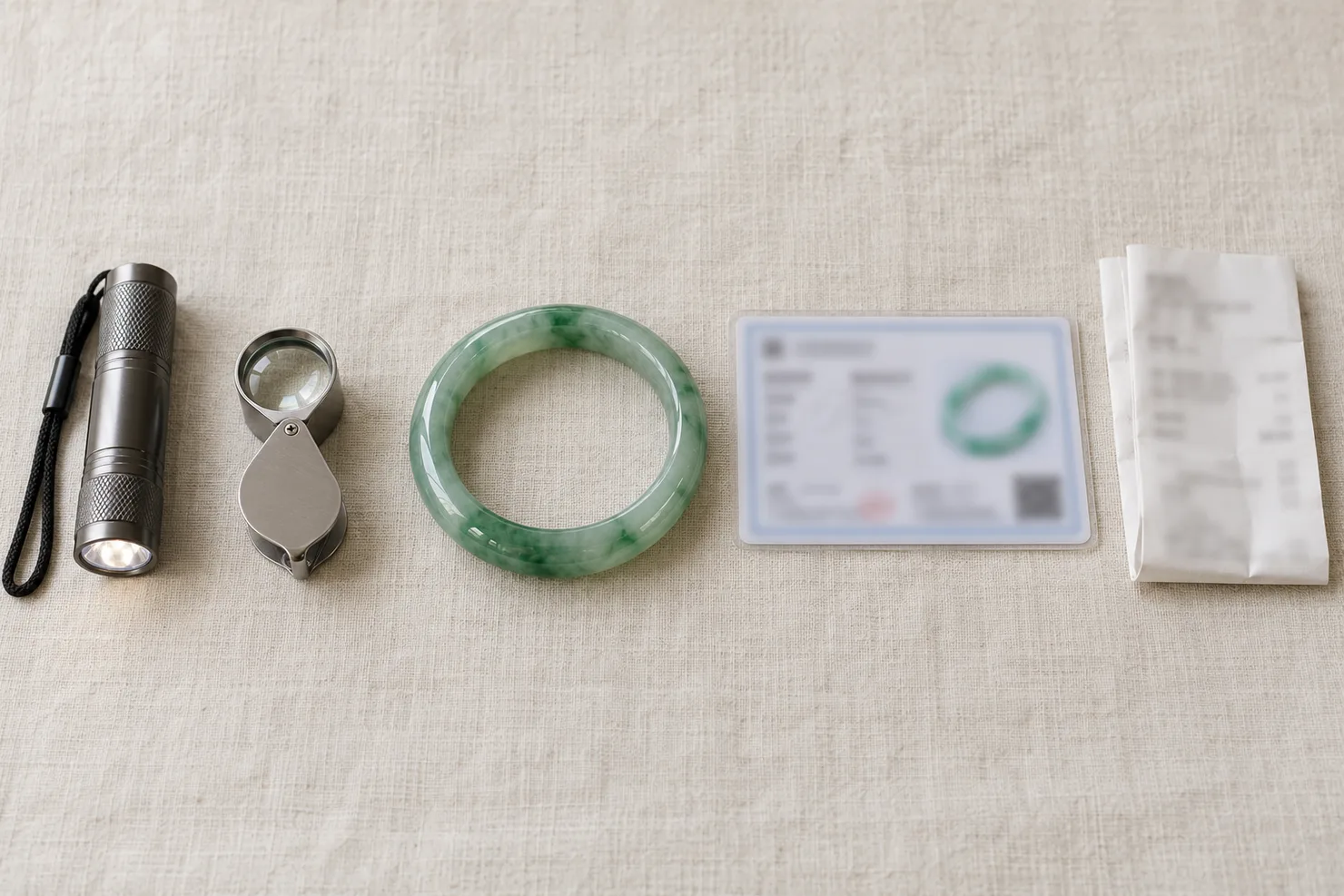
The safest proof is a certificate from a recognized independent gem lab, meaning a lab that is not owned by the seller. A useful jadeite certificate:
- names the material as jadeite;
- states whether any treatment was found (no treatment found is what the trade calls Type A);
- shows a photo, the dimensions and the weight of the exact piece;
- has a report number you can look up on the lab's own website.
In Thailand, the Gem and Jewelry Institute of Thailand (GIT), a government-affiliated institute, is one example of a lab that offers gemstone testing, including jadeite. Whichever lab issued the report, type the lab's website address yourself rather than using a link the seller sends. For step-by-step checks, see how to verify a jadeite certificate.
If an expensive piece has no certificate, ask whether it can be tested before the sale is final. If the seller says no, walk away.
Can you take jade jewelry home from Thailand?
Usually yes, but customs rules depend on your own country. Before you travel, check your country's duty-free allowance for goods bought abroad, and declare your purchases if required. Keep the receipt and the certificate together: they show what you paid and what the piece is. Do not accept a receipt with a lower price written on it; under-declaring can cost you more than the duty.
Is there a safer alternative to street buying?
If you would rather not take your chances in markets, buying online from verified sellers who check certificates is an alternative. On JadeiteHub, every listed piece comes with a certificate and real photos from the seller, some with video. Every sold piece is checked against its certificate before it ships, and if it does not match the description you get a full refund. Payments go through licensed payment providers, shipping is insured, and import duties are paid by the buyer.
FAQ
Is jade cheaper in Thailand?
Not necessarily. There is no fixed price list, and prices in tourist areas are often set for tourists. Thailand has a lot of jade because it borders Myanmar, but good jadeite is traded internationally and priced accordingly. A very low price for bright green is a warning sign.
Where can I buy jade in Bangkok?
Jade is sold in Chinatown (Yaowarat) gold and jewelry shops, mall and department store jewelry counters, markets and online. Wherever you buy, choose the shop yourself, ask for a certificate from a recognized independent lab and get “Type A jadeite” on the receipt.
Is “Burma jade” the same as jadeite?
Real Burmese jade is jadeite, but on market stalls the label is used loosely for many green stones. Ask whether the piece is jadeite and whether it is Type A, and check the certificate.
Can I trust a certificate the shop gives me?
Only after you verify it. Look up the report number on the lab's own website and check that the photo, size and weight match the piece. A report from the shop's own lab or an unknown lab is not independent proof.
Do I need to declare jade jewelry at customs?
It depends on your country. Check your country's allowance for goods bought abroad before you travel, declare if required, and keep the receipt and certificate with the piece.