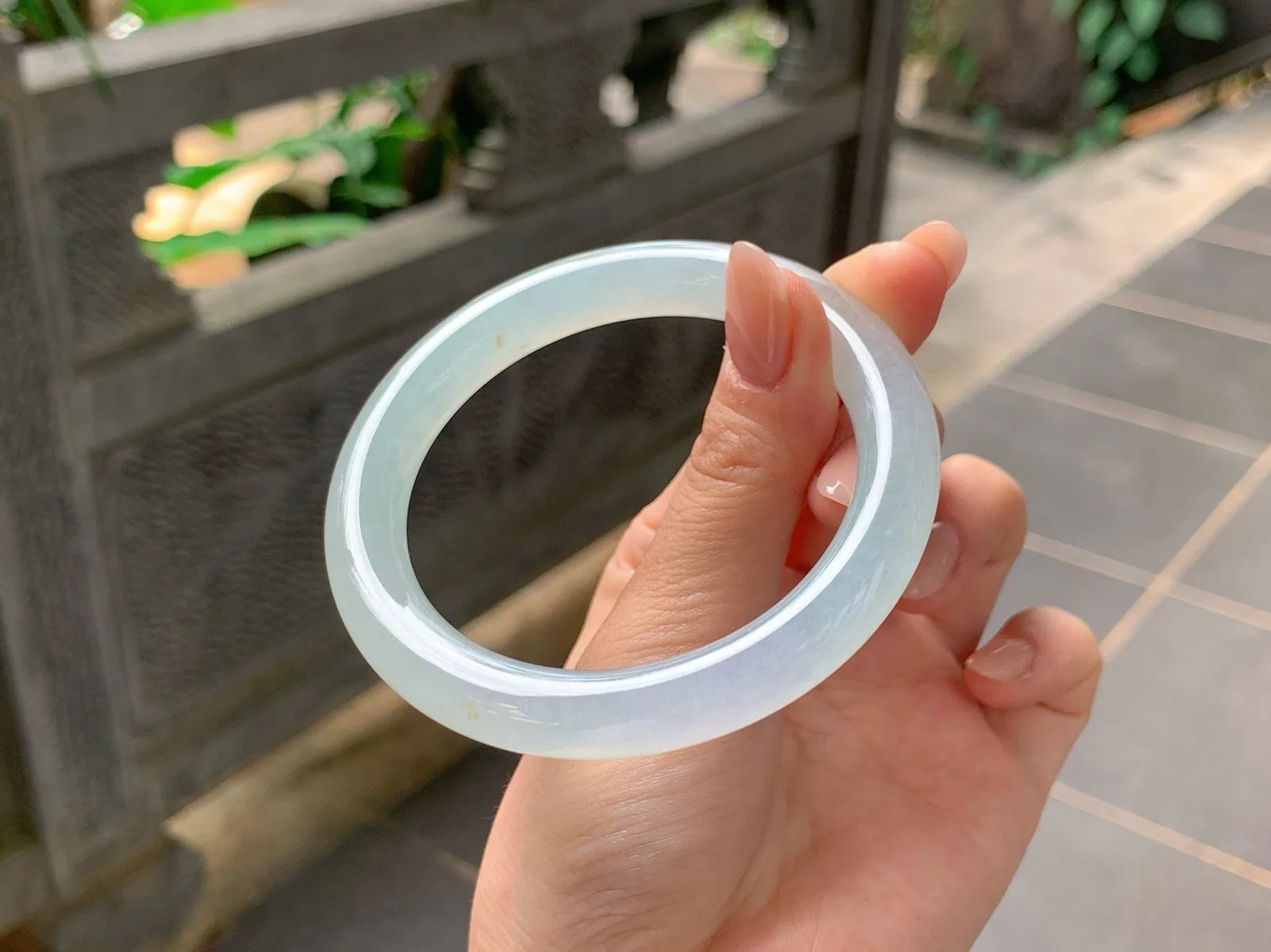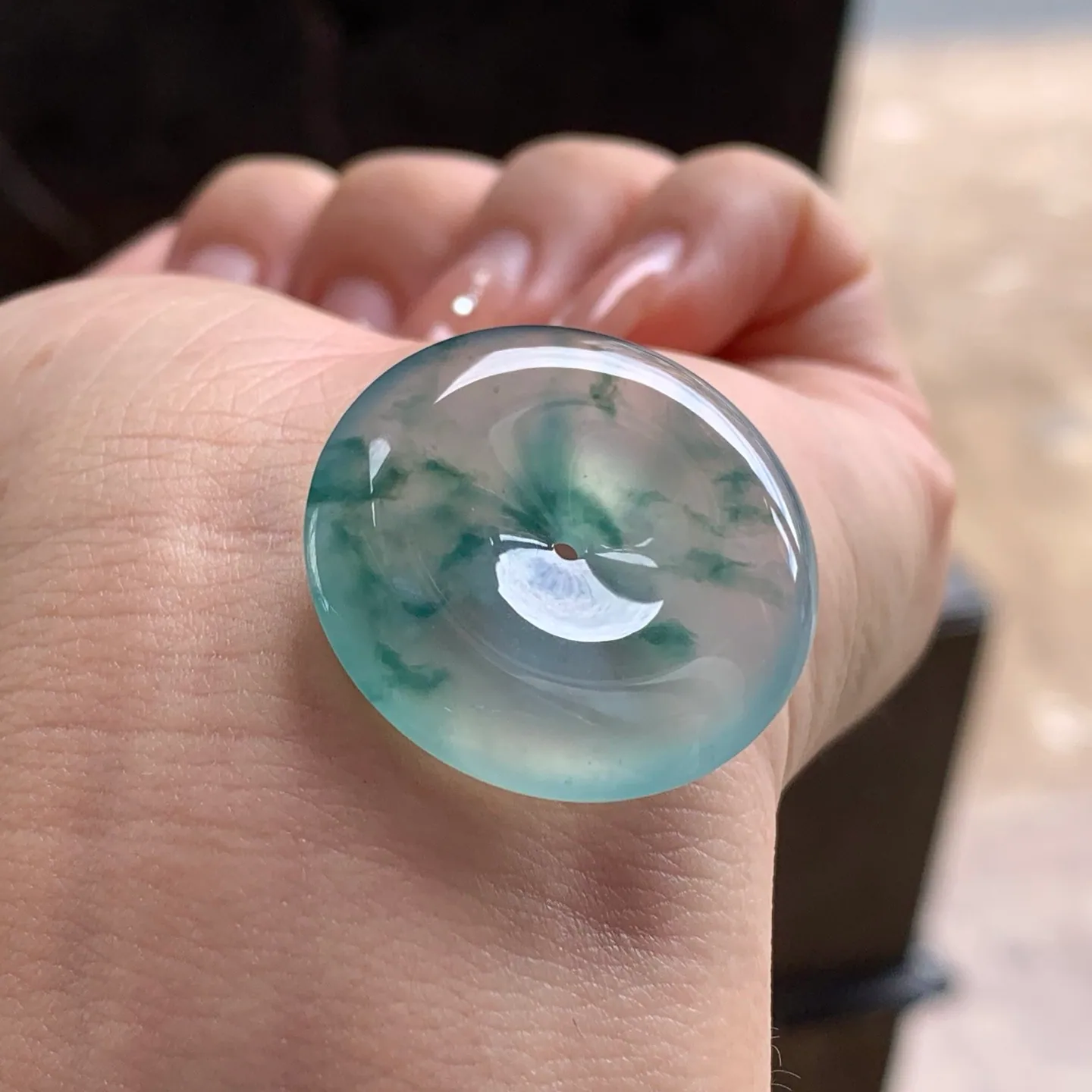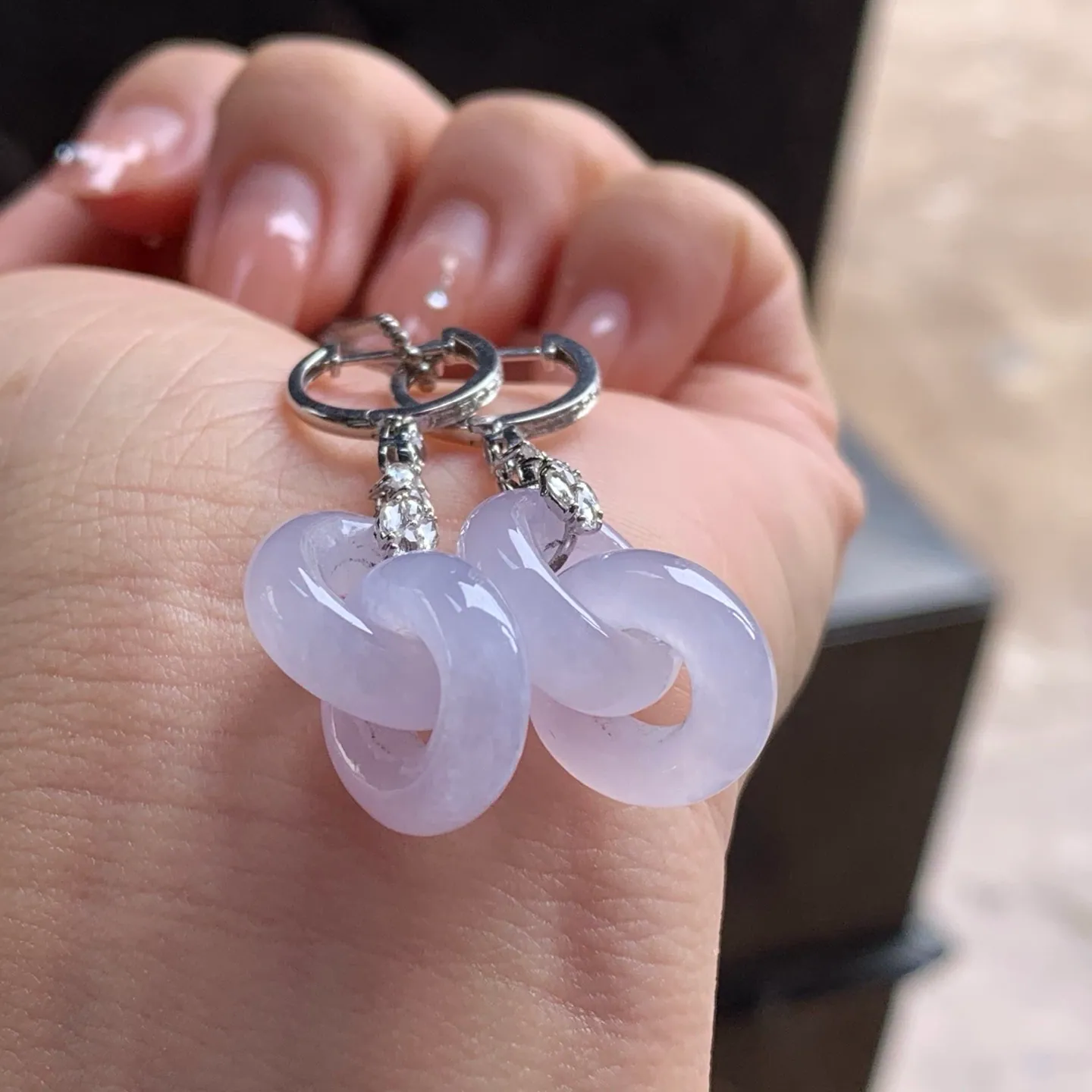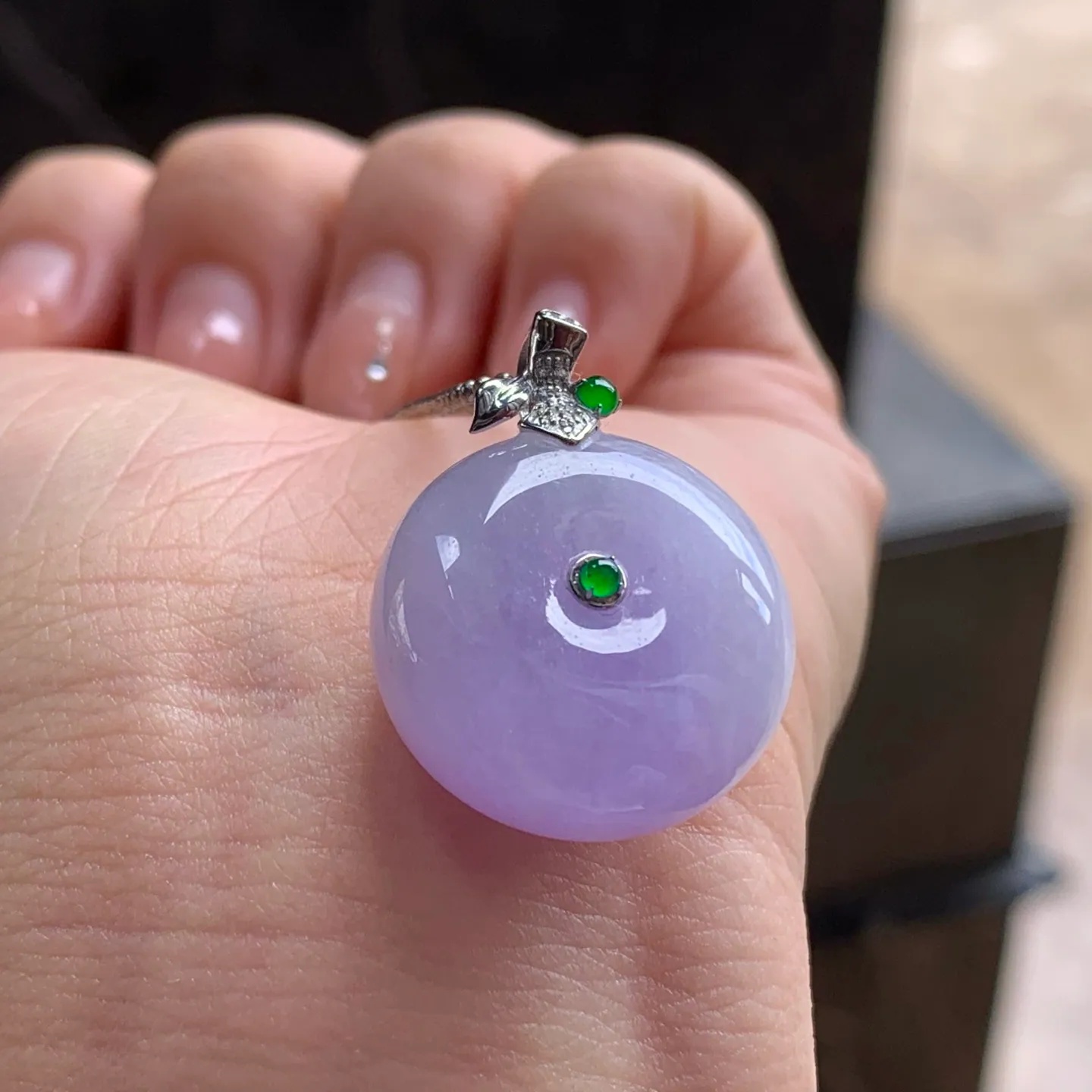
How to Tell if Jade Is Real: Home Tests and Common Fakes
Updated
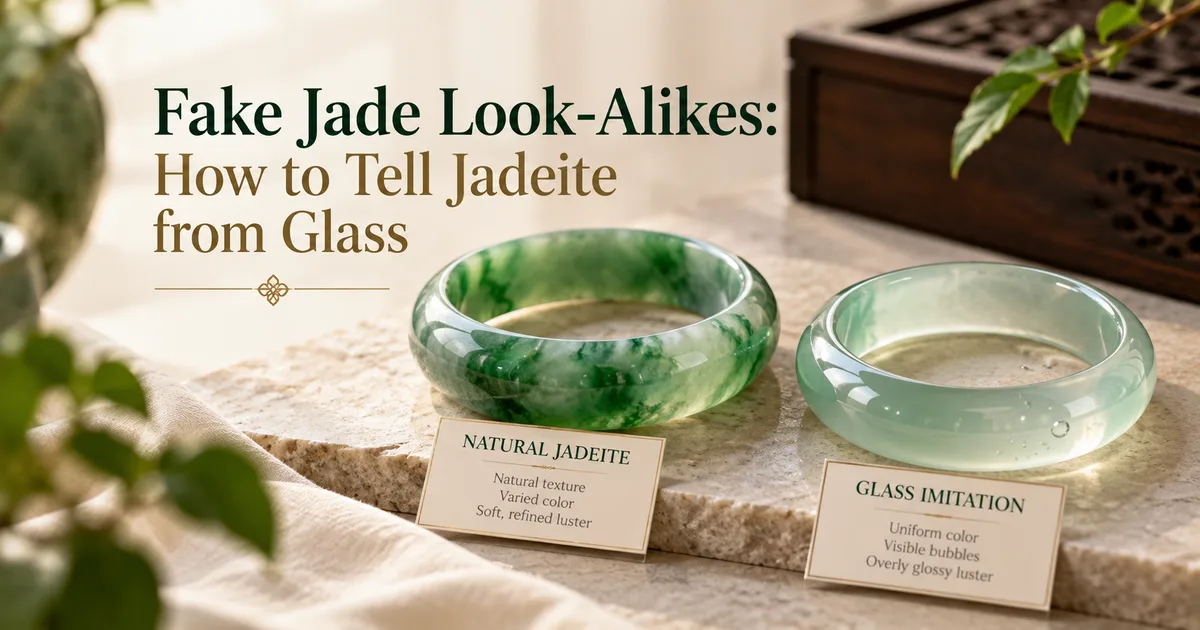
To tell if jade is real at home, start with a flashlight and a loupe: jadeite shows interlocking grain, while glass shows bubbles, aventurine glitters and dyed quartzite ("Malaysia jade") holds its color in a net of cracks. A careful water (density) test separates jadeite (about 3.33) from quartz fakes (about 2.6). The lighter, magnet, water-drop and cold-touch tests prove nothing, and a flame can damage the piece. Only a gem lab certificate that names the material confirms jadeite.
What counts as "fake jade"?
When people say "fake jade", they usually mean one of three different things:
- Look-alikes (simulants) are not jadeite at all. Glass, dyed quartz, agate, serpentine and other stones can look green and smooth. Sold under their own names, they are honest, inexpensive materials. The problem starts when they are sold as jadeite.
- Treated jadeite (Type B and Type C) is real jadeite that has been bleached, filled with resin or dyed. That is a different problem with different clues: see how to spot treated (Type B) jadeite and Type A vs Type B vs Type C jadeite.
- Nephrite is genuine jade, but a different mineral from jadeite, with a different look and price. See jadeite vs nephrite.
This guide covers the first group: the materials most often passed off as jadeite, and how to tell them apart.
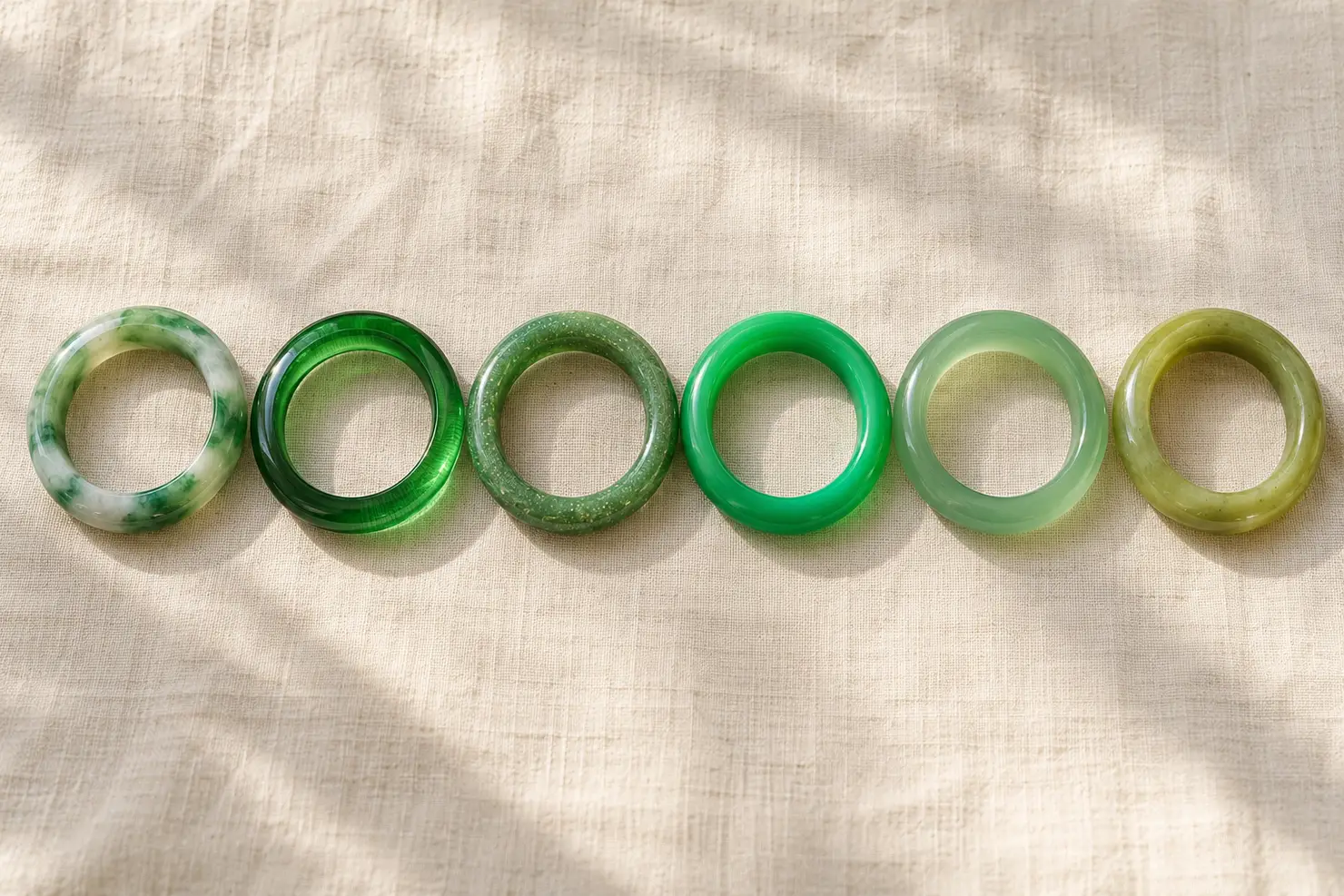
How can you tell if jade is real in one minute?
- Flashlight: in a dim room, shine a light through the piece. Jadeite shows interlocking grains or fibers. Bubbles, glitter, or color trapped in a net of cracks are warning signs.
- Loupe: check the surface, edges and drill holes for bubbles, mold seams or glitter.
- Weight: jadeite feels heavy for its size. A light piece that warms quickly in the hand is a warning sign.
- Name and price: "Malaysia jade", "Indian jade" and similar names are not jadeite, and bright, even green at a low price is a red flag.
- Certificate: only a gem lab report that names the material, with a number you can verify, settles it.
Skip the lighter, magnet and water-drop tests. They prove nothing, and a flame can damage the piece.
Which materials are most often sold as jadeite?
| Material | Trade names you may see | How it looks | Key clue |
|---|---|---|---|
| Glass | "Imitation jade", "meta jade" | Even color, glassy shine, sometimes too clear | Round gas bubbles, swirl lines, mold seams |
| Aventurine quartz | "Indian jade", Dongling jade | Green with tiny glittering flakes | Sparkles under light from mica flakes |
| Dyed quartzite | "Malaysia jade" | Bright, very even green, often translucent | Color collects in a net along grains and cracks |
| Green chalcedony and agate (incl. chrysoprase) | "Australian jade", green agate | Smooth, waxy, very even | No visible grain at all; often dyed |
| Serpentine | "New jade", "Korean jade", Xiuyan jade | Yellow-green, oily shine | Soft: scratches easily, feels light |
| Hydrogrossular garnet | "Transvaal jade", "South African jade" | Green spots on a pale base, black specks | Dotted color; feels about as heavy as jadeite |
| Prehnite | Sold under its own name or as jade | Pale yellow-green, translucent | Radiating, fibrous look; color is rarely jadeite green |
| Dyed marble | "Afghan jade" | Patchy dyed color | Very soft; dye sits in cracks |
| Plastic or resin | No standard name | Light and warm | Very light, warms quickly in the hand, mold lines |
A name that contains "jade" does not make a stone jadeite. Most of the trade names above describe something else.
How do jadeite and its look-alikes compare?
Gem labs separate these materials with instruments. The figures below are typical textbook values; individual stones vary.
| Material | Hardness (Mohs) | Specific gravity | Refractive index |
|---|---|---|---|
| Jadeite | 6.5–7 | about 3.33 | about 1.66 |
| Nephrite | 6–6.5 | about 2.95 | about 1.61 |
| Quartz family (aventurine, quartzite, chalcedony) | 6.5–7 | about 2.6 | about 1.54 |
| Glass | about 5–6 | varies, often 2.4–2.8 | varies, often about 1.5 |
| Serpentine | about 2.5–5.5 | about 2.6 | about 1.56 |
| Hydrogrossular garnet | about 7 | about 3.3–3.5 | about 1.72 |
| Prehnite | 6–6.5 | about 2.9 | about 1.63 |
| Marble | about 3 | about 2.7 | 1.49–1.66 |
Two things follow from this table. Jadeite is denser than most look-alikes, which is why a jadeite bangle often feels heavy for its size. And the quartz-based fakes are as hard as jadeite, so a scratch test will not catch them.
What does the jade flashlight test show?
In a dim room, shine a small white flashlight through the piece, or against its side. This is the most useful home check, and it is how many buyers first look at jade.
- Jadeite shows an interlocking grainy or fibrous structure, cotton-like inclusions and color with natural, irregular edges. On some pieces you can see tiny flashes from crystal faces, which Chinese buyers call "fly-wing" flashes (翠性).
- Glass looks clean and uniform, often with round bubbles or swirl lines.
- Aventurine glitters with small reflective flakes.
- Dyed stone shows its color concentrated in a fine net along cracks and grain boundaries, with paler gaps in between.
- Chalcedony looks even and jelly-like, with no grain.
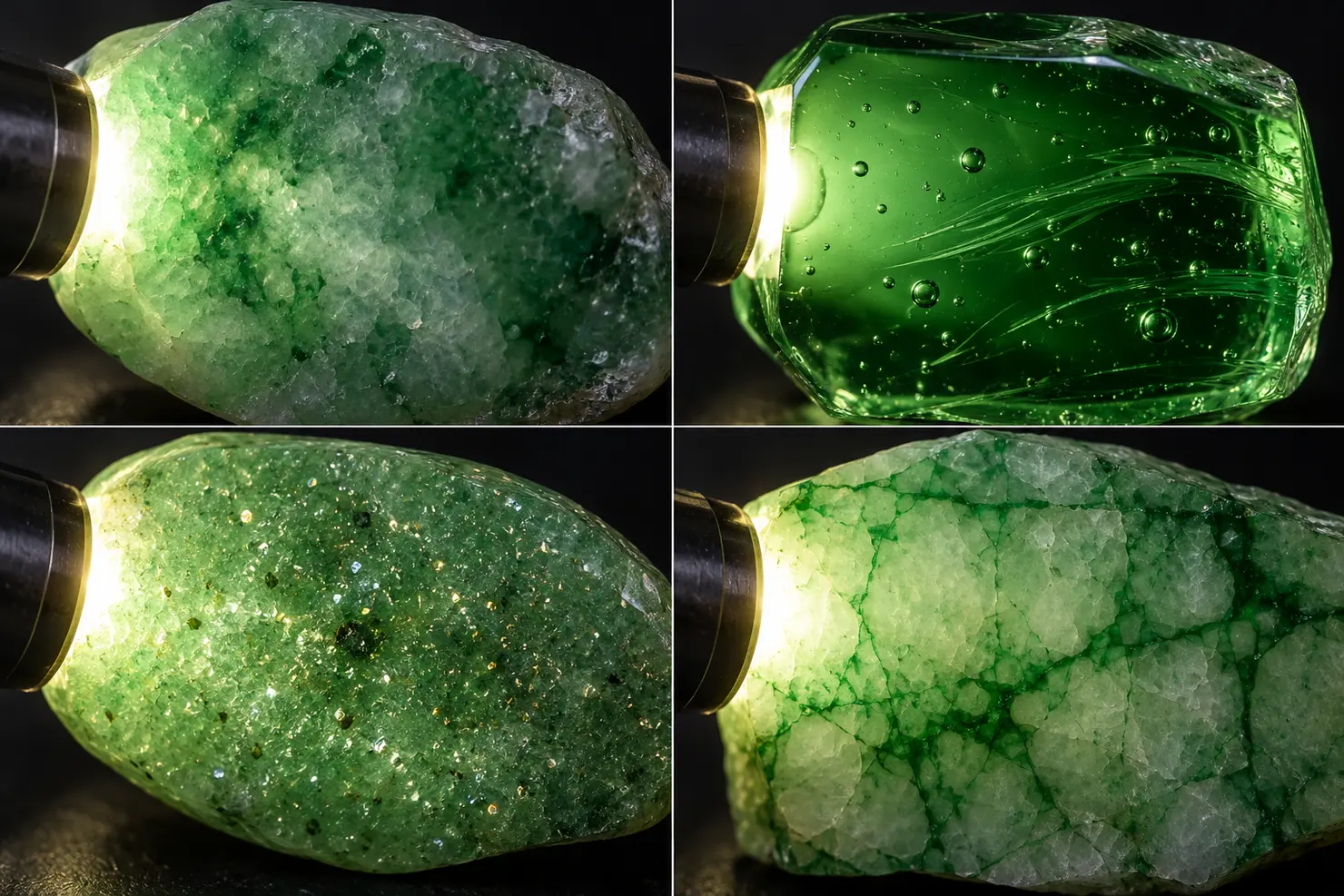
A flashlight has limits. Very fine, highly translucent jadeite may show almost no structure. Good glass can be bubble-free. And a flashlight cannot show whether real jadeite has been filled with resin.
Which home tests work, and which are myths?
Here are the popular home tests, roughly from most to least useful. None of them is proof; at best they tell you something is wrong.
| Test | How it is done | What it can show | Verdict |
|---|---|---|---|
| Flashlight | Shine a white light through or along the piece in a dim room | Grain and fibers in jadeite; bubbles in glass; glitter in aventurine; dye nets | The most useful clue (see above) |
| 10× loupe | Look at the surface, edges and drill holes | Bubbles, mold seams, glitter, dye in cracks, an etched surface | Useful with practice |
| Water (density) test | Weigh the piece dry, then weigh the water it displaces (method below) | Jadeite about 3.33; nephrite about 2.95; quartz family and serpentine about 2.6 | Separates quartz fakes; needs a 0.01 g scale |
| Weight in the hand | Compare with a known piece of the same size | Jadeite feels heavy | A rough clue only |
| UV light | Shine a UV torch on the piece in the dark | A strong bluish-white glow can point to resin (Type B) or wax | A clue to treatment, not to look-alikes |
| Cold touch | Hold it against your cheek or lip | Plastic and resin warm up quickly | Rules out plastic only |
| Water beads up | Put a drop of water on the surface | Depends on polish and wax, not on the material | Myth |
| Magnet | Hold a magnet next to the piece | Jadeite and almost all fakes ignore an ordinary magnet | Tells you nothing |
| Lighter or flame | Hold a flame under the piece | Soot forms on any material | Myth, and it can crack or burn the piece: don't |
| Scratch | Scratch with a steel blade | Soft fakes scratch; quartz fakes do not | Damages the piece; avoid |
| Tapping | Tap two bangles together and listen | Sound depends on shape and thickness | Unreliable; see the Type B guide |
How to do the water (density) test properly. You need a digital scale that reads to 0.01 g, a cup of water and a thin thread.
- Weigh the piece dry and note the number.
- Put the cup of water on the scale and press tare (zero).
- Hang the piece on the thread so it is fully under water, touching neither the bottom nor the sides, with no air bubbles clinging to it. The scale now shows the weight of the water it displaces.
- Divide the dry weight by that reading. The result is the specific gravity (SG).
Jadeite reads about 3.33 (roughly 3.30–3.36). Nephrite reads about 2.95, and quartz-based fakes (aventurine, "Malaysia jade", chalcedony), serpentine and most glass read about 2.6 or lower. The test has limits: hydrogrossular garnet and some lead glass read as high as jadeite; Type B jadeite may read slightly low, but the ranges overlap too much to detect treatment; and pieces set in gold or silver, or very small pieces such as beads and ring stones, cannot be measured reliably on a kitchen scale.
Why the lighter test is a myth. The claim is that real jade stays clean under a flame while fakes turn black. In fact a flame leaves soot on jadeite, glass and other stones alike, so the result proves nothing. Sudden heat can also crack a piece along existing fissures, burn off its wax and scorch the resin in Type B jadeite. Do not hold a flame to any jade, and do not let a seller do it to show you.
Water drops and magnets. Water beads up on any well-polished, waxed surface and spreads on a dull or unwaxed one, so it says nothing about the material. Jadeite is not attracted to an ordinary magnet, but neither are glass, quartz, agate and serpentine, so a magnet cannot tell them apart.
What UV light can and cannot show. Under long-wave UV, natural untreated jadeite is usually inert or glows only weakly, while the resin in Type B jadeite often glows a chalky bluish white. Wax and some natural pieces glow too, so a glow is a reason to ask for a certificate, not a verdict. UV does not help with glass or quartz fakes. See jadeite fluorescence.
Use these tests to raise questions, not to answer them. The only proof is a certificate from a recognized gem lab that names the material.
How do I make sure I am buying jadeite?
- Ask what the material is, in writing. "Malaysia jade", "Indian jade", "Australian jade" and "Korean jade" are not jadeite.
- Ask for a certificate from a recognized gem lab. The conclusion names the material. A jadeite certificate says jadeite and states any treatment; a look-alike's certificate names what it really is, such as quartzite, glass or serpentine. See how to verify a jadeite certificate.
- Ask for photos and video in daylight and under a flashlight.
- Be wary of bright, perfectly even green at a low price. Natural jadeite color is rarely uniform, and vivid green is the most expensive kind. See the jadeite colors guide.
- Buy where a mismatch means a refund.
On JadeiteHub, every listed piece comes with a certificate, every sold piece is checked against its certificate before it ships, and if it does not match the description you get a full refund.
FAQ
How can I tell real jade from glass?
Look with a loupe or a flashlight. Glass often shows round bubbles, swirl lines and perfectly even color, while jadeite shows a grainy or fibrous structure. Good glass can lack bubbles, so a lab certificate is the only proof.
Is aventurine the same as jade?
No. Aventurine is quartz with tiny mica flakes that glitter in light. It is sometimes sold as "Indian jade", but it is not jadeite and is far less valuable.
Is "Malaysia jade" real jade?
No. "Malaysia jade" is quartzite dyed green. Under a flashlight the dye usually collects in a net along grains and cracks.
Is green agate or chalcedony jadeite?
No. Agate and chalcedony are forms of quartz. They look smooth and even with no visible grain, are lighter than jadeite and are often dyed green.
Does real jade feel cold?
Yes, but so do glass and every other stone. Feeling cold only rules out plastic and resin, not other look-alikes.
How do you test jade with water?
Do a density test: weigh the piece dry, then weigh the water it displaces on a 0.01 g scale, and divide. Jadeite reads about 3.33, quartz fakes about 2.6. Watching whether water beads up on the surface tells you nothing.
Does the lighter test show if jade is real?
No. A flame leaves soot on real jadeite and fakes alike, and it can crack the piece or burn the resin in Type B jadeite. Don't try it.