How to Spot Treated (Type B) Jadeite: Clues and Lab Proof
Updated
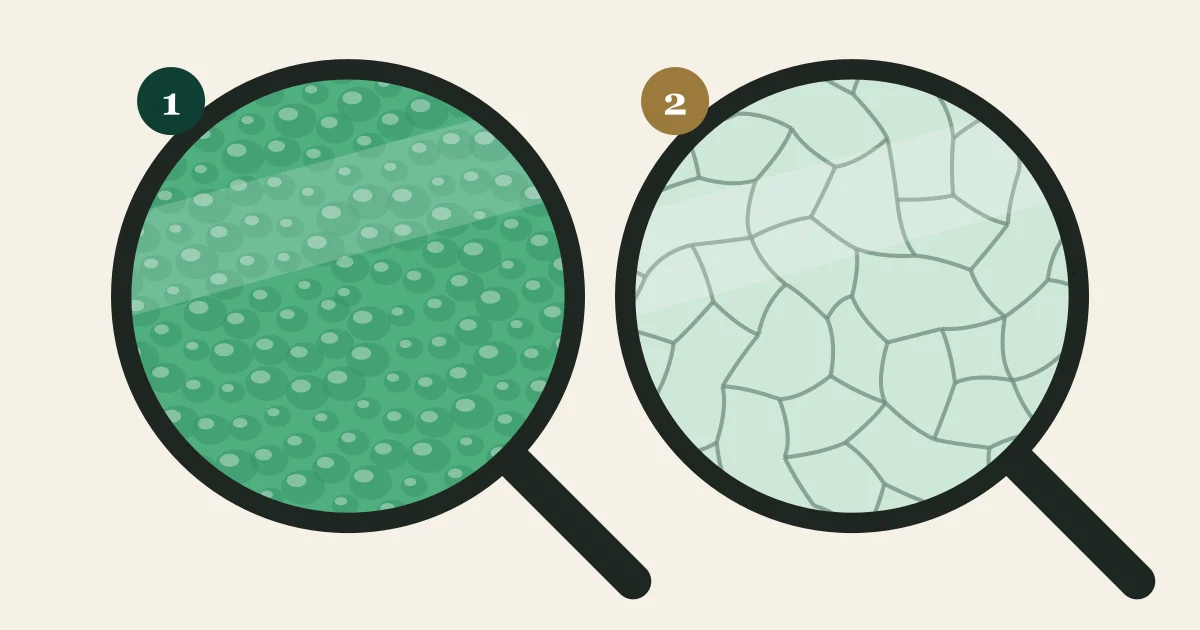
Type B jadeite has been bleached with acid and filled with resin to look cleaner and more translucent. Under a loupe it may show a network of etched lines on the surface, a resin-like luster and a base that looks unnaturally clean, but these are only clues. Tapping and UV lamps are not reliable either. Only a gem lab can confirm treatment, usually by infrared spectroscopy, so buy with a verifiable certificate.
What is Type B jadeite?
Type B jadeite is natural jadeite that has been chemically treated to look better than it is. The usual process has two steps:
- Acid bleaching. The stone is soaked in strong acid to dissolve brown, grey or black stains between the crystal grains. This makes the body look cleaner and brighter, but it also loosens the structure.
- Resin filling. The weakened stone is impregnated with polymer resin under pressure, which fills the gaps, holds it together and makes it look more translucent.
If color is also added by dyeing, the result is called Type B+C. For how the three grades compare, see Type A vs Type B vs Type C jadeite.
Why does it matter if jadeite is Type B?
- It does not last like natural jadeite. Resin can age over the years: the piece may turn yellowish, lose its shine and become more brittle.
- It is worth far less. The trade values Type A jadeite; treated material sells at a small fraction of the price of a similar-looking natural piece.
- It is often sold as Type A. A good treatment can make low-grade material look like fine, translucent jadeite, which is exactly why buyers need to check.
What clues can you see with a loupe or the naked eye?
With a 10× loupe and light reflecting off the polished surface, a few signs are worth checking. None of them proves anything on its own.
| What to look at | Natural Type A often shows | Type B often shows |
|---|---|---|
| Surface under reflected light | A fine, slightly uneven "orange peel" texture | A network of fine etched lines and channels, sometimes called acid-etch marks (酸蚀网纹) |
| Luster | Bright, glassy luster | Softer, resin-like or waxy luster |
| Base and color | Natural impurities; color that seems rooted in the stone | A base that looks unusually clean or bleached; color that seems to float or spread |
| Translucency vs texture | Translucency that fits the texture | More translucency than the coarse texture would suggest |
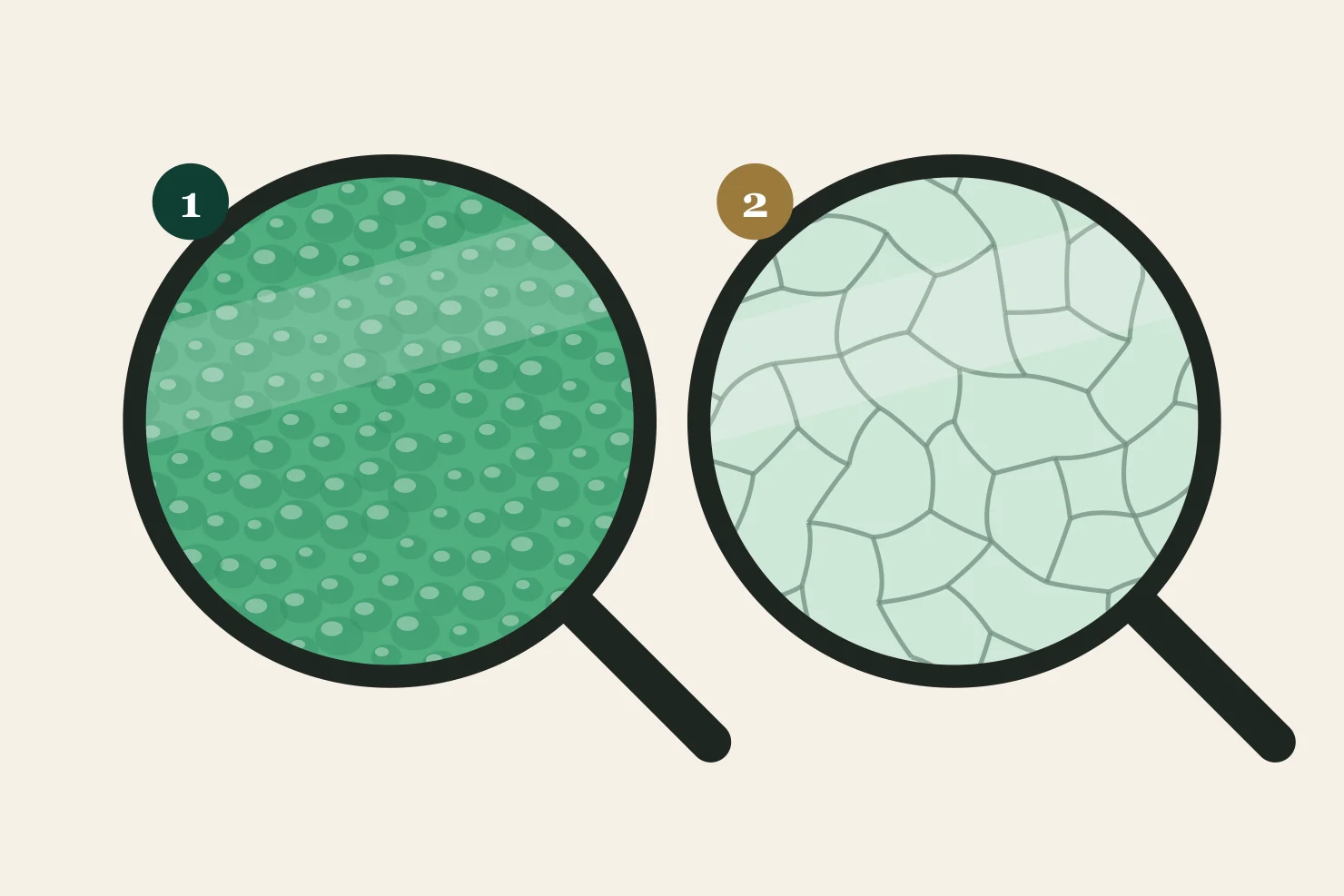
These clues are hard to read in photos, and experienced dealers still get it wrong. Skilled treatment, a thick wax coating or heavy polishing can hide them. For how texture and translucency are described, see zhong, shui and se.
Do the tapping test and UV light work?
Not reliably.
- Tapping. It is often said that natural jadeite bangles ring clearly and Type B sounds dull. In practice, the sound also depends on the bangle's shape, size, thickness and any cracks, so it cannot settle the question. Knocking jadeite together can also chip or crack it.
- UV lamp. Many resins glow blue-white under ultraviolet light, so strong fluorescence is a warning sign. But some natural jadeite with wax also fluoresces, and some treated pieces do not, so the result can mislead in both directions.
How do gem labs confirm Type B?
Labs combine several tests. The key one is infrared spectroscopy: the polymer resin used in Type B absorbs infrared light in a pattern that natural jadeite does not have, so the instrument can detect the filling even when it is invisible. Labs also examine the surface under magnification and check fluorescence and other properties.
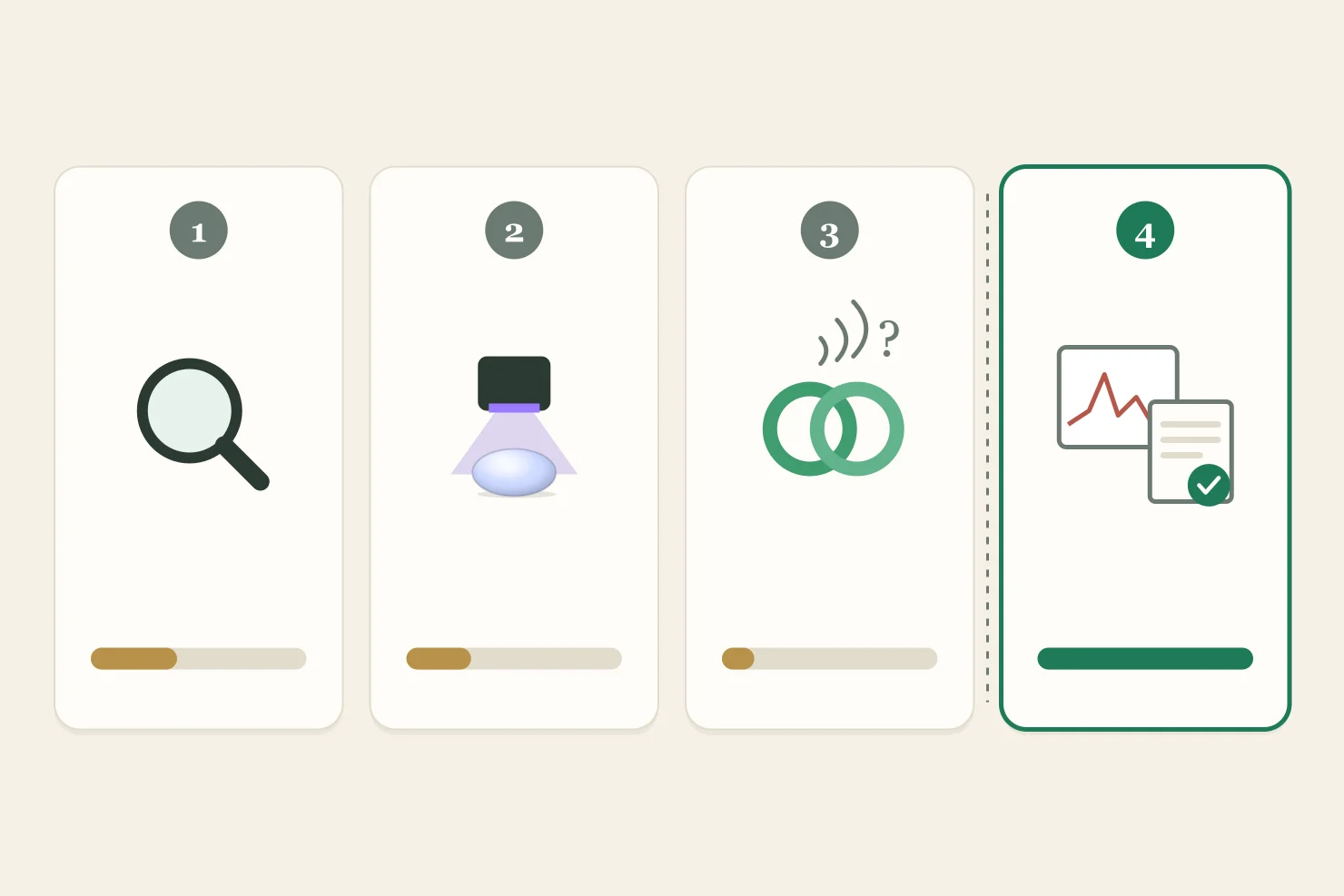
This is why the only dependable way to know is a certificate from a recognized lab that you can verify yourself.
What does a certificate say for Type B jadeite?
- On Chinese lab certificates, natural jadeite is named 翡翠 (jadeite). Treated jadeite is named 翡翠(处理) (jadeite, treated), sometimes with a note on the treatment.
- On English-language reports, look for words such as "treated", "impregnated", "polymer" or "dyed".
Always look the certificate number up on the lab's official website and check that the photo, weight and size match the piece. Step-by-step: how to verify a jadeite certificate.
How can I avoid buying Type B jadeite online?
- Ask for the certificate before you pay, and verify the number yourself.
- Read the conclusion line: you want natural jadeite with no treatment noted.
- Be wary of very clean, very translucent pieces at prices that seem too good for their look.
- Look at the seller's photos and, where available, video under neutral light.
- Pay through a protected checkout, not a personal transfer. See how to buy jadeite from China safely.
On JadeiteHub, every listed piece comes with a lab certificate, and every sold piece is checked against its certificate before it ships. If it does not match its description, you get a full refund.
FAQ
Can you tell Type B jadeite by eye?
Sometimes there are clues, such as etched lines on the surface under a loupe, a resin-like luster or an unnaturally clean base, but they are not reliable. Only a gem lab can confirm treatment.
Does tapping a jadeite bangle show if it is Type B?
No. The sound also depends on the bangle's shape, size and any cracks, so it is not a reliable test, and knocking jadeite can damage it.
Does Type B jadeite glow under UV light?
The resin in Type B often glows blue-white under UV light, but some natural jadeite with wax also glows and some treated pieces do not. Treat it as a clue only.
How do labs detect Type B jadeite?
Mainly with infrared spectroscopy, which detects the polymer resin used to fill the stone, together with magnification and fluorescence checks.