What Is Fluorescence in Jadeite? Glow vs UV Explained
Updated
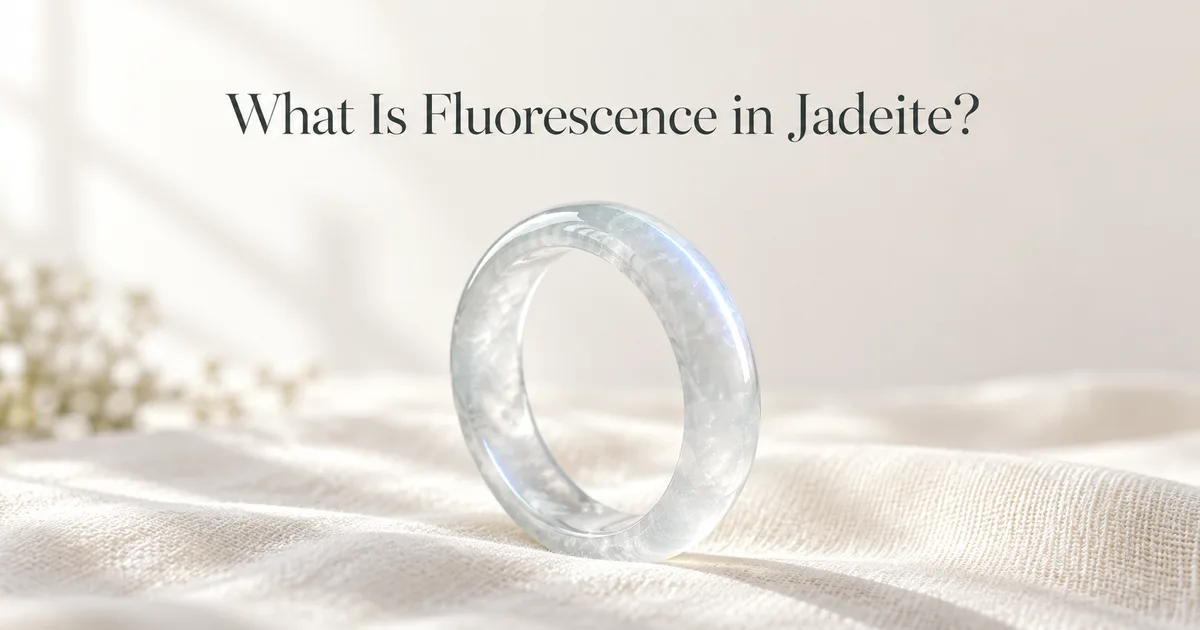
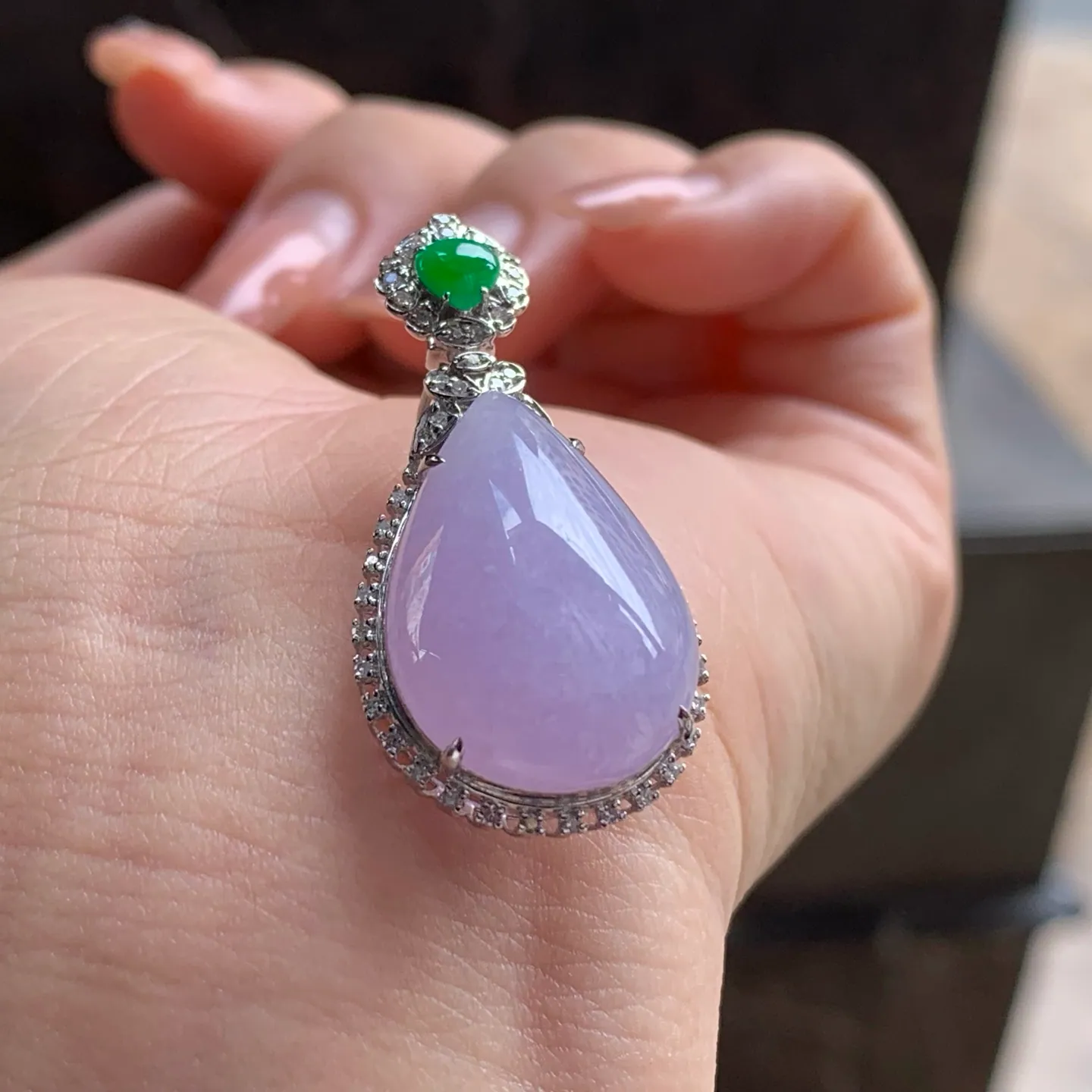
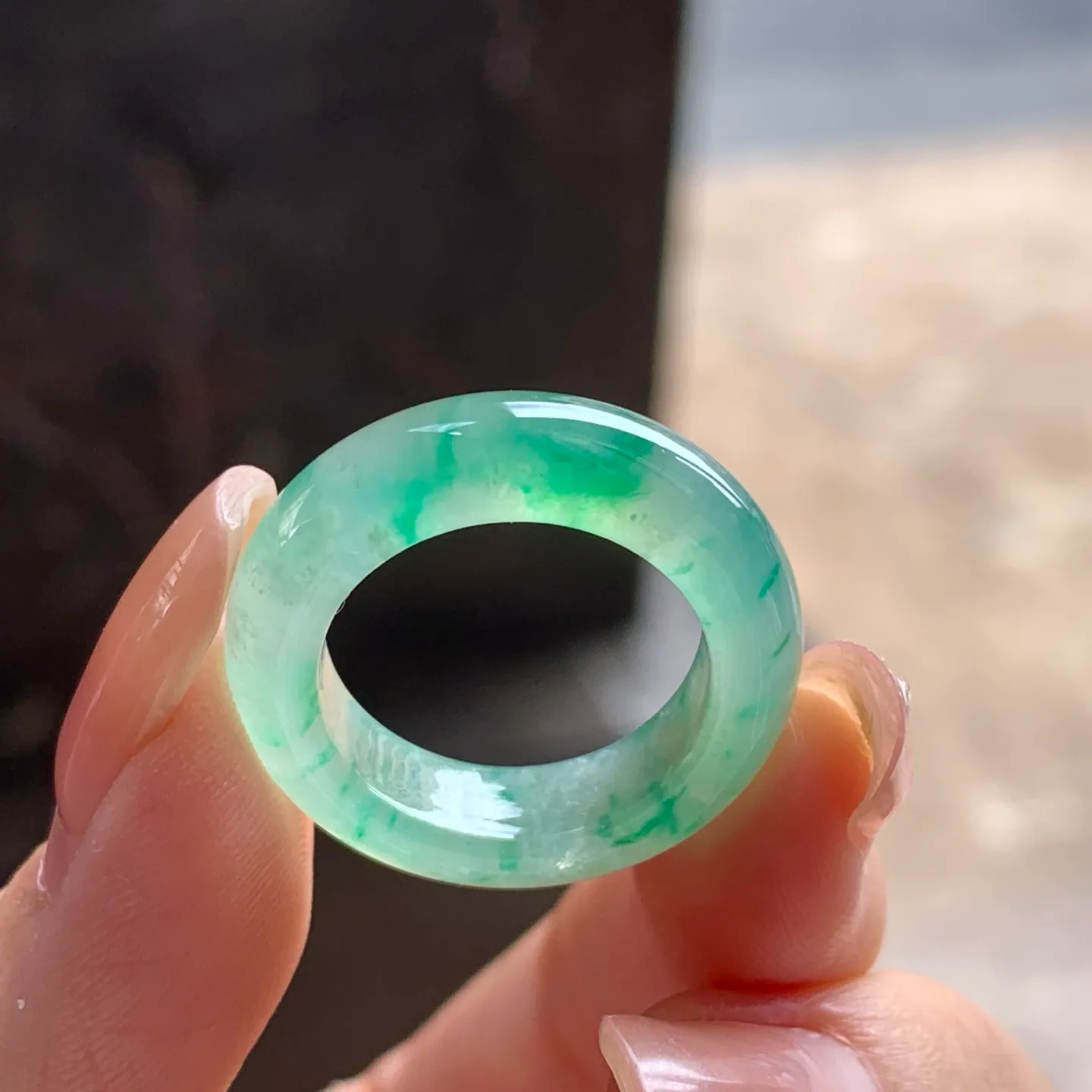
In the jadeite trade, fluorescence (荧光, 起荧) means a soft, bluish-white glow that seems to float on the surface of fine, highly translucent jadeite and moves as you turn it. It comes from fine, dense texture, a curved shape and good polish. It does not glow in the dark, and it is not UV fluorescence, a lab term for glowing under an ultraviolet lamp, which resin-filled jadeite may show but which is only a hint. Judge the glow in natural light while rotating the piece, and confirm the material with a certificate.
What is fluorescence in jadeite?
Fluorescence in jadeite (荧光, usually called 起荧, "the glow coming up") is a soft, bluish-white sheen that seems to float on the surface of fine, highly translucent jadeite and slides across it as you turn the piece. It is a trade word for an optical effect, not a lab measurement.
The confusion starts because the same word is used for two different things:
| Trade "fluorescence" (荧光 / 起荧) | UV fluorescence (紫外荧光) | |
|---|---|---|
| Who uses it | Dealers, carvers, sellers, livestreams | Gem labs, gemmology books, lab reports |
| What you see | A soft glow floating on the surface in ordinary light | A glow that appears only under an ultraviolet lamp, best in the dark |
| What causes it | Light scattering in very fine, dense crystal structure just under a curved, polished surface | Some substances absorb UV light and give off visible light |
| Where it shows | Fine, highly translucent material, often icy or glassy, colorless or pale | Many resins and waxes; natural untreated jadeite usually weak or none |
| What it tells you | The texture and translucency are fine | A possible hint of filling or surface wax, nothing more |
| Effect on value | Genuine strong glow on fine material is prized | None by itself; a strong UV glow is a reason to ask questions |
So when a seller says a bangle "has fluorescence", they almost always mean the first. When a lab report mentions fluorescence, it means the second. "Fluorescent jade" in an English listing is usually a direct translation of 荧光 and has nothing to do with UV.
The jadeite glossary lists both meanings in one line each. This guide goes further: what the trade glow is, how dealers judge it, and how it is faked in photos.
What is the difference between 起荧, 起光 and 起胶?
Dealers have several words for how light behaves on a polished piece. They overlap, and not every dealer uses them the same way, but the core idea is this:
| Trade term | Plain meaning | What you see | Typical material |
|---|---|---|---|
| 起荧 / 荧光感 | "Glow coming up" | A bluish-white light that floats on the surface and moves with the curve when turned | Fine glassy or high-icy, colorless or pale |
| 起光 | "Light coming up" | A bright, lively sheen across the surface; often used almost as a synonym of 起荧 | Fine icy to glassy |
| 起胶 / 胶感 | "Gel coming up" | A thick, glue-like, rich translucency, like jelly or set glue, without a floating sheen | Fine icy or glutinous-icy (糯冰种), often with some color |
| 刚性 | "Hard" luster | A crisp, hard, glassy reflection rather than a soft, oily one | Fine, tightly packed material of any color |
The difference between 起荧 and 起胶 is the one buyers ask about most. 起胶 is about depth: the stone looks thick, wet and full, as if you could press a finger into it. 起荧 is about the surface: a separate layer of light seems to sit on top of the stone and drift as it moves. A piece can have strong 胶感 and little glow, or the other way round. Fine glassy material often has both. As the icy jadeite guide explains, both come from texture, not from treatment and not from UV.
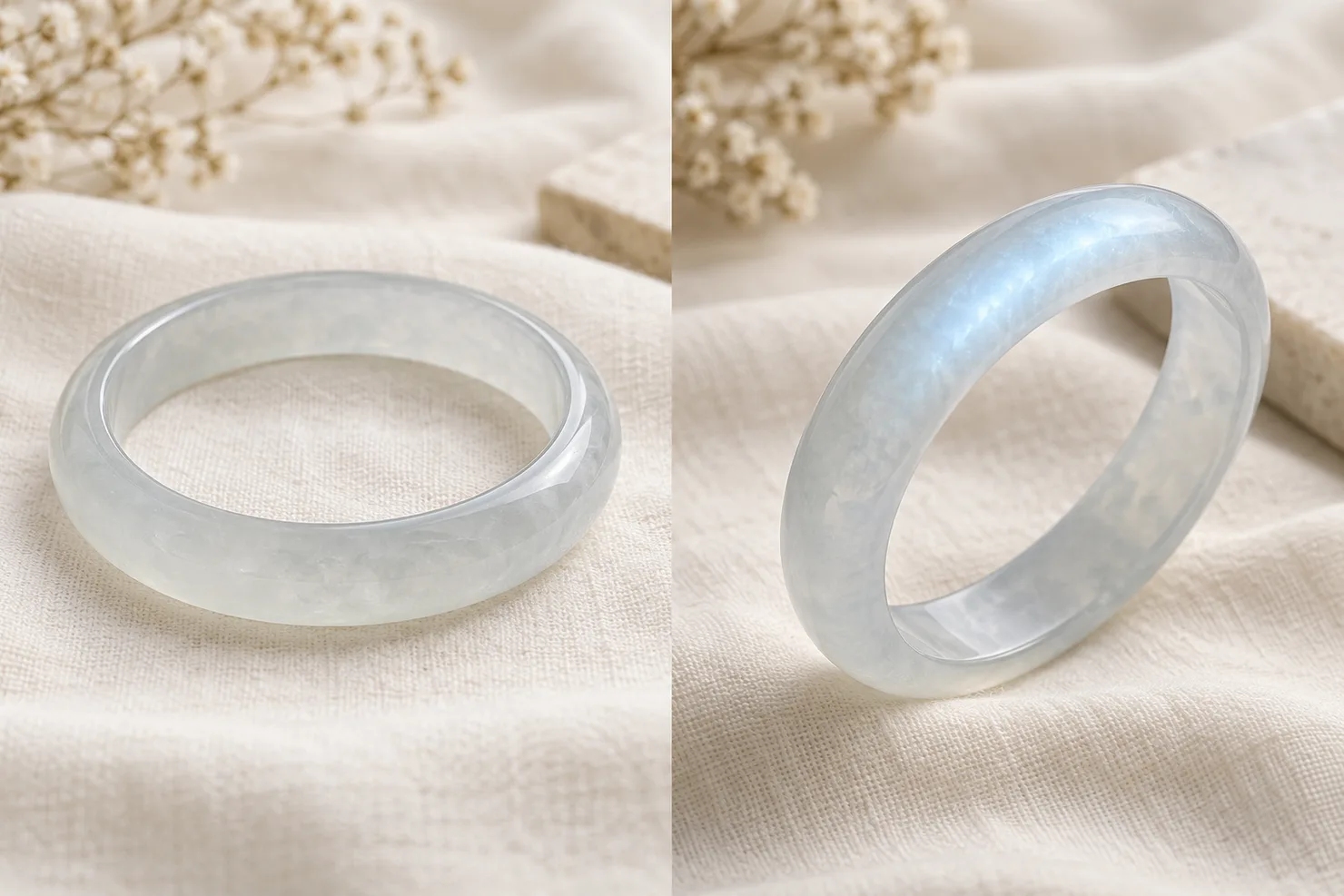
What makes a piece glow?
Four things have to come together. If one is missing, the glow is weak or absent.
| Factor | What helps the glow | What kills it |
|---|---|---|
| Texture (种) | Very fine, tight, even grains | Coarse or visible grains, heavy cotton, a "dry" base |
| Translucency (水) | High: icy, high-icy, glassy | Opaque or milky material that stops light at the surface |
| Shape | Full curves: cabochons, round bangles, beads, plump carvings | Flat pieces: thin plaques, flat backs, many flat carved planes |
| Polish | A high, even polish with no ripples or haze | Poor or uneven polish, scratches, a matte or hazy surface |
Texture and translucency are the root. They come from how fine the crystals are and how tightly they lock together; see zhong, shui and se explained. Shape and polish decide how much of it you actually see. Cut the same material into a round-bar bangle and a flat-inside bangle and they will look different: the round bar gives the light a long curve to travel along. A carved pendant with many flat faces shows less glow than a smooth cabochon from the same stone.
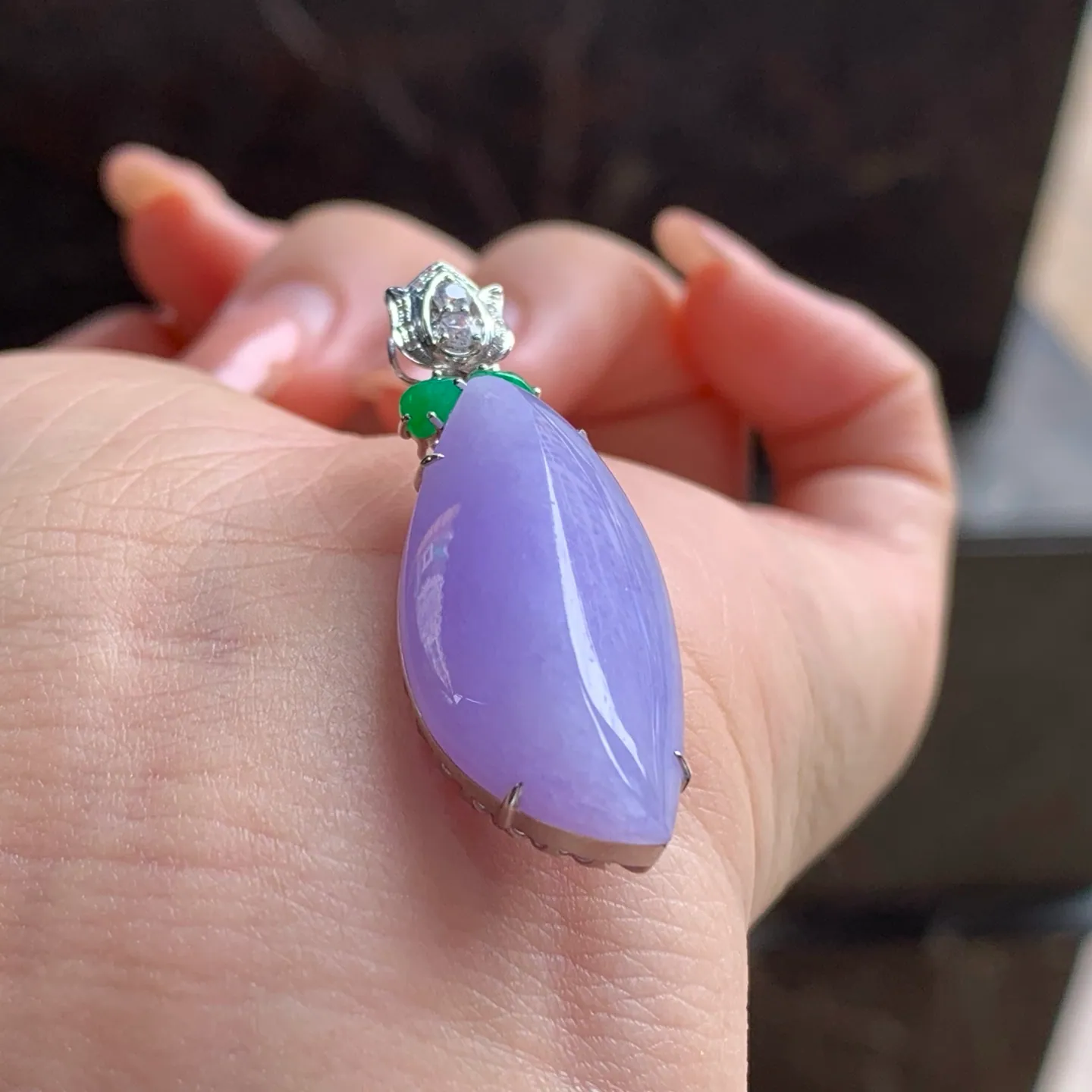
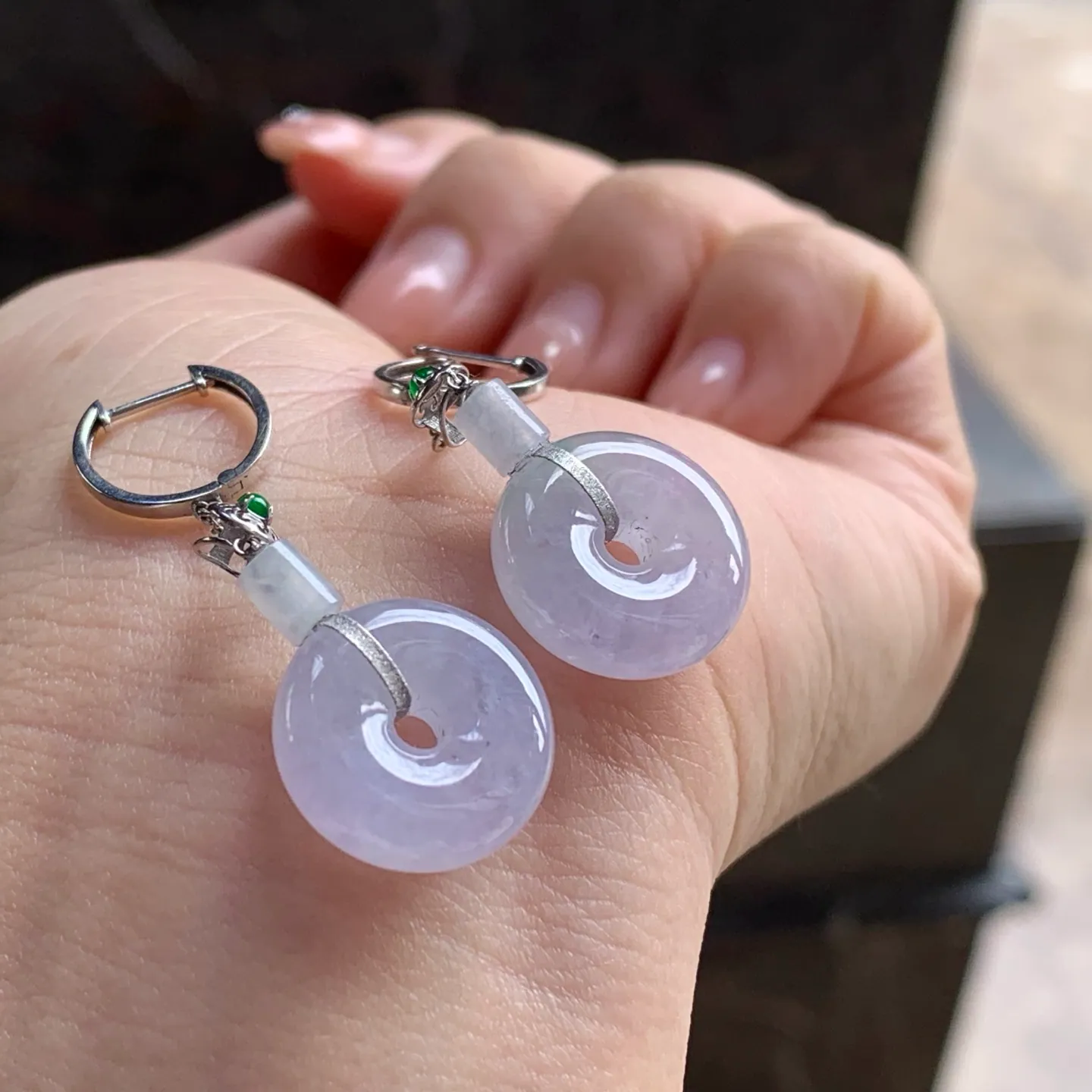
Color matters too. The effect is easiest to see on colorless, white or very pale material, where no strong body color competes with it; that is why it comes up so often with white jadeite. Pale lavender, light blue-green and pale yellow pieces can glow. On deep green it is less obvious, and dealers talk about it less.
How do dealers look for the glow?
Dealers do not judge it from a photo, and not under one bright spotlight. A typical routine:
- Use soft daylight or one diffuse light. Stand by a window out of direct sun, or under a single soft lamp. Avoid jewelry-counter spotlights.
- Hold the piece at a comfortable distance and turn it slowly. A real glow follows the curve of the stone and moves smoothly as you rotate it, a little like light on the surface of water.
- Look from several angles. Straight on, tilted, from the side. Genuine glow shows along the curved parts at many angles, not at one lucky angle.
- Turn the lamp off. Look again in plain room light, or a slightly dim room. A strong genuine glow is still there, only softer. If it disappears completely, most of what you saw was reflection.
- Then check the inside with a flashlight. Shine a small white flashlight through the piece to see texture, cotton and cracks. A glow on a coarse, cracked base is not what dealers pay for.
Why a strong point light misleads. A small, bright light makes a sharp white highlight on any polished curve, even on glass or coarse jadeite. Turning the piece makes the highlight run along the edge, which looks a lot like a floating glow, especially on video. A real glow is broader and softer, seems to sit just under the surface, and is still visible in ordinary light. A highlight is a hard bright spot that vanishes when the light is switched off or moved.
Is UV fluorescence the same thing?
No. UV fluorescence is what you see when you shine an ultraviolet lamp on a stone, usually in the dark. Some materials absorb the UV light and give off visible light, often blue-white.
- Natural, untreated jadeite usually shows weak or no UV fluorescence. Some natural pieces glow faintly, so "no glow" is not a guarantee either way.
- Resin-filled (Type B) jadeite may glow blue-white or chalky white, because many resins fluoresce.
- Wax, used in normal finishing, can also fluoresce, so a natural Type A piece may glow faintly.
- Some treated pieces do not glow at all.
That is why a UV lamp gives a hint, not proof. Labs use UV as one check among several, but the decisive test for resin is infrared spectroscopy. See how to spot treated (Type B) jadeite.
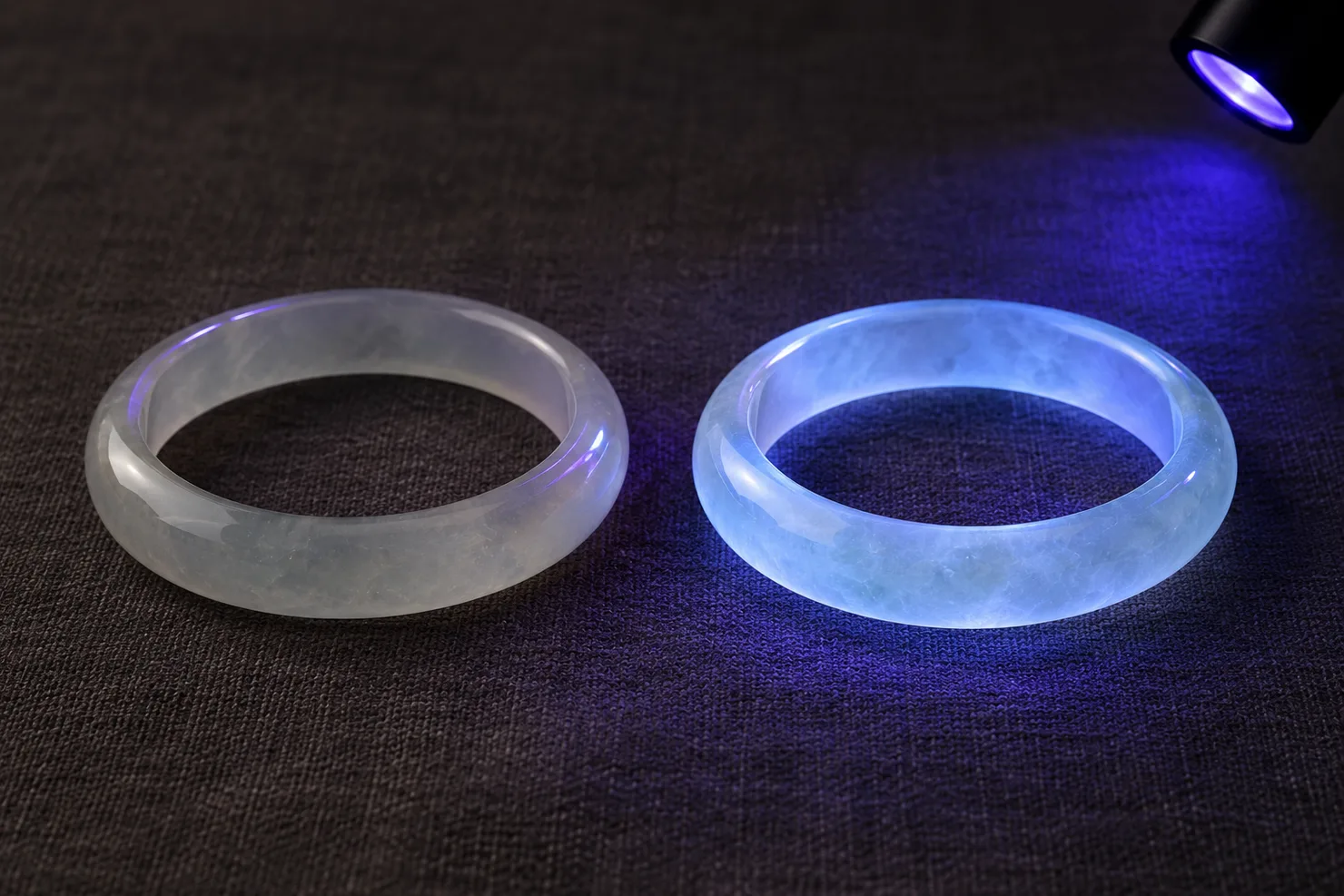
Notice that the two meanings point in opposite directions. A trade glow is a sign of fine material. A strong UV glow is a reason to ask more questions.
Is fluorescent jadeite worth more?
In recent years 荧光 has become one of the hottest selling words in jadeite, especially in livestream and social-media sales. The honest picture has three parts:
- Genuine strong glow on fine icy or glassy material is prized. It is a visible sign of fine texture and high translucency, which drive value anyway. See what determines jadeite price.
- "Fluorescent material" (荧光料) is also a marketing label. Much of what is sold as 荧光 is relatively coarse or less translucent and looks glowy only because of lighting, photo filters, a backlight or a very high polish. Some of it is treated.
- The trade disagrees about the premium. Some dealers see the glow as the most attractive quality of colorless jadeite, while some veterans think the craze has pushed prices beyond what the texture justifies.
A practical rule: pay for texture and translucency you can confirm, and treat the glow as the visible result of those qualities, not as a separate grade. The glow is not a lab grade, and certificates do not rate it.
What tricks do sellers use?
| What the seller shows | What may be going on | What to ask for |
|---|---|---|
| Photos with a strong blue glow along the edge | Cool, blue-tinted white balance, filters or editing | An unedited daylight video with something white or a hand in the frame for color reference |
| A video on a black background under a spotlight | One point light making a sliding highlight | The same piece in ordinary room light, then with the spotlight off |
| The piece lit from behind or below | A backlight that makes any translucent stone look like it glows | Light from the front or side only, then a flashlight check for texture |
| A wet, very glossy surface | Wax or oil boosting the shine and hiding surface texture | A close-up after wiping, and a certificate stating natural, untreated jadeite |
| "荧光" or "fluorescent" on any white or pale piece | The word used as a generic label | A natural-light video while the piece is rotated slowly |
| A very clean, very glowy piece at a surprisingly low price | Possibly bleached and resin-filled (Type B) | A certificate from a recognized lab, checked online |
Type B deserves a note. Bleaching removes stains and the resin fills the gaps, so the stone looks cleaner and more translucent, sometimes with a soft, plastic-like sheen that is sold as glow. That sheen tends to look flat or "coated" rather than floating, but you cannot judge this reliably on a phone screen. See Type A vs Type B vs Type C jadeite.
How do I check before buying?
- Ask for a natural-light video while the piece is rotated. Slow turns, near a window, no filter, no beauty mode. The glow should move with the curve.
- Compare it under two different lights. Ask for the same angle in daylight and under a warm indoor lamp. A genuine glow changes tone but stays. A lighting effect disappears.
- Check the certificate. It should name the material as jadeite and state natural, untreated (Type A). Check the number on the lab's own website: see how to verify a jadeite certificate. The certificate will not mention or grade the trade glow.
- Check texture with a flashlight. Ask for a short video with a flashlight shining through. Fine, even texture with little cotton supports a real glow; coarse grains and cracks do not. See zhong, shui and se explained.
- Judge the piece without the word. Take "fluorescent" out of the listing in your head and ask: would I still want this piece for its texture, translucency, color and shape?
On JadeiteHub, listings use the seller's own photos, and some include video, so you can see how a piece behaves in the light. Every sold piece is checked against its certificate before it ships, it travels with insured shipping, and if it does not match the description you get a full refund.
FAQ
Does fluorescent jade glow in the dark?
No. The trade glow is daylight or lamplight scattered inside fine jadeite, so it needs light to be seen and disappears in the dark. Stones sold as glowing in the dark are usually other materials or carry a luminous coating.
Is fluorescent jade real jadeite?
The word says nothing about the material. Much of it is real jadeite, but glass, quartzite and resin-filled Type B can also look glowy in photos. Only a lab certificate that names natural, untreated jadeite confirms it.
Is jadeite fluorescence the same as UV fluorescence?
No. Trade fluorescence (起荧) is a soft glow seen in ordinary light on fine, translucent jadeite. UV fluorescence is a glow under an ultraviolet lamp; natural jadeite usually shows little or none, and resin may glow.
Is fluorescent jadeite worth paying more for?
A genuine strong glow on fine icy or glassy material is prized because it shows fine texture and high translucency. But much "fluorescent" material is ordinary jadeite in good lighting, and the trade disagrees about the premium. Pay for the texture you can confirm.
Can colored jadeite have fluorescence?
Yes, but it is easiest to see on colorless, white and very pale pieces. Pale lavender or light blue-green can glow; on deep green the effect is less noticeable.