Is Your Jade Roller or Gua Sha Real Jade? How to Check
Updated
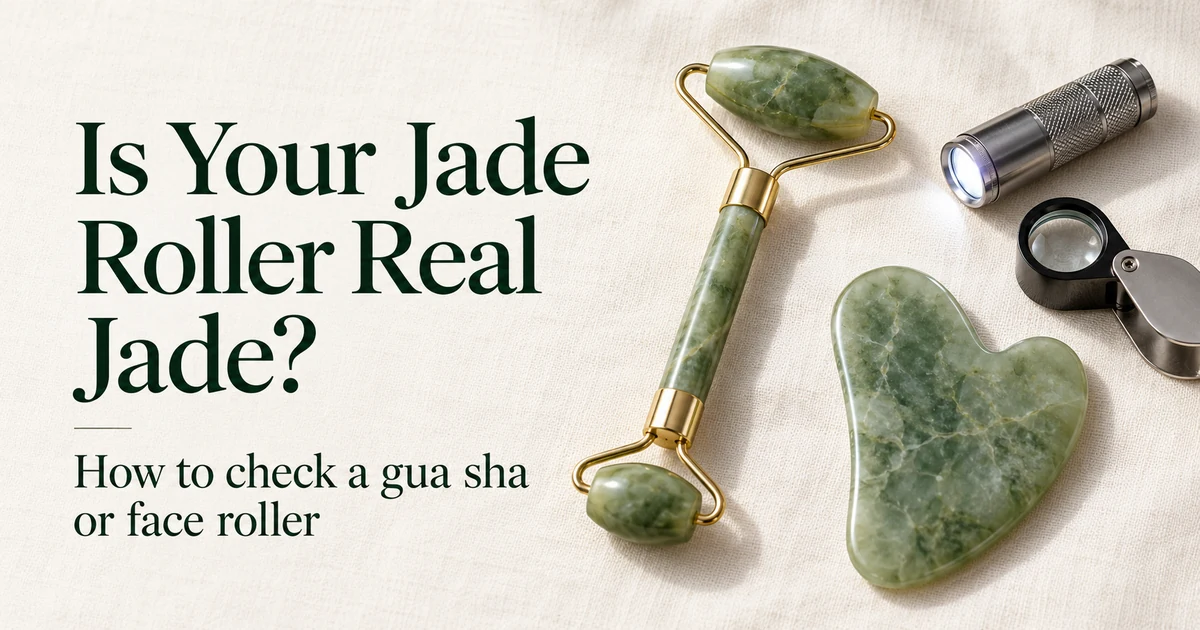
Most "jade" face rollers and gua sha boards are not jadeite. They are commonly made of serpentine (sold as "Xiuyan jade" or "new jade"), aventurine, dyed quartzite, glass or resin, and sometimes nephrite. Real jadeite tools exist but are uncommon and cost far more. A very low price, a light feel, glitter, dye on a cotton swab or easy scratching all point to another material. Only a gem lab can name the material for certain. Any stone or steel feels cool on the skin; choose by durability and care, not by claims.
Is my jade roller real jade?
Probably not jadeite, and possibly not jade at all. "Jade" on a beauty tool is usually a color and a selling word rather than a mineral name. Two different minerals are called jade in the gem trade: jadeite (翡翠, the material JadeiteHub sells) and nephrite (Hetian jade). Most inexpensive rollers and gua sha boards are made of other green stones, glass or plastic.
That does not make your tool useless or a scam if it was sold honestly. A serpentine roller is still a smooth, cool stone. It only matters when a tool is sold as jadeite, or priced as jadeite, when it is something else.
This guide is about the material: what your tool is likely made of and how to check. JadeiteHub sells jadeite jewelry, not beauty tools, and we do not give skincare advice.
What are most jade rollers and gua sha made of?
These materials are commonly sold as "jade" rollers and boards. Typical values are from gem references; individual pieces vary.
| Material | Names on the label | How it looks | Hardness (Mohs) | Key clue |
|---|---|---|---|---|
| Serpentine | "Xiuyan jade" (岫玉), "new jade", "jade" | Pale yellow-green to green, oily or waxy shine, often with dark specks | about 2.5–5.5 | Scratches easily, feels light |
| Aventurine quartz | "Green jade", "Indian jade", Dongling jade | Green with tiny glittering flakes | about 7 | Sparkles when you tilt it in light |
| Dyed quartzite | "Malaysia jade", "green jade" | Bright, very even green | about 7 | Color sits in a net along cracks; dye may rub off |
| Glass | "Jade", "jade glass" | Even color, glassy shine | about 5–6 | Round bubbles, swirl lines, mold seams |
| Resin or plastic | "Jade" | Light, warms up fast | about 2–3 | Very light, warm feel, mold lines |
| Nephrite | "Hetian jade", "white jade", "Xinjiang jade" | Oily, even, often white or spinach green | about 6–6.5 | Real jade, but not jadeite |
| Jadeite | "Burmese jade", "Type A jadeite", 翡翠 | Grainy texture, color uneven in patches | about 6.5–7 | Heavy for its size; usually sold with a certificate |
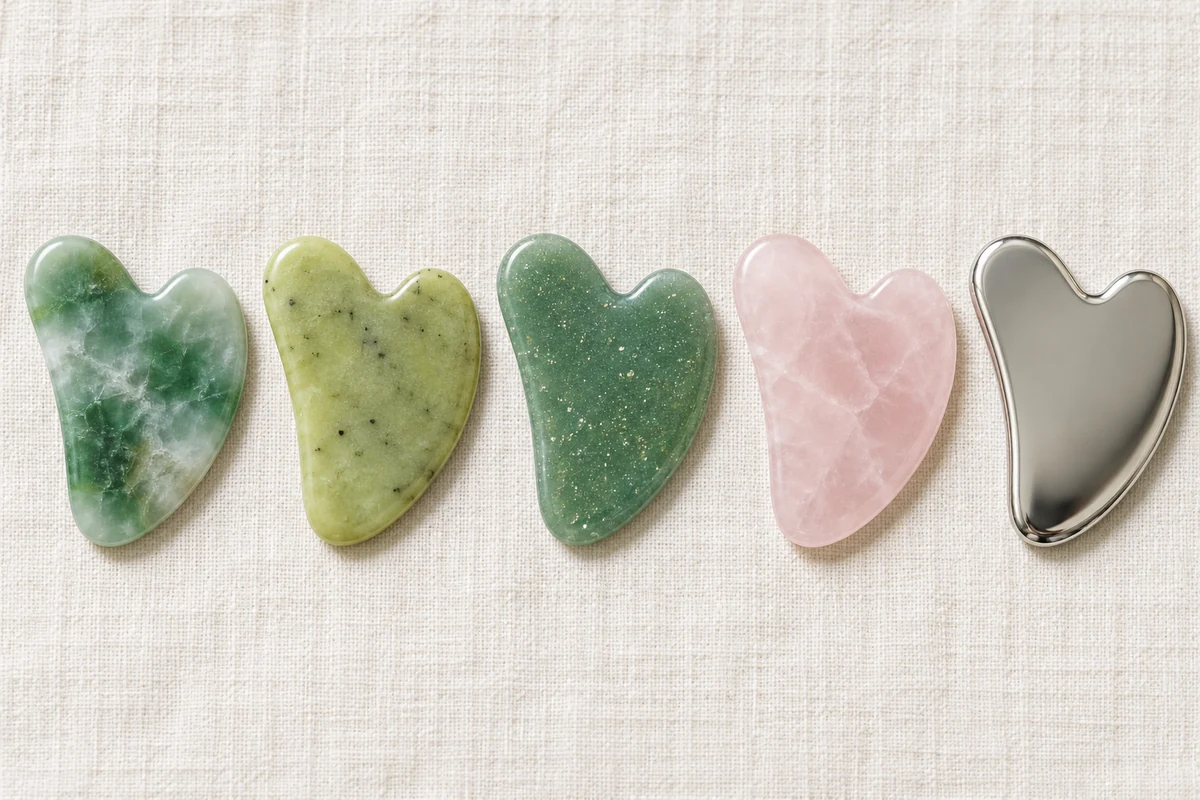
Serpentine is the most common material in green "jade" rollers. It is easy to cut and polish, and its green looks like jade, which is why it has been sold as jade for a long time. It is an honest material under its own name.
How can I tell if my jade roller is real?
Work from the easy checks to the conclusive one. Each home check is a clue, not proof.
- The price and the wording. A gift set with a roller and a board at an everyday price is very unlikely to be jadeite. A jadeite board needs a solid, crack-free slab of jadeite, and jadeite is priced by color and translucency. A seller of jadeite will name the mineral and usually offer a certificate. "Jade stone", "natural jade" or "100% jade" with no mineral name says little.
- Weight. Jadeite is dense (about 3.33). A jadeite board feels noticeably heavier than a serpentine or quartz board of the same size (about 2.6). Resin feels very light. You need a similar piece to compare with, so this only works side by side.
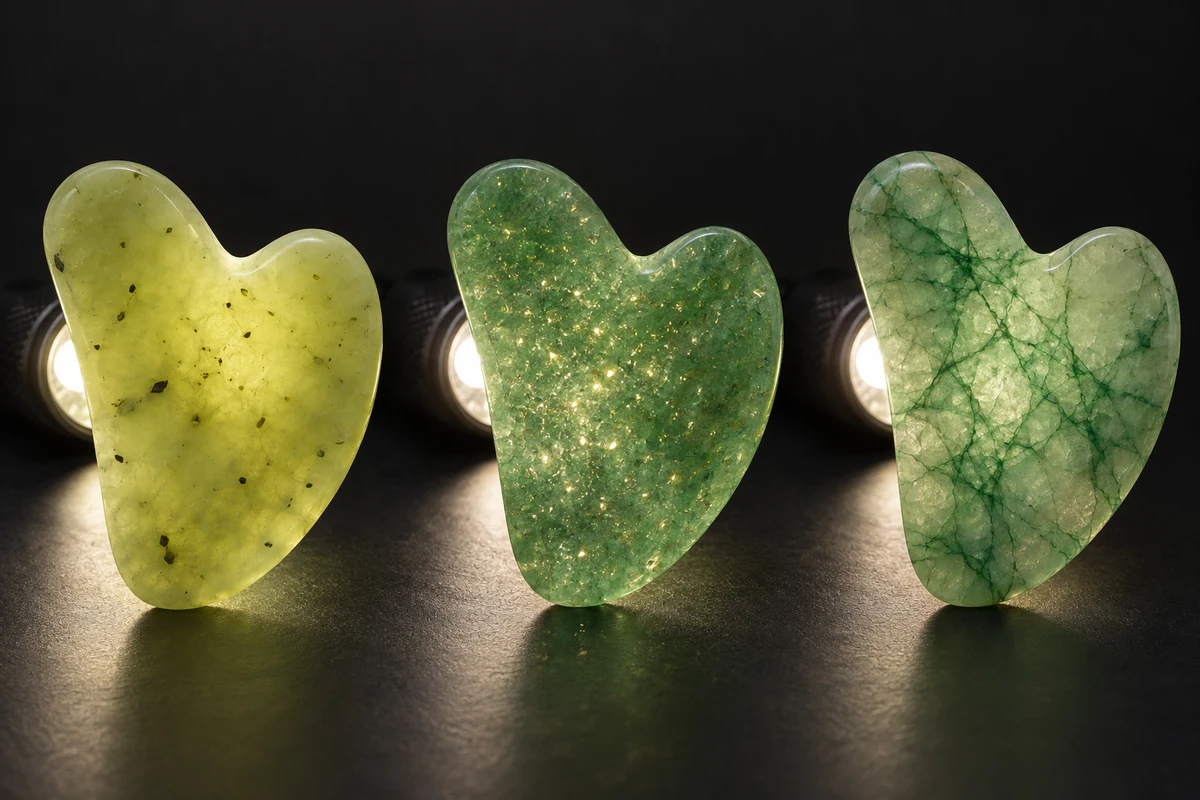
- A flashlight. In a dim room, shine a small white flashlight through the edge. Aventurine glitters. Dyed quartzite shows color gathered in a fine net along cracks. Glass may show round bubbles. Jadeite shows an interlocking, grainy texture and color in irregular patches. See how to tell real jade from look-alikes.
- A 10× loupe. Look for bubbles, glitter, dye lines and mold seams along the edges.
- A cotton swab with rubbing alcohol. Rub a hidden spot. Green on the cotton means dye. A clean swab proves nothing: some dyed material is sealed with resin and does not rub off.
- A scratch test, only if you accept damage. On a hidden spot, a steel knife tip scratches serpentine, resin and some glass, but not quartz or jadeite. It damages the tool and cannot separate quartz from jadeite, so it is a last resort.
- A gem lab. A gem lab can identify the material with instruments. For a cheap tool this costs more than the tool; it is worth it only for a piece sold as jadeite at a jadeite price. A real jadeite certificate names the mineral and any treatment; see how to verify a jadeite certificate.
The "cold touch" test does not help. All stone, glass and metal feel cool at first; only resin warms up quickly. The "hair" or "burn" test with a lighter is not reliable either and can crack a stone.
What would a real jadeite gua sha look like?
They exist, mostly from jadeite carving workshops, and they are priced like jadeite rather than like a beauty tool. Expect:
- A clear statement that the material is jadeite (翡翠), ideally natural and untreated (Type A), with a certificate. Treated jadeite (Type B or C) is real jadeite but bleached, filled or dyed; see Type A vs Type B vs Type C jadeite.
- Color that is rarely perfectly even, often white or pale green with patches of stronger green.
- A grainy, interlocking texture under a flashlight, and a heavy feel.
A bright, even green jadeite board at a low price is a warning sign, not a bargain. Even green is the most expensive color in jadeite.
Jade vs rose quartz vs stainless steel: which material is better?
As materials, they differ in durability and care more than anything else.
| Serpentine ("jade") | Jadeite | Rose quartz | Stainless steel | |
|---|---|---|---|---|
| Hardness (Mohs) | about 2.5–5.5 | about 6.5–7 | about 7 | about 5.5–6 (varies by grade) |
| If dropped | Can chip or break | Tough, but can still chip or crack | Brittle; chips and breaks | Does not break |
| Scratches in daily use | Easily | Rarely | Rarely | Can show fine scratches |
| Cool feel | Cool at first, warms with use | Same | Same | Feels coldest and stays cool longest |
| Cleaning | Mild soap and water | Mild soap and water | Mild soap and water | Easiest; non-porous |
| Common labeling problem | Sold as "jade" | Treated or fake sold as Type A | Rarely faked; sometimes glass | None |
Steel feels coldest because metal draws heat away from the skin faster than stone. Stone and glass feel cool for the first moments and then warm to skin temperature. Many people keep their tool in the fridge; that works with any of these materials, but avoid sudden heat afterwards, which can crack stone.
Does the stone matter for your skin?
That is outside our expertise. Scientific evidence for facial benefits from rollers and gua sha is limited, and we are not aware of evidence that one stone does more for skin than another. Claims about a stone's "energy" or healing power are beliefs, not tested properties. If you have a skin condition, ask a dermatologist before using any tool. What the material does decide is how long the tool lasts and how easy it is to keep clean.
How do I clean and care for a jade roller or gua sha?
- Wash after each use with lukewarm water and mild soap, then dry with a clean towel. Do not share tools between people.
- Keep the roller's metal frame dry. Do not soak a roller; water in the joints can rust the frame and loosen the stone. Wipe the frame instead.
- No boiling water, dishwasher or sudden temperature changes. They can crack stone and loosen glue.
- Store it in a pouch, away from harder stones. Serpentine is soft and scratches against quartz, steel and other tools.
- Dyed stone may lose color with alcohol, strong cleaners or long soaking. If color comes off on a cloth, the stone is dyed.
- Do not drop it. Quartz and serpentine chip easily on a tile floor, and a chipped edge can scratch skin. Stop using a tool with a sharp chip.
For jadeite jewelry, see how to care for jadeite.
What do labels like "Xiuyan jade", "Burmese jade" and "white jade" mean?
- Xiuyan jade (岫玉) is serpentine from Xiuyan in northeast China. It is a traditional carving stone, but it is not jadeite or nephrite.
- "Burmese jade" (in Thai, หยกพม่า) should mean jadeite, since gem jadeite comes mainly from Myanmar. On beauty tools the phrase is often used loosely, so treat it as a claim to check, not proof.
- "White jade" can mean white nephrite, white jadeite or simply a pale stone. In Thailand, หยกขาว usually means nephrite. See white jadeite and jadeite vs nephrite.
- "Natural jade" or "genuine jade stone" without a mineral name tells you almost nothing.
On JadeiteHub we sell only natural, untreated Type A jadeite jewelry, not rollers or gua sha. Every listed piece comes with a certificate, every sold piece is checked against its certificate before it ships, and if it does not match its description you get a full refund.
FAQ
Is my jade roller real jade?
Most likely it is not jadeite. Jade rollers are commonly made of serpentine, aventurine, dyed quartzite, glass or resin, and sometimes nephrite. Real jadeite rollers exist but are uncommon and cost far more. Only a gem lab can confirm the material.
How can I tell if my jade gua sha is fake?
Check the price and wording, compare the weight with a known stone, shine a flashlight through it for glitter, bubbles or dye lines, and rub a hidden spot with an alcohol swab for dye. These are clues; a gem lab report is proof.
Is jade or rose quartz better for gua sha?
As materials, rose quartz is harder than the serpentine used in most "jade" tools but more brittle when dropped. Real jadeite is the toughest of the stones. We are not aware of evidence that either stone does more for skin.
Is stainless steel better than jade for gua sha?
Steel does not break, is easiest to clean and stays cool longest. Stone tools can chip if dropped. Which one feels better is personal; the material does not change the technique.
Why does my jade roller feel cold?
Stone, glass and metal all draw heat from your skin, so they feel cool at first. Feeling cold does not prove a tool is jade; only resin and plastic warm up quickly.
Can I put my jade roller in water?
Wash the stone with lukewarm water and mild soap and dry it, but do not soak a roller. Water in the metal frame can cause rust and loosen the stone. Avoid boiling water and the dishwasher.