Can You Sell Jade? Jadeite Resale Value Explained
Updated
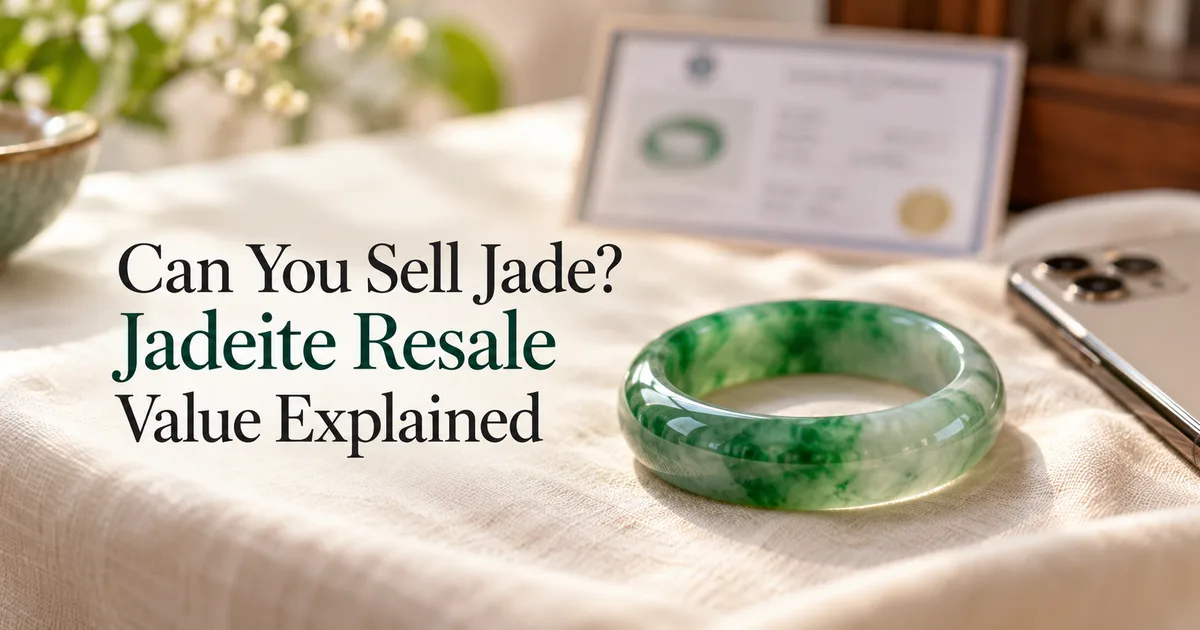
Yes, natural jadeite (Type A) can be resold, but expect offers far below the retail price you paid. Jade has no price per gram like gold, and every buyer must resell at a profit. Pieces with a recognized lab certificate, good color and translucency, no cracks and a common size sell most easily. Get several quotes, and buy jade because you love it, not as an investment.
Can you sell jade?
Yes. Natural jadeite is bought and sold secondhand all the time: by jade dealers, specialist shops, some gold shops and pawnshops, auction houses and private buyers. Old family bangles, gifts you no longer wear and pieces bought on holiday all end up back on the market.
What surprises most sellers is the price. A resale offer is usually far below what you paid in a shop, and sometimes far below what a seller once told you the piece was "worth". That does not mean you were cheated. It is how the jade trade works, and knowing why helps you sell well.
Why is jade resale value so much lower than retail?
- Retail price includes much more than the stone. It covers cutting and polishing, design, any gold or silver setting, shop rent, staff, marketing, certificates and the shop's margin. When you sell, the buyer pays only for the piece as a raw resale item.
- The buyer has to resell it. A dealer, pawnshop or gold shop buys so that they can sell again at a profit, and may hold the piece for a long time before finding a customer.
- Jade has no price per gram. Gold has a daily market price, so a gold shop can pay you close to it. Jadeite does not. Every piece is valued individually by eye, which makes buyers cautious and offers wide apart. See what determines jadeite price.
- The buyer takes the risk of treatment. Many buyers cannot test for resin filling or dye themselves. Without a trusted certificate they price in the chance that the piece is treated.
So "how much is my jade worth?" has two answers: what a shop would ask for it, and what a buyer will pay you for it today. When you sell, only the second one counts.
What makes a jade piece easier to sell?
Buyers look at the same things that set the original price, plus how quickly they can sell the piece again.
| Factor | Better offer | Lower offer, or hard to sell |
|---|---|---|
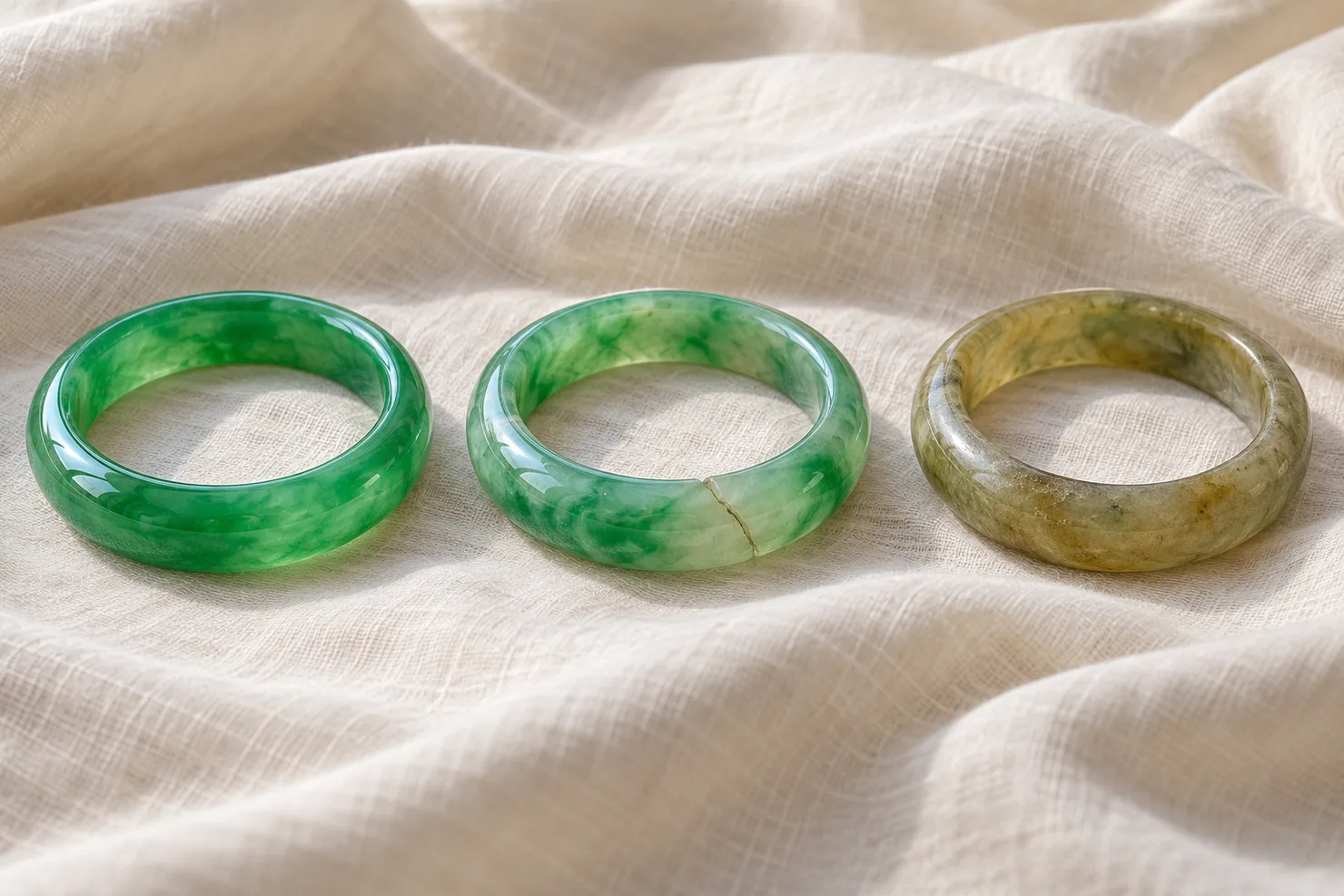
| Natural or treated | Type A (natural) | Type B or C (bleached, filled or dyed): very little resale value |
| Certificate | From a recognized independent gem lab, matching the piece | None, or only the shop's own "certificate" |
| Color | Even, lively color; also good colorless icy material | Dull, grayish or patchy color |
| Texture and translucency | Fine and translucent | Coarse and opaque, typical low-grade commercial material |
| Cracks and damage | Clean, no cracks, no chips | Cracks, chips, glued or repaired pieces |
| Size | Common wearable sizes, such as bangle inner diameters many people fit | Very small or very large bangles, unusual sizes |
| Design | Classic shapes and popular carvings | Unusual or dated designs, heavily customized settings |
| Origin and paperwork | Receipt, certificate and a clear history | Unknown origin, no paperwork |
Type A vs treated is the first question. Treated jade looks good when new but is valued far lower, and many buyers will not take it at all. If you are not sure what you have, read Type A vs Type B vs Type C jadeite and how to spot treated jadeite.
Cracks matter a lot. A crack makes a bangle risky to wear, so buyers mark it down heavily. See cracked or broken jade bangle for how to tell a crack from a natural stone line.
Where can I sell jade?
| Where | Good for | Watch out for |
|---|---|---|
| Jade dealers and specialist jade shops | Most pieces, especially with a certificate; they know jadeite | Offers vary widely between shops; get several |
| Gold shops and pawnshops | A quick sale, or a short-term loan against the piece | Many value the gold setting more than the jade, and some do not take jade at all |
| Auction houses | High-end pieces with strong certificates | They usually accept only top pieces; fees, and a long wait for the sale |
| Consignment (a shop sells it for you) | Better pieces where you can wait | Commission, slow sales, and a clear written agreement is needed |
| Selling privately online, on marketplaces or in collector groups | Getting closer to a retail-style price | Scams, time-wasters and safety when meeting buyers |
Safety when selling privately: meet in a public place, ideally inside a bank or a shop with cameras; never post the piece before payment has fully cleared; and be wary of buyers who overpay, send "payment screenshots" or ask you to pay a fee first.
How do I sell my jade, step by step?
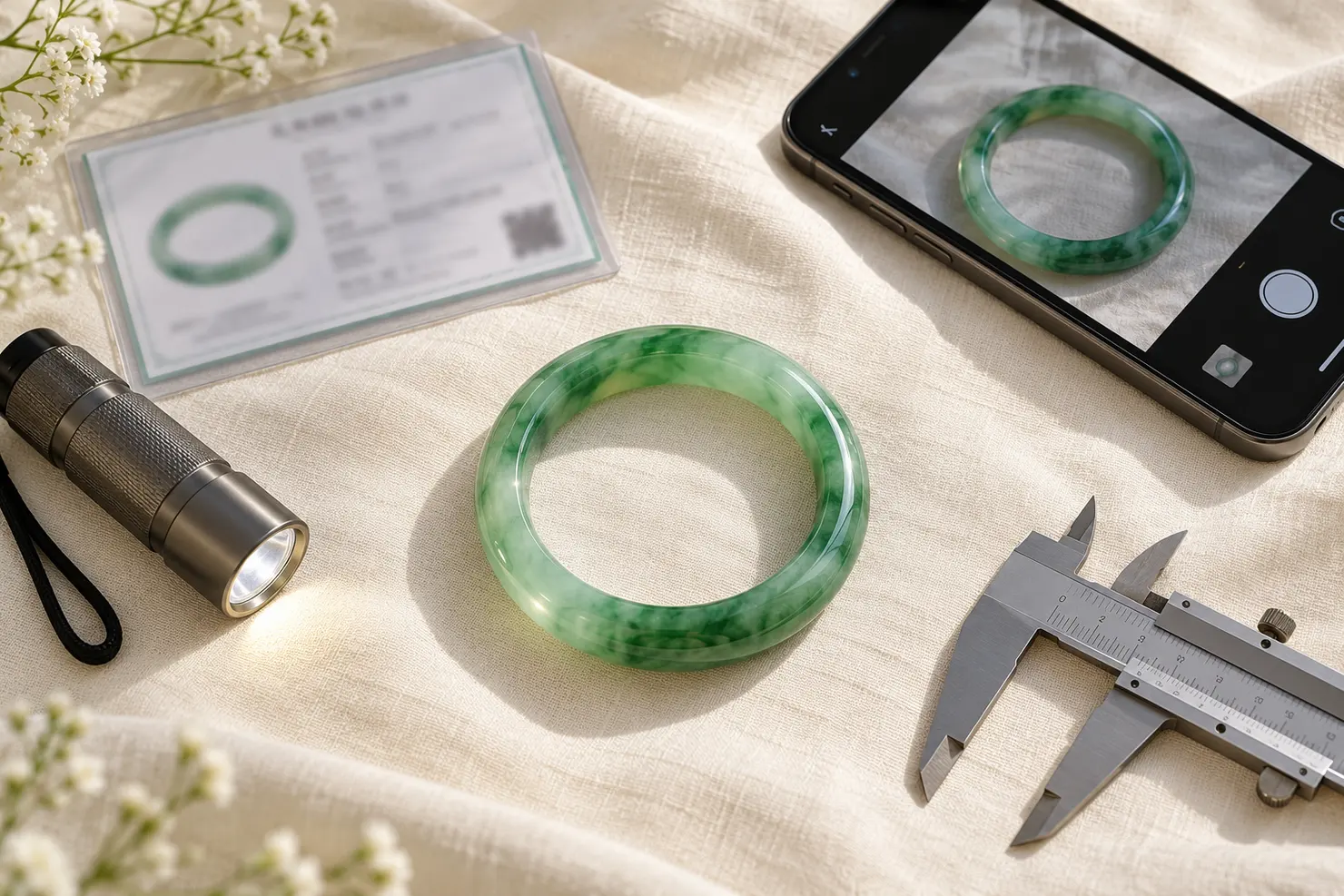
- Confirm it is Type A. If you have a certificate, check that it is real and matches the piece: see how to verify a jadeite certificate. If you have none, a test from a recognized gem lab is often worth it for a good piece, because buyers offer more when they do not have to guess. For a low-value piece the test may cost more than it adds.
- Clean it gently and photograph it well. Take photos and a short video in daylight, plus close-ups with a flashlight shining through the piece. Show any marks honestly. See how to care for jadeite for safe cleaning.
- Measure it. For a bangle, measure the inner diameter in millimetres and the band width and thickness. See how to choose a jadeite bangle size. For pendants, note length, width and thickness.
- Get several quotes. Show the same photos and certificate to three or more buyers. Offers for the same piece can differ a lot, because each buyer has different customers and a different view of the stone.
- Ask why an offer is low. A good buyer will tell you: a crack, a weak color, an unpopular size, a certificate they do not trust. That tells you whether another buyer is likely to see it differently.
- Keep control of the piece. Do not leave it with a stranger "for appraisal", and do not pay any upfront appraisal, certificate or registration fee to someone who says they have a buyer waiting. This is a common scam.
Does jade increase in value?
Top-quality jadeite, such as intense even green or fine glassy material, has been in strong demand at major auctions for years. That is the very top of the market.
Ordinary commercial jadeite is different. Most bangles and pendants sold in shops do not rise in value in a way you can count on, and the gap between retail and resale price means you would usually get back less than you paid, even if the piece is genuine and undamaged.
So treat jade as something to wear and enjoy, not as an investment. If a seller tells you a piece "will only go up in value", treat that as a sales line, not a promise.
How can I protect resale value when I buy?
If you might sell one day, a few choices at the time of buying help a lot:
- Buy Type A with a certificate from a recognized lab, and keep the certificate and receipt safe.
- Pay for quality rather than size. Texture, translucency and color matter more than weight. See what determines jadeite price.
- Choose a size that fits you and many others, if resale matters to you.
- Ask about the return policy before you pay, and buy where a mismatch means a refund. See how to buy jadeite from China safely.
- Look after it so that it stays free of chips and cracks.
On JadeiteHub, every listed piece comes with a certificate that you keep, which also helps if you ever decide to sell. Every sold piece is checked against its certificate before it ships, and if it does not match the description you get a full refund.
FAQ
Does jade have resale value?
Natural Type A jadeite does, but resale offers are usually far below the retail price. Treated (Type B or C) jade has very little resale value. A recognized lab certificate, good quality and no cracks help most.
What is the resale value of a jade bangle?
There is no fixed price. Each bangle is valued on its own: whether it is natural, its color, translucency, cracks, size and certificate. Get quotes from several buyers to see what yours is worth today.
Where can I sell jade near me?
Try jade dealers and specialist jade shops first, then gold shops or pawnshops for a quick sale. Auction houses only take top pieces. Selling privately can bring more but takes time and care.
Does jade increase in value?
Top-quality jadeite has been in strong demand at major auctions, but ordinary commercial jade does not reliably increase in value. Buy it because you love it, not as an investment.
Why will nobody buy my jade?
Common reasons are that it is treated, has a crack, has no trusted certificate, is an unusual size or is low-grade material. A gem lab test tells you whether it is natural, which is the first thing buyers ask.