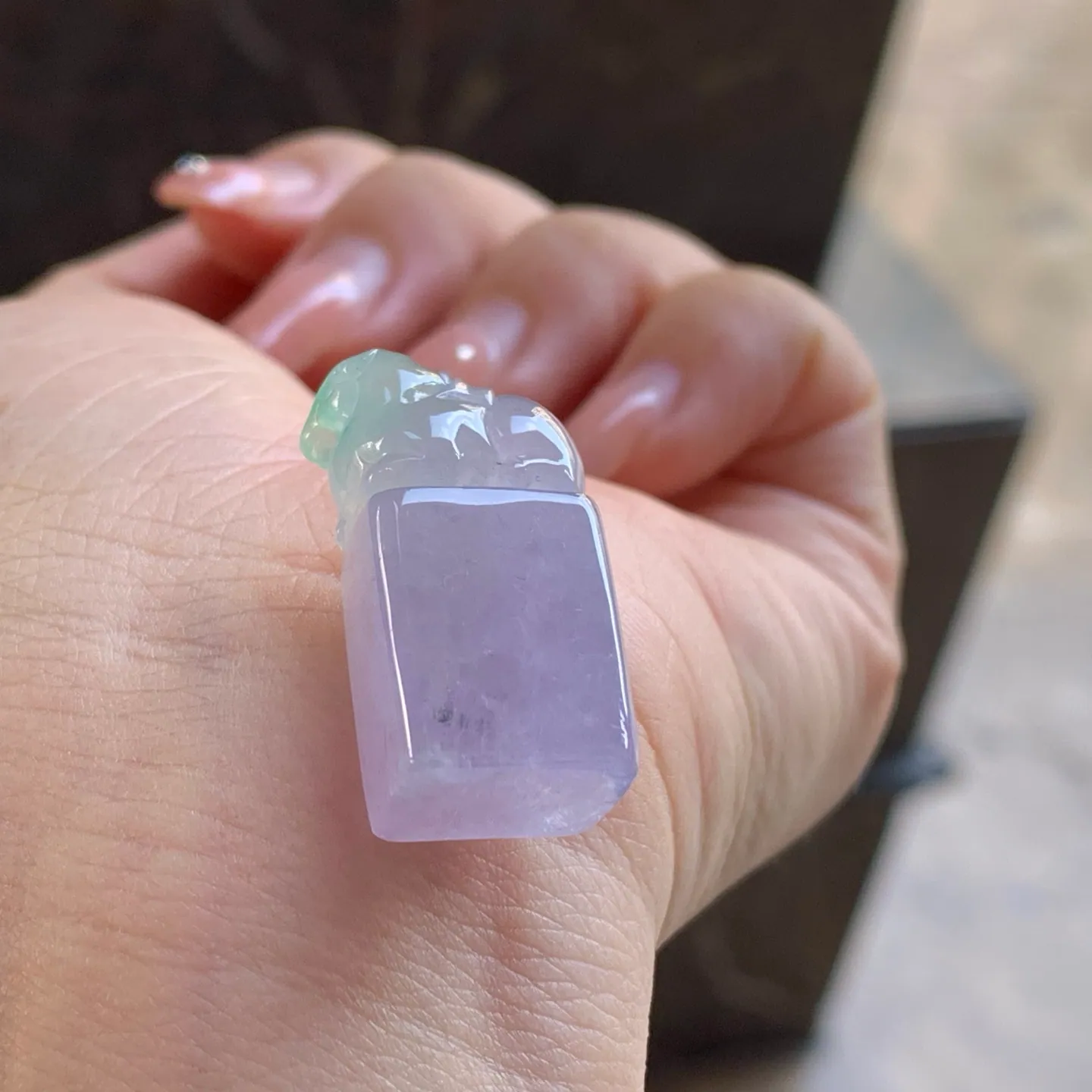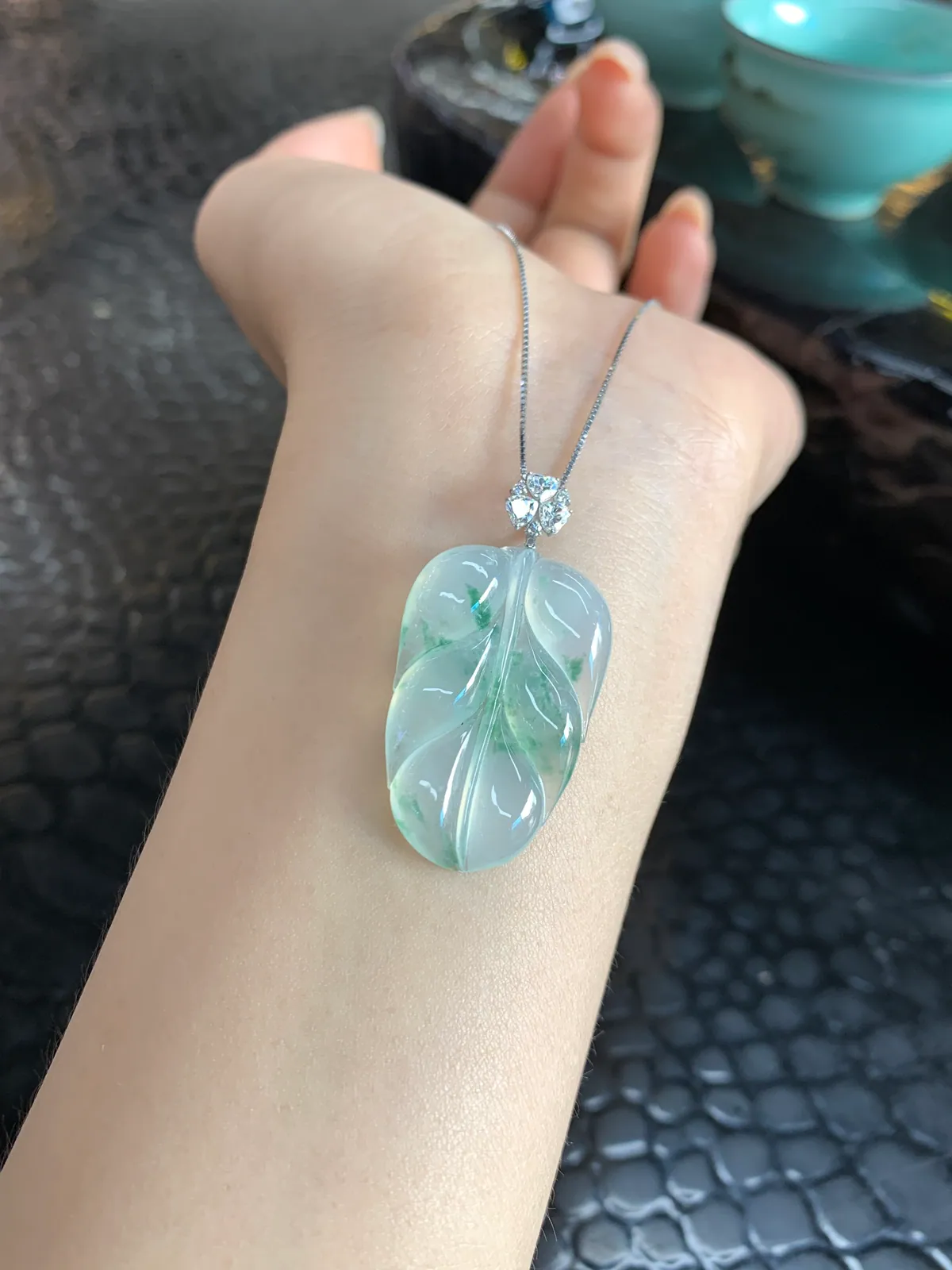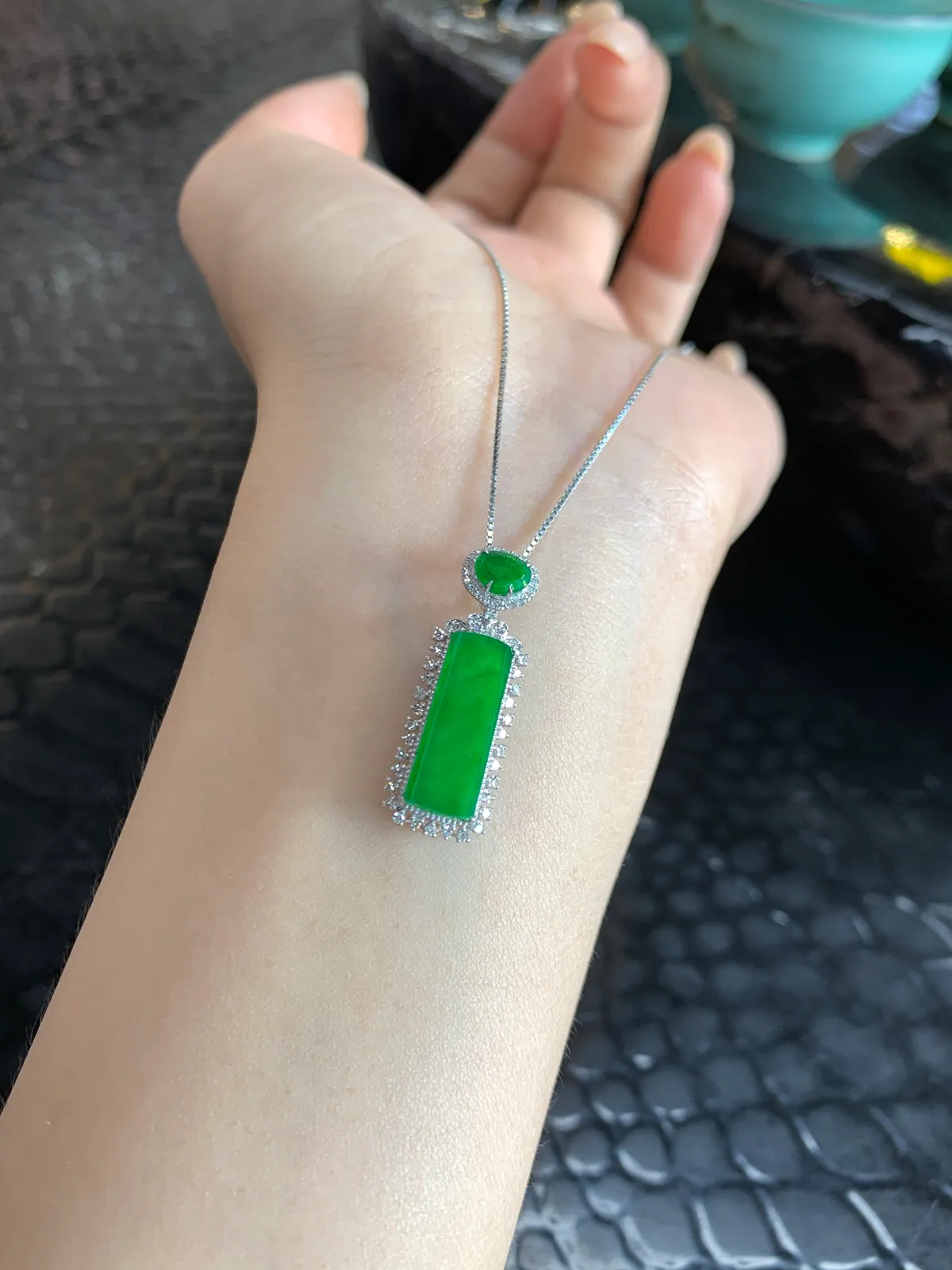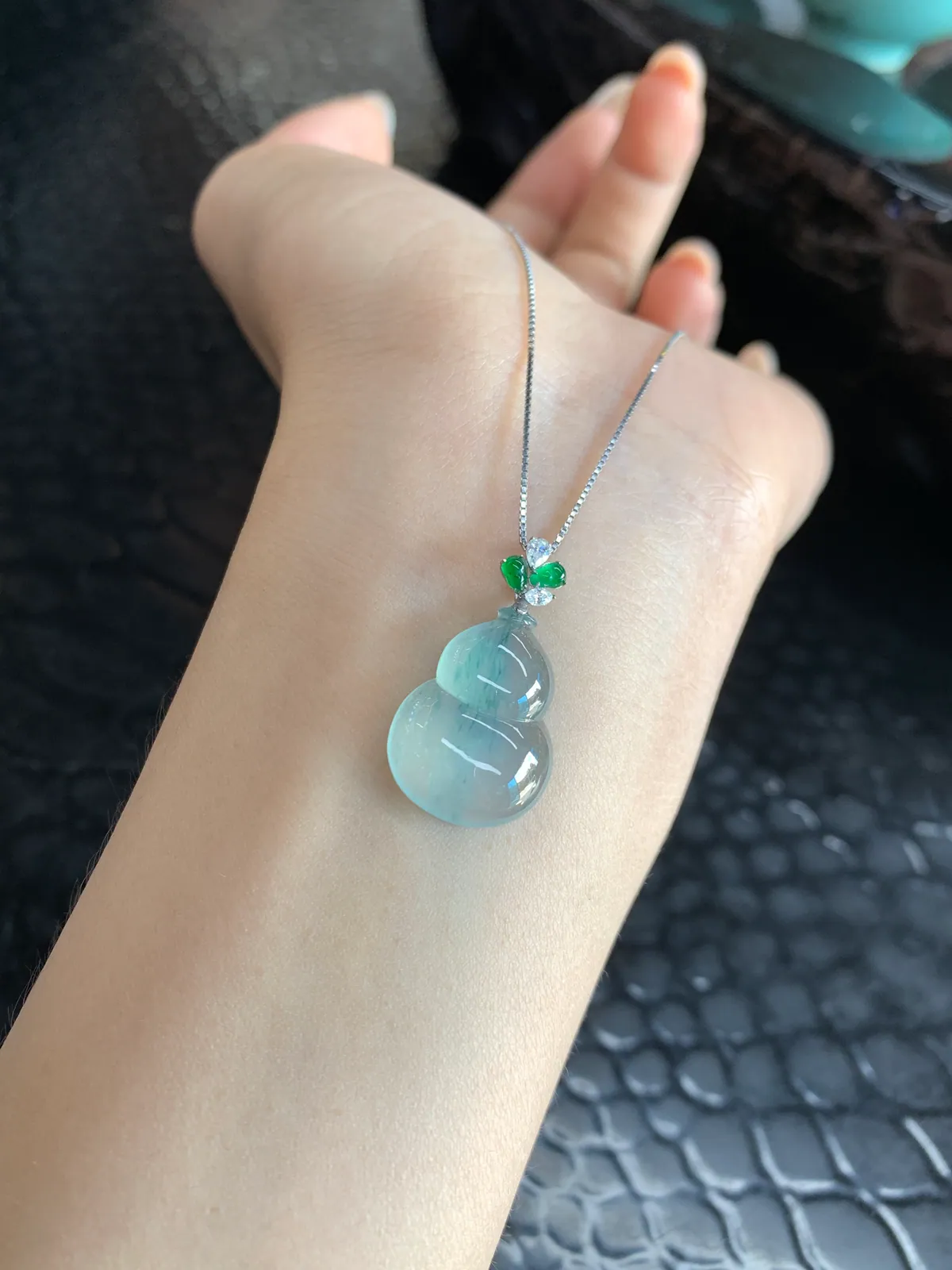
What Is a Gold-Wrapped Jade Bangle? Gold-Set Jadeite
Updated
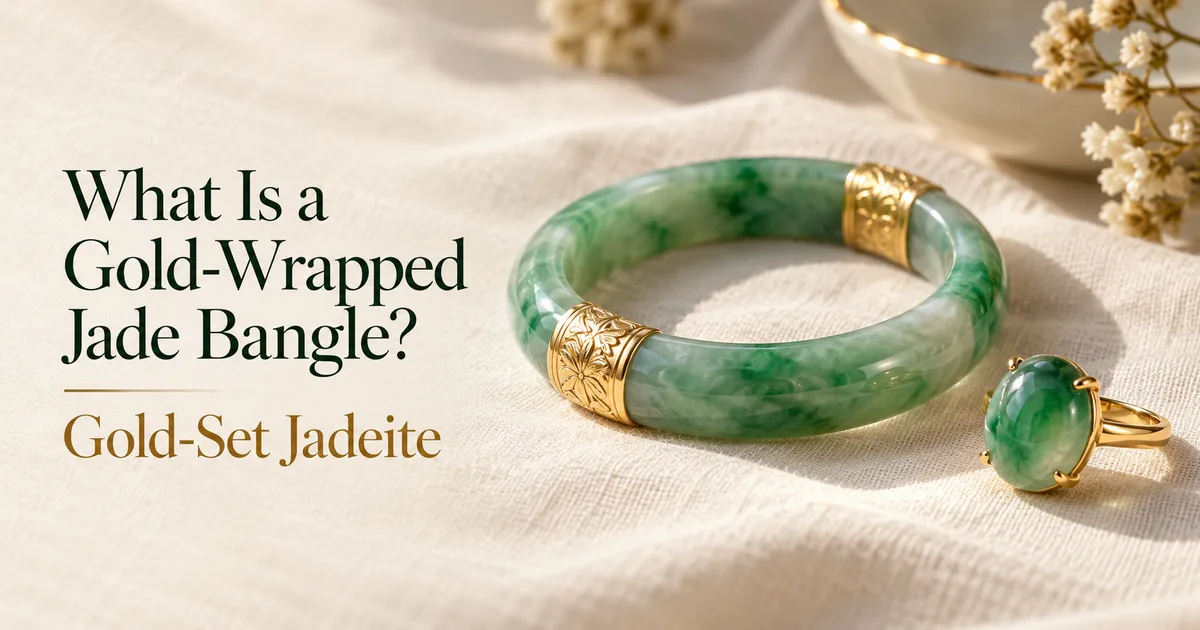
A gold-wrapped jade bangle is a jadeite bangle with sections covered in gold, either for decoration or to hold a crack together. Gold-set jadeite also includes rings and pendants in prong or bezel settings, gold caps and bails, and hinged bangles. 18K is the usual gold for settings, because 24K is soft and bends. Gold can hide cracks, chips and dyed areas, so ask why it is there and for photos without it. The certificate covers the jade, not the gold.
What is gold-set or gold-wrapped jadeite?
A gold-wrapped jade bangle is a jadeite bangle with one or more sections covered by a band of gold, added either as decoration or to hold a crack together. Gold-set jadeite is the wider term: any jadeite held in gold, from a cabochon ring to a pendant with a gold bail.
You will see several names for the same idea:
| Term | Where you see it | What it usually means |
|---|---|---|
| Gold-set, set in gold (镶金, 镶嵌) | Rings, pendants, earrings | A jadeite stone held by a gold mount |
| Gold-wrapped, gold-capped (包金) | Bangles, pendants | A gold band or cap fitted around part of the jade |
| Gold inlaid with jade (金镶玉) | Bangles, pendants, ornaments | Jade and gold combined in one design; often used loosely for any gold-and-jade piece |
| Bọc vàng (Vietnamese) | Bangles, pendants, rings | Gold-wrapped or gold-set jade |
| เลี่ยมทอง (Thai) | Pendants, bangles, rings | Jade framed or wrapped in gold |
What kinds of gold settings are there?
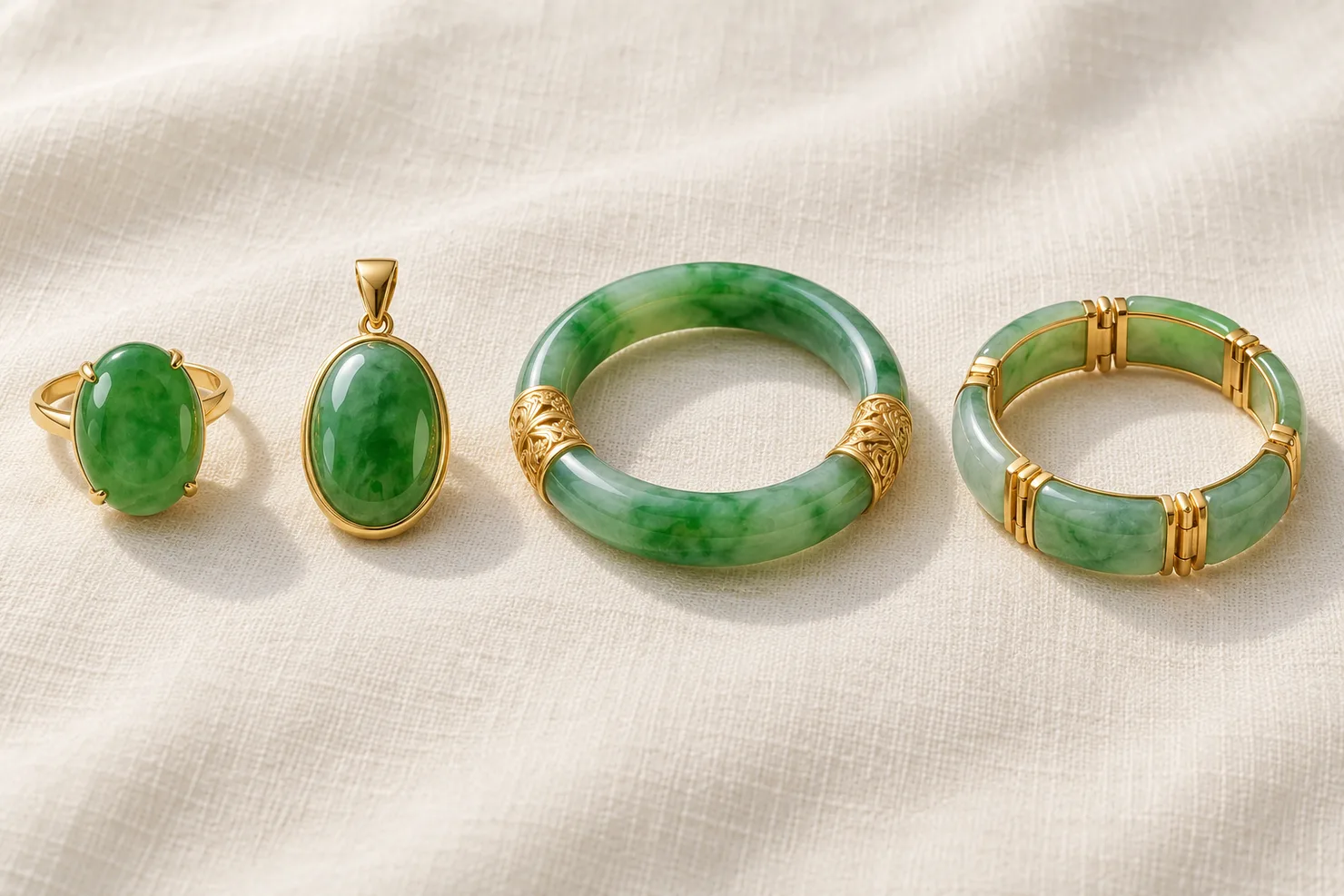
| Setting | Used on | What the gold does | What it can hide |
|---|---|---|---|
| Prong setting (爪镶) | Cabochon rings and earrings | Small claws hold the stone; the sides and back stay visible | Chips under a prong |
| Bezel setting (包镶) | Pendants, rings | A gold rim surrounds the edge of the stone | Chips and cracks at the edge |
| Closed back | Rings and pendants with thin stones | Metal under the stone protects it | The whole underside; a foil or colored backing can make the stone look greener and brighter |
| Gold cap and bail | Carved pendants | A gold top with a loop for the chain, so no hole is drilled | A drill hole, a chip or a crack at the top |
| Decorative wrap (包金镯) | Bangles | One or more gold bands as a design | Whatever lies under the band |
| Repair wrap | Cracked or broken bangles | Gold bands bind a crack or join broken pieces | The crack itself |
| Hinged bangle | Bangles made of jade sections | Gold hinges and a clasp join the sections, so the bangle opens | Each joint between jade and gold |
A hinged bangle opens, so it suits people whose hand is too large for a solid bangle of the size they want. Because it is made of separate jade sections, judge each section on its own.
Wrapping a bangle in gold is an old way to save a cracked one, and done well it looks like a design choice. See cracked or broken jade bangle: what to do for the other options. The gold-capped style also appears in jadeite bangle styles.
Is 18K, 24K or 14K gold better for jadeite?
For most settings, 18K. Most gold-wrapped and gold-set jadeite is made in China, where 18K gold (stamped Au750 or G18K, 75% gold) is the usual choice. The higher the gold content, the softer the metal. Pure gold bends and scratches easily, so prongs can open and a thin wrap can dent.
| Metal | Gold content | Common marks | Durability | Typical use with jadeite |
|---|---|---|---|---|
| 24K (pure gold) | About 99.9% | 999, 9999, 足金 | Very soft; bends, dents and scratches | Simple wraps and caps where the gold is thick; not ideal for prongs |
| 22K | About 91.6% | 916, 22K | Soft | Traditional yellow-gold jewelry in some countries |
| 18K | 75% | 750, 18K, Au750 | Strong enough for prongs and thin bezels | The most common choice for good jadeite |
| 14K | 58.5% | 585, 14K | Harder, slightly paler yellow | Everyday and lower-priced pieces |
| White gold (18K or 14K) | 75% or 58.5% | 750 or 585 | As above; usually plated with rhodium | A white look; the plating wears and can be redone |
| Platinum | Usually 90–95% platinum | Pt900, Pt950 | Dense and hard-wearing | Fine rings and pendants |
| Silver | 92.5% silver | 925, S925 | Soft; tarnishes | Lower-priced pieces; sometimes gold-plated |
A few points that often come up:
- 18K vs 24K for a bangle wrap. A 24K wrap is a deeper yellow and contains more gold, but it is softer. Some workshops make thick 24K wraps, or use pure gold processed to be harder. An 18K wrap can be thinner and still keep its shape. Ask the jeweler which they use, and why.
- White gold vs silver. They can look alike. White gold is a gold alloy; silver is a different, softer metal that darkens over time. The mark tells you which it is.
- Gold-plated silver looks like gold but is not. Check the mark, not the color.
Can a gold wrap or setting hide a crack?
Yes. This is the most important thing to know before you buy gold-set jadeite. Gold is opaque, so whatever sits under it, a crack, a chip, a glued repair or a dyed patch, cannot be seen.
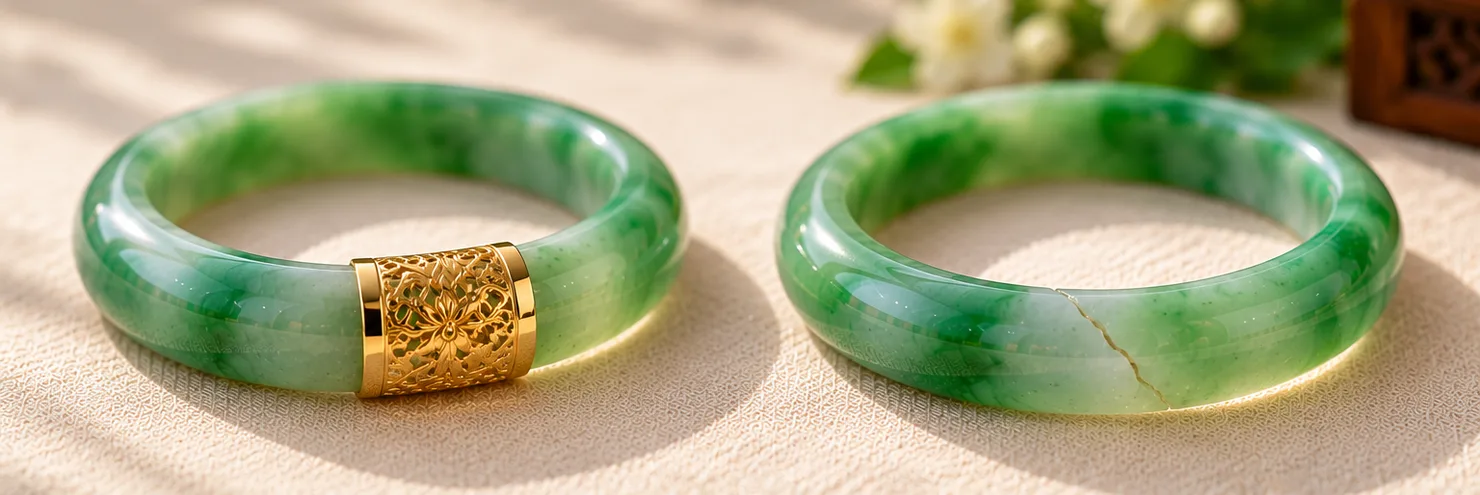
Gold does not mean there is a problem. Many wraps are pure decoration on a sound bangle, and many cabochons are set in a bezel simply because it looks good. But you should know which case you are buying.
Before you buy:
- Ask why the gold is there. Decoration or repair? Ask the seller to say it in writing.
- Ask for photos taken before setting or without the wrap, if they exist. For a new piece, a workshop may have them.
- Ask whether the wrap covers a crack, a break, a chip or glue. A bangle that was broken and joined with gold is a repaired bangle.
- Shine a flashlight on both sides of each gold section. A line that runs up to the gold on one side and continues on the other side is a warning sign.
- Look at the back of rings and pendants. With a closed back, ask how thick the stone is and whether there is a foil or colored backing. The jadeite ring guide explains open and closed backs.
- Watch for color that stops at the gold. Green that is strongest right next to a setting can be dye. See how to spot treated jadeite.
- Check that the certificate photo matches the piece, including the shape and position of the gold.
Does the certificate cover the gold?
No. A jadeite certificate identifies the stone: that it is jadeite, and whether it is natural or treated. For a set piece, the lab can only examine what it can see, and the weight given is often the total weight, metal included. Some reports mention the metal, but that is not a full test of its purity.
So ask about the gold separately:
- The purity mark (hallmark), such as 750 or 18K, stamped inside the band, on the clasp or on the bail.
- The gold weight, written on the receipt or invoice, separate from the jade.
- Who made the wrap, and whether it can be removed later.
See how to verify a jadeite certificate for checking the report itself.
Does gold add value or lower it?
Both are possible, and they should be valued separately.
| Situation | Effect on value |
|---|---|
| Solid gold in the setting or wrap | Adds metal value, which depends on its weight and purity |
| Fine workmanship | Adds to the price of the finished piece, but is hard to recover if you sell |
| Decorative wrap on a sound bangle | The jade is valued as it is; ask for proof that it is sound |
| Wrap over a crack or a break | The bangle is valued as a cracked or repaired bangle, which is much lower |
| Thin stone over a closed back | The stone may be worth less than it looks when set |
In most good pieces, the price depends mainly on the jade: its color, translucency, texture and size. See what determines jadeite price.
How do I clean and care for gold-set jadeite?
- Wash in lukewarm water with a drop of mild soap, using a soft brush around prongs, bails and the edges of wraps, where dirt collects.
- Dry carefully. Water and soap can sit under a wrap or behind a closed back. Pat dry and let the piece air-dry before storing it.
- No ultrasonic or steam cleaners. Vibration and heat can loosen settings and widen existing cracks.
- Keep chemicals away. Chlorine in pools and hot springs, bleach and household cleaners can damage gold alloys and the polish of the stone. Remove the piece before swimming or cleaning.
- Do not use silver dip or metal polish near the jade. Polish the metal with a jewelry cloth only.
- Check prongs, hinges and clasps every few months, and have a jeweler tighten anything loose. White gold may need replating from time to time.
More tips are in how to care for jadeite jewelry.
On JadeiteHub, listings use real photos from the seller, and some include video. Every sold piece is checked against its certificate before it ships, travels with insured shipping, and is fully refunded if it does not match the description.
FAQ
Is 18K or 24K gold better for a jade bangle?
For most settings and wraps, 18K. It is harder, so prongs and thin wraps keep their shape. 24K is purer and a deeper yellow, but soft, so it bends and scratches unless the wrap is thick.
Can a cracked jade bangle be wrapped in gold?
Yes. A jeweler can fit gold bands over a crack, or join a broken bangle with gold. It holds the bangle together and can look attractive, but the bangle is still a cracked or repaired bangle, and that should be disclosed if it is ever sold.
Can a gold wrap be removed from a jade bangle?
Usually, by a jeweler. Removing it shows what is underneath, but it may leave marks, and a bangle that relied on the wrap to hold a crack may come apart.
Does a jadeite certificate test the gold?
No. It identifies the jadeite and any treatment. For the gold, check the purity mark, such as 750 for 18K, and ask for the gold weight on the receipt.
Is a gold-wrapped jade bangle worth less?
Not if the wrap is decorative and the bangle is sound; the gold adds metal value. If the wrap covers a crack or a break, the bangle is worth much less than an undamaged one.