Oval Jade Bangle (Guifei): Sizing, Fit and Oval vs Round
Updated
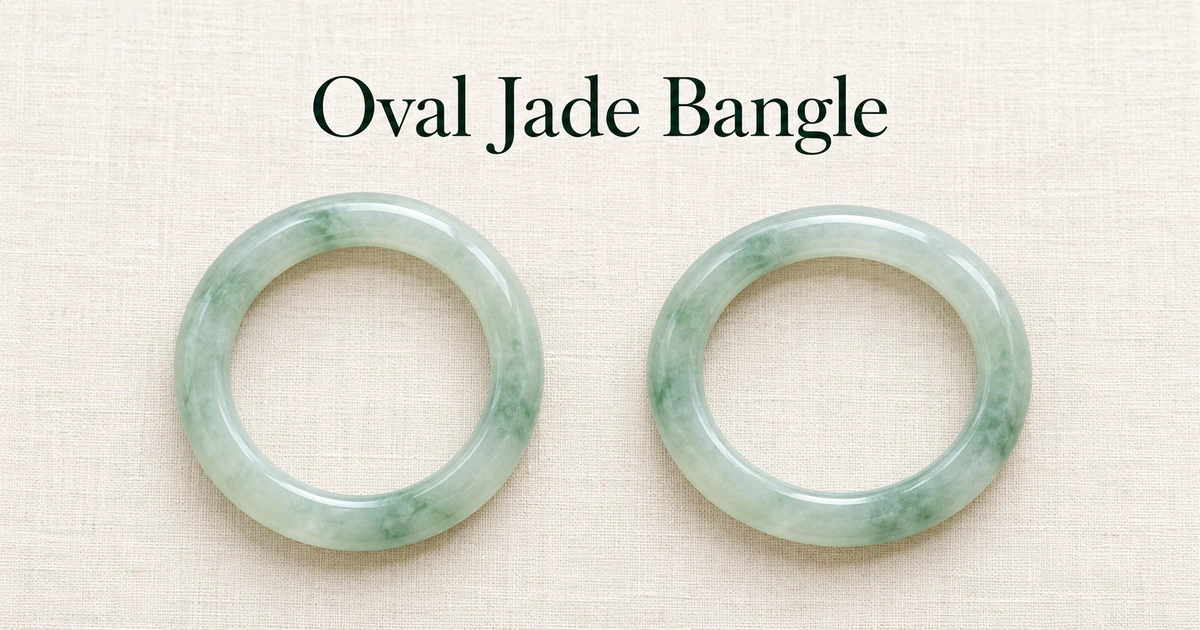
A guifei bangle (贵妃镯) is an oval jade bangle, usually flat on the inside. Because a wrist is flatter than it is round, an oval sits closer, turns less and knocks against things less than a round bangle. It is sized by two inner measurements, the long axis and the short axis, so ask for both. To compare it with a round size, square both axes, average them and take the square root: a 56 × 48 mm oval is about the same opening as a 52 mm round. Put it on with the long axis across the width of your hand. Choose by your round size, the short axis and how you like a bangle to sit.
What is a guifei (oval) jade bangle?
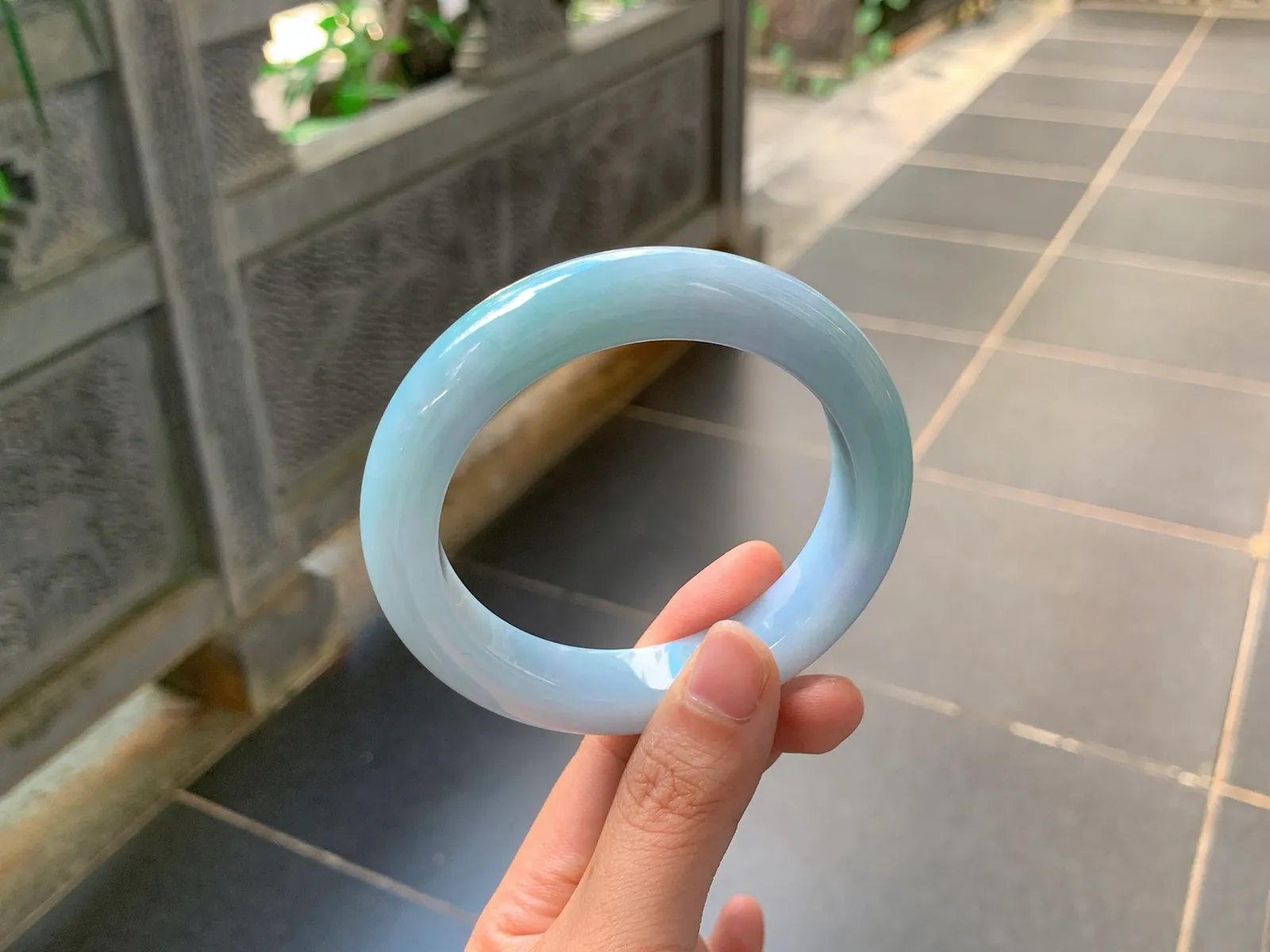
A guifei bangle (贵妃镯, gui fei zhuo) is a jade bangle that is oval rather than round when you look down on it. Most are flat on the inside and gently rounded on the outside, like the flat-inner "princess" bangle, only pressed into an oval. In English shops you will see it called an oval bangle, an oval jade bracelet or a guifei bangle; in Vietnamese it is usually vòng quý phi.
The idea behind the shape is simple. A wrist is not a circle. Seen in cross-section it is wider from side to side than it is from front to back. A round bangle leaves gaps above and below the wrist and spins freely; an oval follows the wrist, so it sits closer, turns less and is less likely to knock against a desk or a door frame.
贵妃 (guifei) was a high rank of imperial consort in the Chinese palace. You will often read that the bangle is named after Yang Guifei (杨贵妃), the famous Tang-dynasty consort, but that is a popular story, not something written down at the time. Treat the name as a trade name for the shape.
This guide covers what is specific to the oval: how it is measured, how to compare it with your round size, how to put it on, and when to choose it over a round bangle. For all bangle styles side by side, see jadeite bangle styles; for measuring your hand, see how to choose a jadeite bangle size.
How is an oval bangle different from a round one?
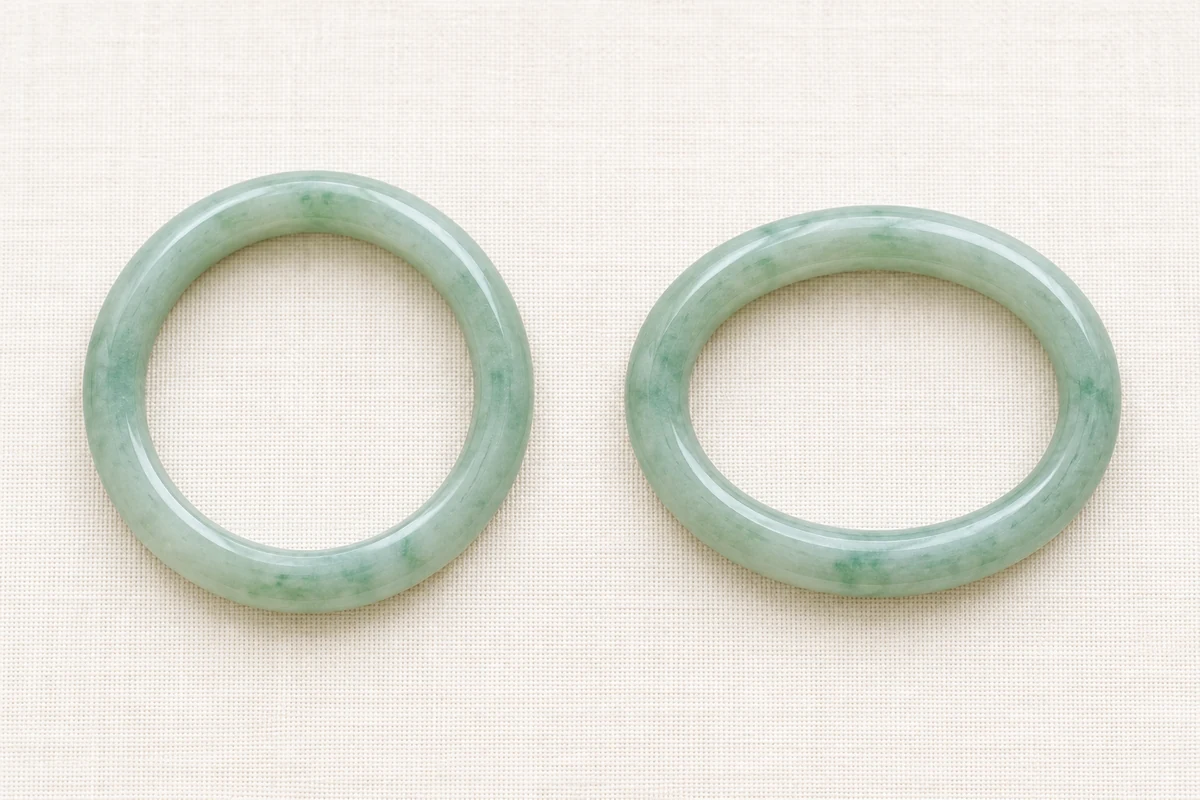
| Round bangle | Oval (guifei) bangle | |
|---|---|---|
| Shape from above | A circle | An oval |
| Inside profile | Round (圆条) or flat (正装) | Almost always flat |
| How it is sized | One inner diameter | Two inner axes: long × short |
| On the wrist | Moves and turns freely | Sits closer, turns less |
| Daily wear | Can knock against desks and keyboards | Less movement, often easier when typing |
| Putting it on | Any angle | Long axis across the hand |
| Choice on the market | Most bangles are round | Far fewer, so less choice in color and size |
| Price | Set by the material | Set by the material, the same way |
The last line matters. The shape does not make a bangle more or less valuable; texture, color, cleanliness and size do. For what drives the price of any bangle, see jade bangle price.
How is an oval jade bangle measured?
An oval bangle has two inner measurements, both taken across the opening on the inside of the band:
- Long axis (长径): the widest inside measurement, from end to end of the oval.
- Short axis (短径): the narrowest inside measurement, at right angles to the long axis.
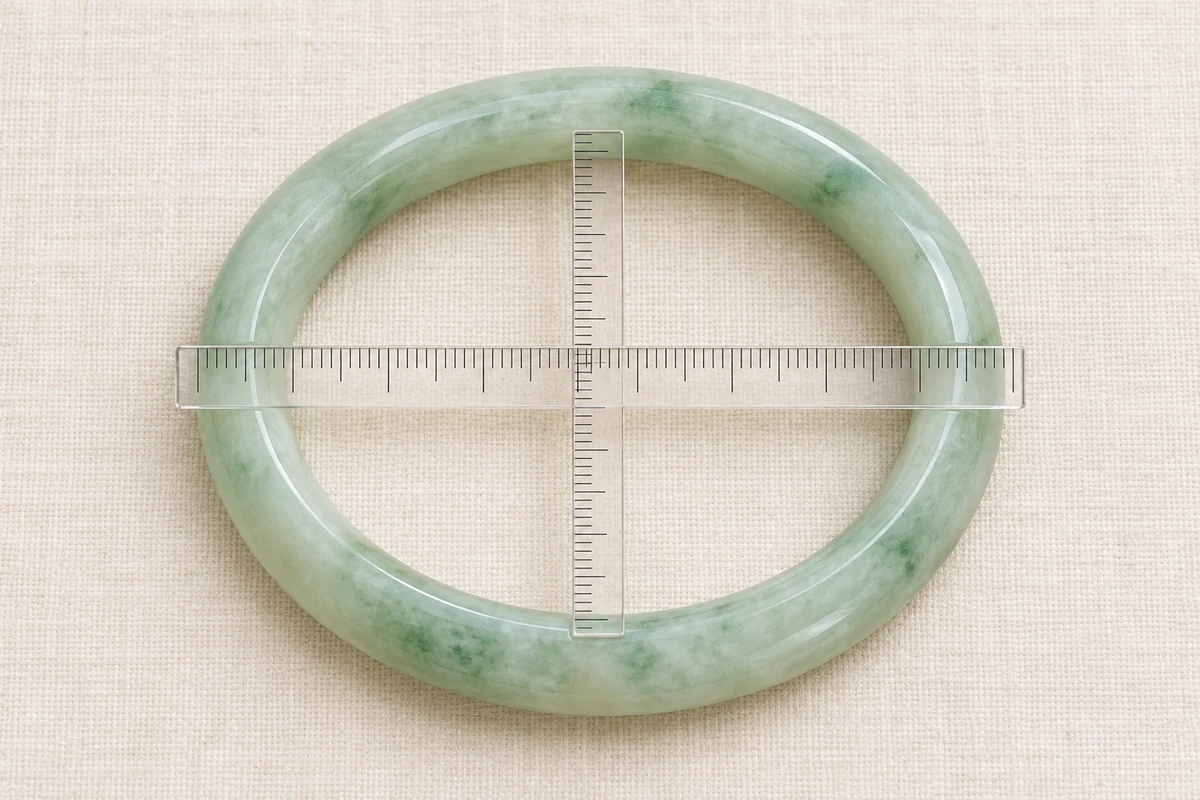
A full listing gives both, written as long × short, for example "56 × 48 mm". Band width and band thickness are given the same way as for a round bangle.
Watch out for single-figure listings. Some sellers label an oval bangle with one number only, for example "oval, 54". That number does not always mean the same thing: it may be the long axis, the short axis or the seller's own idea of a matching round size. Before you buy, ask the seller for both inner axes. At JadeiteHub, our oval bangles are currently listed with one inner figure, so ask us for both axes before you reserve one (see the table below).
How do I find my oval bangle size from my round size?
Start from your round size. If you already have a round bangle that fits, measure straight across its inside opening; if not, measure your hand as described in how to choose a jadeite bangle size.
Then work out the round equivalent of the oval you are looking at. Its inside perimeter is close to that of a round bangle with this diameter:
Round equivalent ≈ √((long² + short²) ÷ 2)
In words: square the long axis, square the short axis, add them, divide by 2 and take the square root. Some examples:
| Oval (long × short, mm) | Round equivalent (mm) |
|---|---|
| 54 × 46 | about 50 |
| 55 × 48 | about 52 |
| 56 × 48 | about 52 |
| 57 × 50 | about 54 |
| 58 × 51 | about 55 |
| 60 × 53 | about 57 |
How to use the number:
- Aim for a round equivalent close to your round size. If a 54 mm round fits you, an oval around 57 × 50 is a good place to start.
- Some people can go a little smaller. When you squeeze your hand to slip a bangle on, it becomes an oval itself, and an oval opening matches it. People with soft, flexible hands sometimes wear an oval whose round equivalent is 1–2 mm below their round size. Bony knuckles usually need the same size.
- Then check the short axis. The short axis is what sits against the top and bottom of your wrist. If it is much smaller than the front-to-back depth of your wrist plus a little room, the bangle will feel tight even if it goes on.
- Avoid very stretched ovals. When the two axes are far apart, the bangle can sit badly and turn so that its narrow side lies across the wrist, which defeats the point of an oval. A moderate difference between the axes is easier to wear.
The formula is geometry, not a fit guarantee. Hands compress differently, so treat the result as a starting point and, if you can, try an oval on before buying, or ask the seller for a photo of it on a hand of known size.
How do you put on and take off an oval bangle?
The one rule: line the long axis up with the width of your hand, from the thumb side to the little-finger side.
- Hold the bangle so the long axis runs across your hand, not up and down.
- Fold your thumb in toward your little finger, as for any bangle.
- Rub a little soap or hand lotion on your hand, or slip a thin plastic bag over it first.
- Ease the bangle over the knuckles with a gentle rocking motion, working over a bed or a folded towel.
- Once it is on, turn it so the long axis lies along the width of your wrist. It will then stay there.
Take it off the same way: long axis across the hand, thumb tucked, a little soap. If it will not go over the knuckles without real force, it is too small; do not force it. For a bangle that is already stuck, see stuck jade bangle.
Who should choose an oval bangle, and who a round one?
An oval is a good choice if you:
- want a bangle that stays in place rather than sliding around;
- type or write a lot, and a moving bangle bothers you on the desk;
- have a slim or flat wrist, where a round bangle leaves a large gap;
- like the look of a bangle that hugs the wrist.
A round bangle may suit you better if you:
- like a bangle that moves and turns on the wrist;
- want the widest choice of colors, textures and sizes;
- want the simplest sizing, with one number;
- have a round, thick wrist, where an oval's advantage is smaller.
Whichever hand you wear it on, the choice of shape does not change; see which hand to wear a jade bangle.
What should you check before buying an oval bangle?
The checks are the same as for any jadeite bangle, plus the sizing details above.
- Both inner axes, the band width and the band thickness, in millimeters.
- The band all the way round. An oval has tighter curves at its two ends; check those areas carefully for cracks by shining a small flashlight through the band and turning it slowly. A line that cuts the light sharply is a crack. See jadeite cotton and cracks.
- Photos in daylight, including the inside surface. See how to judge jadeite from online photos.
- A certificate that names the material as natural jadeite (翡翠) and matches the bangle's size and weight. See how to verify a jadeite certificate.
Oval bangles cannot be resized, and turning a round bangle into an oval is not possible either; the shape is cut from the stone.
Which oval bangles are on sale at JadeiteHub?
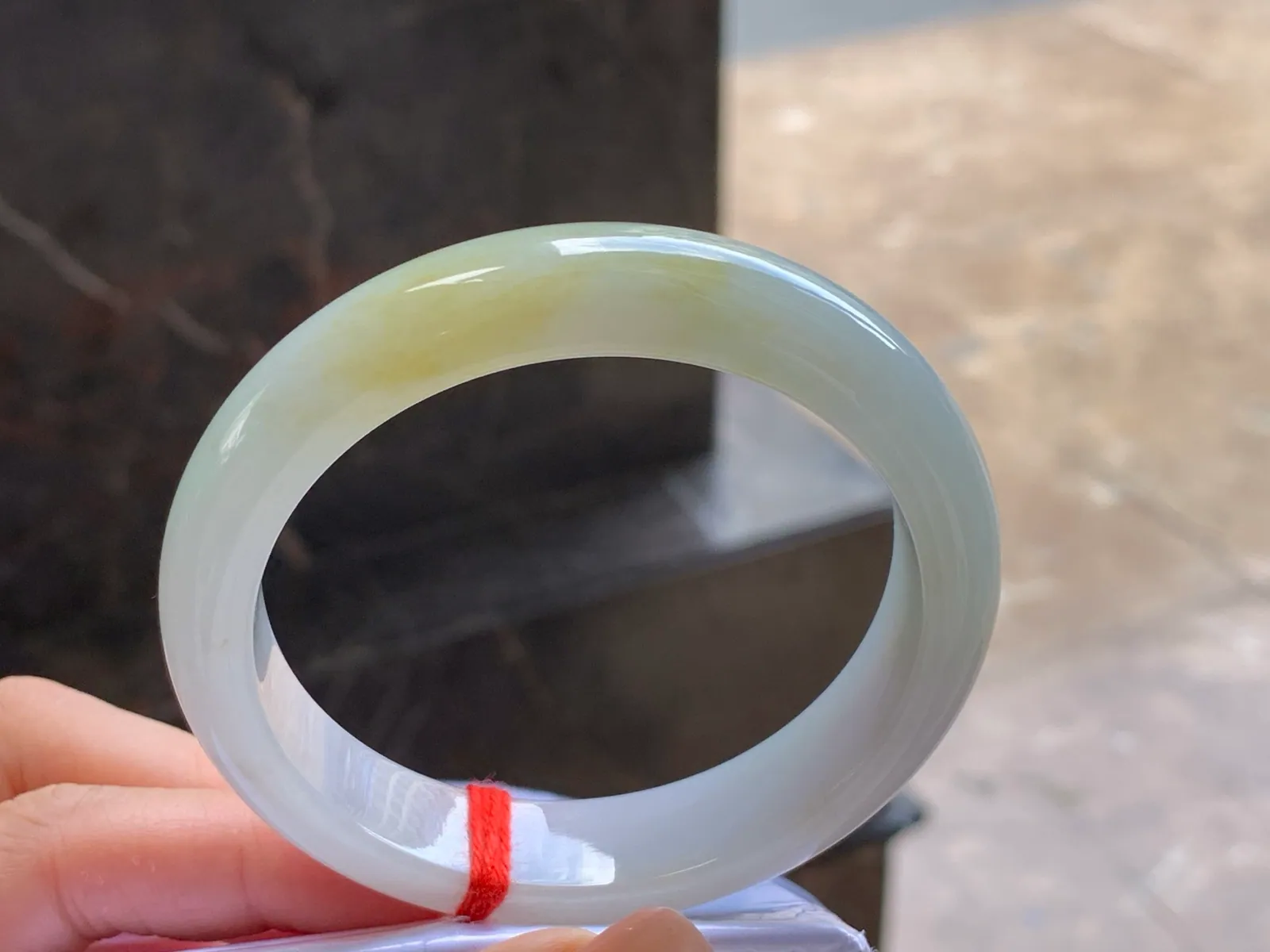
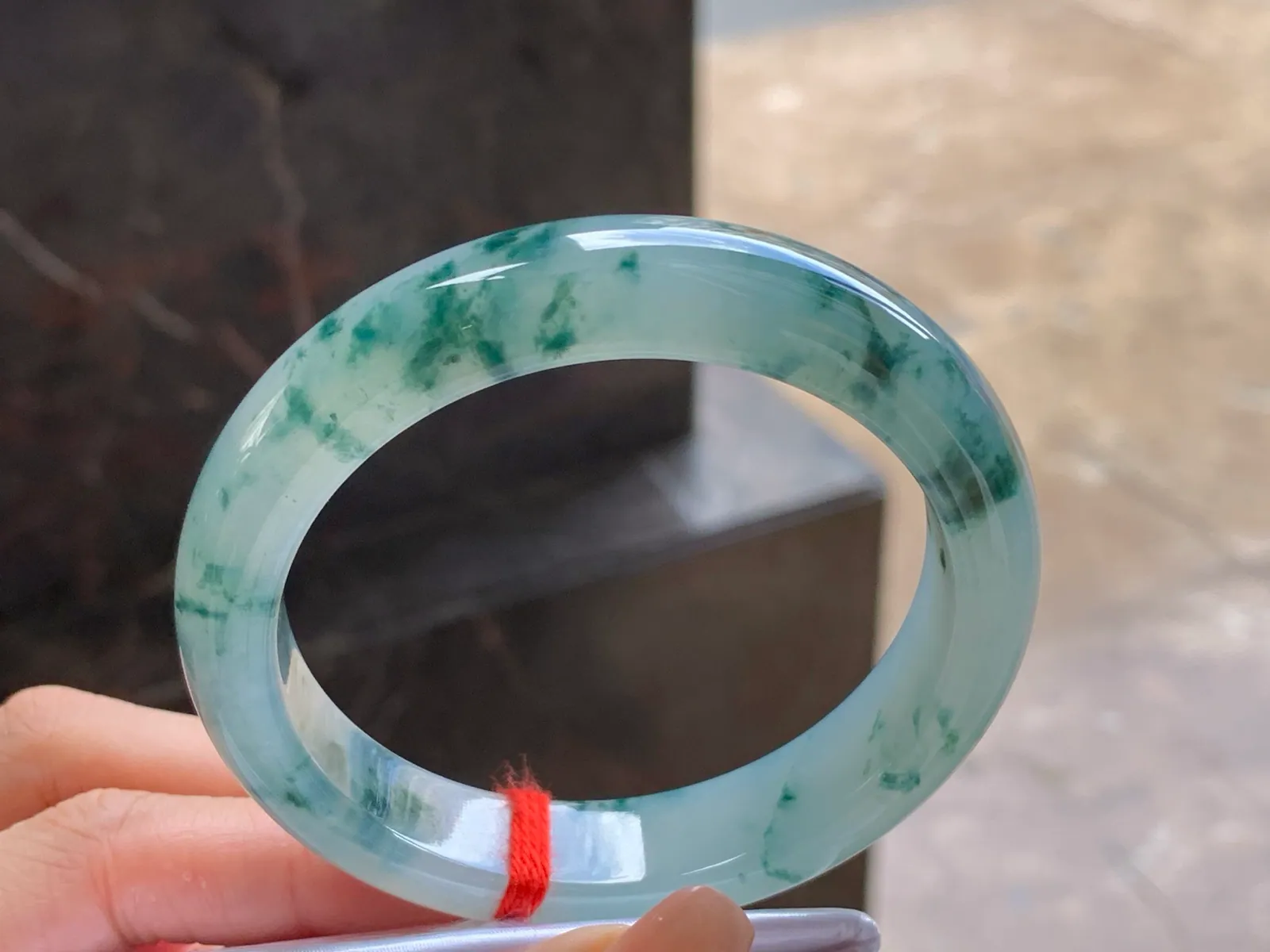
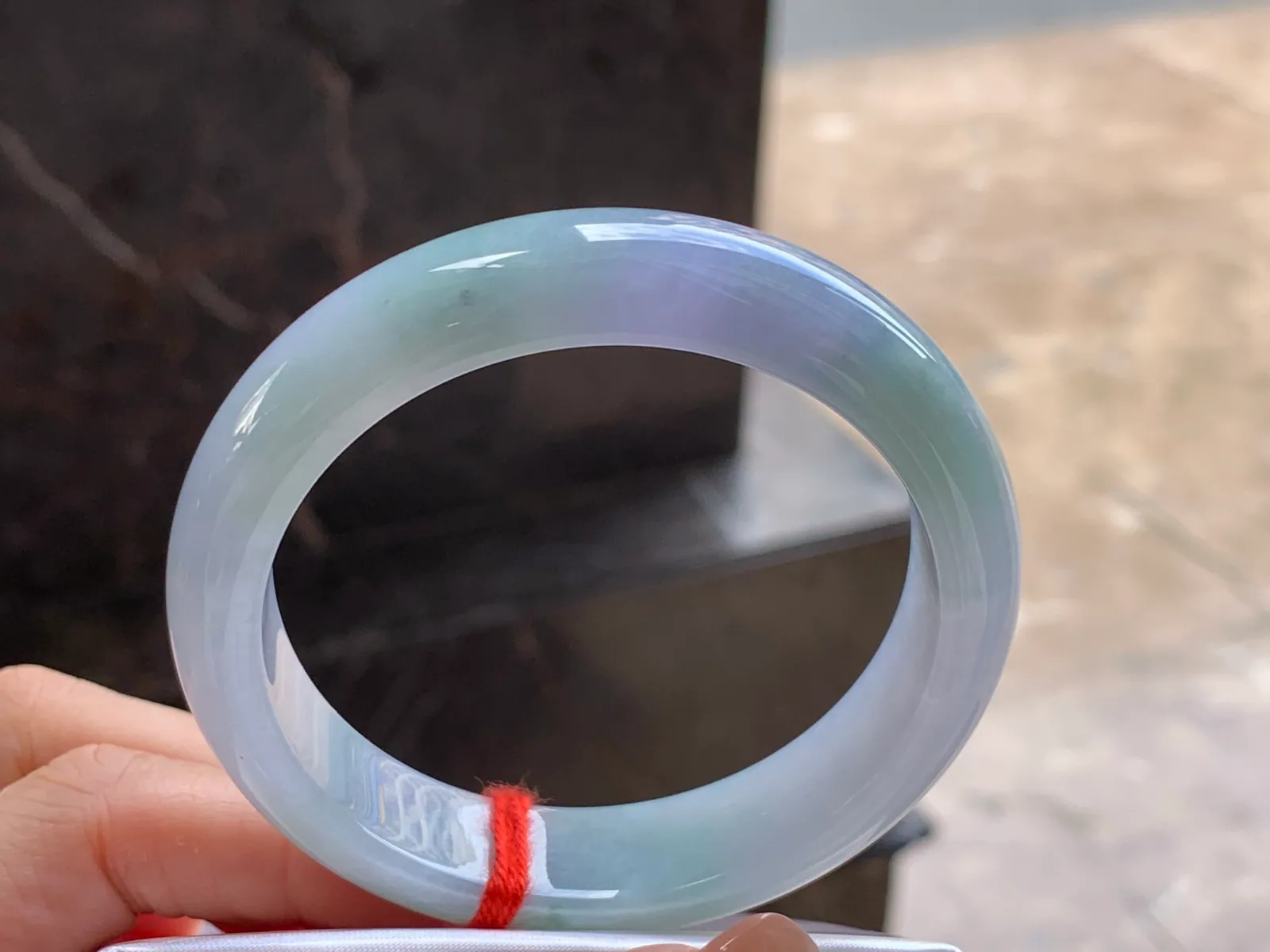
Three right now. All are certified natural Type A jadeite. Prices are as of 27 October 2026 and may change. Each is listed with one inner figure, so ask us for both inner axes before you reserve one.
| Listing | Texture and color | Listed inner size | Band width × thickness | Price |
|---|---|---|---|---|
| JH-000056 | Icy, pale blue-green (淡晴水) | 53.2 mm | 12.1 × 7.7 mm | US$8,969 |
| JH-000020 | Icy-glutinous, lavender with green (春带彩) | 54 mm | 12.3 × 8.1 mm | US$9,659 |
| JH-000140 | Icy-glutinous, vivid green (辣绿) | 53.2 mm | 12.8 × 7.3 mm | US$12,959 |
For what icy and icy-glutinous mean, see icy jadeite and glutinous jadeite; for lavender with green, see Fu Lu Shou jade. To compare with round bangles, browse all JadeiteHub bangles.
Every piece on JadeiteHub is certified natural Type A jadeite and ships with its own certificate from an accredited Chinese national gem lab (国检). If it does not match its description, you get a full refund.
FAQ
What is a guifei bangle?
A guifei bangle (贵妃镯, gui fei zhuo) is an oval jade bangle, usually flat on the inside. It follows the shape of the wrist, so it sits closer and turns less than a round bangle. 贵妃 was a rank of imperial consort.
How do I convert an oval bangle size to a round size?
Square the long and short axes, add them, divide by 2 and take the square root. A 56 × 48 mm oval gives about 52 mm, so its opening is close to a 52 mm round bangle. It is a starting point, not a fit guarantee.
Should an oval bangle be bigger or smaller than my round size?
Start with an oval whose round equivalent is close to your round size. Because the oval matches the shape of a squeezed hand, some people with soft hands can go a little smaller; bony knuckles may need the same size or larger.
Why does an oval bangle listing show only one size?
Some sellers label oval bangles with a single figure, and it does not always mean the same axis. Ask the seller for both the long and the short inner axis before you buy.
Is an oval bangle harder to put on?
Only if you hold it the wrong way. Turn the long axis across the width of your hand, tuck your thumb in, and use soap or a thin plastic bag, the same as for a round bangle. Take it off the same way.
Is an oval jade bangle better than a round one?
Neither is better; they wear differently. An oval suits people who want a bangle that stays put, such as when typing. A round bangle is easier to size, more common and moves freely, which some people prefer.