How Much Is a Jade Bangle Worth? Real Prices Explained
Updated
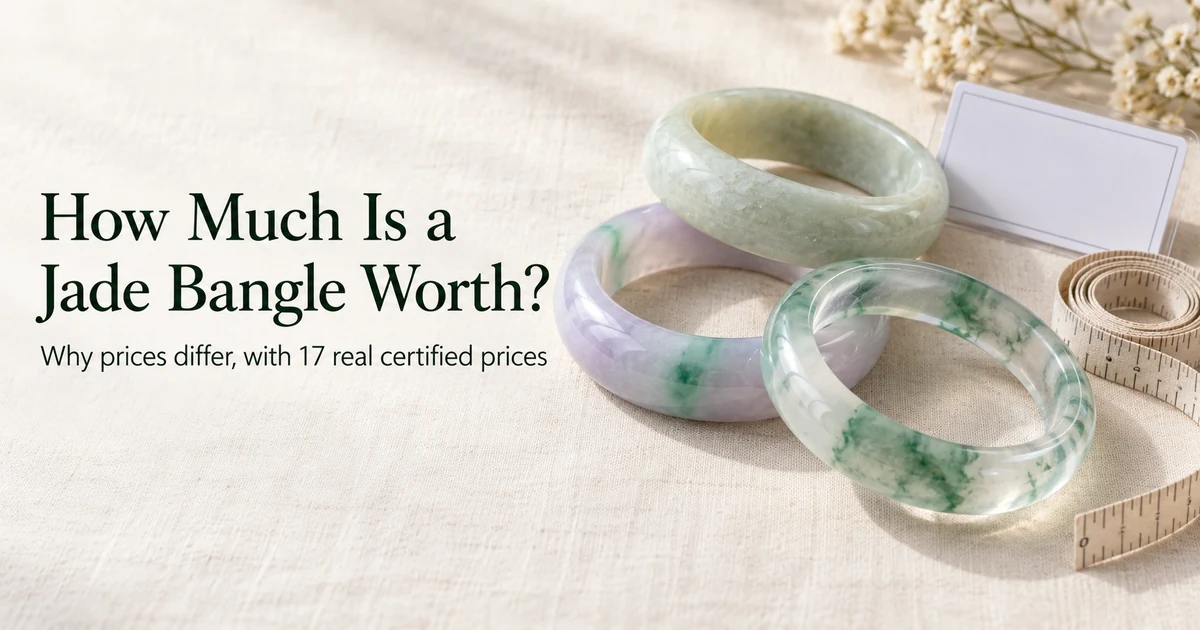
There is no price list for jade bangles. Two certified, untreated (Type A) green bangles can differ in price many times over, because texture, color, flaws, size and style are judged piece by piece. Finished jadeite is not priced by the gram or carat. As of 21 October 2026, JadeiteHub's 17 listed certified Type A bangles range from US$4,319 to US$20,579; in that set, texture and color move the price far more than size. A bangle priced far below comparable certified pieces is most often treated jadeite, another stone or very low-grade material, so ask for a certificate first.
How much is a jade bangle worth?
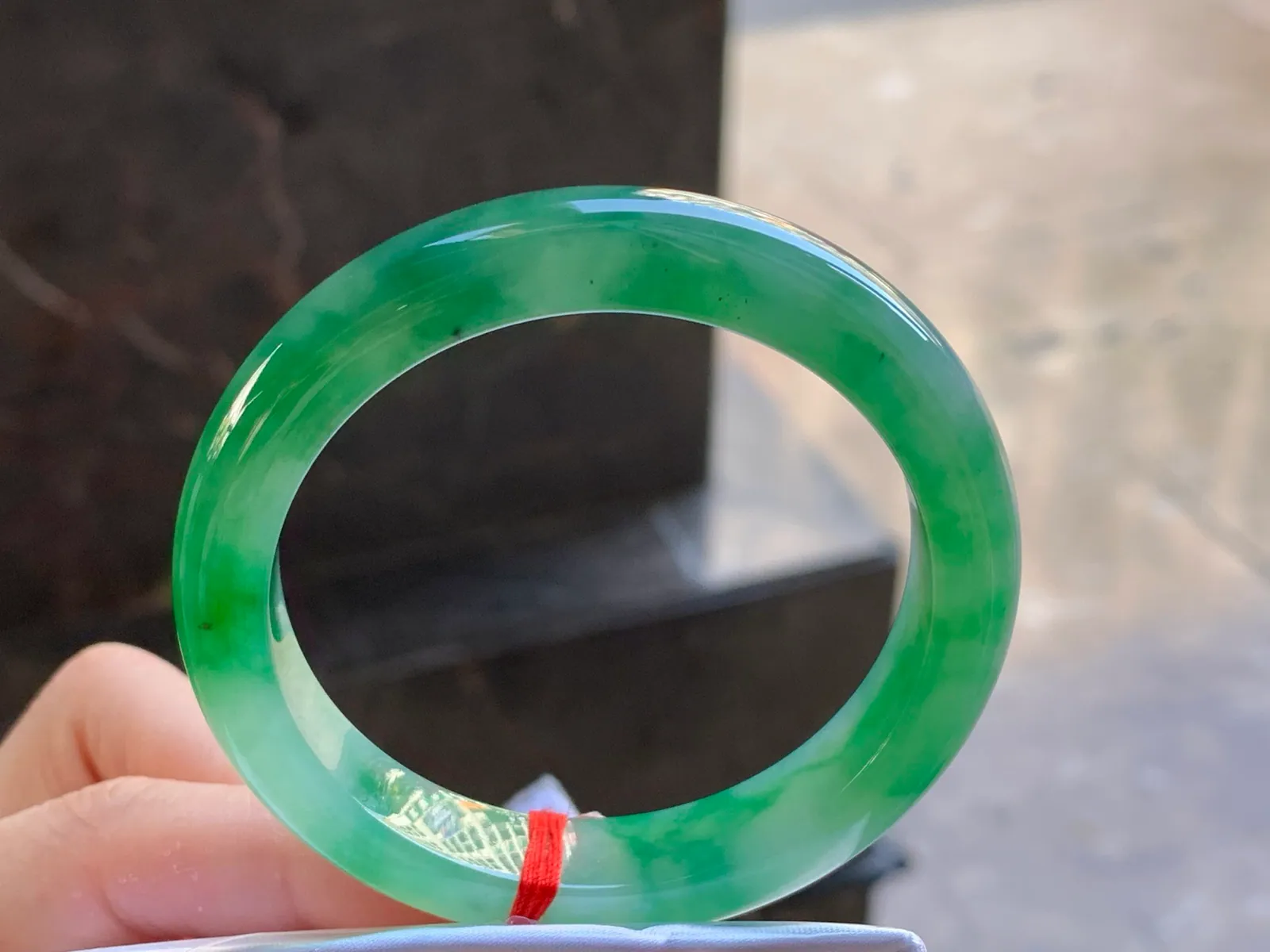
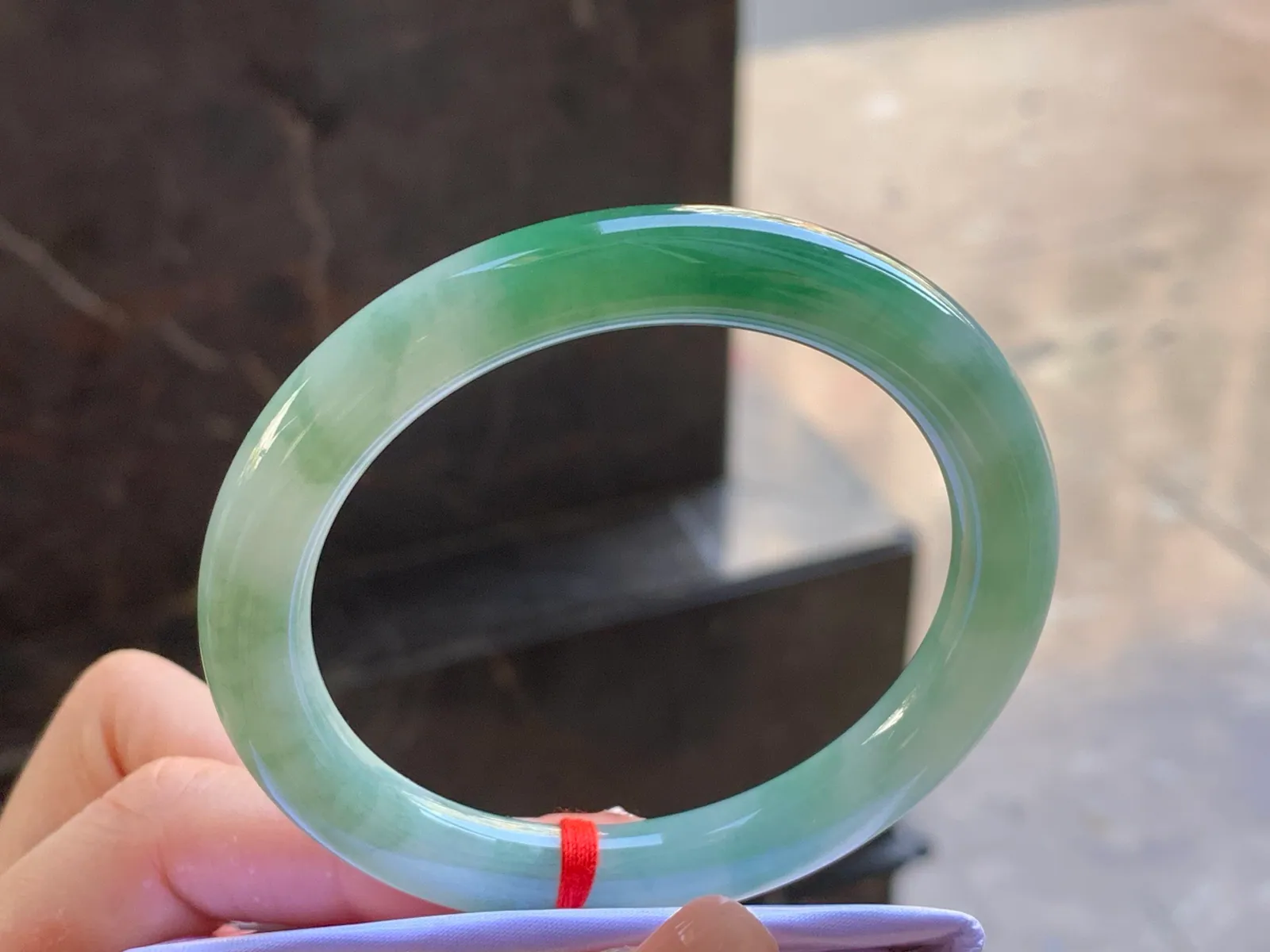
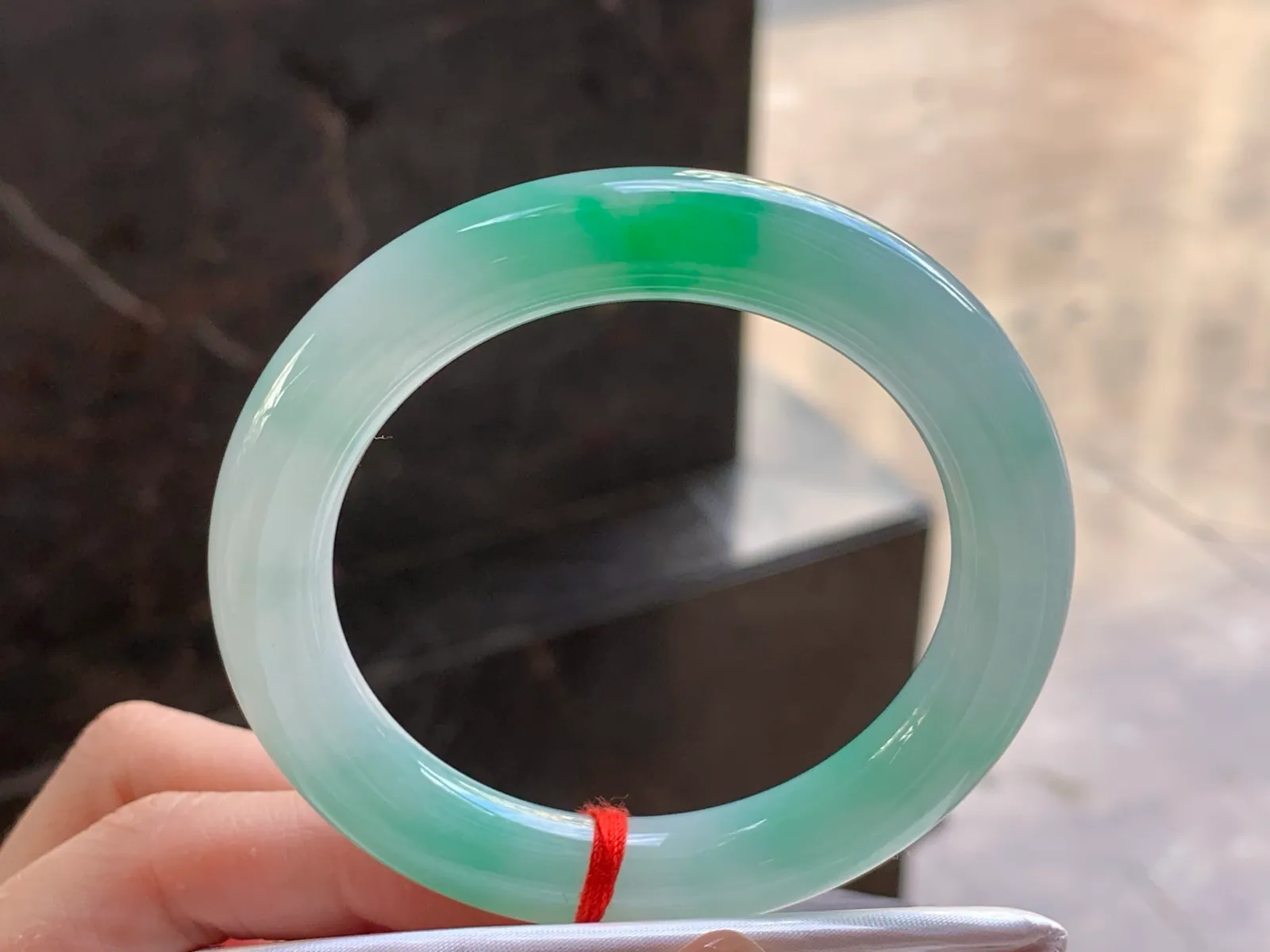
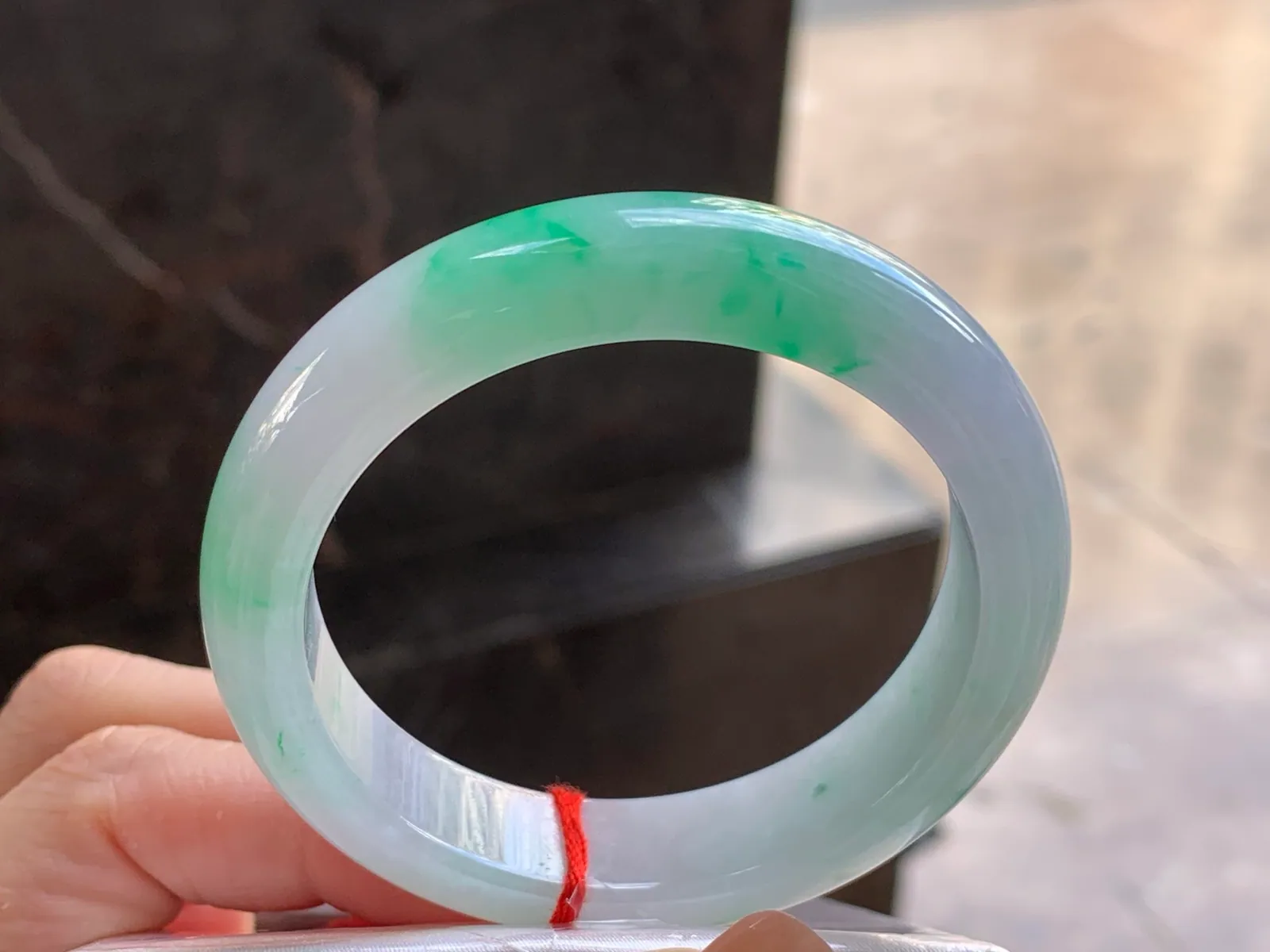
A real jade bangle can cost anything from a modest amount to a fortune, and no honest dealer can give you one number. "Jade bangle" covers jadeite and nephrite, untreated and treated stone, grainy opaque material and glass-clear material. Even inside the narrowest category, certified untreated (Type A) jadeite with some green, the plainest and the finest bangles can differ many times over.
What we can give you is real data: as of 21 October 2026, the 17 certified Type A jadeite bangles listed on JadeiteHub range from US$4,319 to US$20,579. The table further down shows what sits at each end, and why. This article is specific to bangles; for the general factors behind any jadeite price, see what determines jadeite price.
Why is there no price list for jade bangles?
Because every bangle is cut from a different part of a different stone, and the things that set its price are judged by eye, one piece at a time. Diamonds have a shared grading scale that dealers map to price sheets. Jadeite has trade words, such as icy, glutinous and floating flower, but each word covers a wide range of quality.
Here is what moves a bangle's price most, roughly in the order dealers look:
| Factor | What dealers look at | Why it matters for a bangle |
|---|---|---|
| Treatment | Natural (Type A) or bleached, filled or dyed (Type B/C) | Treated bangles are worth a fraction of natural ones |
| Texture and translucency (种水) | How fine the grain is and how far light goes in: bean, glutinous, icy-glutinous, icy, glassy | Often the biggest single step in price; a bangle shows its texture all the way round |
| Color | Hue, intensity, evenness, and how much of the band it covers | A full ring of even green is far rarer than one patch of green |
| Flaws | Cracks (裂) versus stone lines (石纹), cotton, dark spots | A real crack cuts value sharply and is a breakage risk; a healed stone line matters much less |
| Size | Inner diameter, band width and thickness | A bangle needs one solid, crack-free block; bigger and chunkier means more material |
| Style | Round bar (圆条), flat inside (正装), oval (贵妃), slim | A round bar needs more material than a flat-inside bangle of the same inner size |
| Finish | Even thickness, roundness, polish | Poorly balanced or lumpy bangles sell for less |
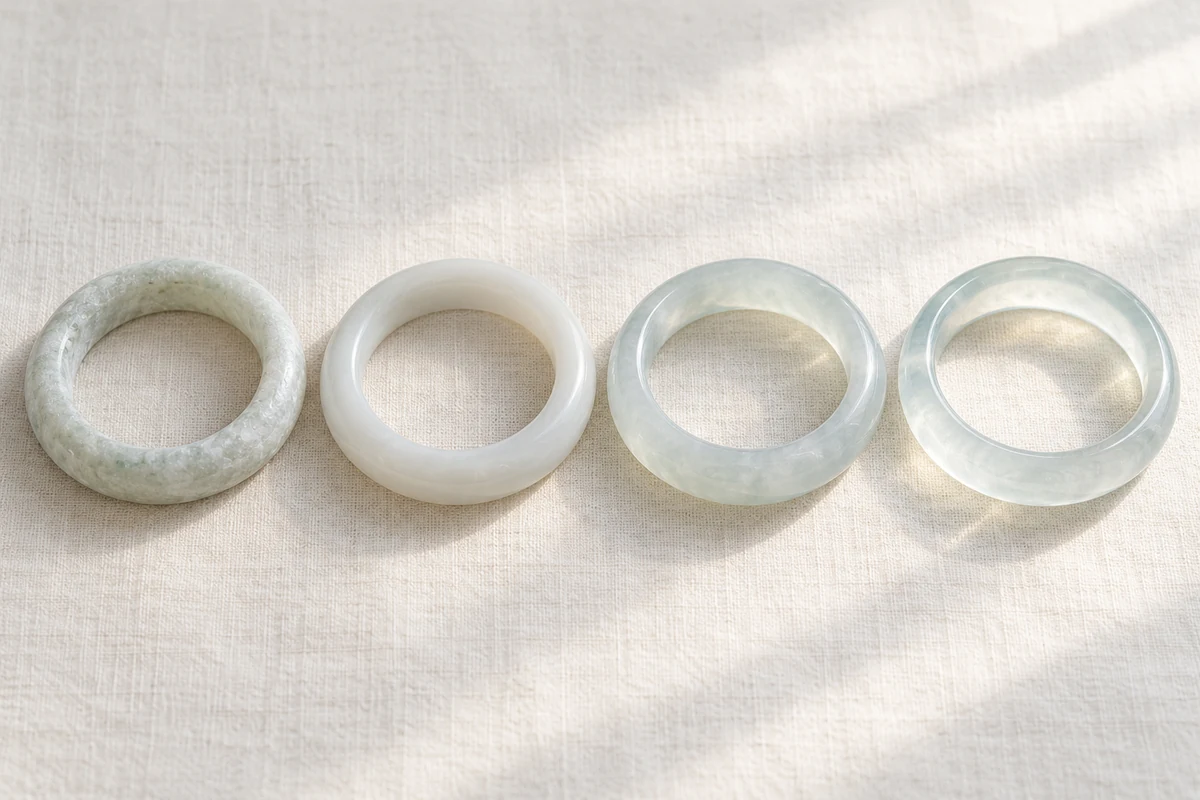
Two points dealers stress that buyers often miss:
- Cracks versus stone lines. Sellers often say "no cracks, only stone lines". A stone line is a healed natural vein; a crack is an open break. Under a flashlight, a crack usually stops the light and catches a fingernail; a stone line lets light pass. On a bangle, which takes knocks, the difference is large. If the seller cannot tell you which one you are looking at, have the bangle checked before you buy.
- Labels are ranges, not grades. "Icy" from one seller can be "icy-glutinous" from another. Compare the stone, not the word.
Why does size change the price so much?
A bangle is cut from a single slab, so its size decides how much good material it uses up. The cutter marks circles on a slab, avoiding cracks, and cuts the bangle out in one piece. A larger inner diameter needs a bigger crack-free area. A wider or thicker band needs a thicker slab and more of it. A round bar uses more material than a flat-inside bangle, because the inner side is rounded instead of flat. The center disc left over goes to smaller pieces such as pendants, which are worth less per piece.
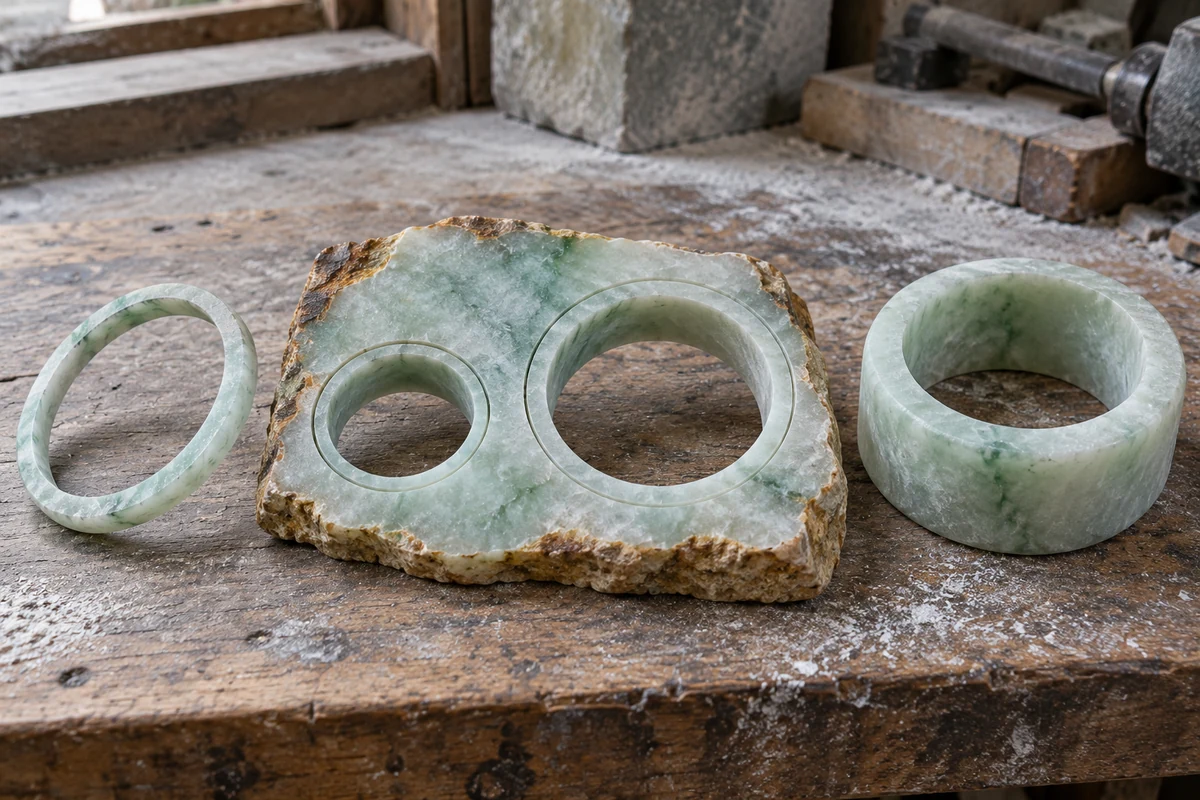
So, for the same texture and color, a large, chunky round-bar bangle usually costs more than a small, slim flat-inside one. But, as the table below shows, size is a smaller lever than texture and color: a better stone in a smaller size usually beats a plainer stone in a bigger one. To pick the right size for your wrist, which matters more than paying for a bigger one, see our bangle sizing guide.
Can you price jade by the gram or by the carat?
No, not finished jadeite. People ask "how much is jade worth per gram, per carat or per ounce" because gold and diamonds work that way. Jadeite does not. Only bulk low-grade rough and carving waste (边角料) are commonly sold by weight, by the kilo. Finished bangles, pendants and rings are priced one by one.
A heavier bangle is not more valuable just because it is heavier. Two bangles of the same weight can differ many times in price, and a light, thin icy bangle can cost more than a heavy, opaque one. If a seller quotes a price per gram for finished jadeite, it usually means the material is low-grade, or the seller is using a gold-style frame that does not fit jade.
What do real certified Type A bangles cost?
As of 21 October 2026, here are 15 of the 17 certified Type A jadeite bangles listed on JadeiteHub, grouped by texture. Sizes are inner diameter. Prices can change; check the listing for the current price.
| Texture | Piece | Style | Inner size | Price (US$) |
|---|---|---|---|---|
| Glutinous (糯种) | JH-000034 spring-with-color (春带彩, purple and green) | Flat inside | 56.7 mm | 4,319 |
| Glutinous | JH-000021 pale qingshui (晴水) | Round bar | 53 mm | 7,509 |
| Glutinous | JH-000024 spring-with-color | Round bar | 56 mm | 8,889 |
| Bean (豆种) | JH-000029 light green | Round bar | 55.3 mm | 7,209 |
| Icy-glutinous (糯冰种) | JH-000032 honey yellow | – | 51.6 mm | 6,749 |
| Icy-glutinous | JH-000031 white | Round bar | 54.7 mm | 7,559 |
| Icy-glutinous | JH-000020 spring-with-color | Oval | 54 mm | 9,659 |
| Icy-glutinous | JH-000033 pale qingshui | – | 57 mm | 11,869 |
| Icy-glutinous | JH-000036 green floating flower (飘花) | – | 56 mm | 14,739 |
| Icy-glutinous | JH-000037 blue floating flower | – | 55.8 mm | 15,749 |
| Icy-glutinous | JH-000027 green floating flower | – | 55.6 mm | 17,019 |
| Icy (冰种) | JH-000030 floating flower | Round bar | 51.5 mm | 7,209 |
| Icy | JH-000028 green floating flower | – | 56.3 mm | 7,939 |
| Icy | JH-000023 green qingshui | – | 53.2 mm | 13,969 |
| Icy | JH-000026 floating flower | – | 51.6 mm | 20,579 |
What the table shows:
- Size is not what makes a bangle expensive. The cheapest piece, JH-000034 at US$4,319, is one of the largest (56.7 mm). The most expensive, JH-000026 at US$20,579, is one of the smallest (51.6 mm).
- The same label can mean very different prices. JH-000030 and JH-000026 are both icy floating-flower bangles of almost the same size (51.5 and 51.6 mm), yet one is US$7,209 and the other US$20,579. The difference is in how clear the texture is and how much and how lively the color is, which no label captures.
- Texture ranges overlap. The glutinous JH-000024 (US$8,889) costs more than the icy JH-000030 (US$7,209) and JH-000028 (US$7,939). The light green bean-texture JH-000029 costs the same as the icy JH-000030. Lively color on a coarser texture can match or beat a finer texture with less color.
- Color moves price within one texture. Among the icy-glutinous bangles, the honey-yellow and white pieces sit at US$6,749 and US$7,559, while the green and blue floating-flower pieces sit at US$14,739 to US$17,019.
- Style counts too. The two glutinous spring-with-color bangles are almost the same size, but the round-bar JH-000024 costs about twice the flat-inside JH-000034. Color and texture differ between them as well, so style is only part of that gap.
Keep the scope in mind: these are mid-to-upper grade certified pieces from one seller, not the whole market. Plain low-grade Type A bangles cost less, and top imperial-green bangles sold at auction reach far higher; see the most expensive jade ever sold. Browse all current pieces in the JadeiteHub shop.
Why are some jade bangles so cheap?
Very cheap "jade bangles" in tourist markets, street stalls and online shops are usually one of these:
- Treated jadeite (Type B or C). Real jadeite that has been acid-bleached and resin-filled, or dyed. It can look cleaner and greener than natural stone of the same price class. See Type A vs Type B vs Type C jadeite.
- Another stone sold as jade. Nephrite, serpentine, quartzite, dyed quartzite sold as "Malaysia jade", aventurine, or glass. See how to tell real jadeite from look-alikes.
- Genuine but very low-grade jadeite. Coarse, opaque, cracked or poorly colored Type A material. It is honest jadeite, simply priced for what it is.
We will not give you a price "below which it is fake", because market prices differ by place, seller and grade. The useful rule is relative: if a bangle is priced far below certified pieces of similar texture, color and size, ask for a lab certificate before you pay, and check what stone the certificate names. A bright, even green bangle at a low price is a warning sign, not a lucky find.
Why does the same bangle cost differently in China, Myanmar, Thailand, Vietnam or Hong Kong?
Because the price depends on where in the supply chain you buy and who the seller expects to sell to, not on the country alone. Most gem jadeite is mined in Myanmar, and many bangles are cut and polished in Guangdong workshops (Pingzhou is a well-known bangle center). Each step to a shop in another city or country adds transport, duties, rent and margin. Tourist areas price for tourists, and haggling from a high opening price is normal in many jade markets.
Places closer to the source do offer more choice, but they also have more treated and fake goods mixed in, so the risk rises with the bargain. See why jade can be cheaper in China. We do not quote typical local prices for each country, because they vary too much by grade and seller to be meaningful.
Is the price you pay what the bangle is worth?
No. The price you pay is a retail price, and what you could sell it for later is usually well below it. A dealer buying back needs a margin and has to wait to resell. Certified, good-texture pieces with attractive color are the easiest to resell; plain or treated pieces are hard to sell at all. See selling jadeite and resale value. Buy a bangle because you want to wear it, not as a plan to make money.
How can you tell if a quoted price is fair?
Compare like with like, and get the information you need to compare:
- Get the certificate and check it. It should name the mineral as jadeite and state that it is natural or untreated. Verify the report number with the lab; see how to verify a jadeite certificate.
- Ask for a daylight video. Natural light, the bangle turned slowly all the way round, plus a flashlight shot through the band. Shop lighting and filters can make color and texture look better than they are.
- Get the measurements. Inner diameter, band width and thickness, and the style (round bar, flat inside, oval).
- Ask about flaws by name. Where are the stone lines, is there any crack, cotton or dark spot?
- Compare against two or three similar certified pieces. Same texture, similar color amount, similar size and style. If one quote is far above or far below the others, ask why.
- Be wary of pressure. "Last piece", "price only for today" and "this is old mine material" are sales phrases, not evidence.
On JadeiteHub, every listed bangle has a lab certificate, each sold piece is checked against its certificate at our inspection center before shipping, and if it is not as described you get a full refund.
FAQ
How much is a real jade bangle worth?
There is no single price. Certified untreated (Type A) jadeite bangles vary with texture, color, flaws, size and style. As of 21 October 2026, the 17 certified Type A bangles listed on JadeiteHub range from US$4,319 to US$20,579; top imperial-green bangles at auction go far higher.
How much is jade worth per gram or per carat?
Finished jadeite is not priced by weight. Only bulk low-grade rough and carving waste are commonly sold by the kilo. Each bangle is priced on its own texture, color and flaws, so two bangles of the same weight can differ many times in price.
Why are some jade bangles so cheap?
Very cheap bangles are usually treated jadeite (Type B or C), another stone such as dyed quartzite, nephrite or glass, or very low-grade jadeite. If a bangle is priced far below comparable certified pieces, ask for a lab certificate first.
Does a bigger bangle cost more?
For the same texture and color, a larger, wider or thicker bangle usually costs more because it uses more material. But texture and color move price more: in JadeiteHub's listings the cheapest bangle is one of the largest and the most expensive is one of the smallest.
Is jade cheaper in China or Myanmar?
It can be, closer to the source and away from tourist areas, but those markets also carry more treated and fake goods. The price depends on the grade, the seller and where in the supply chain you buy, so always compare certified pieces.
Can I sell my jade bangle for what I paid?
Usually not. Resale prices are normally well below retail, because a buyer needs a margin. Certified, good-quality pieces are the easiest to resell. Buy a bangle to wear, not as a way to make money.