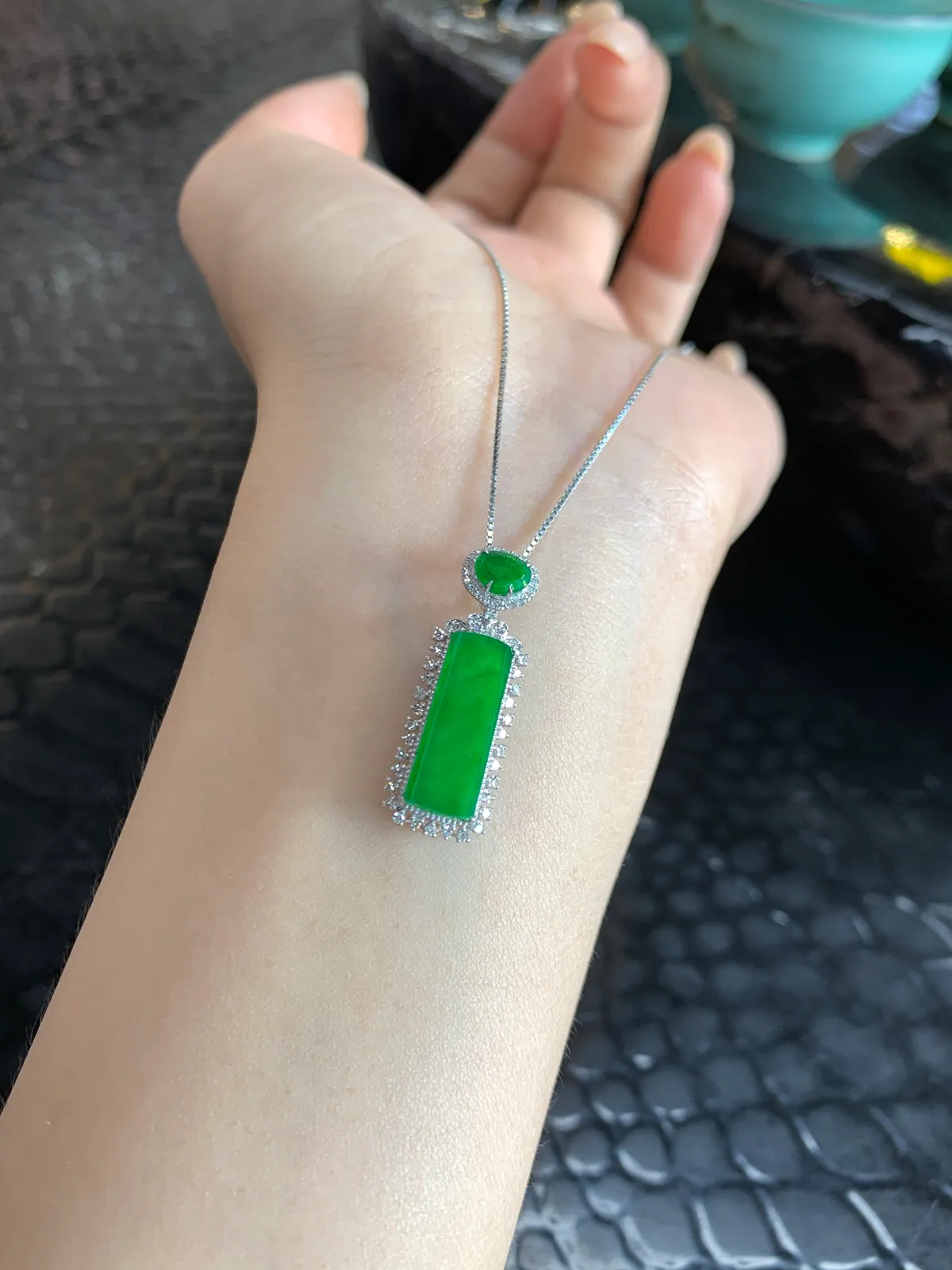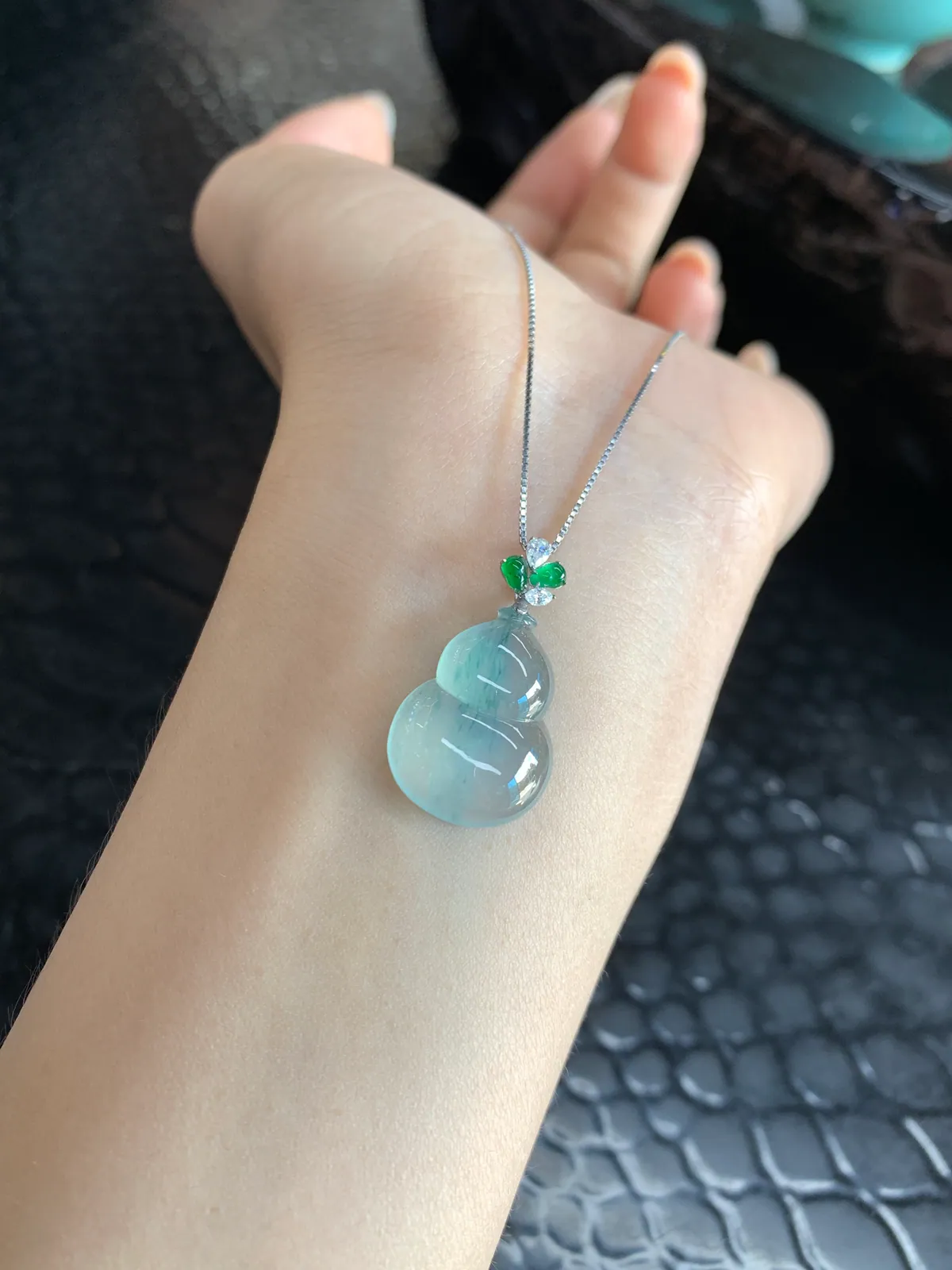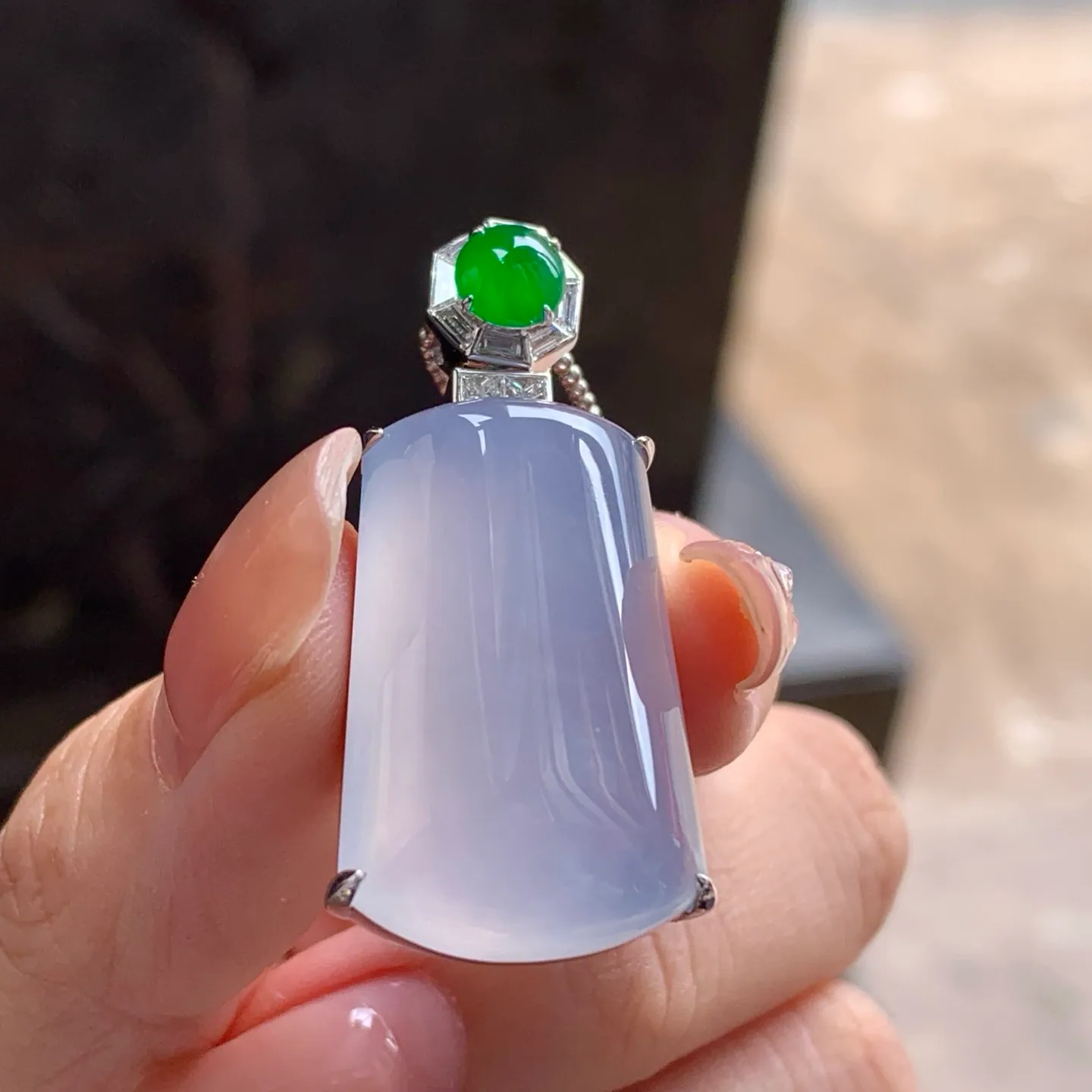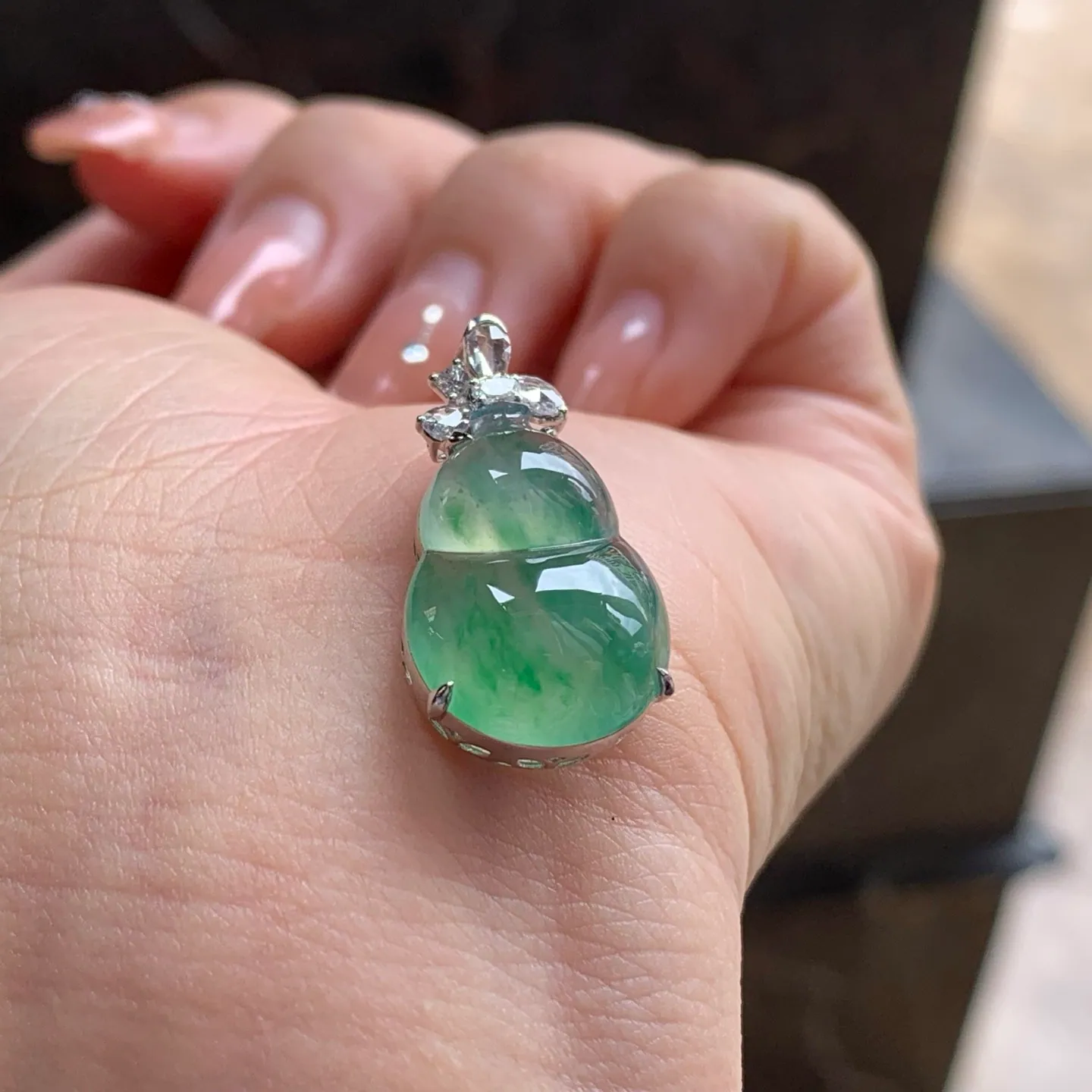
Fu Lu Shou Jade: Three-Color Jadeite Meaning and Value
Updated
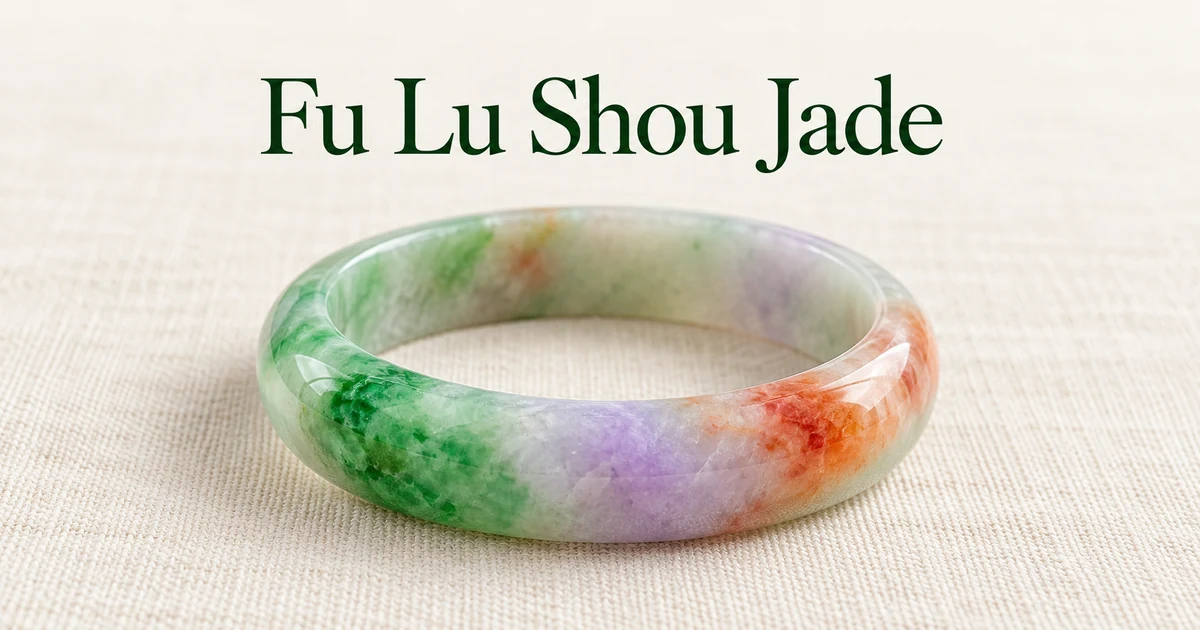
Fu lu shou (福禄寿) jade is natural jadeite with three colors in one piece, usually green, lavender and red or yellow, named after the gods of fortune, prosperity and long life. Spring with color (春带彩) is lavender plus green. Natural three-color pieces are rare, while dyed "tri-color" and "rainbow jade" bangles are common, so judge each color, the base and the cracks, ask whether the red is heated, and buy with a certificate stating natural Type A jadeite.
What is fu lu shou jade?
Fu lu shou jade (福禄寿, fu lu shou) is natural jadeite with three colors in one piece. In the usual form they are green, lavender and red or yellow. The name comes from the three gods of good fortune (福 fu), prosperity and rank (禄 lu) and long life (寿 shou), so a three-color bangle reads as a wish for all three at once.
It is the same mineral as any other jadeite. Only the arrangement of color is special. In English listings you will see the same idea sold as "three color jade", "tri-color jade bangle", "multicolor jade bangle" or "rainbow jade bangle". Those English names are looser than the Chinese one; we come back to that below, because the loosest of them are where most dyed bangles hide.
The trade uses a small family of names for multicolor jadeite:
| Name | Chinese | Colors | Notes |
|---|---|---|---|
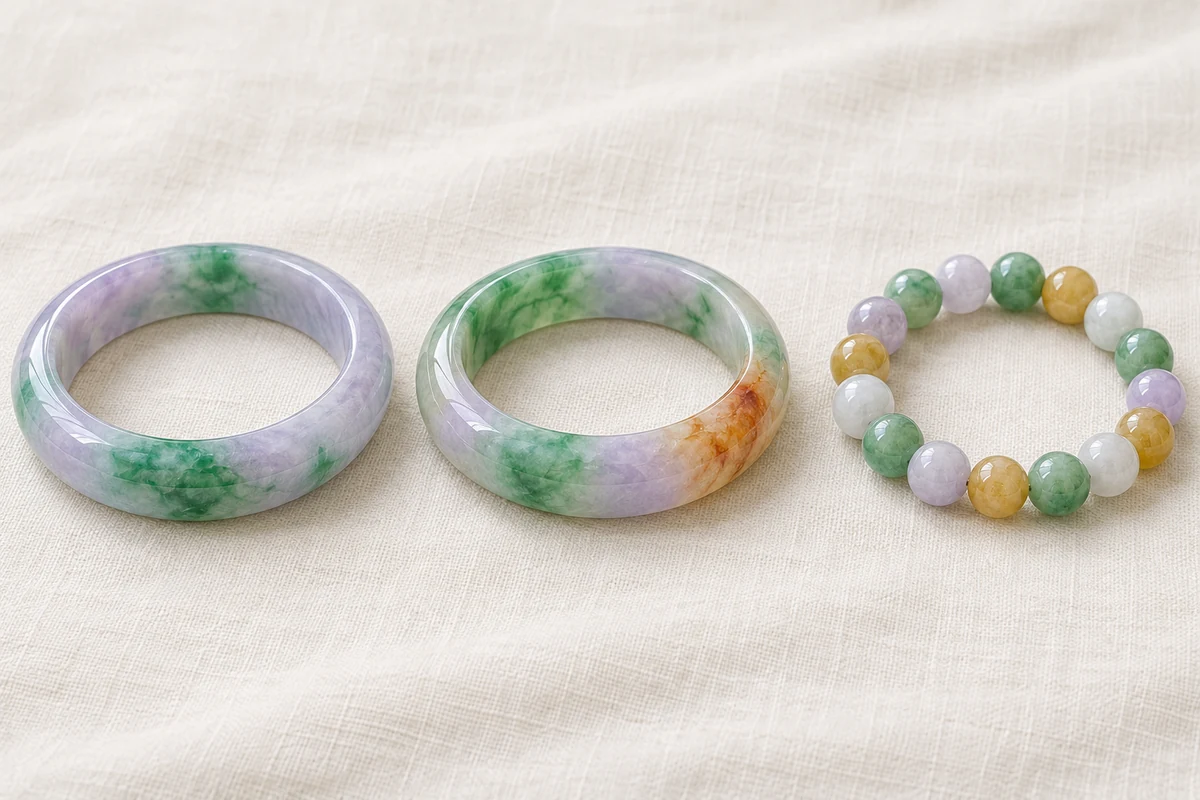
| Spring with color | 春带彩 | Lavender + green | The most common multicolor combination. "Spring" (春) is the trade word for lavender, "color" (彩) for green |
| Yellow with green | 黄加绿 | Yellow + green | Often a yellow skin color beside green |
| Fu lu shou | 福禄寿 | Three colors, usually green + lavender + red or yellow | The best known name for three colors |
| Fu lu shou xi | 福禄寿喜 | Four colors | A fourth color, often white or a second warm tone, is said to add 喜 (xi, joy). Usage varies |
| Five colors | 五彩, 福禄寿喜财 | Five colors | Very rare in good material, and often used loosely |
For lavender itself, see lavender jadeite; for red and yellow, red and yellow jadeite.
Which color stands for fu, lu and shou?
There is no single fixed answer, and sellers who say otherwise are giving their own version. The most common reading in Chinese sources is:
| Color | Often linked to | Why, in the usual explanation |
|---|---|---|
| Red or yellow (翡) | 福 fu, good fortune | Red is the color of celebration and luck |
| Green (翠) | 禄 lu, prosperity and rank | Green is linked to growth, and to official rank in some explanations |
| Lavender (春) | 寿 shou, long life | Purple is linked to nobility and long life |
Other sources swap lu and shou, or give yellow to lu. The trade itself cares much less about the mapping than about the colors being natural and clean. Treat any mapping as tradition, not a rule.
Why the three gods? Fu, Lu and Shou (福禄寿三星) are the three star gods of Chinese folk religion: Fu often shown holding a child, Lu in an official's robe, Shou as an old man with a high forehead, a staff and a peach. Their figures stand in homes and shops across China and the Chinese communities of Southeast Asia. In Thailand they are well known as ฮก ลก ซิ่ว (the Teochew reading), and in Vietnam as Phúc Lộc Thọ, or Tam Đa. A three-color jadeite is a way to carry that wish without carrying the figures.
There is also a five-elements reading. Because a three-color piece covers several element colors at once, sellers often say it "suits every element" (五行皆宜). That is a folk saying, not a property of the stone. See jade and the five elements and jade meaning and beliefs.
Does fu lu shou jade have benefits?
No proven ones. "Brings luck", "adds years" and "suits every element" are traditional wishes, not effects of the stone. Buying it because you love the colors or the meaning, or as a gift for parents or a couple, is a fine reason. Paying extra because of claimed powers is not.
Why is natural three-color jadeite rare?
Because the three colors come from different causes and usually form in different parts of the stone.
- Green comes mainly from chromium built into the crystals when the rock formed.
- Lavender is a primary color too. Its cause is still debated; traces of manganese or iron are the usual explanations.
- Red and yellow are secondary. They are iron oxides that seeped between the grains near the weathered outer skin of the boulder, long after the rock formed.
So for one bangle to show all three, the carver needs a part of the boulder where the weathered red or yellow layer meets a body that already holds lavender and green. That layer is usually thin. In a bangle, which is cut from a large slab, it often ends up as a small warm patch on one side.
Two practical results:
- Spring with color is far more common than fu lu shou. Lavender and green often grow together; adding a natural red or yellow is what makes three colors uncommon.
- Most multicolor bangles have a modest base. The colors often sit in glutinous (糯种) or bean (豆种) material. Three clean colors in icy or finer material are rare and priced accordingly.
What makes a fu lu shou bangle valuable?
Dealers look at it the way they look at any jadeite (color, then texture and translucency, then flaws and size), with a few extra points for multicolor pieces.
| Factor | More valued | Less valued |
|---|---|---|
| Each color | Every color clear and lively on its own | One color so pale you have to search for it; gray-lavender, brownish red |
| Boundaries | Colors meet with natural, soft transitions and stay clean | Colors muddy each other into gray or brown zones |
| Base | Translucent, fine texture (glutinous-icy, icy or better) | Dry, coarse, opaque base |
| Balance | Each color has a real share of the piece | Almost all white, with three small dots of color |
| Placement | Colors on the visible top of the bangle or the face of the pendant | Best color on the inside or hidden by a setting |
| Flaws | Few cracks, little cotton | Cracks, especially through the colored zones |
Two points the table cannot show:
- Three weak colors are not worth more than one strong one. A bangle with bright, even green alone is usually worth far more than a dull three-color bangle of the same size. Count of colors is not a value factor by itself.
- Taste varies. Some buyers want large, bold color fields; others prefer soft lavender with a few wisps of green. Two dealers can price the same piece differently.
For texture and translucency, see zhong, shui and se explained; for the full list of price factors, what determines jadeite price.
How much does a fu lu shou or spring-with-color piece cost?
It depends on the material, not on the name. A three-color bangle can be an everyday piece or a collector's piece. Here is what spring-with-color and multicolor pieces on JadeiteHub cost, with certificates, as of 22 October 2026 (prices can change):
| Piece | Material | Size | Price |
|---|---|---|---|
| JH-000034 | Glutinous, spring with color, flat-inner bangle | Inner diameter 56.7 mm | US$4,319 |
| JH-000024 | Glutinous, spring with color, round bangle | Inner diameter 56 mm | US$8,889 |
| JH-000020 | Glutinous-icy, spring with color, oval (guifei) bangle | Inner size 54 mm | US$9,659 |
| JH-000022 | Icy, spring with color, wu shi pai pendant, 18K gold setting | – | US$3,239 |
| JH-000043 | Icy, multicolor round beads, 19 beads | 10 mm beads | US$7,159 |
What this shows:
- Two spring-with-color bangles of similar size differ by about two times. Strength and share of color, texture and the cut of the bangle make the difference.
- A pendant is far cheaper than a bangle with similar material. A bangle needs a big, clean slab; a pendant does not.
- A cheap "fu lu shou bangle" is a warning sign. If a three-color bangle costs about the same as a plain one, ask what the colors really are.
Browse more in jadeite bangles.
Are three-color jade bangles often fake?
Yes. Multicolor is one of the most commonly dyed looks in jadeite. Dye is cheap, and three bright colors on one bangle are exactly what a dyer can make that nature rarely does.
| What you are sold | What it may be | Clues |
|---|---|---|
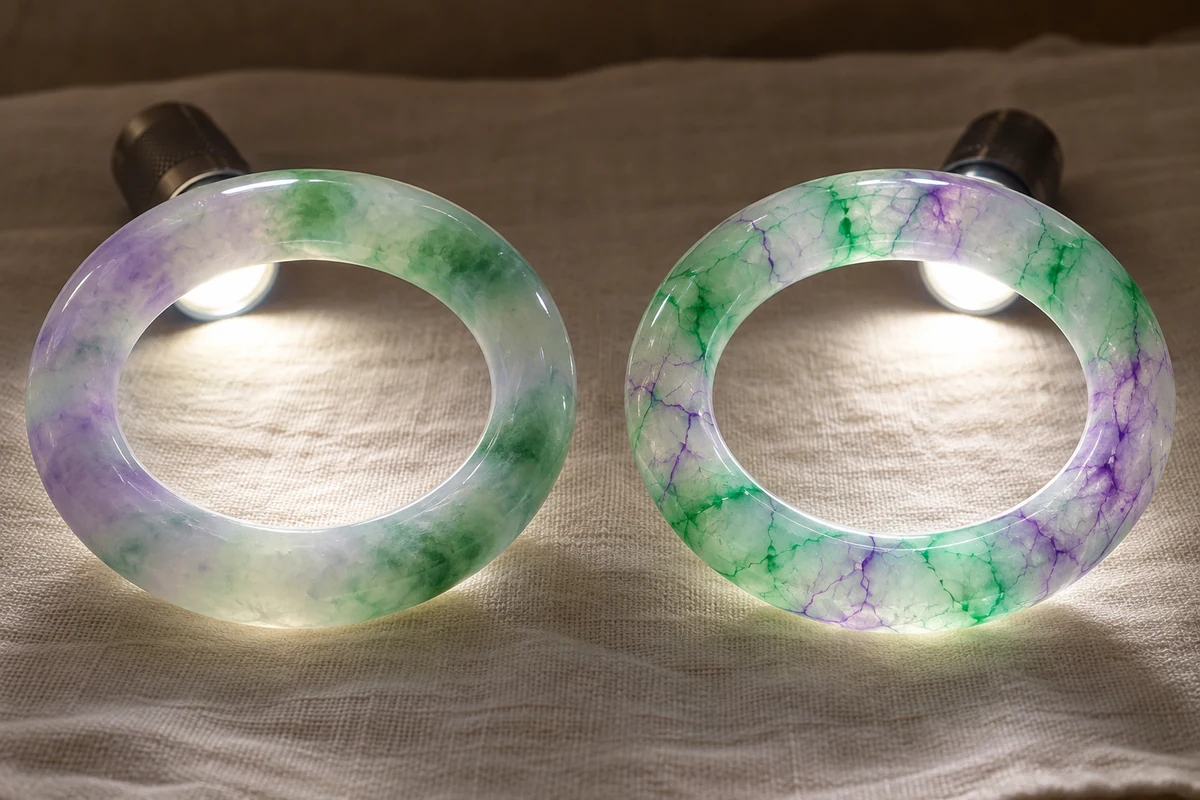
| "Tri-color" or "rainbow jade" bangle, low price | Dyed jadeite (Type C), often bleached and resin-filled too (Type B+C) | Colors too bright and too even; color sitting in a fine web along cracks and grain boundaries under a flashlight |
| "Fu lu shou" with a strong red | Heated red (烤色) | Even, dry-looking red or brownish red, no natural transition into the body |
| "Rainbow jade" | Dyed quartzite or marble | Lighter in the hand, sugary grain, color in the gaps |
| "Multicolor jade" | Colored glass | Bubbles, swirl lines, colors that look painted or layered |
About heated red: most of the jadeite trade does not accept heated red as natural red, and it is worth far less. Heating turns yellow-brown iron colors redder; it is seen mostly on single-color red pieces. Under China's national standard, heating is classed as an enhancement (优化), so a certificate may still call the piece natural jadeite without mentioning it. If a fu lu shou piece rests its value on its red, ask the seller directly whether the red is heated.
How to look at the colors yourself:
- Daylight first. Natural colors often fade gradually into the body; dye often has hard, patchy edges or looks "printed on".
- Flashlight behind the piece. Natural color lives inside the grains. Dye concentrates in cracks and gaps, showing a net or threads of color.
- Loupe on the surface. Look for an etched, cracked web under the polish, a sign of acid treatment (Type B).
- Compare the colors to each other. On natural pieces, each color has its own texture and depth. If all three look equally saturated and equally glossy, be careful.
These are clues, not proof. Experienced dealers misjudge dyed pieces too. A lab certificate stating natural jadeite with no dye or filling (Type A) is the proof. See how to spot treated jadeite and how to verify a jadeite certificate.
Who wears fu lu shou jade, and when?
Because the name carries good fortune, prosperity and long life, three-color jadeite is a classic gift for:
- Parents and grandparents, especially for milestone birthdays, where the longevity wish matters most.
- Weddings, as a bangle for the bride or a gift from the family. See jade wedding jewelry.
- A new job, business or home, where the prosperity wish fits.
Spring with color is popular with younger buyers because lavender and green look fresh and modern. Fu lu shou pieces with a strong red read as more traditional and festive.
There is no rule about which hand or which day. Wear it like any other bangle: see which hand to wear a jade bangle.
How do I buy a fu lu shou piece safely?
- Ask for daylight photos and video of every color, plus a flashlight moved around the whole piece.
- Ask which color is the weakest and how much of the piece it covers. A seller who knows the piece will answer.
- Ask whether the red or yellow is natural or heated.
- Get a lab certificate stating natural jadeite with no treatment, and check it online.
- Ignore the color count in the title. Judge each color, the base and the cracks as you would on a one-color piece.
On JadeiteHub, listings use the seller's own photos, and some include video. Every sold piece is checked against its certificate before it ships, and if it does not match the description you get a full refund.
FAQ
What does fu lu shou jade mean?
Fu lu shou (福禄寿) names the three Chinese star gods of good fortune, prosperity and long life. A jadeite piece with three colors, usually green, lavender and red or yellow, carries that wish. It is a traditional meaning, not a power of the stone.
Which color is fu, lu and shou?
A common reading is red or yellow for fu, green for lu and lavender for shou, but sources differ and some swap lu and shou. The trade cares more about the colors being natural and clean than about the mapping.
What is spring with color jade?
Spring with color (春带彩) is jadeite with lavender and green in the same piece. "Spring" is the trade word for lavender and "color" for green. It is the most common multicolor jadeite.
Is a three-color jade bangle more valuable than a green one?
Not by itself. Three weak, dull colors are usually worth much less than one strong, even green of the same size. Value comes from the quality of each color, the base texture, cracks and size.
How can I tell if a tri-color jade bangle is dyed?
Warning signs are colors that are too bright and even, and color gathered in a fine web along cracks under a flashlight. Also ask whether the red is heated. The proof is a lab certificate stating natural, untreated (Type A) jadeite.