Lavender Jadeite: Colors, Value and How to Spot Dyed
Updated
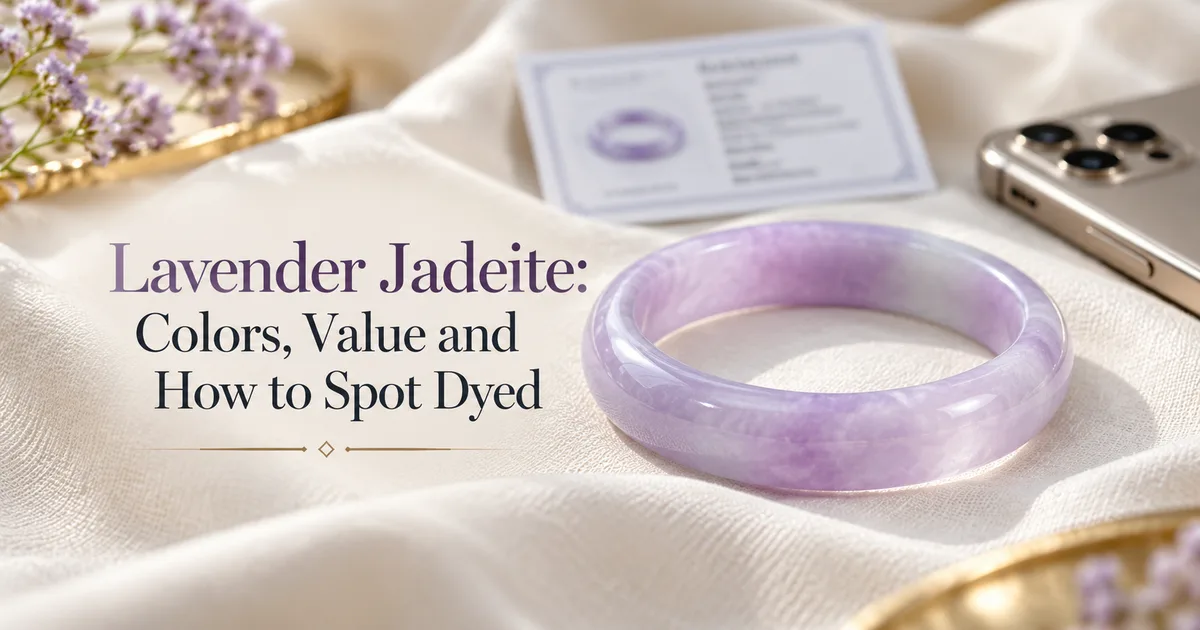
Lavender jadeite is natural jadeite with a purple tone, from pale pink-purple and blue-purple to rare deep royal purple. Its value depends on how deep, bright and even the color is, and on texture and translucency; most lavender is pale and fairly coarse. Dyed lavender (Type C) is common, so judge color in daylight, check it under a flashlight and buy with a lab certificate that states natural, untreated (Type A) jadeite.
What is lavender jadeite?
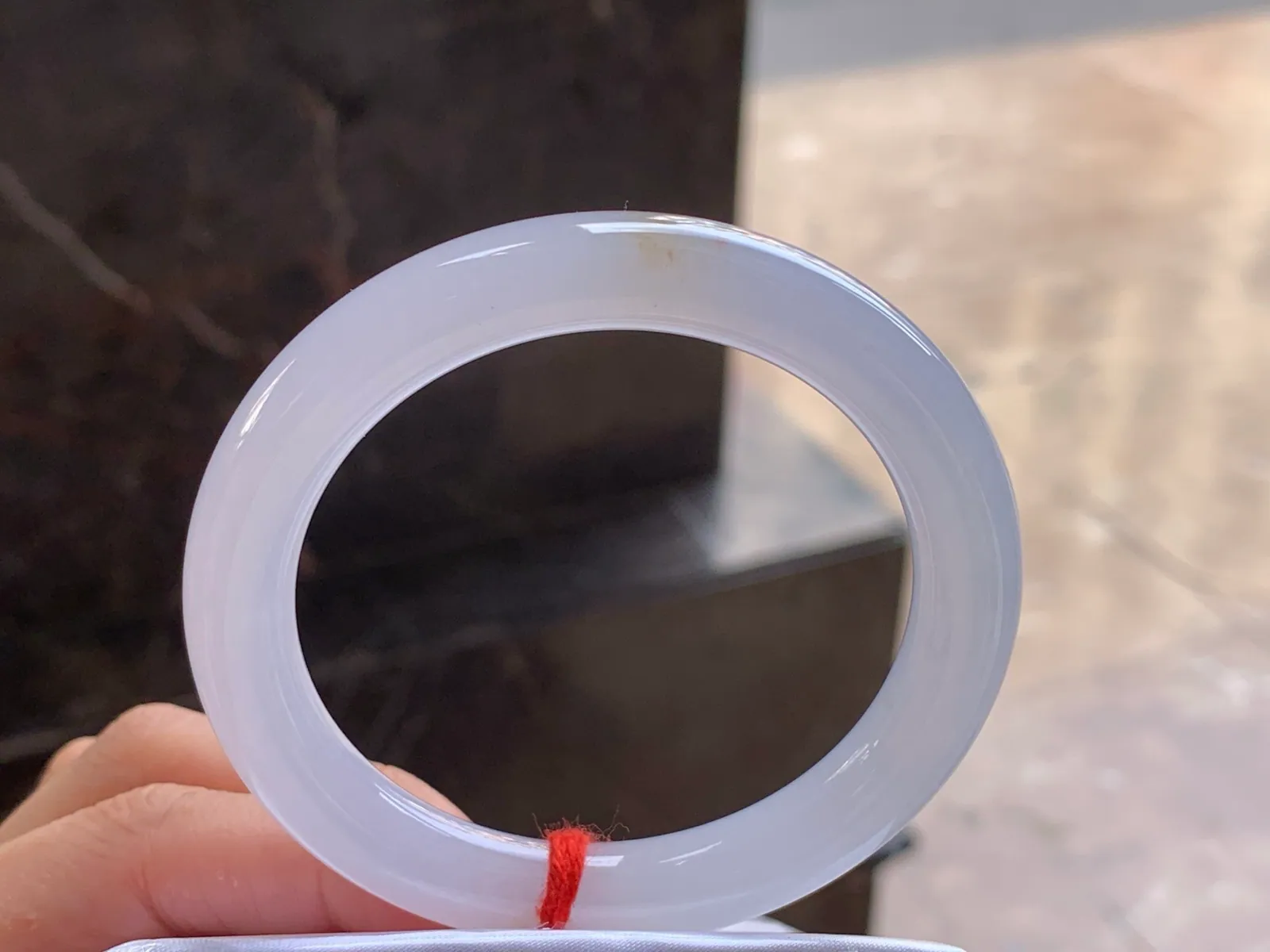
Lavender jadeite is jadeite with a natural purple tone. In Chinese it is called 紫罗兰 (zǐluólán, "violet") or 紫翡, and traders often just say 春 ("spring"). It is the same mineral as green jadeite; only the color is different.
Why it is purple is not fully settled. Trace amounts of manganese are the explanation you will see most often; some research points to iron instead, or to both. For a buyer, the cause matters less than the result: the color is natural, usually soft, and it varies a lot from piece to piece. For how lavender fits among the other jadeite colors, see the jadeite colors guide.
One honest point before you shop. Much lavender jadeite has a coarser grain and lower translucency than fine green jadeite. Lavender that is fine-textured, translucent and strongly colored all at once is rare. Most lavender on the market is pale, and a good share of it is fairly opaque.
What shades of lavender jadeite are there?
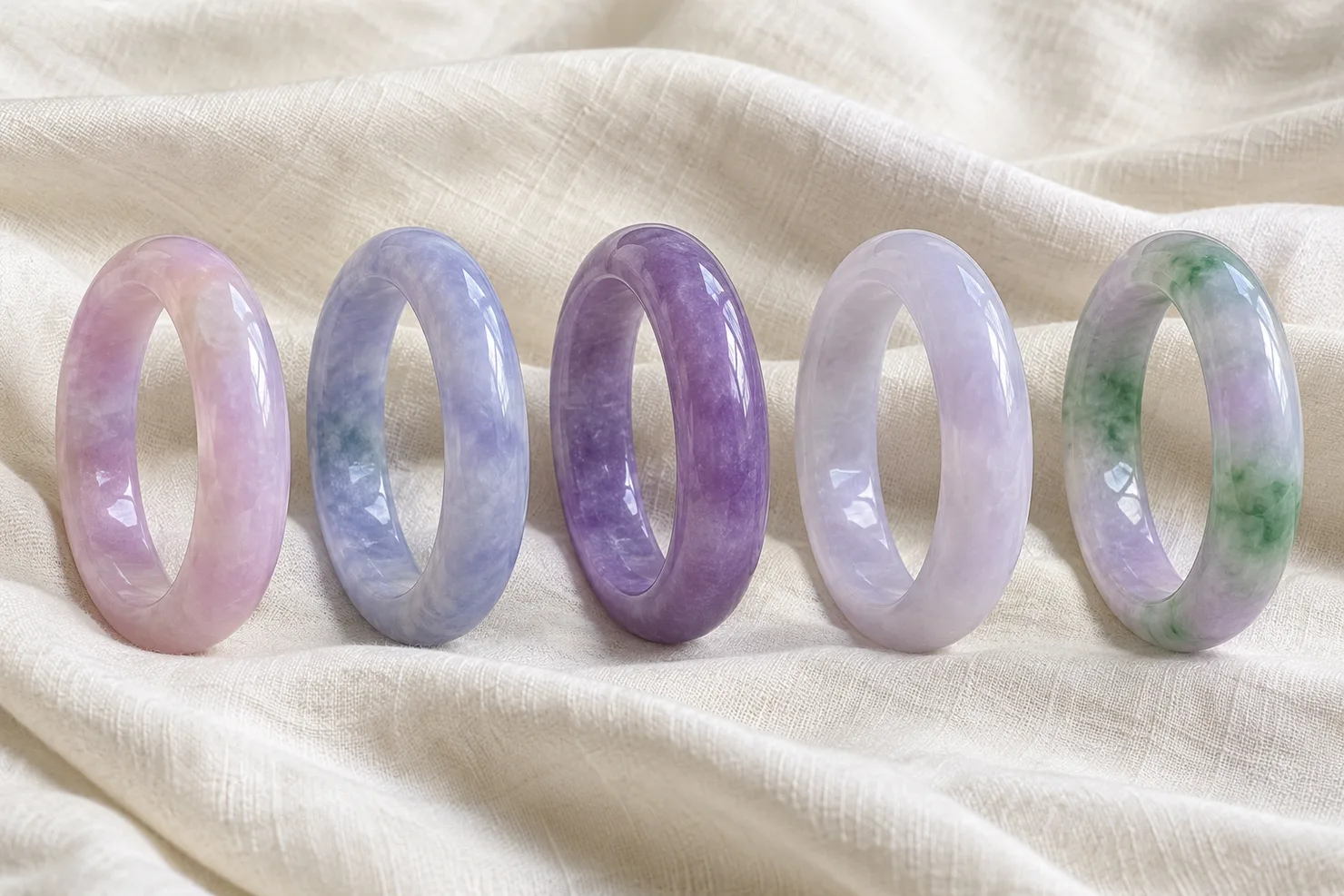
Traders describe lavender by its tone and its depth. The names below are common in Chinese listings, and the boundaries between them are loose.
| Shade | Chinese name | What it looks like | How common |
|---|---|---|---|
| Pale lavender | 淡紫 | A faint purple haze on a white or light body | The most common |
| Pink-lavender | 粉紫 | Soft purple with a warm, pinkish tone | Light shades are common; strong pink-purple is not |
| Blue-lavender | 蓝紫 | Cooler purple that leans toward blue | Common |
| Deep purple | 皇家紫, 茄紫 | Strong, deep purple; the bright, saturated kind is sold as "royal" or "imperial" lavender | Rare |
Deep purple is not automatically better. Deep purple that is also bright and clean is the most prized. Deep purple that looks gray or dark loses much of its appeal.
Lavender also appears together with other colors:
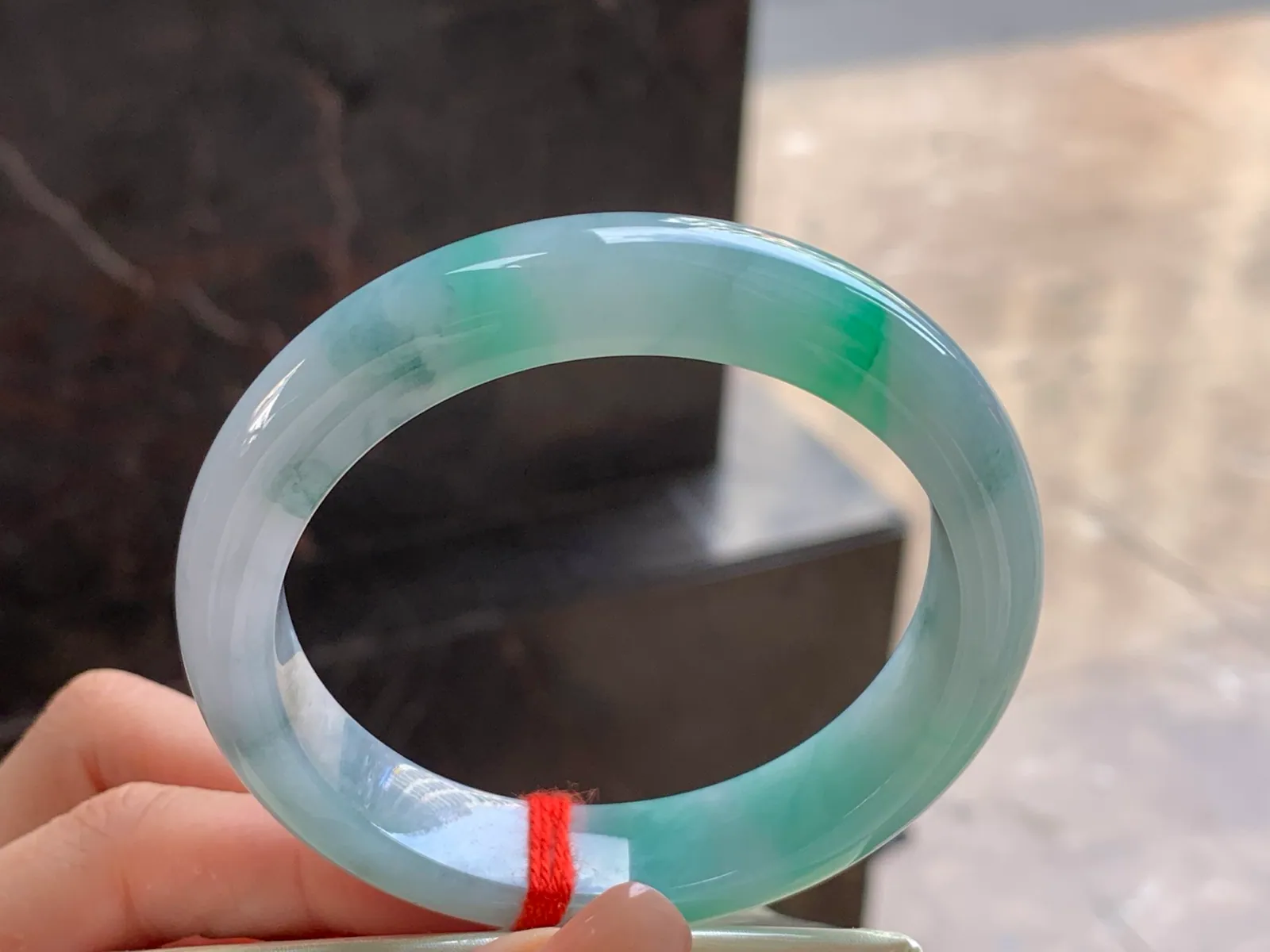
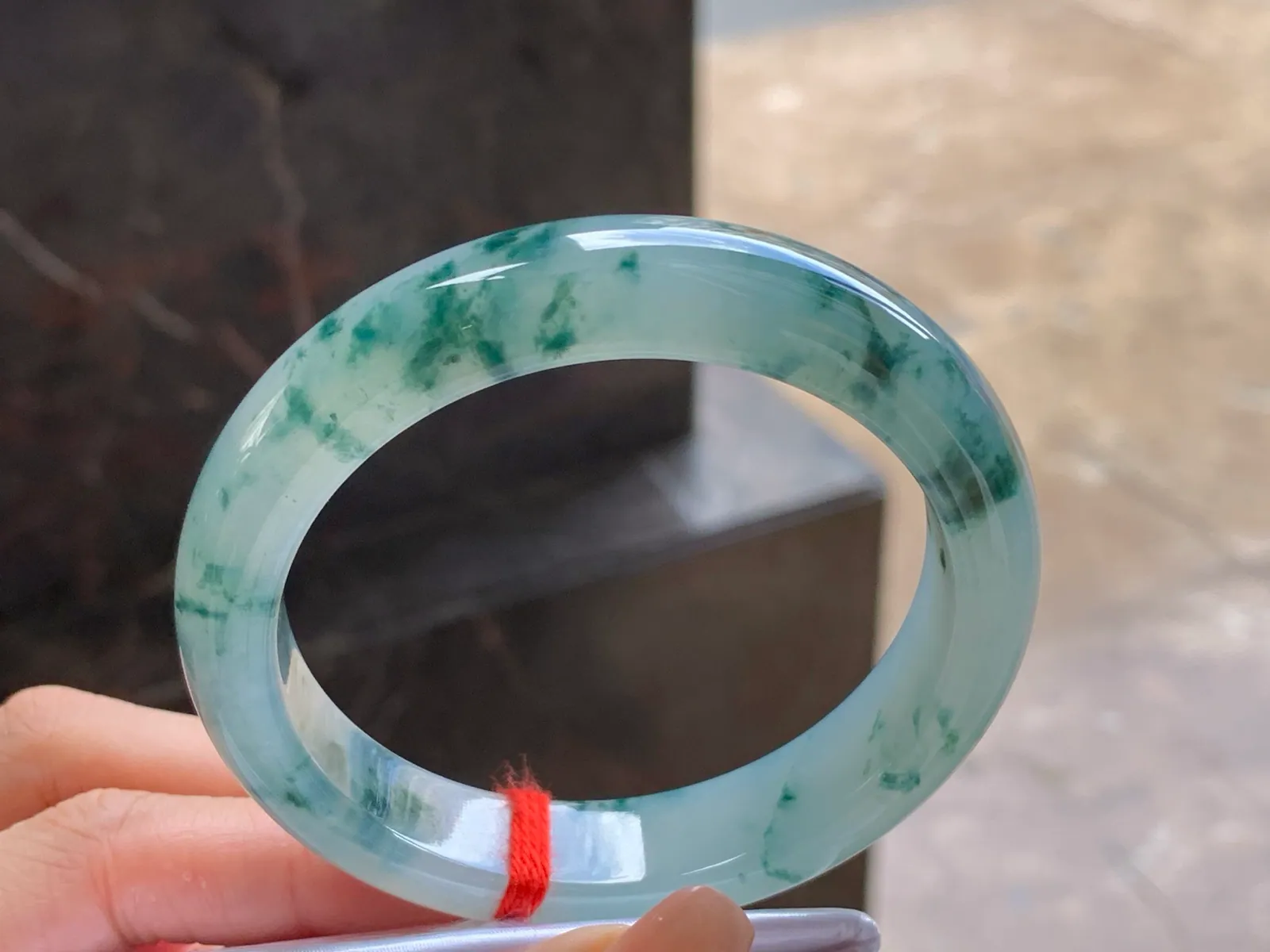
- Spring with color (春带彩): lavender and green in the same piece. "Spring" (春) is the trade word for lavender and "color" (彩) means green. The best have clear patches of both colors in fairly translucent material.
- Fu lu shou (福禄寿): three colors in one piece, usually green, lavender and red or yellow, named after three symbols of good fortune.
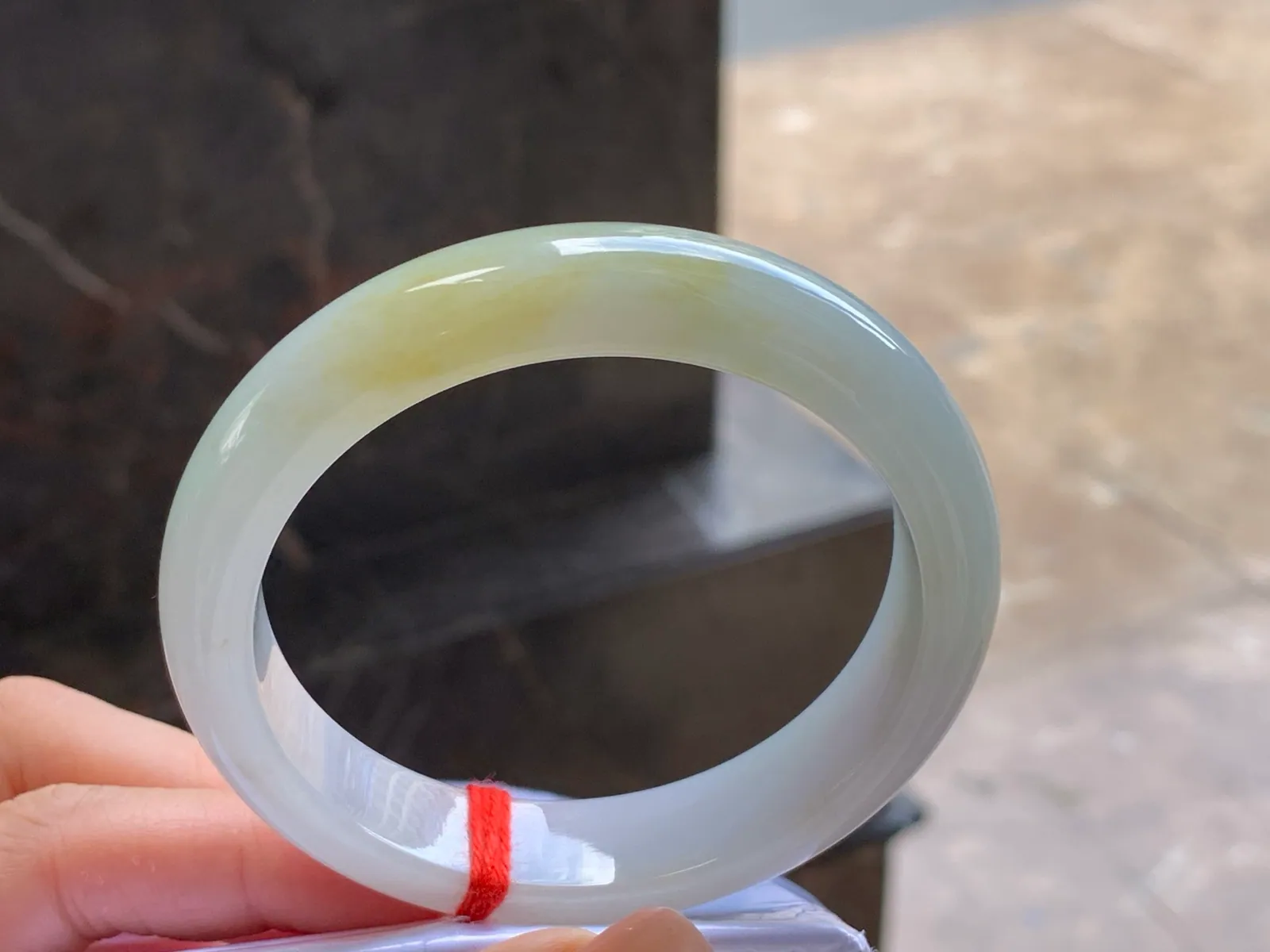
- White with lavender: a white or colorless body with patches or wisps of lavender. This is very common in bangles.
What makes lavender jadeite more valuable?
The same points that set the price of any jadeite apply. With lavender they pull against each other more often, because strong color and fine material rarely come together.
| Factor | Raises value | Lowers value |
|---|---|---|
| Depth of color | Clear, noticeable purple | So pale it looks almost white |
| Brightness | Lively, clean purple | Grayish, brownish or dull purple |
| Evenness | Color across the whole piece | One small purple patch on a white body |
| Translucency | Light passes through well; the piece looks moist | Opaque, chalky look |
| Texture | Fine grain, smooth polish | Coarse, visible grain; pitted or "orange peel" surface |
| Cracks and flaws | Clean piece | Cracks, black spots, heavy cotton-like inclusions |
Pink or blue is mostly a matter of taste, and preferences differ between buyers and markets. Depth and brightness matter more than which way the purple leans.
In practice, buyers trade one thing for another: deeper purple in coarser material, or paler purple in finer, more translucent material. For how texture and translucency are judged, see zhong, shui and se explained. For the full list of price factors, see what determines jadeite price.
Why does lavender jadeite look different in every photo?
Lavender is the jadeite color most affected by light.
- Warm light, such as yellowish lamps and many shop lights, often makes lavender look pinker and stronger.
- Daylight or neutral white light shows the real tone, which is often paler or bluer than it looked under warm light.
- Photos are often enhanced. Raised saturation, filters and phone beauty modes can turn pale lavender into vivid purple.
So judge lavender in daylight, near a window but out of direct sun, and ask for photos and video taken the same way. If you can, compare two or three pieces side by side: differences in depth are much easier to see.
Does natural lavender fade? Some dealers and sources report that pale lavender can lighten after long exposure to strong light or heat. This is not well documented, and many pieces show no change, but there is no reason to take the risk. Keep lavender jadeite out of strong sun and away from heat, and store it in a drawer or pouch. See how to care for jadeite. Dyed lavender is a different matter: it can fade noticeably (see below).
How do I spot dyed lavender jadeite?
Dyed jadeite is called Type C, and lavender is one of the colors most often dyed. Pale or white jadeite is stained purple, sometimes after it has also been bleached and filled with resin (Type B+C). See Type A vs Type B vs Type C jadeite.
Clues that lavender may be dyed:
- Color sits in a net. Under a flashlight or a 10× loupe, the purple is concentrated in fine lines along cracks and grain boundaries, with paler gaps in between.
- Too even, too vivid. Natural lavender is usually soft and uneven, with gradual edges. Strong, uniform purple across a whole bangle at a modest price is a warning sign.
- Odd tone. Dye can look slightly too red, too electric or inky next to natural lavender.
- Fading. Dyed color can fade within months, especially in light, and sometimes unevenly.
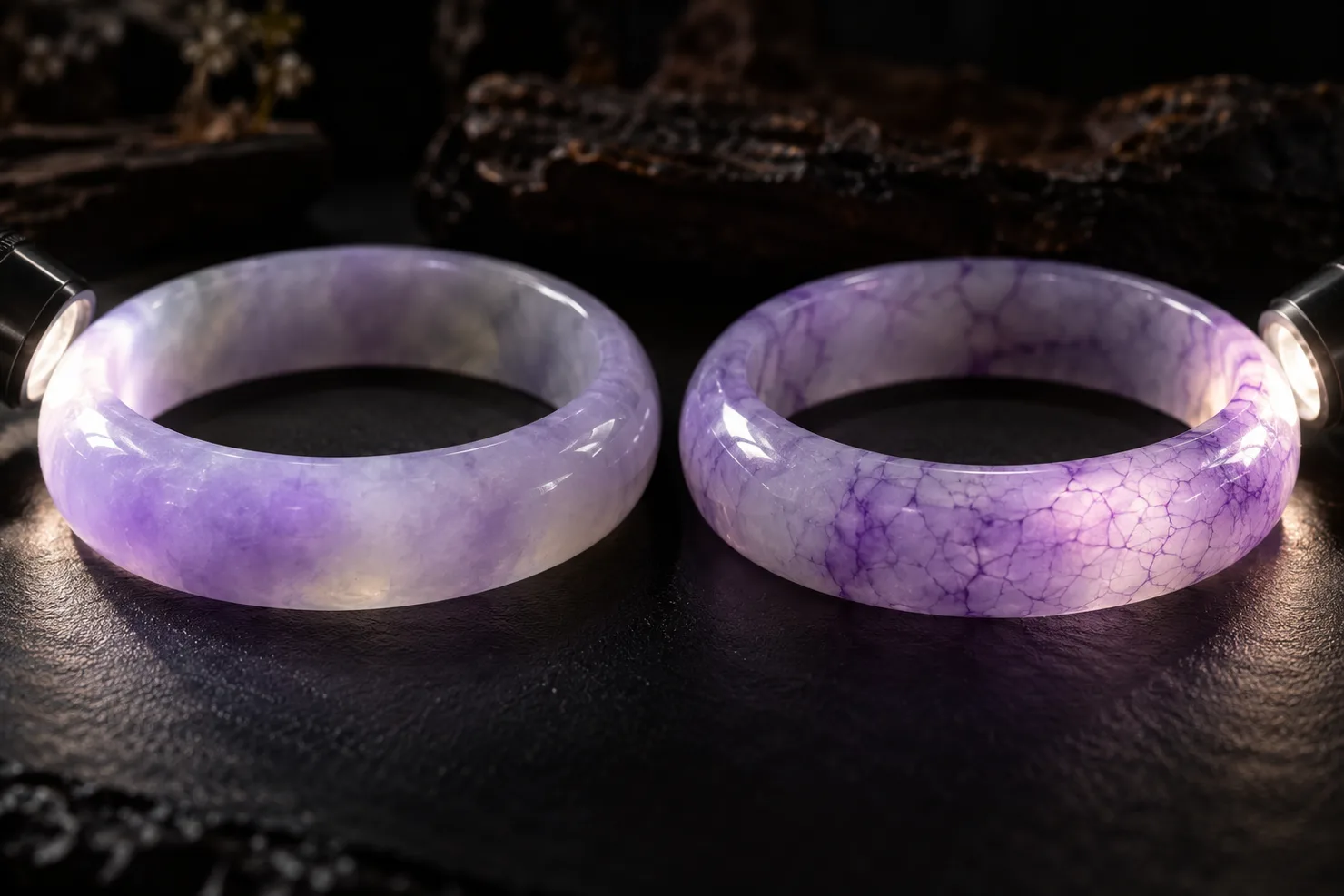
These are clues, not proof. Some dye is hard to see, and natural lavender can also follow fine veins. The reliable answer is a lab certificate. For natural lavender, the conclusion should name jadeite and state natural or Type A, with no mention of dye or treatment. Words such as "dyed", "treated" or "B+C" mean the color is not natural. See how to verify a jadeite certificate.
Is "Turkish purple jade" or "African purple jade" jadeite?
Not necessarily, so do not assume it. Several other materials can look like lavender jadeite:
| Material | How it can look | What to watch for |
|---|---|---|
| Dyed quartzite | Even purple, fairly translucent | Dye collected along grains and cracks; lighter in the hand than jadeite |
| Purple chalcedony | Smooth, waxy, very even lavender | No visible grain at all; often dyed |
| Amethyst and other purple quartz | Clear to cloudy purple, glassy | Usually more transparent and crystal-like than jadeite |
| Glass | Even color, glassy shine | Round bubbles, swirl lines |
Names such as "Turkish purple jade" and "African purple jade" are trade names. They do not tell you which mineral the stone is, and they are not Burmese jadeite unless a lab certificate states jadeite. Ask the seller to write down what the material is. For more on simulants, see jadeite look-alikes.
What does lavender jadeite mean?
In modern Chinese jewelry marketing, lavender is linked with grace, romance and gentle elegance, and it is a popular gift for women. In Thailand, purple is the traditional color for people born on a Saturday, so some Thai buyers choose purple jade for that reason. In Vietnam, people often ask which element (mệnh) purple suits; the answers differ from source to source. These are folk traditions and personal meaning, not properties of the stone.
How should I buy lavender jadeite online?
- Ask for daylight photos and video, unfiltered and from more than one angle.
- Ask for a flashlight shot to see where the color sits and how translucent the piece is.
- Ask for a certificate that names jadeite and states natural or Type A, and check it online.
- Compare shades across several listings in the same light before you decide what "deep" means.
- Check the size. For bangles, measure your hand first; see how to choose a jadeite bangle size.
- Keep expectations realistic. Pale, slightly coarse lavender is normal. Strong, translucent lavender is rare and priced that way.
On JadeiteHub, listings use the seller's own photos, and some include video. Every sold piece is checked against its certificate before it ships, and if it does not match the description you get a full refund.
FAQ
Is lavender jadeite rare?
Light lavender is fairly common. Lavender that is deep, bright and even, in fine, translucent material, is rare, and that combination is what makes a piece valuable.
Does lavender jade fade?
Dyed lavender can fade over time. For natural lavender, some sources report that pale color can lighten with long exposure to strong light or heat. It is not well documented, but keeping it out of strong sun is a sensible precaution.
How can I tell if lavender jadeite is dyed?
Under a flashlight, dyed color often sits in a net along cracks and grain boundaries and looks too even or too vivid. Only a lab certificate stating natural, untreated jadeite confirms the color is natural.
What is spring with color (chun dai cai)?
A jadeite piece with both lavender (“spring”, 春) and green (“color”, 彩). Pieces with clear patches of both colors in translucent material are the most sought after.
Is Turkish or African purple jade real jadeite?
These are trade names and say nothing reliable about the material. Do not treat such a stone as Burmese jadeite unless a lab certificate states jadeite.