Jade and the Five Elements: Which Color Suits You?
Updated
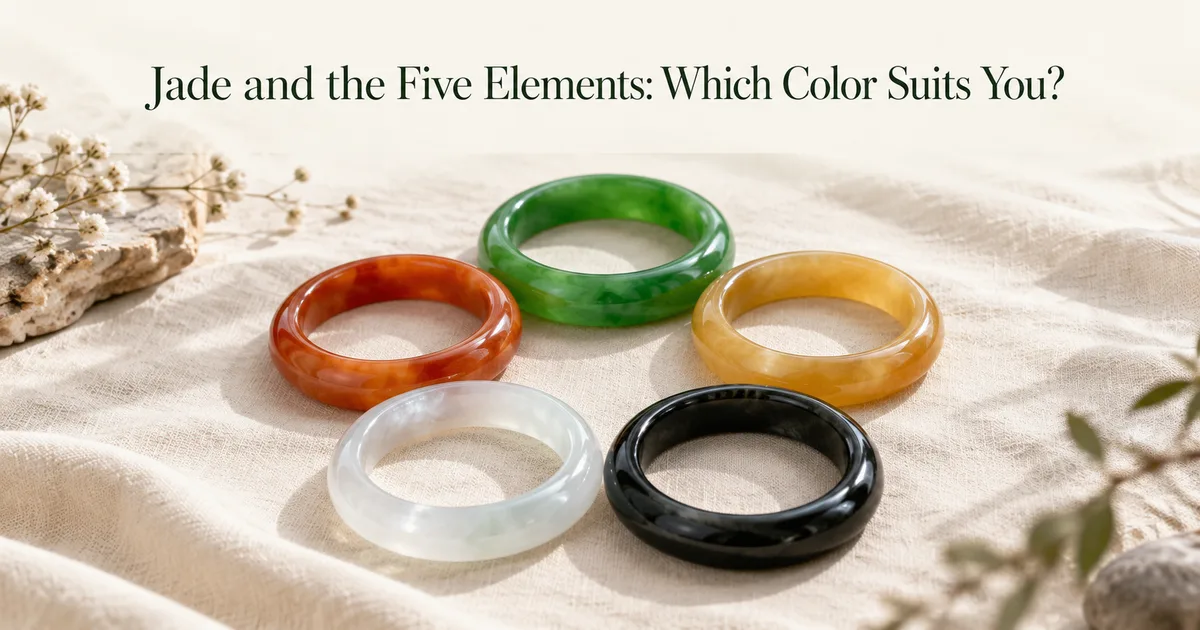
Choosing jade by the Five Elements is a folk tradition that matches a jadeite color to your element: green is Wood, red and purple are Fire, yellow is Earth, white is Metal and black is Water. In Vietnam your element (mệnh) usually comes from your lunar birth year, in Thailand from your zodiac year, birth month or birth day. It is tradition, not efficacy: color quality and natural Type A material matter far more for value than any element match.
What is choosing jade by the Five Elements?
Choosing jade by the Five Elements is a Chinese folk tradition, shared in Vietnam and Thailand, that matches a jadeite color to the wearer's element so the piece "suits" them. The stone itself has no element in this system. Only its color does, so the same green bangle is said to suit some people and not others.
People search for it in their own words. Vietnamese buyers ask "cẩm thạch hợp mệnh gì?" (which element does jade suit?) or "mệnh Thổ đeo vòng màu gì?" (what bangle color for an Earth person?). Thai buyers ask "หยกเหมาะกับธาตุอะไร" (which element is jade good for?) and "ธาตุเกิด" (birth element). Chinese buyers say 五行 and 喜用神. The answers come from the same tables, read in slightly different ways.
This guide explains those tables, how your element is worked out, and where the trade's view differs from the marketing. For the wider meanings of jade, see jade meaning and beliefs.
What are the five elements and their colors?
The five elements are Wood, Fire, Earth, Metal and Water (Chinese 五行, Vietnamese ngũ hành: Mộc, Hỏa, Thổ, Kim, Thủy; Thai ธาตุทั้งห้า: ไม้ ไฟ ดิน ทอง น้ำ). Each element is traditionally tied to a direction, a season and a group of colors.
| Element | Chinese | Vietnamese | Thai | Traditional colors | Jadeite colors usually placed here |
|---|---|---|---|---|---|
| Wood | 木 | Mộc | ไม้ | Green | Every green, from pale apple green to vivid imperial green |
| Fire | 火 | Hỏa | ไฟ | Red, pink, orange, purple | Red jadeite (红翡), orange-red, most lavender |
| Earth | 土 | Thổ | ดิน | Yellow, brown, beige | Yellow and honey jadeite (黄翡), brownish yellow |
| Metal | 金 | Kim | ทอง (โลหะ) | White, grey, silver, gold tones | White, colorless, icy and glassy jadeite |
| Water | 水 | Thủy | น้ำ | Black, dark blue | Black jadeite (墨翠), very dark green, some bluish pieces |
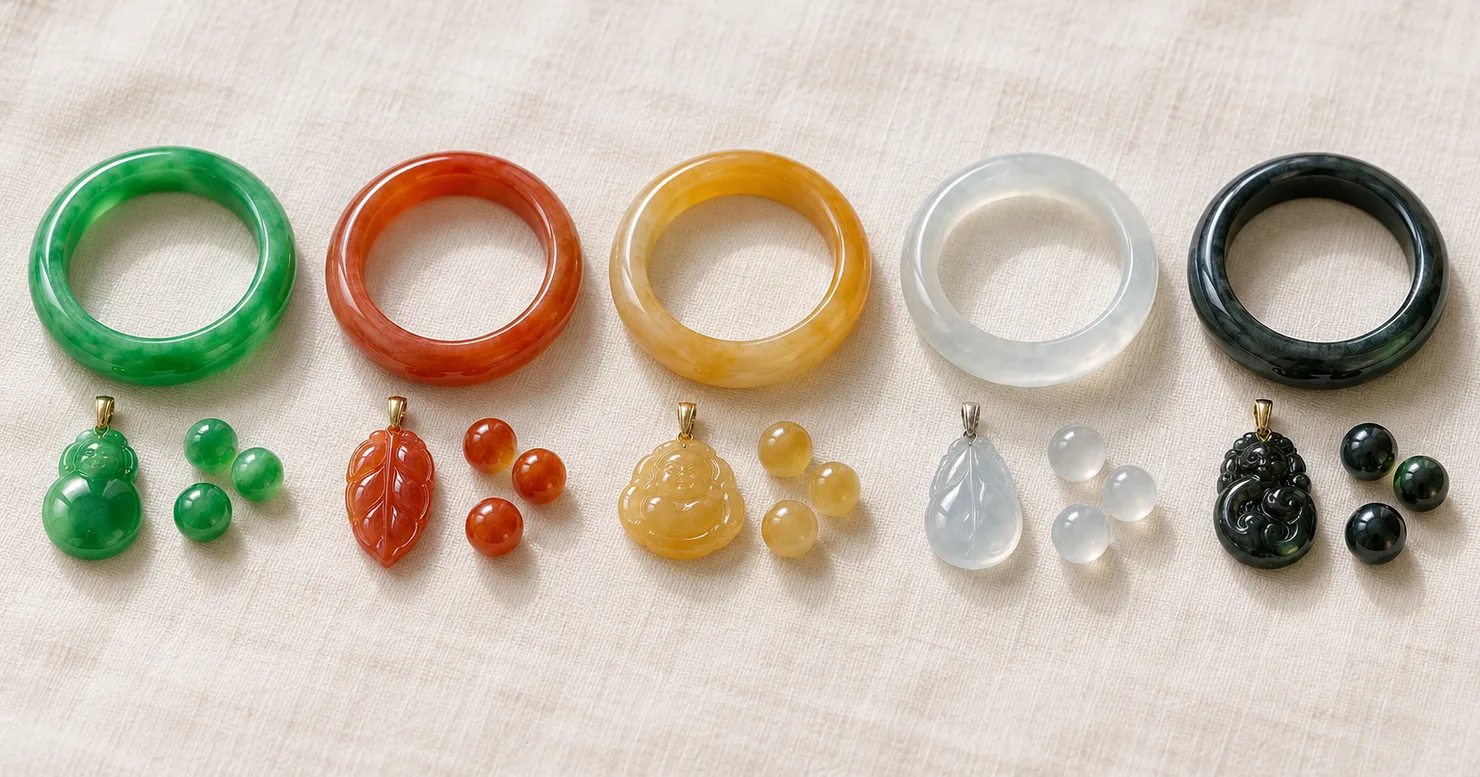
Two points cause most of the confusion. First, black jadeite (墨翠) is in fact a very dark green: lit from behind it glows green. By surface color it is Water, but some advisers place it with Wood because the light shows green. Second, lavender is not settled. Most sources put purple with Fire, some with Water, a few with Wood. Neither question has a single right answer, and it is fine to say so to a buyer.
What do tương sinh and tương khắc mean?
The elements are linked by two cycles. In plain words, one is "who feeds whom", the other is "who holds back whom".
| Cycle | Chinese | Vietnamese | The five steps |
|---|---|---|---|
| Generating (feeding) | 相生 | Tương sinh | Water feeds Wood, Wood feeds Fire, Fire makes Earth (ash), Earth yields Metal (ore), Metal produces Water (condensation) |
| Controlling (holding back) | 相克 | Tương khắc | Metal cuts Wood, Wood breaks up Earth, Earth dams Water, Water puts out Fire, Fire melts Metal |
From these two cycles, folk advice builds three kinds of color:
- Your own color (Vietnamese màu bản mệnh): the color of your element. A Wood person's own color is green.
- Your supporting color (màu tương sinh): the color of the element that feeds yours. Water feeds Wood, so a Wood person's supporting color is black or dark blue. Many Vietnamese advisers rank this above your own color.
- The color to avoid (màu tương khắc): the color of the element that holds yours back. Metal cuts Wood, so a Wood person is told to avoid white.
The trade disagrees on one detail. Some advisers also tell you to avoid the color of the element you hold back (for Wood, yellow Earth), because "it tires you". Others say that color is acceptable or even good for wealth. If two tables disagree on your "avoid" color, this is usually why.
How do I find my element from my birth year?
In Vietnam, mệnh almost always means the element of your birth year by the nạp âm system (纳音, "received sound"). Each pair of years in the 60-year cycle shares one element with a poetic name. 1990 and 1991 (Canh Ngọ, Tân Mùi) are Lộ Bàng Thổ, "earth by the roadside", so a person born in 1990 is mệnh Thổ, Earth.
The year follows the lunar calendar. If you were born in January or early February, check whether your birthday came before Lunar New Year (Tết). If it did, use the previous year.
| Element by birth year (nạp âm) | Birth years 1950–2027 |
|---|---|
| Metal (Kim) | 1954, 1955, 1962, 1963, 1970, 1971, 1984, 1985, 1992, 1993, 2000, 2001, 2014, 2015, 2022, 2023 |
| Wood (Mộc) | 1950, 1951, 1958, 1959, 1972, 1973, 1980, 1981, 1988, 1989, 2002, 2003, 2010, 2011, 2018, 2019 |
| Water (Thủy) | 1952, 1953, 1966, 1967, 1974, 1975, 1982, 1983, 1996, 1997, 2004, 2005, 2012, 2013, 2026, 2027 |
| Fire (Hỏa) | 1956, 1957, 1964, 1965, 1978, 1979, 1986, 1987, 1994, 1995, 2008, 2009, 2016, 2017, 2024, 2025 |
| Earth (Thổ) | 1960, 1961, 1968, 1969, 1976, 1977, 1990, 1991, 1998, 1999, 2006, 2007, 2020, 2021 |
Years always come in pairs, and the cycle repeats every 60 years, so 1924 has the same element as 1984. A few examples with their nạp âm names: 1984 Giáp Tý is Hải Trung Kim (gold in the sea), 1988 Mậu Thìn is Đại Lâm Mộc (great forest), 1996 Bính Tý is Giản Hạ Thủy (stream water), 2000 Canh Thìn is Bạch Lạp Kim (white wax metal), and 2026–2027 is Thiên Hà Thủy (water of the Milky Way). The 2027 year itself is covered in the 2027 Year of the Goat guide.
Why does the same birth year give different elements?
Because there are several systems, and websites rarely say which one they use. Take someone born in 1990:
| System | Used mainly by | How it works | 1990 gives | 1984 gives | 1996 gives |
|---|---|---|---|---|---|
| Nạp âm (纳音) | Vietnamese "mệnh" | The pair of years in the 60-year cycle | Earth | Metal | Water |
| Heavenly stem (天干) | Many Chinese and Thai websites | The last digit of the year: 0–1 Metal, 2–3 Water, 4–5 Wood, 6–7 Fire, 8–9 Earth | Metal | Wood | Fire |
| Zodiac animal (地支) | Thai ธาตุประจำปีเกิด | The animal: Tiger and Rabbit Wood; Snake and Horse Fire; Monkey and Rooster Metal; Rat and Pig Water; Ox, Dragon, Goat and Dog Earth | Fire (Horse) | Water (Rat) | Water (Rat) |
| Full birth chart (八字, "useful element" 喜用神) | Chinese fortune tellers | Year, month, day and hour together; the adviser picks the element the chart lacks | Depends on the chart | Depends on the chart | Depends on the chart |
So the same 1990 person can read "Earth", "Metal" or "Fire" depending on the page. None of these is a mistake. They are different traditions. If you are buying for a Vietnamese family, use nạp âm. If a Chinese master has read your 八字, use the useful element they gave you, which often differs from your birth-year element.
How do Thai birth elements work?
Thai buyers meet three separate ideas, and they are easy to mix up:
| Thai idea | Based on | Elements | Linked to jade color? |
|---|---|---|---|
| ธาตุประจำปีเกิด (element of the birth year) | Zodiac animal (ปีนักษัตร) | Five: ไม้ ไฟ ดิน ทอง น้ำ, as in the table above | Yes, through the Chinese color table |
| ธาตุเกิด or ธาตุเจ้าเรือน (birth element) | Birth month, from Thai traditional medicine | Four: ดิน น้ำ ลม ไฟ (earth, water, wind, fire). Commonly: Jan–Mar Fire, Apr–Jun Wind, Jul–Sep Water, Oct–Dec Earth | Not traditionally; it is used for food and health advice, and sources differ |
| สีประจำวันเกิด (birth-day color) | Day of the week you were born | No elements, one color per day | Yes: green for Wednesday, purple for Saturday, and so on |
The birth-day colors, with the jadeite colors usually matched to them, are in jade meaning and beliefs. Thai astrologers also publish yearly lucky and unlucky colors (สีกาลกิณี), and these change from year to year and astrologer to astrologer. Thai sources also differ on when the zodiac year changes: some use Chinese New Year, some an older Thai date in spring, so people born in January to April should check.
Which jadeite colors map to which element?
Dealers name colors far more finely than "green" or "red". Here is how the common trade colors are usually placed:
| Trade color | Chinese | What it looks like | Element usually given |
|---|---|---|---|
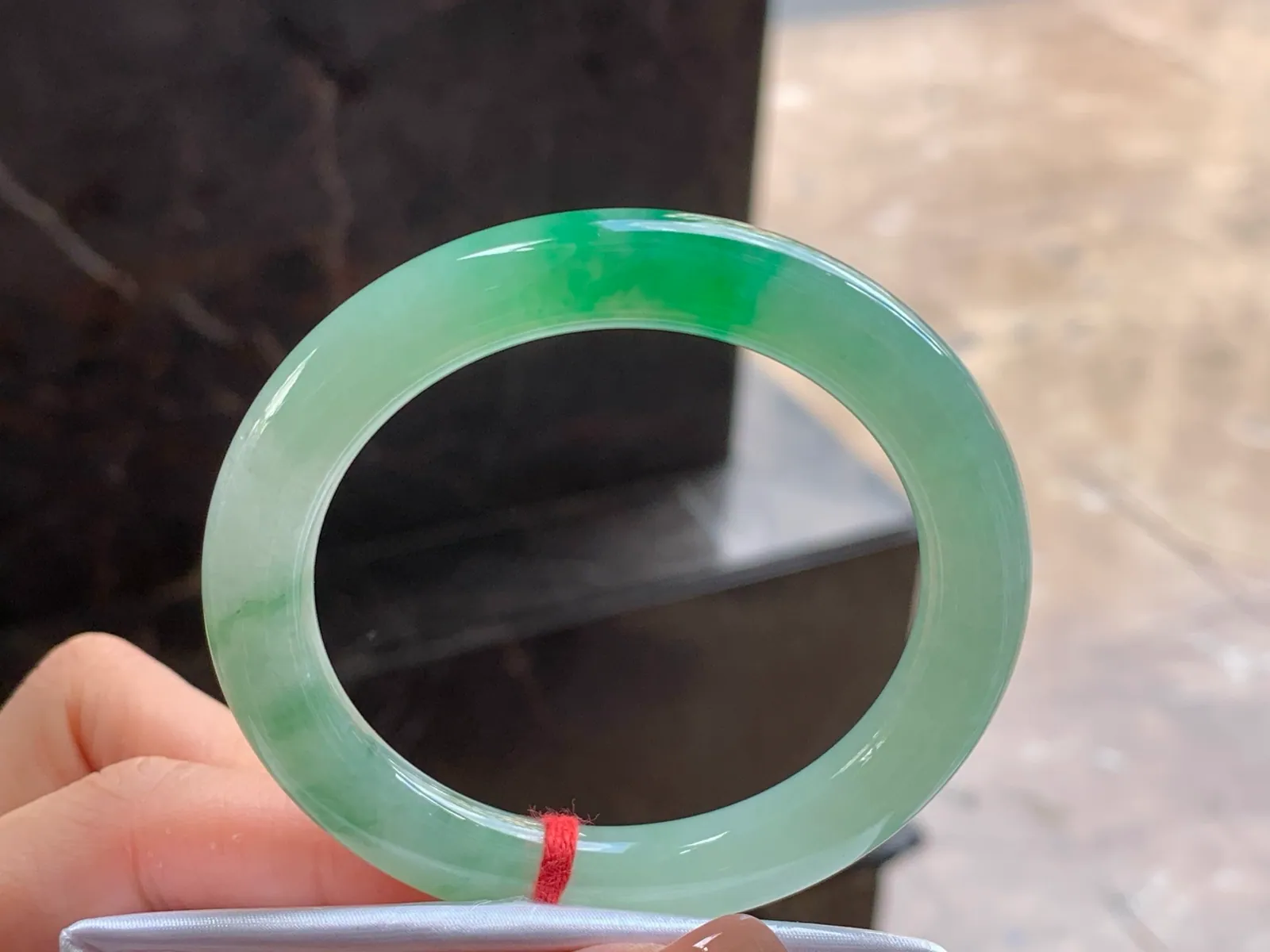
| Imperial, vivid green | 帝王绿, 正阳绿 | Saturated, bright, even green | Wood |
| Spicy green | 辣绿 (vi: lạt lục, lục cay) | Intense, slightly darker green | Wood |
| Apple green, pale green | 苹果绿, 浅绿 | Lighter green | Wood |
| Oily green | 油青 | Grey or bluish dark green, oily luster | Wood, sometimes Water |
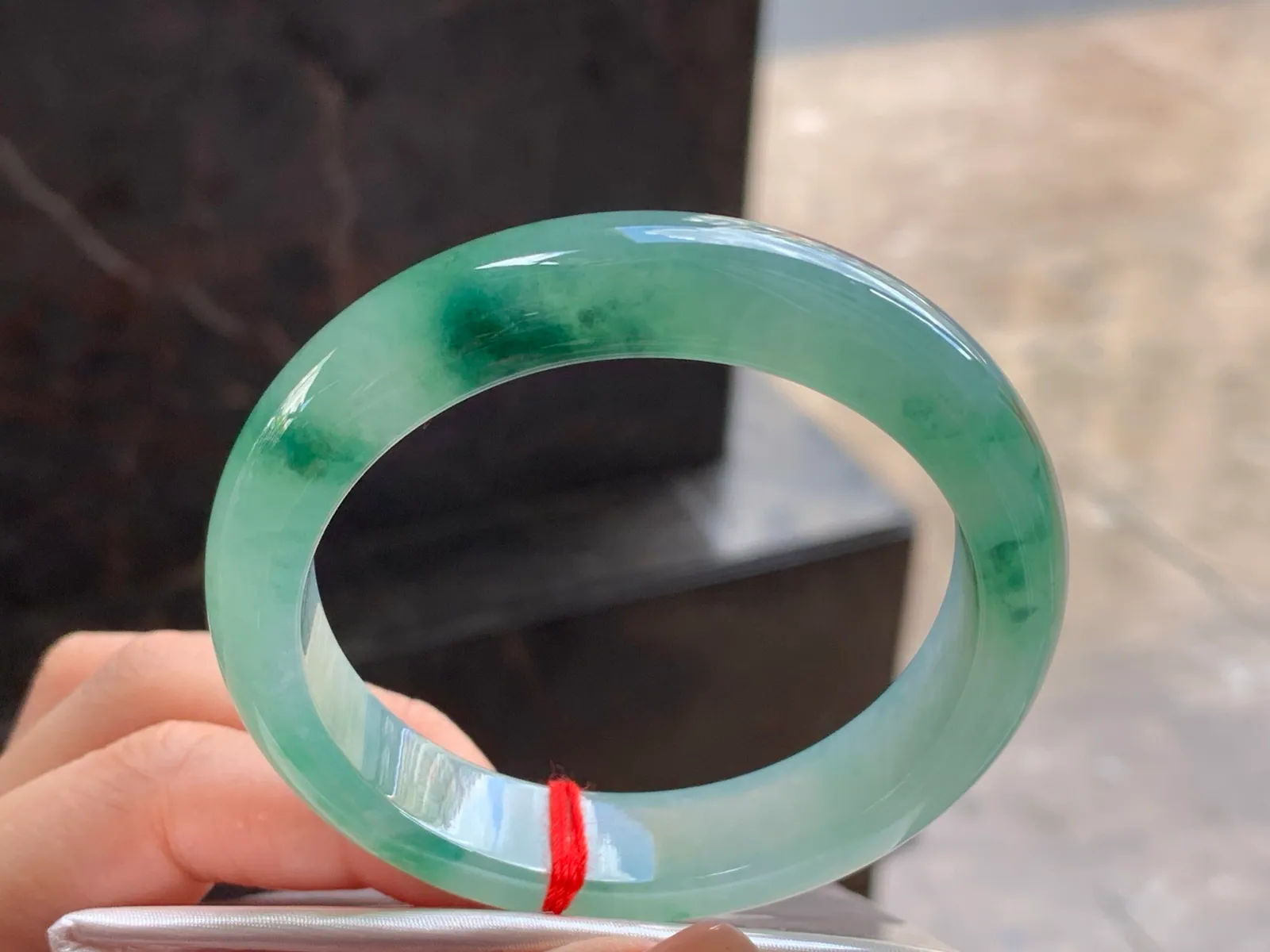
| Floating green flowers | 飘花 | Green or blue-green wisps in icy jade | Wood, or Metal plus Wood |
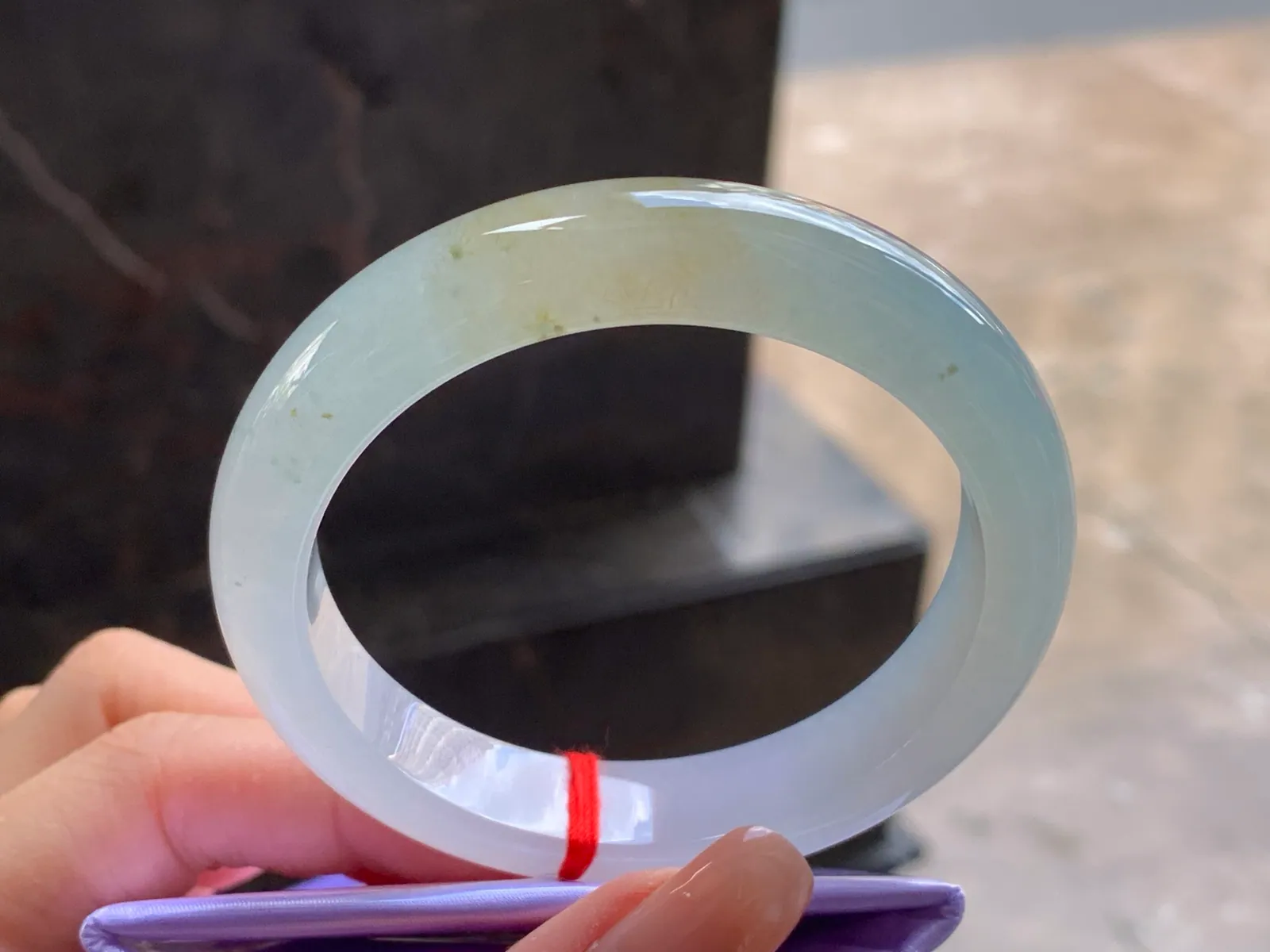
| Light blue-green | 晴水 | Pale, even blue-green tint | Wood or Water; sources differ |
| Black jadeite | 墨翠, 乌鸡 | Looks black, glows dark green when backlit | Water, some say Wood |
| Red, orange-red | 红翡 | Red-brown to orange-red | Fire |
| Yellow, honey | 黄翡 | Yellow to honey | Earth |
| Lavender | 紫罗兰, 春色 | Pink-purple to blue-purple | Mostly Fire; some say Water or Wood |
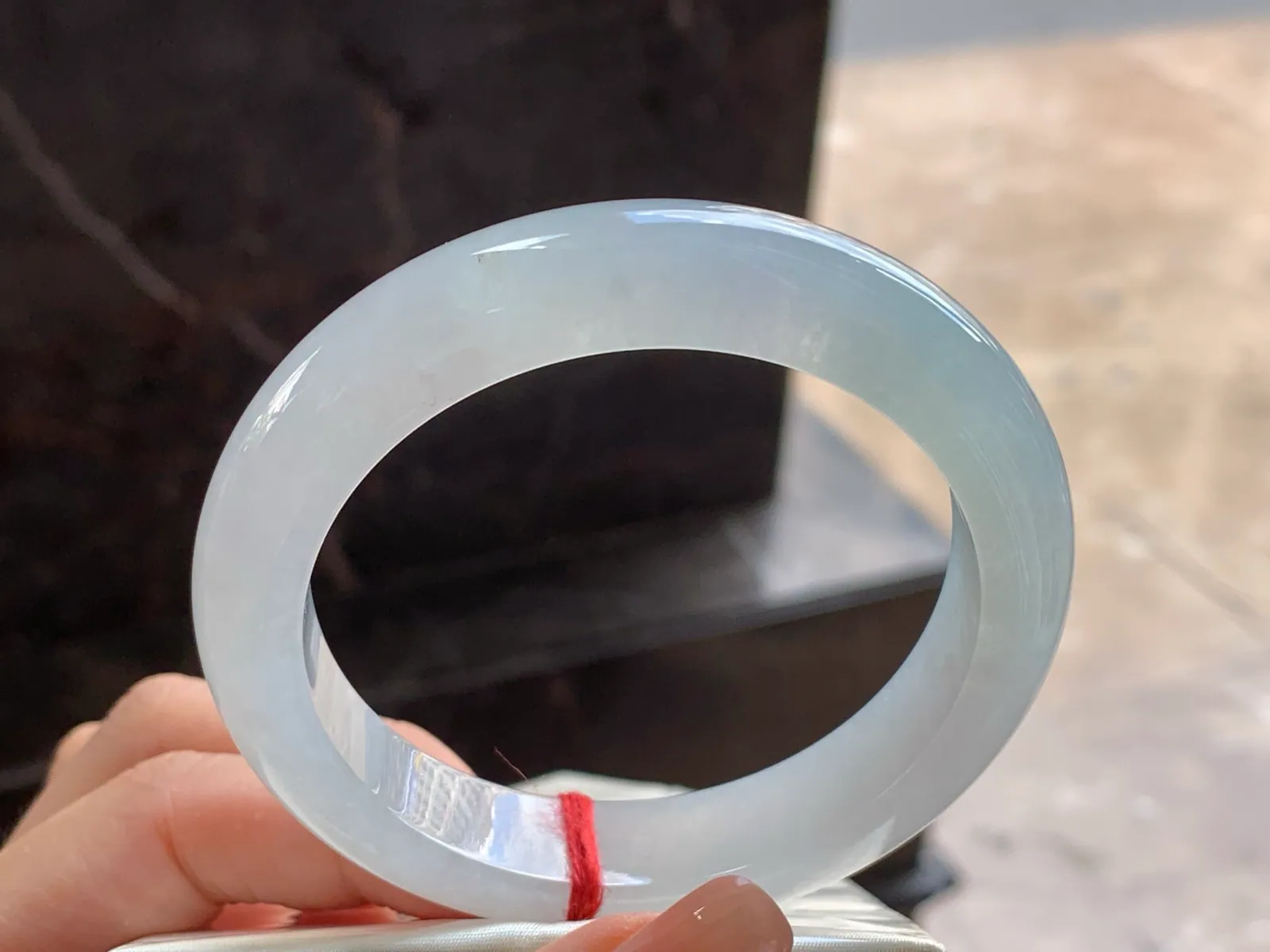
| White, colorless, icy | 白, 冰种, 玻璃种 | No color, from milky to clear | Metal |
| Three or more colors | 福禄寿, 春带彩 | Green with purple and red or yellow | Often said to suit everyone |
Two notes from the trade. Gold settings are often counted too: most gold-set jadeite is made in China in 18K gold, and gold is Metal by name, so some advisers count a gold-set green pendant as "Wood with Metal". And a single bangle often carries more than one color, for example white with green patches. Advisers usually go by the color that covers most of the piece.
Which jade suits each element?
Putting the cycles and the colors together gives the most common advice. It matches the table in our beliefs guide:
| Your element | Own color | Supporting color | Jade usually suggested | Usually told to avoid |
|---|---|---|---|---|
| Metal (Kim) | White, grey | Yellow, brown (Earth feeds Metal) | White, icy, yellow, honey | Red, lavender (Fire melts Metal) |
| Wood (Mộc) | Green | Black, dark blue (Water feeds Wood) | Green, black jadeite, blue-green | White (Metal cuts Wood) |
| Water (Thủy) | Black, dark blue | White (Metal produces Water) | Black jadeite, white, icy, blue-green | Yellow, brown (Earth dams Water) |
| Fire (Hỏa) | Red, pink, purple | Green (Wood feeds Fire) | Green, red, lavender | Black (Water puts out Fire) |
| Earth (Thổ) | Yellow, brown | Red, pink, purple (Fire makes Earth) | Yellow, honey, red, lavender | Green (Wood breaks up Earth) |
The hardest case is Earth, because green is the classic jade color and the tables tell Earth people to avoid it. In practice families solve it in three ways: they choose yellow, red or lavender jadeite instead; they choose white or icy jade with only a little green; or they follow a 八字 reading that says otherwise. Some simply wear the green they love.
What do jade colors mean in China, Vietnam and Thailand?
The color sayings are older than the element tables, and they explain why certain colors are popular gifts:
- Green: life, growth and 平安 (peace and safety) in China; in Vietnam the classic vòng cẩm thạch for daughters and brides; in Thailand the Wednesday color.
- Red (翡): celebration and good fortune; in Thailand the Sunday color.
- Yellow: wealth and the earth; in Thailand the Monday color.
- White: purity and calm; often paired with gold.
- Black: protection in folk belief; Wednesday-night color in Thailand.
- Lavender: romance and grace; Saturday in Thailand. See lavender jadeite.
- Three colors (福禄寿): fortune, prosperity and long life together.
These are sayings and wishes. No color of jade has been shown to change luck, health or money.
Does matching your element matter more than color quality?
Not for value. The element table tells you which color family to look at. It does not tell you whether a piece is good. Within any color, price is set by how saturated, bright and even the color is, by the texture and translucency (种水), by cracks, and by size and workmanship. See the jadeite colors guide and what determines jadeite price.
What the trade sees again and again:
- "Hợp mệnh" as a price label. A listing that says "suits Fire, brings luck" for an ordinary piece is selling the story, not the stone. A piece is worth the same whatever your element is.
- Rare colors pushed hard. Earth and Fire people are steered toward red, yellow and lavender, which are rarer in good quality. Vivid, even red or purple at a low price is a warning sign.
- Dyed jade made to order. Treated jadeite is bleached, filled with resin (Type B) or dyed (Type C). Dye can make any color, so a seller can offer the "right" color for every element. Dyed color sits in a net of fine cracks and grain boundaries, looks too even, and can fade.
- "Phong thủy stone" with no material named. "Feng shui jade", "Myanmar jade stone" or "natural stone" is not the same as natural jadeite. Many green feng shui bracelets are quartzite, aventurine or glass: see jade look-alikes.
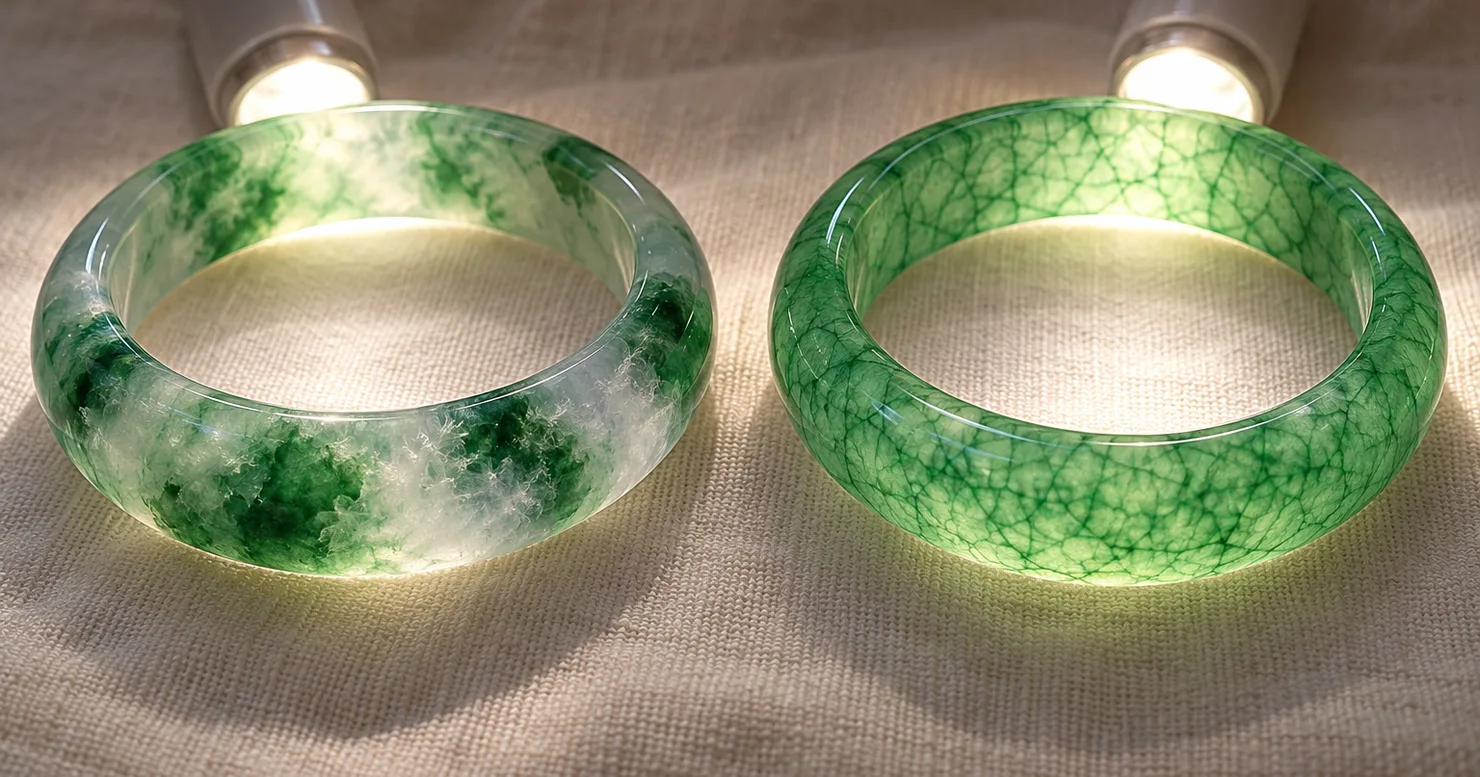
The tradition itself says a dyed piece does not count: the color is meant to be the stone's own. That is one more reason to insist on Type A. Learn the signs in how to spot treated jadeite.
How do dealers check that the color is natural?
A dealer looks at color in this order before thinking about any element:
- Daylight first. Look near a window in indirect daylight, not under warm shop lamps, which make green look richer and lavender pinker.
- Reflected light. Shine a white flashlight onto the surface at an angle. Look for fine cracks, a net of lines, and pits or a dull, resin-like surface.
- Transmitted light. Press the flashlight against the back and look through. Natural green sits in patches, veins or "roots" (色根) with soft edges and white cotton between them. Dyed green spreads in thin lines along cracks and grain boundaries, with paler areas in the gaps.
- Check the edges of the color. Natural color fades gradually into the base. Dye often stops at a crack or looks the same everywhere.
- Read the certificate. A Chinese certificate for natural jadeite names it 翡翠 with no treatment noted. 翡翠(处理) means treated, often marked B, C or B+C. See how to verify a jadeite certificate.
A common mistake is to judge color in a photo taken under warm light, with the piece glowing on a black cloth. Ask for daylight photos and a backlit shot.
How to choose jade by your element, step by step
- Decide which system you follow. Vietnamese family custom: nạp âm birth year. Thai: zodiac year, or birth-day color. Chinese: your 八字 useful element if you have one.
- Find the lunar birth year. Born before Lunar New Year? Use the previous year.
- Pick a color family from the tables: own color or supporting color, and skip the one you are told to avoid if that matters to you.
- Within that family, buy quality. Even, lively color, good translucency, no cracks, natural Type A.
- Ask for daylight and flashlight photos and a certificate that names the material and any treatment.
- Pay for the stone, not the story. If a seller charges more because a piece "suits your element", walk away.
On JadeiteHub, sellers post real photos of the actual piece, some with video, so you can judge the color yourself in daylight and backlight before you choose by element. Every sold piece is checked against its certificate before it ships, travels with insured shipping, and is fully refunded if it does not match the description. Payments go through licensed providers; import duties are paid by the buyer.
FAQ
Which element does jade suit?
By tradition it depends on the color, not the stone. Green jade is Wood and is said to suit Wood and Fire people; white is Metal, red and lavender are Fire, yellow is Earth, and black is Water.
I was born in 1990. What is my element?
By the Vietnamese nạp âm system, 1990 Canh Ngọ is Lộ Bàng Thổ, Earth. Other systems give Metal (the year ending in 0) or Fire (the Horse). If you were born before Lunar New Year 1990, use 1989 instead.
Can an Earth person wear green jade?
Many tables say Earth people should avoid green because Wood breaks up Earth. Families often choose yellow, red or lavender jadeite instead, or white jade with only a little green. It is a tradition, so wearing the green you love is also a common choice.
Does jade bring luck if it matches my element?
That is a folk belief, not a proven effect. Matching your element can make a gift more meaningful, but it does not change the stone's quality or value.
Is a dyed jade bangle in my element color still good?
No. Dyed (Type C) or resin-filled (Type B) jadeite is worth far less, its color can fade, and in the tradition the color is meant to be the stone's own. Ask for a certificate that names any treatment.