Is Jade Bad Luck? 8 Jade Bracelet Myths Explained
Updated

Jade is not considered unlucky in Chinese, Vietnamese or Thai tradition; it is worn for protection and good fortune. Most "bad luck" stories are rules about how to treat jade: a bracelet that breaks is said to have taken a blow for you, and old or inherited jade is usually welcomed, not feared. None of these beliefs is a proven fact. The real risks are practical: treated Type B or C jade sold as natural, and a hidden crack that makes a bangle break.
Can jade bring bad luck?
Not in the traditions that value jade most. In China, Vietnam and Thailand, jade is worn to keep its owner safe and to invite good fortune, so the question people usually ask is the opposite one: will jade bring good luck?
Where worries about bad luck do appear, they are almost always about how jade is treated: what happens if it breaks, whether you may take it off, whose jade you wear, what color you choose. This guide goes through those beliefs one by one, says where each comes from, and separates the tradition from what can actually go wrong.
A note before we start: these are cultural beliefs. There is no evidence that any stone changes your luck. They are worth knowing because they matter to many families, and because they shape how people give and wear jade.
Myth 1: Is breaking a jade bracelet bad luck?
Usually the opposite. The common saying is 玉碎挡灾, "the jade broke to block misfortune": the bracelet is believed to have absorbed a blow that was meant for you. Vietnamese and Thai families tell a very similar story.
What people do next matters more to them than the break itself. Many collect every piece, wrap them in red cloth or a clean pouch, and keep them rather than throw them out. Some have the pieces recut into a ring or a small pendant so the bracelet stays in the family. Others simply say thank you and buy a new one when the time feels right.
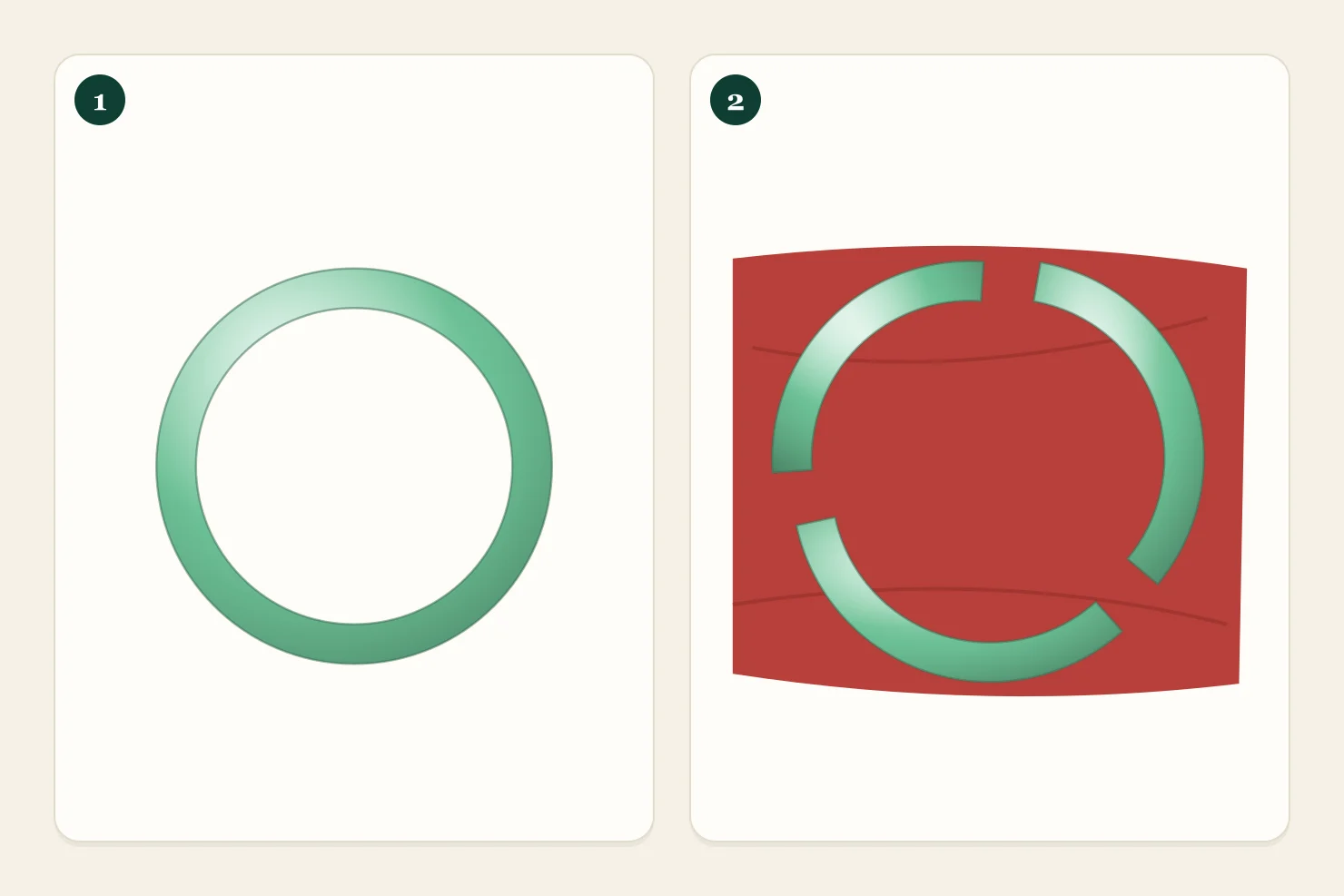
For what to do practically with a cracked or broken bangle, including repairs, see what to do with a cracked or broken jade bangle.
Myth 2: Is it bad luck to take off a jade bracelet?
You will hear that a jade bangle, once on, should never come off, or that removing it "breaks the bond" with its wearer. The belief has a practical root: a well-fitted bangle is hard to get over the knuckles, so many older women simply never removed theirs. It also connects to the saying 人养玉,玉养人, "people nourish jade and jade nourishes people", which pictures jade and wearer growing together over years.
There is no tradition that punishes you for taking a bangle off to protect it. Removing it for heavy lifting, sport, cooking with hot pans or a trip to the sauna is simply good sense. See can you wear jade every day for which activities are fine and which are not.
Myth 3: Is it bad luck to wear someone else's jade?
This is the belief that worries buyers most. The idea is that jade "holds" something of the person who wore it, so wearing a stranger's piece means taking on their fortune, good or bad.
Tradition draws a sharp line here:
- Family jade is a blessing. A grandmother's bangle passed to a granddaughter is meant to carry protection and love forward. Most families see wearing it as an honour.
- Unknown old jade gets more caution. Some people avoid pieces of unknown history, especially antique jade that may have come from graves. Others clean a second-hand piece and simply start wearing it.
If you have inherited a piece and want to know whether it is natural jadeite, see old jade heirlooms: how to tell what you have.
Myth 4: Should you never buy jade for yourself?
Some people say jade only brings luck when it is given as a gift. This is more a reflection of how jade is usually acquired than a real rule: bangles are traditional gifts from parents, grandparents and partners, so "jade comes to you" became part of the story.
Plenty of people buy jade for themselves, for a milestone, a new job or simply because a piece speaks to them. The related saying "jade chooses its owner" points the same way: pick the piece you keep coming back to.
Myth 5: Is black jade unlucky?
Black can be read two ways. Some people avoid black for gifts to elderly relatives, because black is linked with mourning in parts of Chinese culture. Others choose black jadeite precisely for protection: very dark green jadeite (墨翠) is a favourite material for Guanyin, Buddha and guardian figures, because carving shows clearly against the dark stone.
If you are buying black jade, the more useful question is whether it is jadeite at all, since many black stones are sold as jade. See black jadeite: real or dyed.
Myth 6: Can the wrong color bring bad luck?
Five-element (Wu Xing) traditions match jade colors to a person's element, and some sources list a color to "avoid". For example, green is linked to Wood, and Metal is said to "cut" Wood. Followers of this system may skip a color that clashes with their element.
These are folk guides and the sources do not always agree, especially on lavender. If color matching matters to you, read jade and the five elements and jade meaning and beliefs; if it does not, choose the color you love.
Myth 7: Are jade bracelets good luck, and what is lucky jade for men?
In tradition, yes: jade is worn for peace, protection and prosperity. Particular designs carry particular wishes. Among men, the most popular "lucky" pieces are not bangles but pendants:
- Safety buckle (平安扣) for peace and safety.
- Plain tablet (无事牌) for "no trouble", a wish for an uneventful, safe life.
- Pixiu (貔貅) for keeping wealth.
- Dragon for strength and success.
For sizes, styles and how men usually wear jade, see jadeite for men. Treat the meanings as wishes, not promises.
Myth 8: Does jade change color if you are unlucky or ill?
Stories say a piece turns dull when its owner is in trouble. Natural Type A jadeite does not change color with your fortune or your health. What does change is the surface: skin oils and soap residue can make it look dull, and a wipe with a soft cloth brings the shine back. Treated jade, on the other hand, can yellow or turn cloudy over time, which leads to the real risk below.
What actually goes wrong with jade?
If anything deserves the name "bad luck", it is these two problems, and both can be avoided:
- Treated jade sold as natural. Bleached and resin-filled (Type B) or dyed (Type C) jade can look attractive at first, but it is worth far less and can become brittle or fade. See Type A vs Type B vs Type C jadeite.
- A hidden crack. A crack that runs into a bangle can make it break after a small knock. Ask to see the piece lit from inside before you buy.
The protection here is ordinary: buy natural jadeite with a certificate from a recognised lab, and check that the certificate matches the piece. See how to verify a jadeite certificate. Every JadeiteHub piece is sold with its certificate and checked against it before shipping.
FAQ
Is it bad luck to break a jade bracelet?
In Chinese, Vietnamese and Thai tradition, a broken jade bracelet is usually seen as having taken a misfortune in your place, not as a bad omen. Many families keep the pieces or have them recut.
Is it bad luck to take off a jade bracelet?
No tradition says you will be punished for it. The idea of never taking a bangle off comes from how hard a good fit is to remove. Taking it off to protect it from knocks is sensible.
Can I wear jade that belonged to someone else?
Family jade is traditionally seen as a blessing. Some people prefer to avoid old jade of unknown history, but this is personal belief, not a rule.
Does jade bring good luck?
Jade is traditionally worn for protection, peace and prosperity. These are cultural wishes; there is no evidence that a stone changes anyone's luck.
Is black jade bad luck?
Not in general. Some avoid black for gifts to elders, while others choose dark jadeite for protective Guanyin and Buddha pendants.