Guatemalan Jade vs Burmese Jade: Blue Water and Value
Updated
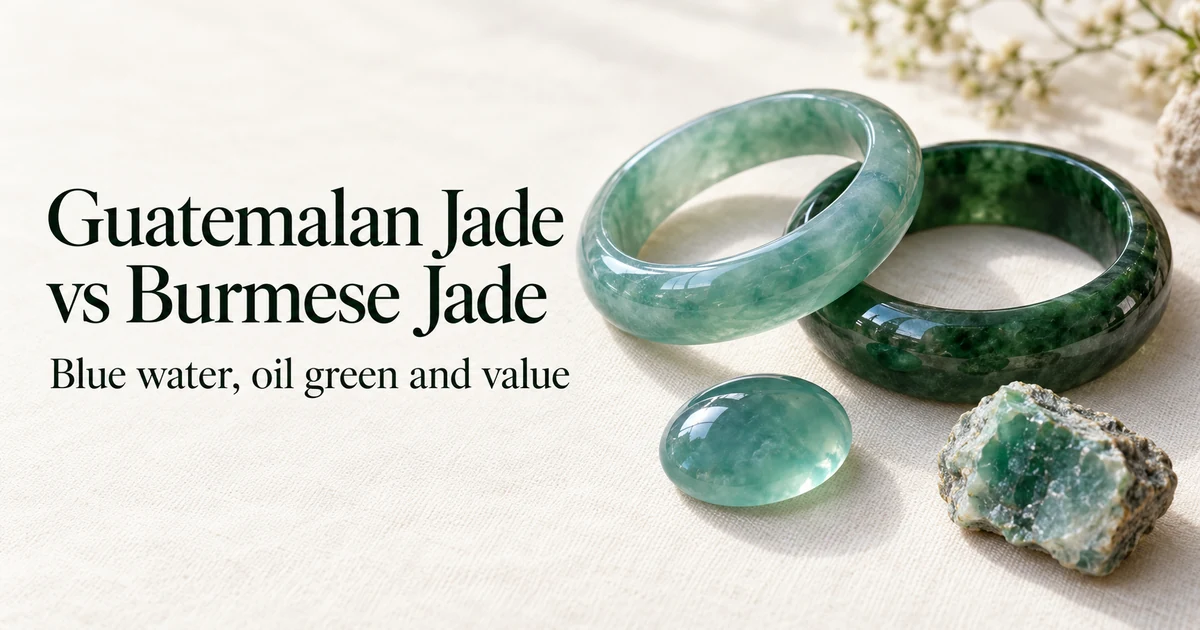
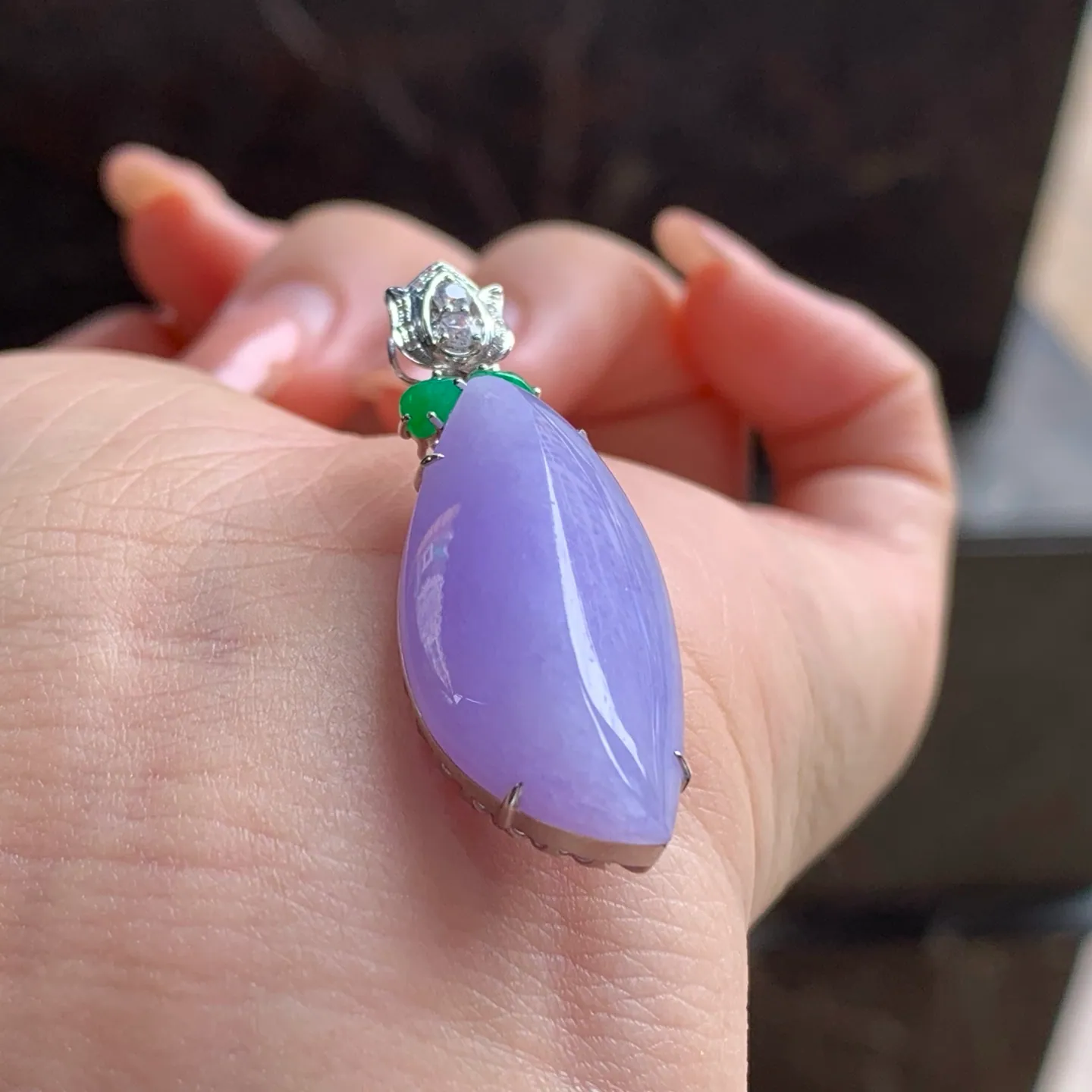
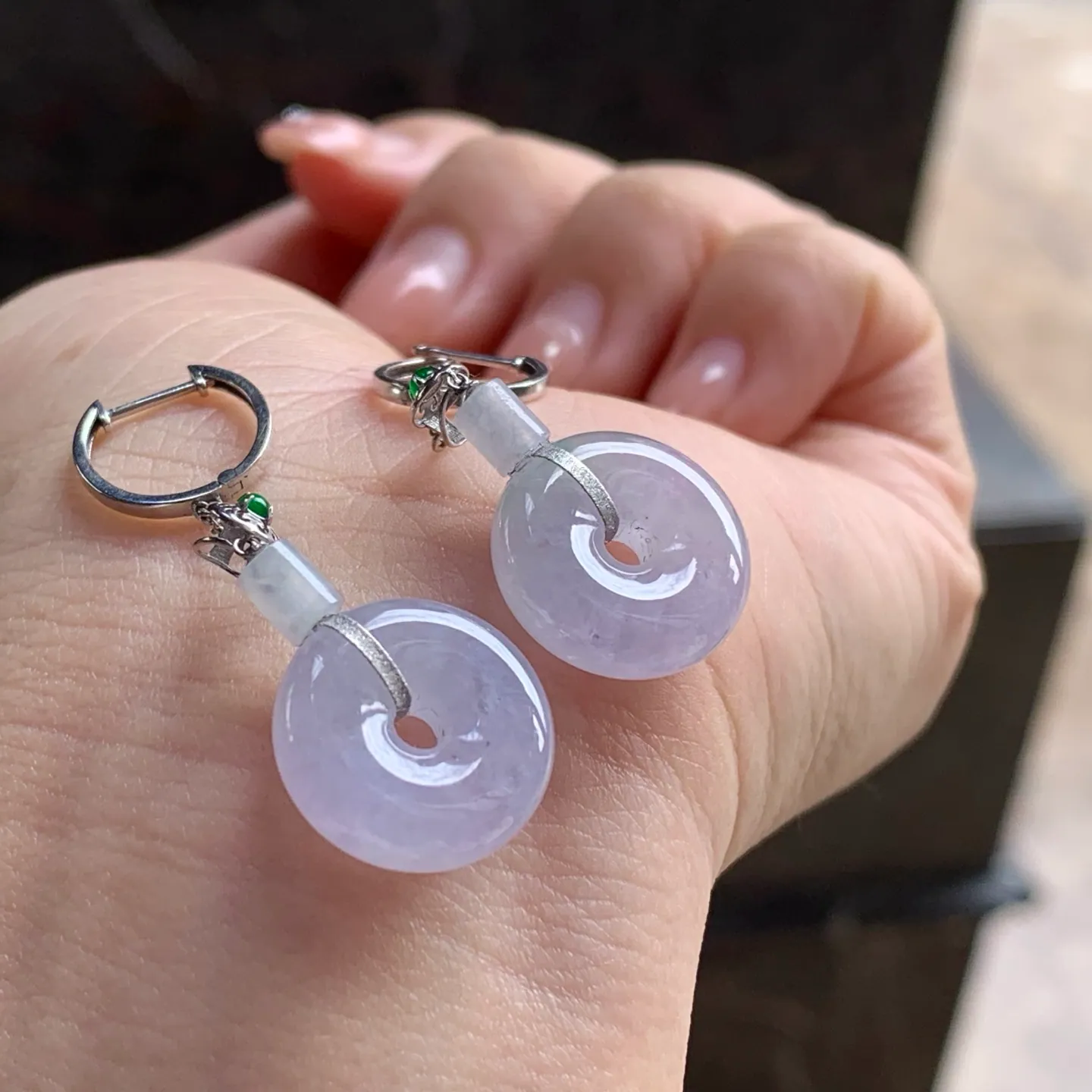
Guatemalan jade is real jadeite, the same mineral as Burmese (Myanmar) jade, mined along the Motagua River valley in Guatemala and once prized by the Olmec and Maya. It is best known for bluish and greyish greens: "blue water" (蓝水), dark "oil green" (油青), black and some lavender. In the Chinese trade it is called 危料 and generally sells below Burmese pieces that look similar, but fine pieces exist. Most certificates do not state origin, and telling the two apart by eye is hard even for experts, so judge the piece, its treatment status and its certificate rather than the country.
What is Guatemalan jade?
Guatemalan jade is jadeite, the same mineral as Burmese jade, found in Guatemala. Most of it comes from the Motagua River valley, along a major fault zone in the east of the country where the conditions that form jadeite also exist. It is not a look-alike, not nephrite and not a lower "kind" of jade: a lab tests Guatemalan jadeite as jadeite.
Jadeite forms in only a handful of places in the world. Myanmar (Burma) supplies almost all gem-quality jadeite, and Guatemala is the best-known second source. Smaller deposits exist in places such as Japan, Russia and Kazakhstan. For the bigger picture, see where does jadeite come from.
Where does Guatemalan jade come from, and how old is its history?
Long before jadeite reached China from Burma, it was carved in Mesoamerica. The Olmec and later the Maya worked jadeite from the Motagua region into masks, beads, ear ornaments and ritual objects, and the Maya valued it above gold. The Olmec were especially fond of a bluish-green jadeite.
After the Spanish conquest, the sources were largely forgotten. Geologists identified jadeite in Guatemala again in the mid-20th century, and small-scale mining and carving for tourists and jewelry followed. In recent years far more Guatemalan rough has been shipped to China and carved there, which is why Guatemalan jadeite now appears in Chinese, Thai and Vietnamese shops and live streams.
How is Guatemalan jade different from Burmese jade?
They are the same mineral, so hardness, density and toughness are essentially the same. The differences are in the typical look of the material and in how the market prices it. These are tendencies, not rules: plenty of pieces from each source look like the other.
| Burmese (Myanmar) jadeite | Guatemalan jadeite | |
|---|---|---|
| Mineral | Jadeite | Jadeite |
| Chinese trade name | 缅料 (Burmese material) | 危料 (Guatemalan material) |
| Typical greens | From yellowish to pure green; the source of imperial green | Often bluish, greyish or dark green; vivid pure green is rare |
| Typical specialties | Imperial green, glassy and icy material, lavender, red and yellow | Blue water (蓝水), oil green (油青), black, some lavender |
| Texture | Very wide range, up to very fine and glassy | Wide range; fine, translucent blue-water pieces exist |
| Treatment risk | Type B and C exist | Type B and C exist too |
| Market value | Sets the benchmark | Generally below Burmese pieces that look similar |
| Certificate | Usually says "jadeite", no origin | Usually says "jadeite", no origin |
What is "blue water" jade, and is blue jade real jadeite?
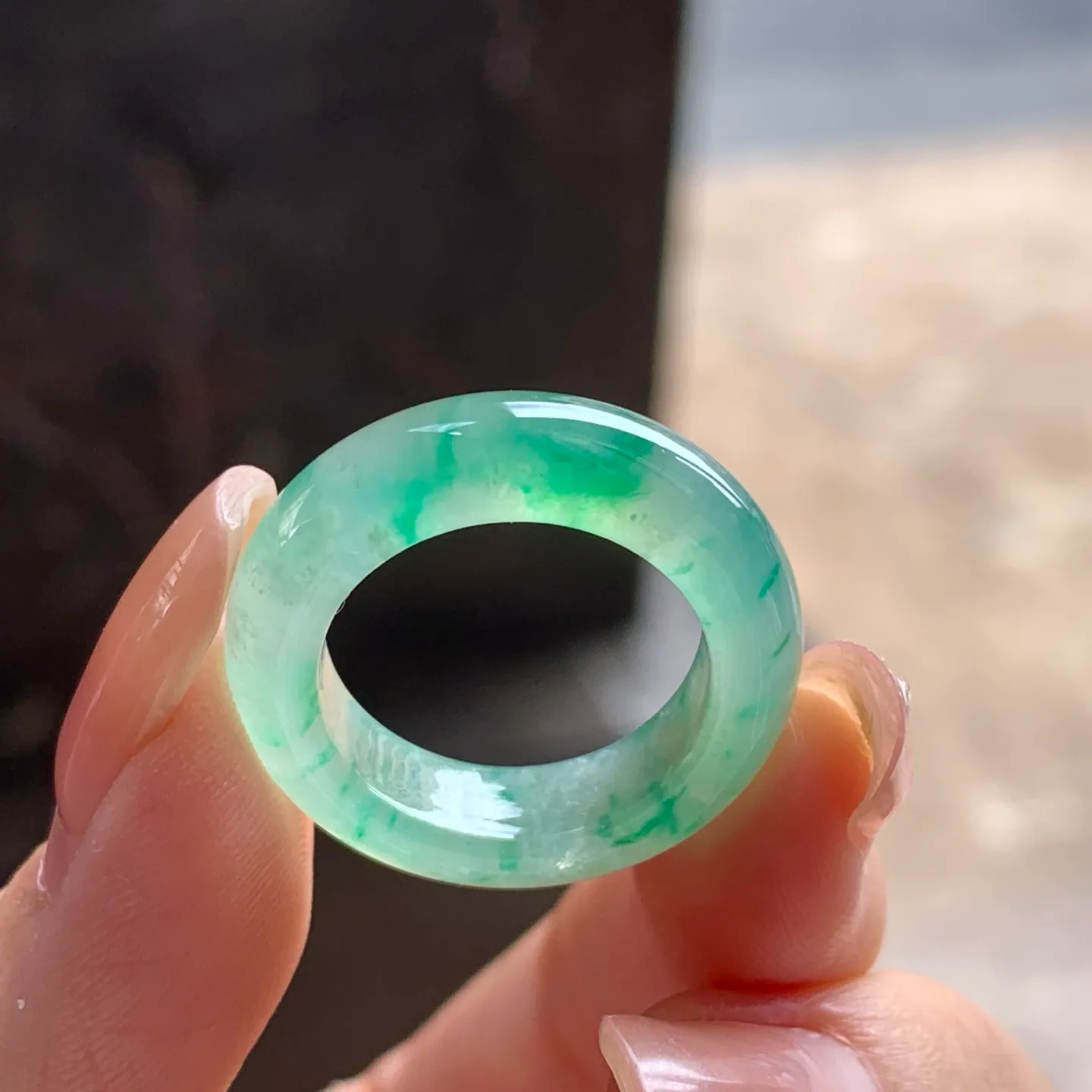
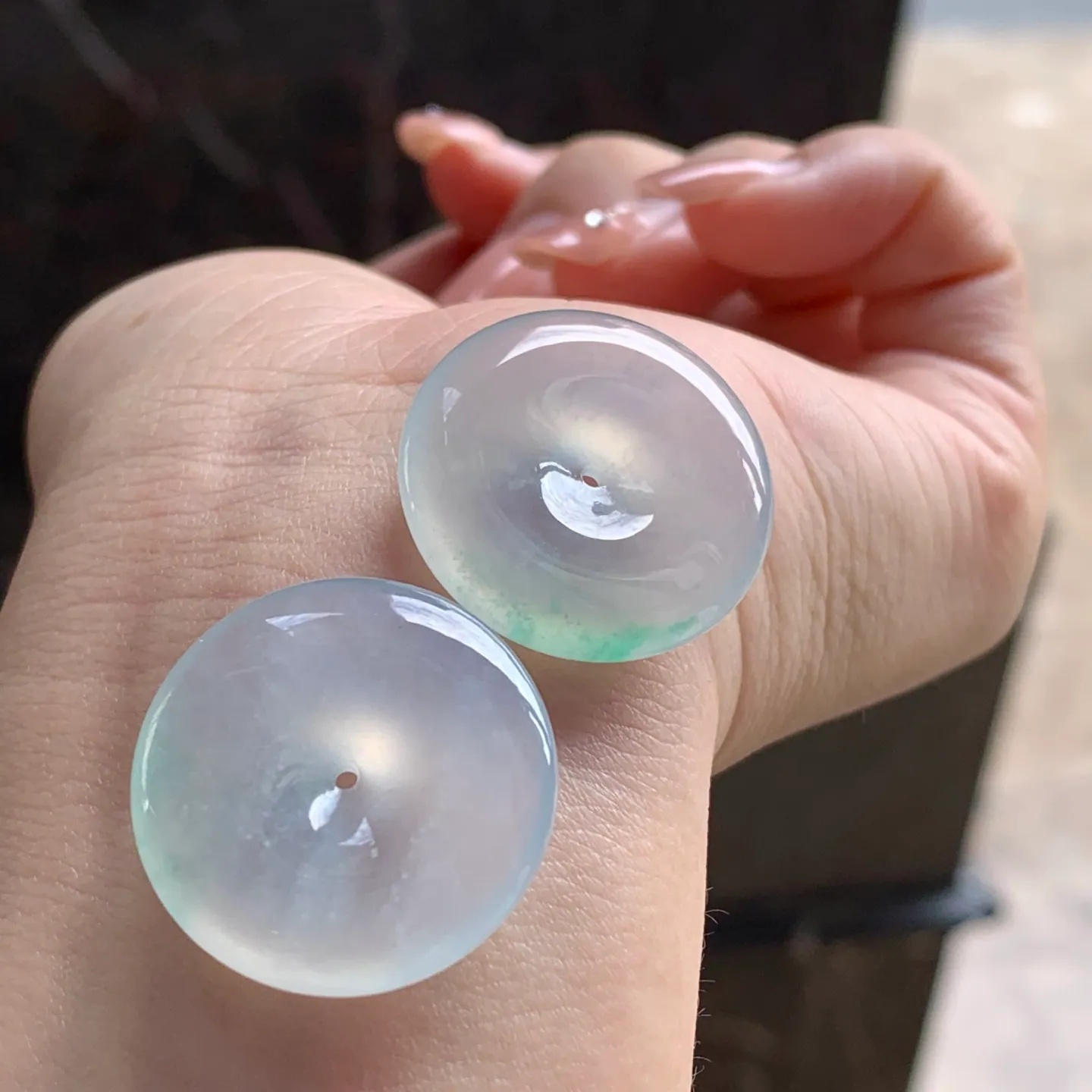
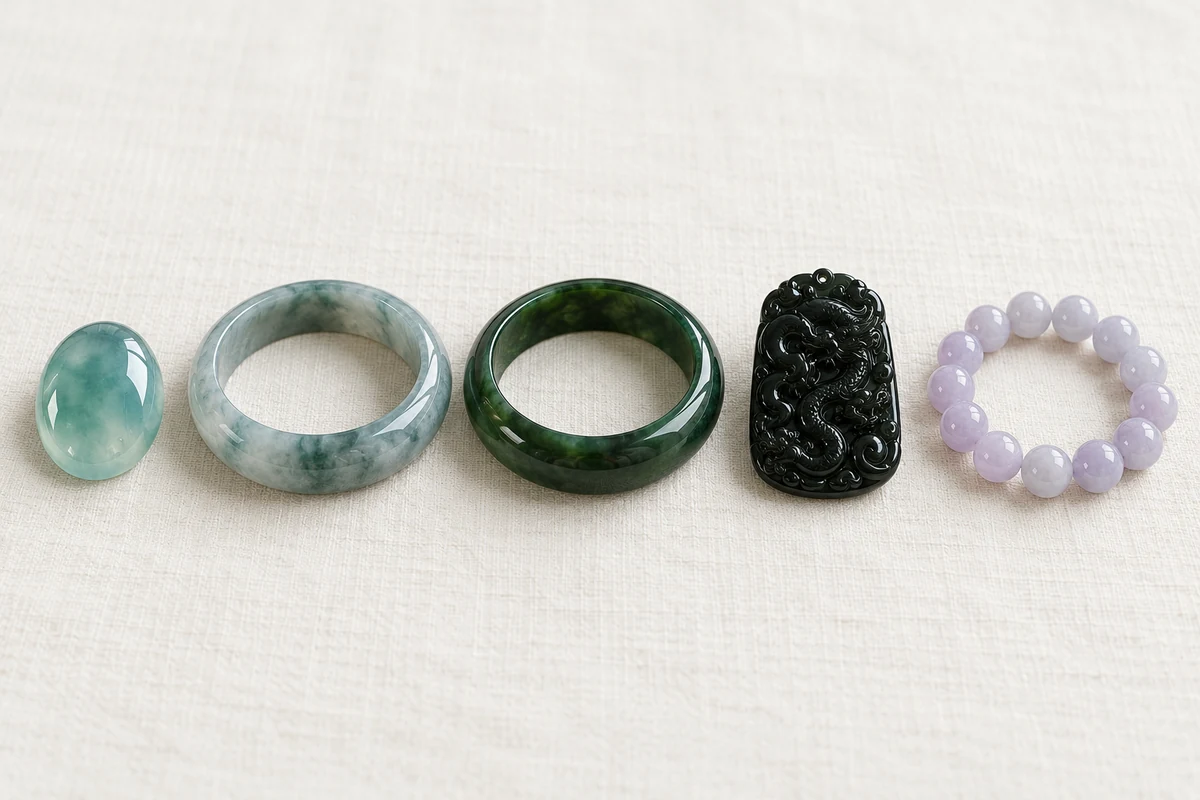
"Blue water" (蓝水, lan shui) is a trade name for translucent jadeite with a cool, bluish-green or blue-grey tone, often with little visible texture. It is one of the colors Guatemalan jadeite is best known for, although Burmese blue-water jadeite also exists. Blue water is natural jadeite color, not a treatment, provided the piece is Type A.
Truly blue jadeite, as opposed to bluish green, is rare from any source. When you see a bright, even sky-blue "jade", be careful: dyed quartzite and glass are much more common than natural blue jadeite. See fake jade look-alikes.
A naming note: searches for "blue jadeite dishes" usually mean vintage milk-glass kitchenware sold under the name "Jade-ite" (for example by Fire-King). That is glass, not stone, and has nothing to do with jadeite jade.
What is oil-green (油青) jade?
Oil green (油青, you qing) is dark green with a grey or blue tone and a smooth, oily-looking surface, usually translucent rather than icy. It is common in Guatemalan jadeite and also in Burmese material. Traders value it below bright, pure green, because the grey tone makes it look dull, but well-polished oil-green bangles are popular everyday pieces and some men prefer the darker color.
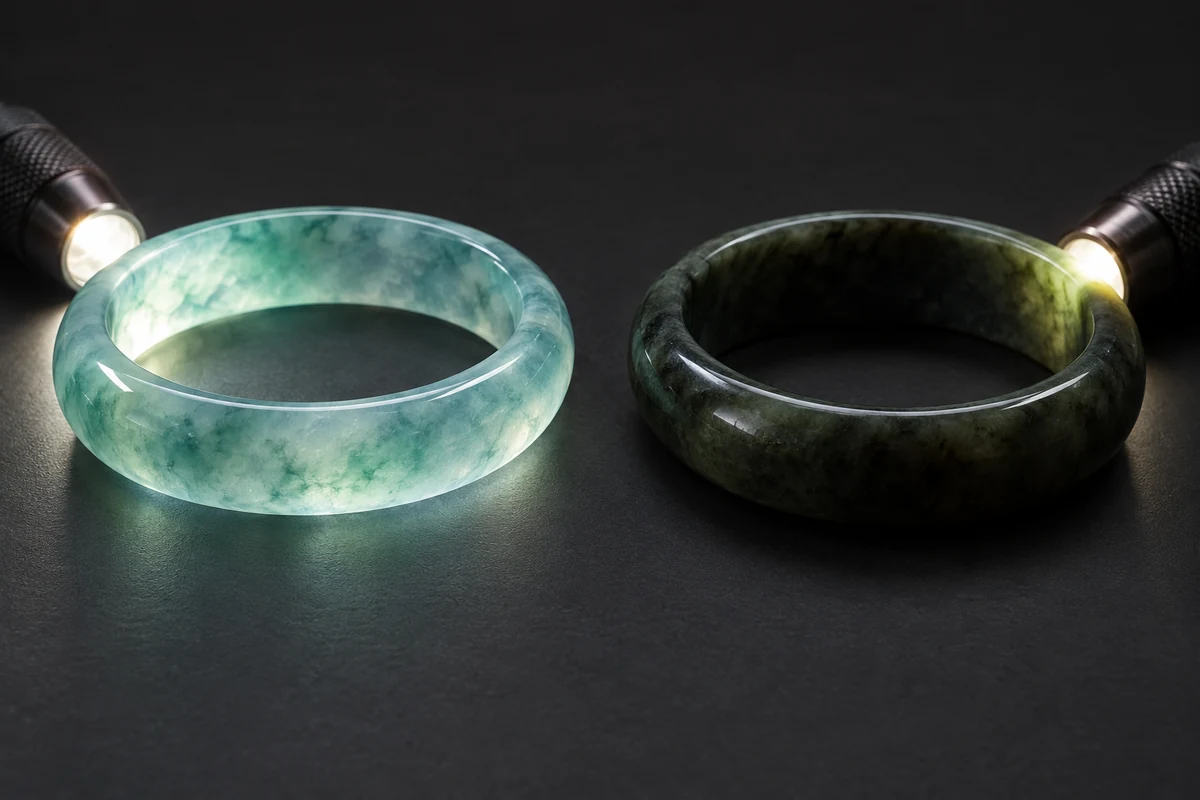
Black Guatemalan jadeite is also common. As with Burmese black jadeite (墨翠), a strong light through a thin edge often shows dark green. See black jadeite.
Can you tell Guatemalan jade from Burmese jade by eye?
Usually not with confidence, and be wary of anyone who claims they always can. Experienced traders form an opinion from a set of clues: a bluish or greyish cast in the green, a slightly "drier" or less glossy look in some material, and the kinds of colors the piece shows. But each clue also appears in Burmese jadeite, and the finest Guatemalan blue water can be very convincing.
Instruments do not settle it easily either. Research labs can sometimes point to an origin with advanced analysis, but this is not part of a normal jadeite certificate.
What you can judge, whatever the origin, is the piece itself: translucency, color, evenness, cracks, workmanship and size. See zhong, shui and se explained and what determines jadeite price.
Does a jadeite certificate say where the jade is from?
Usually not. Most jadeite certificates name the material and whether it has been treated, for example "jadeite" for natural, untreated material, or "jadeite (treated)" for Type B. A standard certificate from China's National Gemstone Testing Center (NGTC), for example, names the material as 翡翠 (jadeite) whether it came from Myanmar or Guatemala.
So a certificate that says "jadeite" does not mean "Burmese jadeite". If a seller states an origin, ask how they know and treat it as their claim, not as something the certificate proves. See how to verify a jadeite certificate.
Is Guatemalan jade Type A? Is it worth buying?
Guatemalan jadeite can be Type A, B or C, exactly like Burmese jadeite. Origin says nothing about treatment. A blue-water bangle can be bleached and resin-filled just as easily as a Burmese one, so the certificate should still say natural, untreated jadeite. See Type A vs B vs C jadeite.
Whether it is worth buying depends on the piece and the price:
- It is a good choice if you like cool blue-green, oil-green or black tones. These are the colors Guatemalan material does well, often at a lower price than a Burmese piece of similar appearance.
- It is a poor choice if it is sold as Burmese at a Burmese price, or as "imperial green". Vivid imperial green comes almost entirely from Myanmar; see imperial green jadeite.
- For resale, the Chinese market currently pays more for Burmese material, so a Guatemalan piece is a piece to wear and enjoy rather than an investment.
How do I buy Guatemalan jade safely?
- Ask the origin in writing, and ask how the seller knows. "I don't know" is an honest answer; a confident claim with no basis is not.
- Ask for a lab certificate that names the material as jadeite and states no treatment. Check the number on the lab's website.
- Look at the piece under different light. Blue-water and oil-green colors shift a lot between warm light, daylight and cold white LED. Ask for a video in daylight and with a flashlight.
- Compare prices with similar pieces, not with the word "jade". Compare translucency, color, cracks and size.
- Be wary of bright, even sky-blue at a low price: it is more likely dyed stone or glass.
On JadeiteHub, every listed piece is natural, untreated Type A jadeite with a lab certificate. Every sold piece is checked against its certificate before it ships, and if a piece does not match its description you get a full refund.
FAQ
Is Guatemalan jade real jade?
Yes. Guatemalan jade is jadeite, the same mineral as Burmese jade. A gem lab identifies it as jadeite. Like Burmese jadeite, it can still be treated (Type B or C), so check the certificate.
What is the difference between Guatemalan and Burmese jade?
They are the same mineral. Guatemalan jadeite more often shows bluish, greyish or dark green (blue water, oil green) and black, while Burmese jadeite is the source of imperial green and most glassy material. Guatemalan pieces generally sell below Burmese pieces that look similar.
Is blue jadeite natural?
Bluish-green "blue water" jadeite is a natural color, found in Guatemalan and Burmese jadeite. Bright, even sky-blue "jade" at a low price is more often dyed quartzite or glass. A certificate confirms what it is.
Does a jadeite certificate show the country of origin?
Usually not. Most certificates name the material (jadeite) and any treatment, but not whether it came from Myanmar or Guatemala.
Can you tell Guatemalan jade from Burmese jade by eye?
Not reliably. Traders look for a bluish or greyish cast and certain colors, but these also appear in Burmese jadeite. Judge quality, treatment and certificate rather than origin.
Is Guatemalan jade a good investment?
It is better bought to wear. The Chinese market currently pays more for Burmese jadeite, so Guatemalan pieces usually resell for less than Burmese pieces that look similar.