What Is Imperial Green Jade? Value, Fakes and Checks
Updated
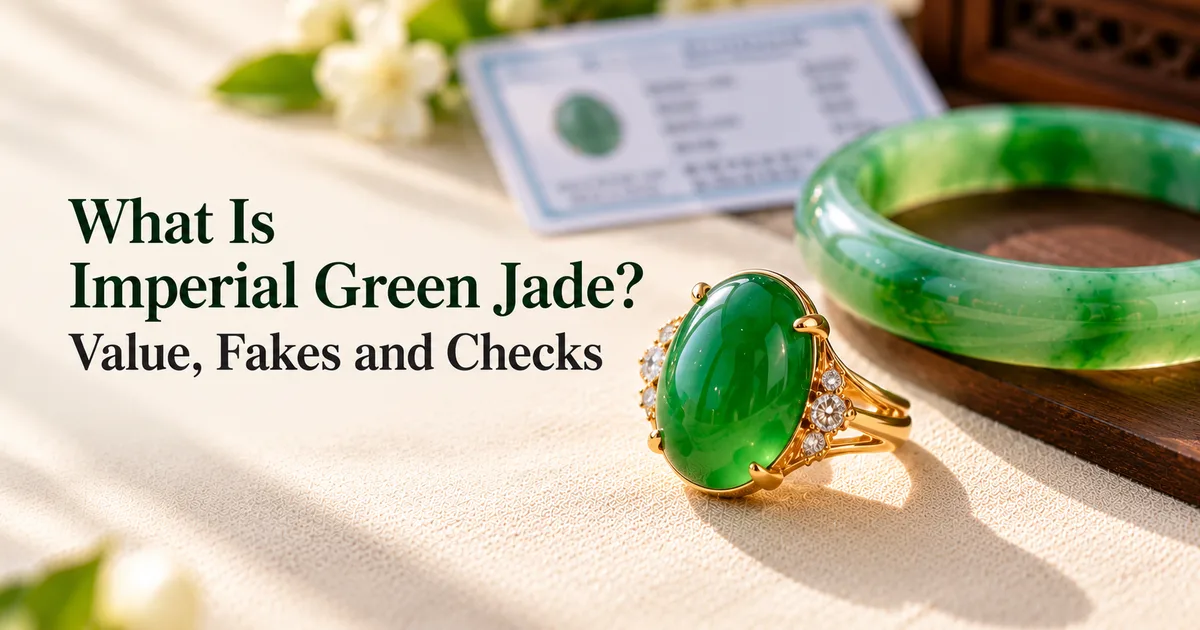
Imperial green jadeite is natural jadeite with an intense, pure and even green in fine, highly translucent material, usually glassy or icy. Color alone is not enough, and the name is used loosely: many bright greens sold as "imperial" are not. Because it is so valuable, it is also the most faked color. Judge it in daylight, check it with a flashlight and buy only with a certificate stating natural, untreated (Type A) jadeite.
What is imperial green jadeite?
Imperial green jadeite is natural jadeite with an intense, pure and even green in fine, highly translucent material, usually of glassy or icy texture.
In Chinese it is called 帝王绿 (dìwáng lǜ, "emperor green"). The name is usually linked to the Qing court, where green jadeite was highly prized. Traders judge green with four words, 浓 (strong), 阳 (bright), 正 (pure) and 匀 (even), and imperial green is the color that scores at the top on all four: no yellow, gray or blue cast, not so dark that it turns blackish, and spread evenly through the piece.
Color alone is not enough. The same green in coarse, cloudy jadeite is not called imperial by careful traders. The texture has to be fine and the stone translucent enough that the green seems to glow from inside. That is why the most quoted phrase in Chinese is 玻璃种帝王绿, "glassy-type imperial green": top color in top material. For how texture and translucency are judged, see zhong, shui and se explained. For where imperial green sits among the other jadeite colors, see the jadeite colors guide.
One more point: imperial green is trade language, not a lab grade. There is no single official standard, and two dealers can disagree about the same stone.
How does imperial green compare with other greens?
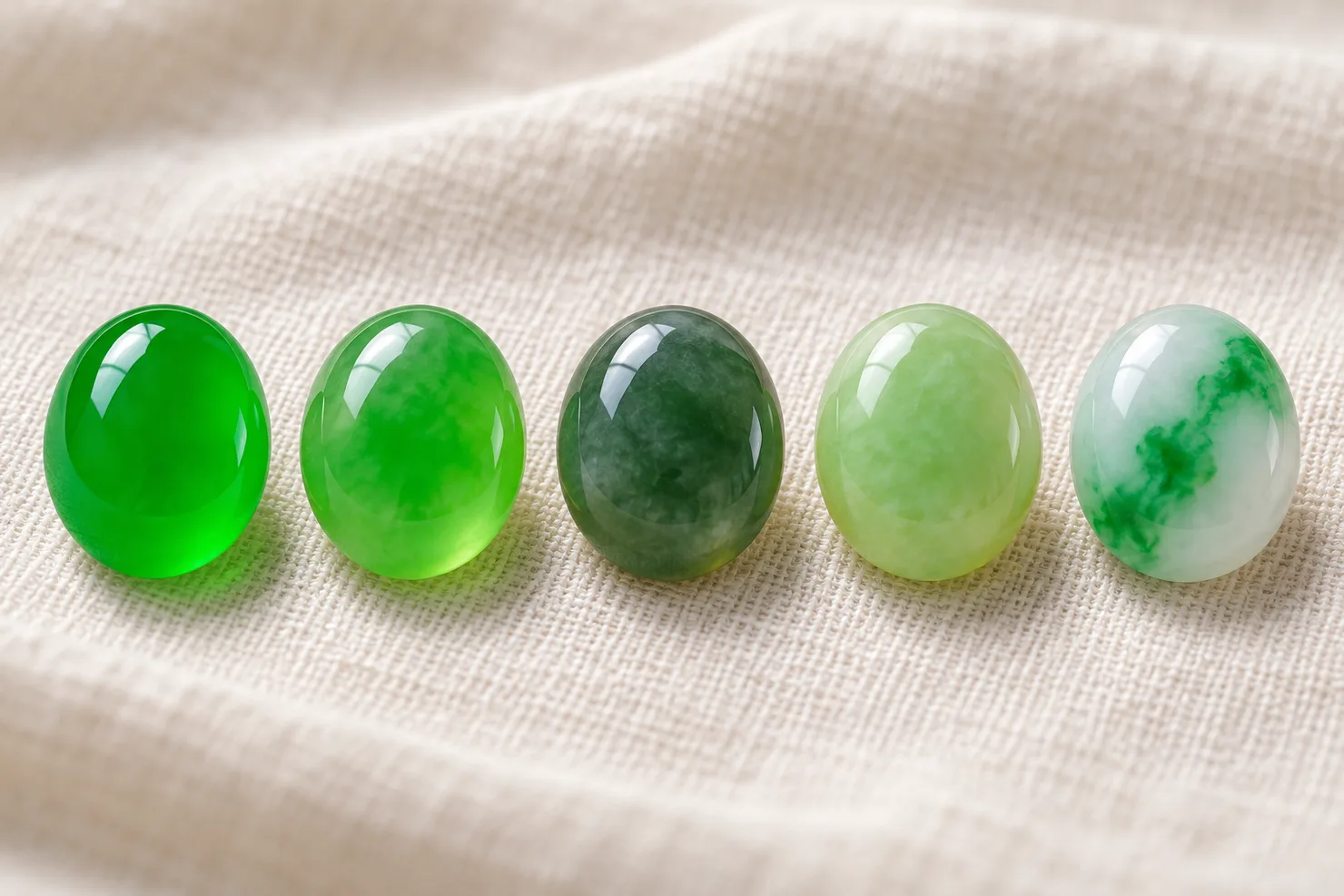
Listings use many names for green. The boundaries between them are loose and vary from dealer to dealer, but the general order is well established.
| Name | Chinese | What it looks like | How it compares |
|---|---|---|---|
| Imperial green | 帝王绿 | Intense, pure, even green in glassy or icy material | The top of the scale |
| Pure bright green | 正阳绿 | Bright, pure green, a touch lighter than imperial | Very close to imperial; the label is often used for the best bright greens |
| Spicy green | 辣绿 | Very strong, vivid green, often slightly darker or sharper | Highly valued; some traders treat it as near imperial |
| Bright green | 阳绿 | Lively, vivid green | Fine color, usually a step below imperial |
| Apple green | 苹果绿 | Bright green with a slight yellow tint | Attractive, less saturated than imperial |
| Oily green | 油青 | Dark grayish or bluish green with an oily luster | Common; usually priced well below bright green |
| Bean green | 豆绿 | Light, often slightly yellowish green in coarser material | Very common; affordable |
The table shows why "green jadeite" covers a huge range of value. Two pieces can both be called green, and one can be worth many times the other.
Why is imperial green so rare and expensive?
Imperial green is rare because several things have to come together in one stone: strong pure color, even distribution, fine texture, high translucency and few cracks. Each of these is uncommon; all of them together, in a piece big enough to cut, is rarer still.
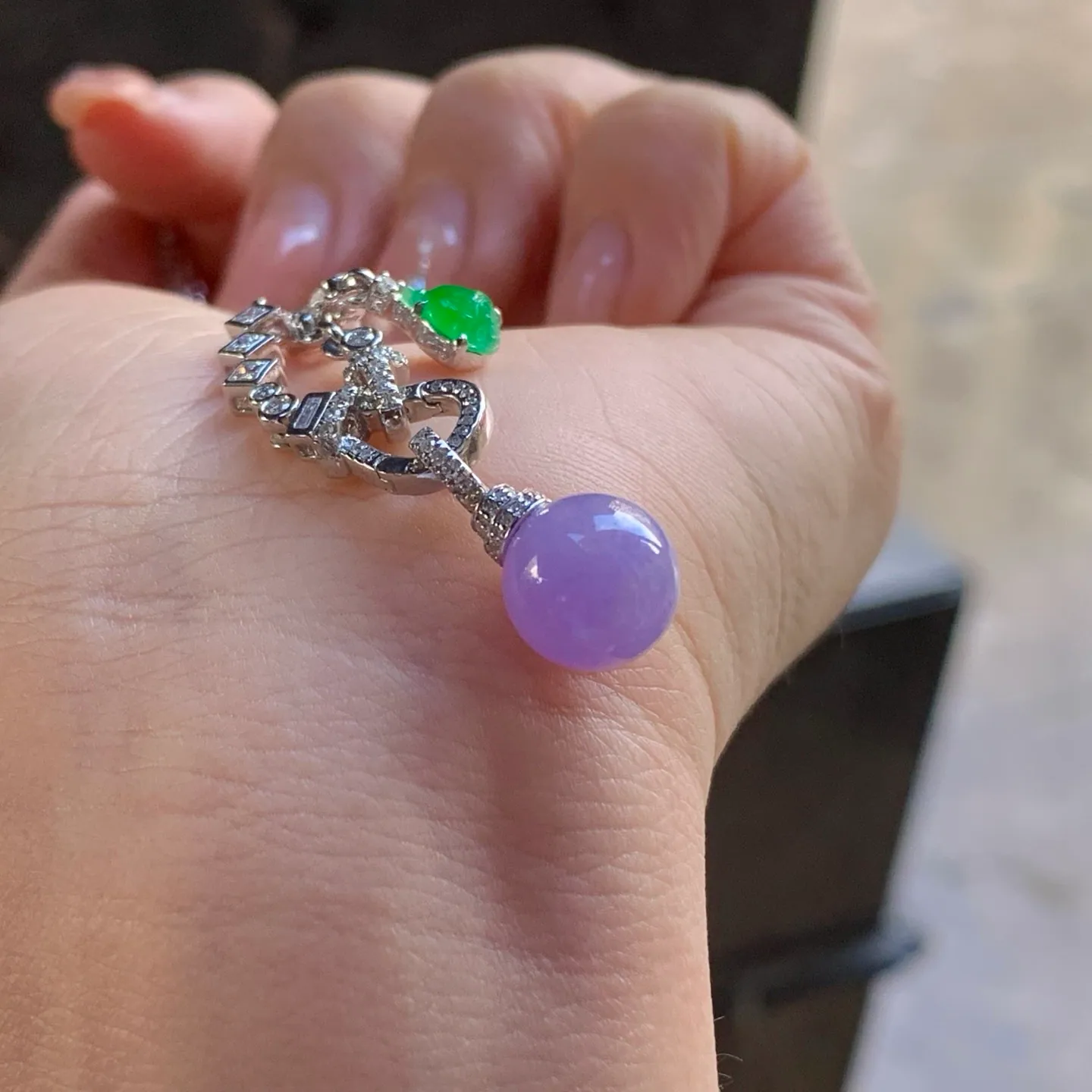
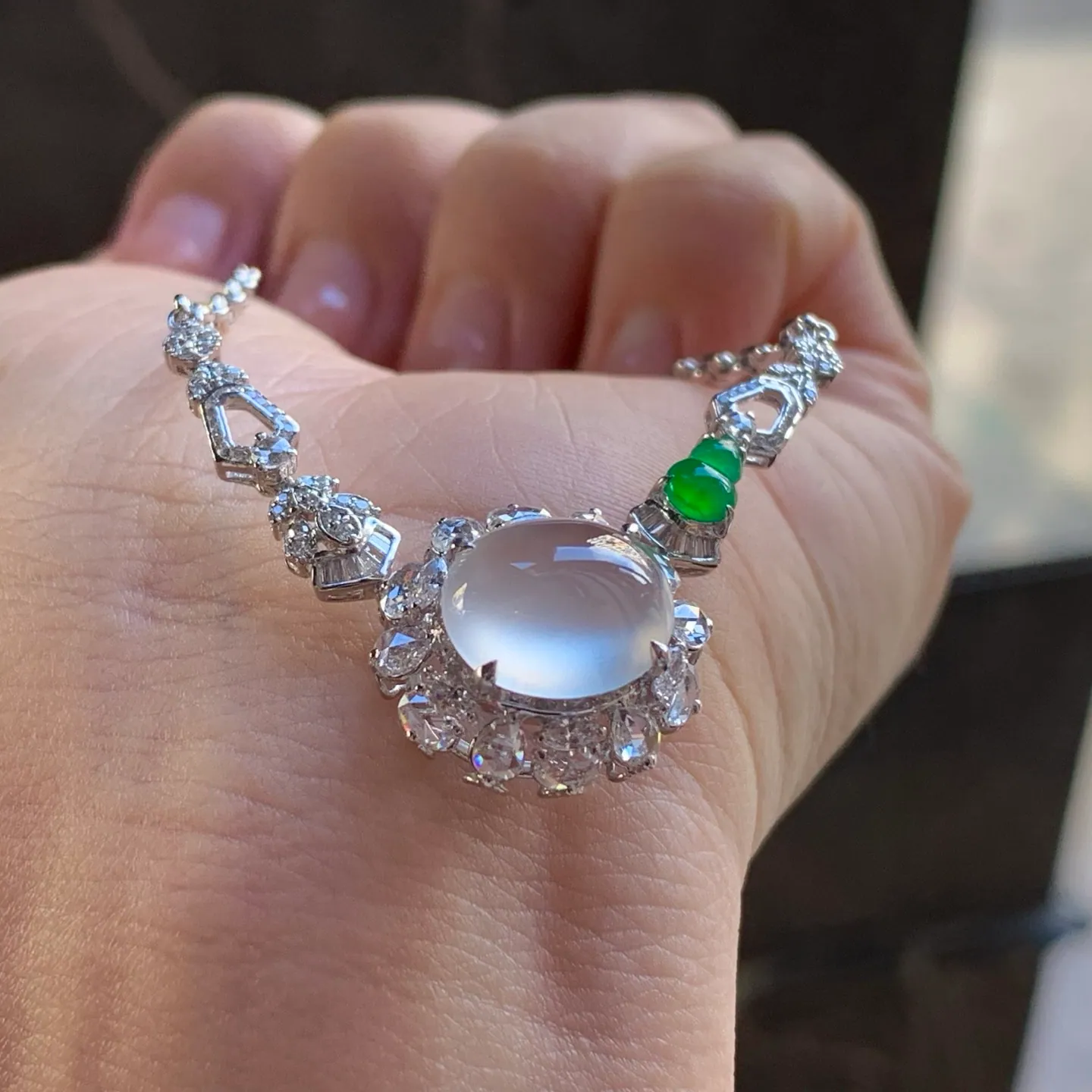
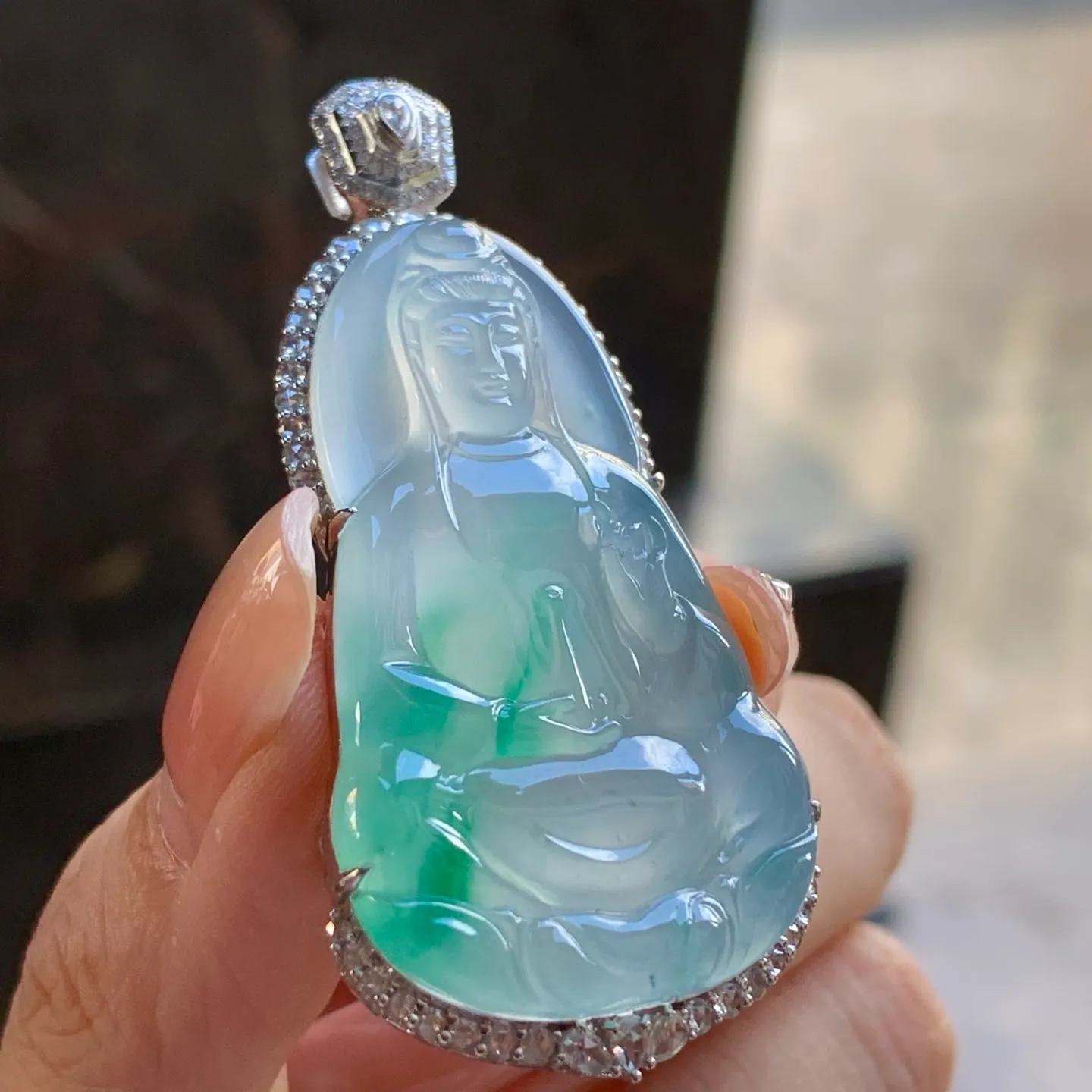
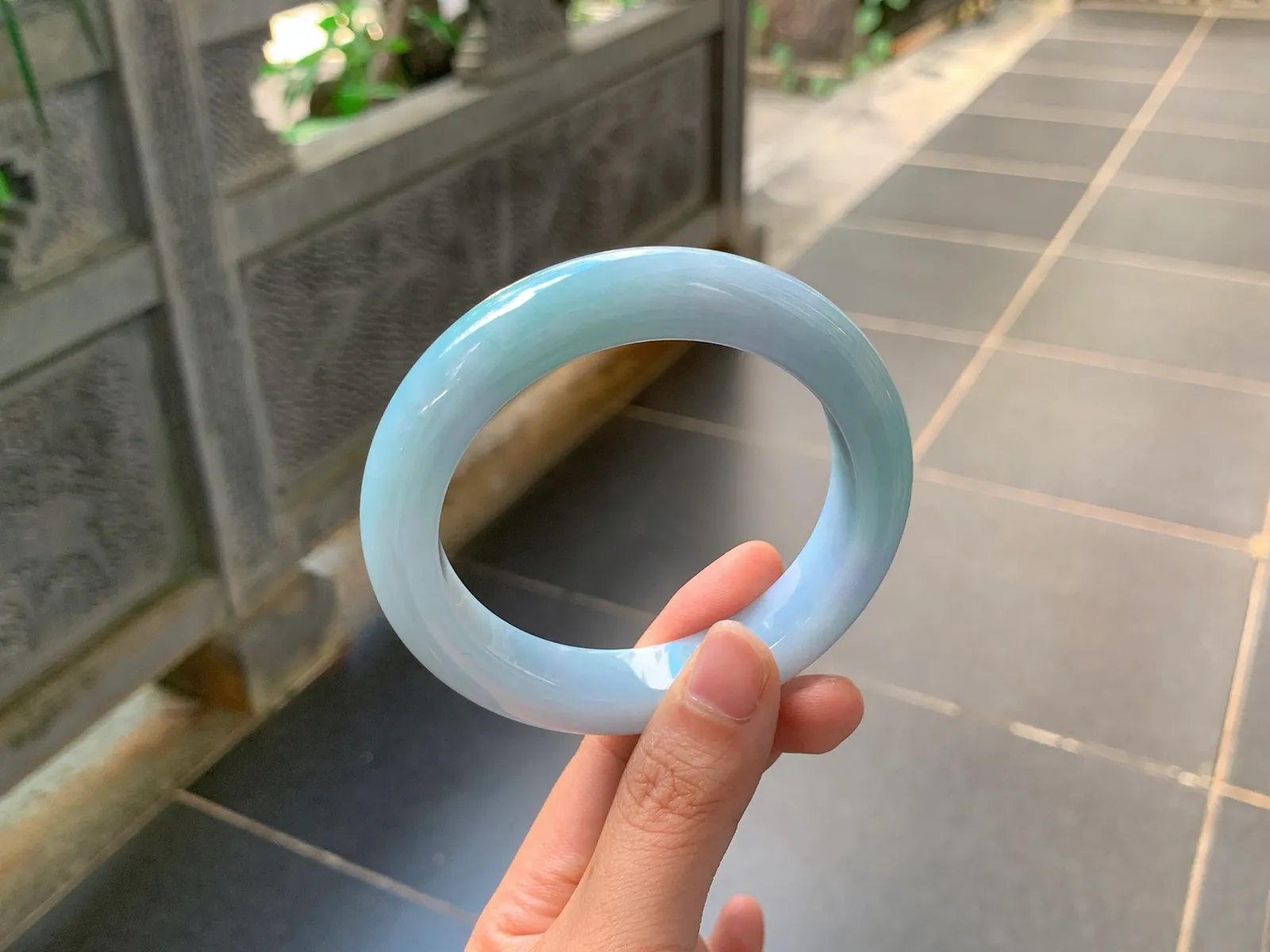
Size matters a lot. Imperial green is most often seen in small pieces such as ring cabochons, earrings and small pendants. An imperial green jadeite bangle needs a large block of even, clean material, so it is far rarer, and such bangles are among the most expensive jadeite of all.
There is no fixed price for imperial green. Two pieces with the same label can differ widely in value depending on color, texture, size, cut, cracks and treatment. For the full list of price factors, see what determines jadeite price.
Why does everyone seem to sell "imperial green"?
Because the word sells. "Imperial" has become a sales word, used for far more stones than deserve it.
- Any bright green gets the label. Many listings call ordinary bright or apple green "imperial". In Thailand, sellers often call any vivid green piece "จักรพรรดิ" (imperial).
- Live streams and lighting. Strong white lamps, light from behind and phone filters make green look brighter, more even and more translucent than it is in daylight.
- A small spot of good green. A piece with one small patch of strong green may be sold as "imperial green" even though most of it is pale.
- Imperial color in coarse material. A strong green in cloudy, grainy material may be described as imperial because of its color alone.
None of this has to be fraud. It is often just loose language. But it means the word "imperial" in a listing tells you very little. Look at the stone, the light it was filmed in, and the certificate.
What is sold as imperial green but is not?
Because the color is so valuable, it is the color most often faked.
| What it is | How it is made | Clues |
|---|---|---|
| Dyed jadeite (Type C) | Pale jadeite stained green | Color gathers along cracks and grain boundaries; can look flat or too uniform; can fade |
| Bleached, filled and dyed jadeite (Type B+C) | Acid-bleached, filled with resin, then dyed | Very bright, even green with a slightly plastic look; may show a net of cracks under a flashlight |
| Green glass | Melted glass colored green | Glassy shine, round bubbles, swirl lines, perfectly even color |
| Dyed quartzite ("Malaysia jade") | Quartz rock stained green | Color in a fine net between grains; lighter in the hand than jadeite |
The simplest red flag is price. Real imperial green is one of the most expensive gem materials there is. A bright, perfectly even green bangle offered cheaply is almost certainly dyed, treated or not jadeite at all. For more on treatment, see how to spot treated jadeite.
How can I check an imperial green piece?
- Ask for a lab certificate that names jadeite and states natural, or Type A, with no mention of dye or treatment. Check the report number on the lab's website; see how to verify a jadeite certificate.
- Do not expect the word "imperial" on the certificate. A standard lab report generally identifies the material and any treatment, and describes the color in plain words such as "green". Grading terms like imperial are trade language. A few labs offer separate color grading, but that is not the norm.
- Compare daylight and warm light. Ask for photos and video in daylight near a window, out of direct sun. Warm lamps shift the green toward yellow, and strong white or backlighting makes almost any green look more vivid and translucent.
- Ask for a flashlight shot. Natural color usually glows through the stone with soft, irregular edges. Dye tends to gather in a net along cracks, with paler or dull patches in between.
- Ask where the green is. The whole piece, or one side or one spot? Ask for a photo of the back.
- Check translucency. If the green is strong but the stone is cloudy and grainy, it may be a fine color, but it is not imperial in the full sense.
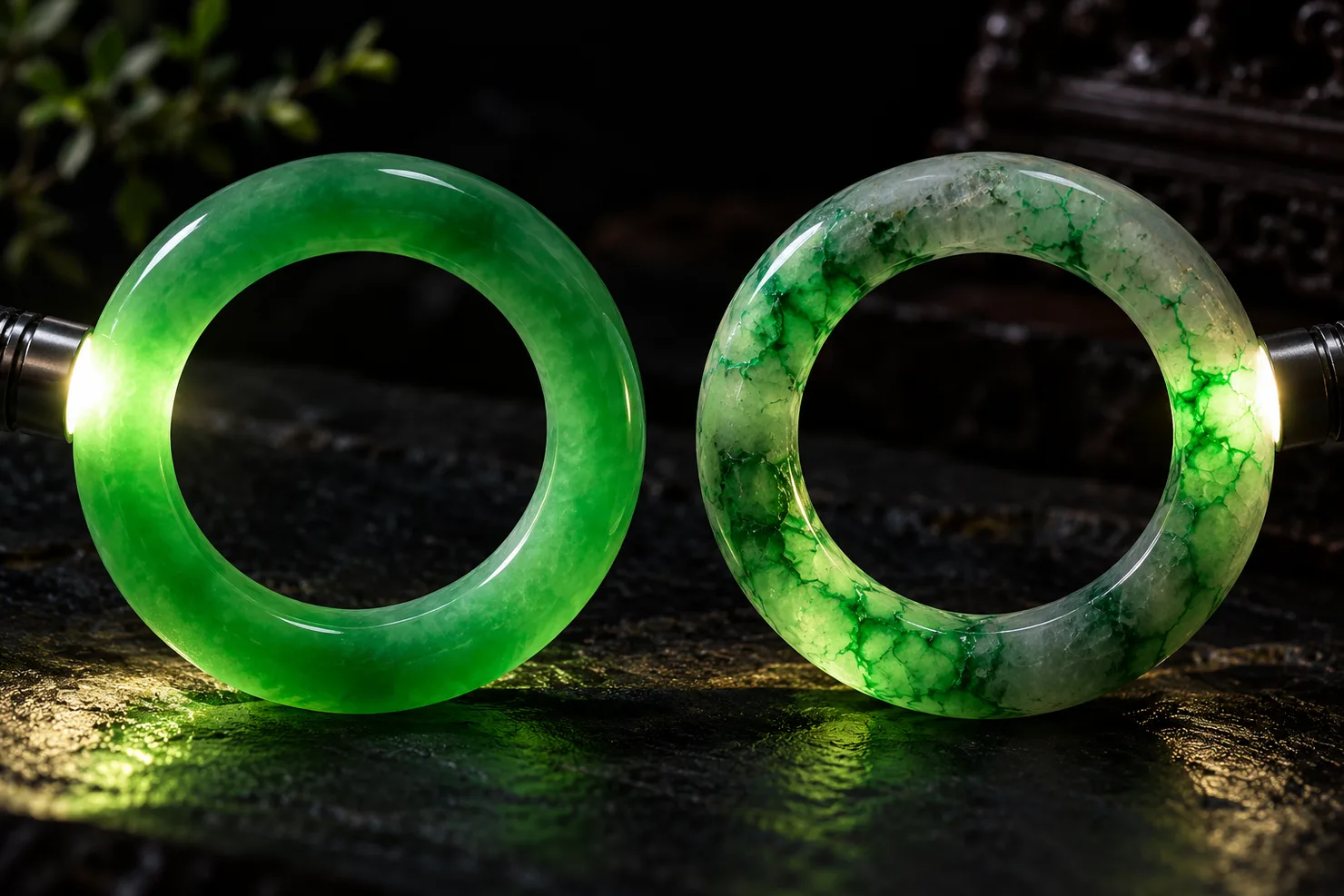
The flashlight and the eye only give clues. Some dye is hard to see, and natural green can also follow fine veins. The certificate is what confirms that the color is natural.
What does imperial green mean?
Green is the classic jade color, and its meanings come from tradition and sayings rather than from the stone itself.
- China: green stands for life, growth and spring. The "imperial" name carries a sense of rank and success, and good green jade is often given as an heirloom, as in the saying 黄金有价玉无价, "gold has a price, jade is priceless".
- Thailand: green is the traditional color for people born on a Wednesday (daytime), so Wednesday-born buyers often choose green jade.
- Vietnam: green belongs to the Wood element (mệnh Mộc), and folk advice says it suits Wood and Fire people.
These are folk traditions and personal meaning, not properties of the stone. For more, see jade meaning and beliefs.
On JadeiteHub, listings use the seller's own photos, and some include video. Every sold piece is checked against its certificate before it ships, and if it does not match the description you get a full refund.
FAQ
What is imperial green jade?
It is natural jadeite with an intense, pure and even green in fine, highly translucent material, usually glassy or icy. It is a trade term for the top color, not an official lab grade.
How much is imperial green jade worth?
There is no fixed price. Value depends on color, texture, translucency, size, cracks and treatment. Genuine imperial green is among the most expensive jadeite, especially in bangles, so a cheap "imperial" piece is a warning sign.
What is glassy imperial green (玻璃种帝王绿)?
It means imperial green color in glassy-type material, the most transparent and finest texture. It is the highest combination of color and material in the trade.
Will a certificate say "imperial green"?
Usually not. A standard lab report identifies the material and any treatment and describes the color in plain words such as green. Imperial is a trade term used by sellers.
Is very bright green jade at a low price real?
Be cautious. Bright, perfectly even green at a low price is often dyed jadeite (Type C or B+C), green glass or dyed quartzite. Only a lab certificate stating natural, untreated jadeite confirms it.