Is Jade a Good Investment? A Jade Dealer's Honest Answer
Updated
For most buyers, jade jewelry is not a good investment. A tiny top tier of jadeite, such as large imperial green or fine glassy pieces, has sold for record prices at auction. Ordinary bangles and pendants usually resell to dealers at a fraction of retail, because jadeite has no standard price or exchange and dealers must resell at a margin. What holds value best: Type A with a lab certificate, fine texture and color, no cracks, classic forms and wearable sizes. Treated, cracked, mass-carved and trend pieces lose value fastest. Buy jade you will enjoy wearing; this is not financial advice.
Is jade a good investment?
For most buyers, no: ordinary jadeite jewelry is not a good investment, because you usually cannot sell it for what you paid. A very small top tier of jadeite, such as large imperial green or fine glassy pieces, has sold for record prices at major auctions. Almost everything sold in shops, markets and livestreams is in a different market, where resale offers sit far below retail.
We sell jadeite, so we have every reason to tell you it will go up. We won't. This page explains, from the trade side, why top jadeite and ordinary jadeite behave so differently, what tends to hold value, what loses it fastest, and what "investment" talk from sellers usually means. It is general information about the jade trade, not financial advice; if you are deciding where to put savings, talk to a licensed financial adviser, not a jade seller, including us.
Does jade increase in value?
Some does, most does not, and the two are easy to confuse because both are called "jade".
| Top-tier jadeite | Ordinary commercial jadeite | |
|---|---|---|
| Examples | Imperial green bead necklaces, large glassy cabochons, top icy or lavender bangles | Most bangles, carved pendants, bead bracelets and rings in shops and livestreams |
| Where it sells | Major auction houses, private dealers with collector clients | Shops, markets, websites, livestreams |
| What sets the price | Rarity, matching, size, lab reports, provenance, who is bidding | Retail markup, the seller's costs, bargaining |
| Is there a public price record? | Yes, auction results are published | No; asking prices are not sale prices |
| Typical resale | Can sell well, but through auction or specialist dealers, with fees and waiting | Usually a fraction of the retail price |
At the top, the record still belongs to the Hutton-Mdivani necklace, sold by Sotheby's Hong Kong in 2014 for HK$214 million, and in May 2026 Christie's sold the "Ethereal" necklace for HK$200.2 million. Our article on the most expensive jade in the world lists the confirmed results. Two things follow from it. First, demand for truly top material has been strong for years. Second, a record that has stood for twelve years shows that even at the very top, prices do not simply climb every year.
For ordinary pieces the honest answer is the one in our guide to selling jade and resale value: most shop bangles and pendants do not rise in value in a way you can count on, and the gap between retail and resale means you usually get back less than you paid, even when the piece is genuine and undamaged.
Why do people say jade prices will only go up?
Because there is a real supply story behind it, and sellers stretch it. Gem jadeite comes mainly from the Hpakant area of Kachin State in Myanmar, and the official trade there has been disrupted for years. In 2016 the Myanmar government said it would stop renewing expiring jade and gem mining permits until a new gemstone law was in place. Since the military took power in 2021, conflict has affected Kachin State; the United States (April 2021) and the United Kingdom (May 2021) sanctioned the state-owned Myanma Gems Enterprise, and the European Union has also listed it. We cover the background, and what it does to prices in China and Myanmar, in why jade is cheaper in China.
Traders do talk about good rough getting harder to buy, and the squeeze is felt most at the top: large, clean, finely textured rough with strong color. That is exactly the material ordinary buyers rarely own.
What the supply story does not mean:
- It does not mean no jadeite is being sold. Plenty of commercial material is still cut in Guangdong workshops every day, and low- and mid-grade carvings are commonly cut on CNC machines and then hand-finished, so they are produced in large numbers.
- It does not raise the value of every piece equally. Scarcity of top rough says nothing about a coarse, cloudy bangle.
- It does not help you sell. Even if the shop price of similar pieces rises, the price a dealer offers you is still a buying price.
In Chinese markets you will hear "矿已经封了,只涨不跌" ("the mines are closed, it only goes up"). Treat it as a sales line built on a real headline, not as a forecast.
Why is ordinary jade hard to sell at a profit?
Because jadeite has no standard price, no exchange and a wide gap between buying and selling prices.
| Gold | Jadeite | |
|---|---|---|
| Daily public price | Yes, by weight and purity | No; every piece is valued by eye |
| Who buys it back | Almost any gold shop, close to the day's price | Dealers and some shops, each with their own view |
| Testing | Quick purity test | Needs a lab report to rule out treatment |
| Two pieces of the same weight | Worth about the same | Can differ many times in value |
| Selling quickly | Usually easy | Often slow, unless you accept a low offer |
Several costs sit between your purchase price and anything you could make:
- Retail markup. A shop price covers cutting, polishing, any gold or silver setting, rent, staff, marketing and the seller's margin. A dealer buying from you pays for the stone as stock, not for those costs. See what determines jadeite price.
- The dealer has to resell. Dealers buy at a trade buying price (收货价) well below retail, because they may hold a piece for months and must make a margin when they sell it.
- Proof costs money. A piece without a trusted lab report is priced as if it might be treated. New tests, consignment commissions and auction fees all come out of what you receive.
- Time. Finding the one buyer who loves your piece can take a long time. Pieces sold quickly usually sell cheaply.
None of this means jadeite is worthless when you sell. A good, certified, undamaged piece always has buyers. It means "investment" is the wrong frame for most jewelry.
What kind of jade holds its value best?
The same things that make jadeite expensive in the first place, plus easy resale. Traders sum up quality as 种水色 (texture, translucency, color); see zhong, shui and se explained.
| Tends to hold value better | Tends to lose value |
|---|---|
| Natural, untreated Type A, with a certificate from a recognized lab that matches the piece | Bleached and filled (Type B) or dyed (Type C), or no reliable certificate |
| Fine texture and good translucency (icy, glassy) | Coarse, cloudy, opaque material |
| Even, lively color, or clean colorless high-translucency material | Grayish, dull or patchy color |
| Complete and clean: no cracks, chips or repairs | Cracked, chipped, glued or repaired |
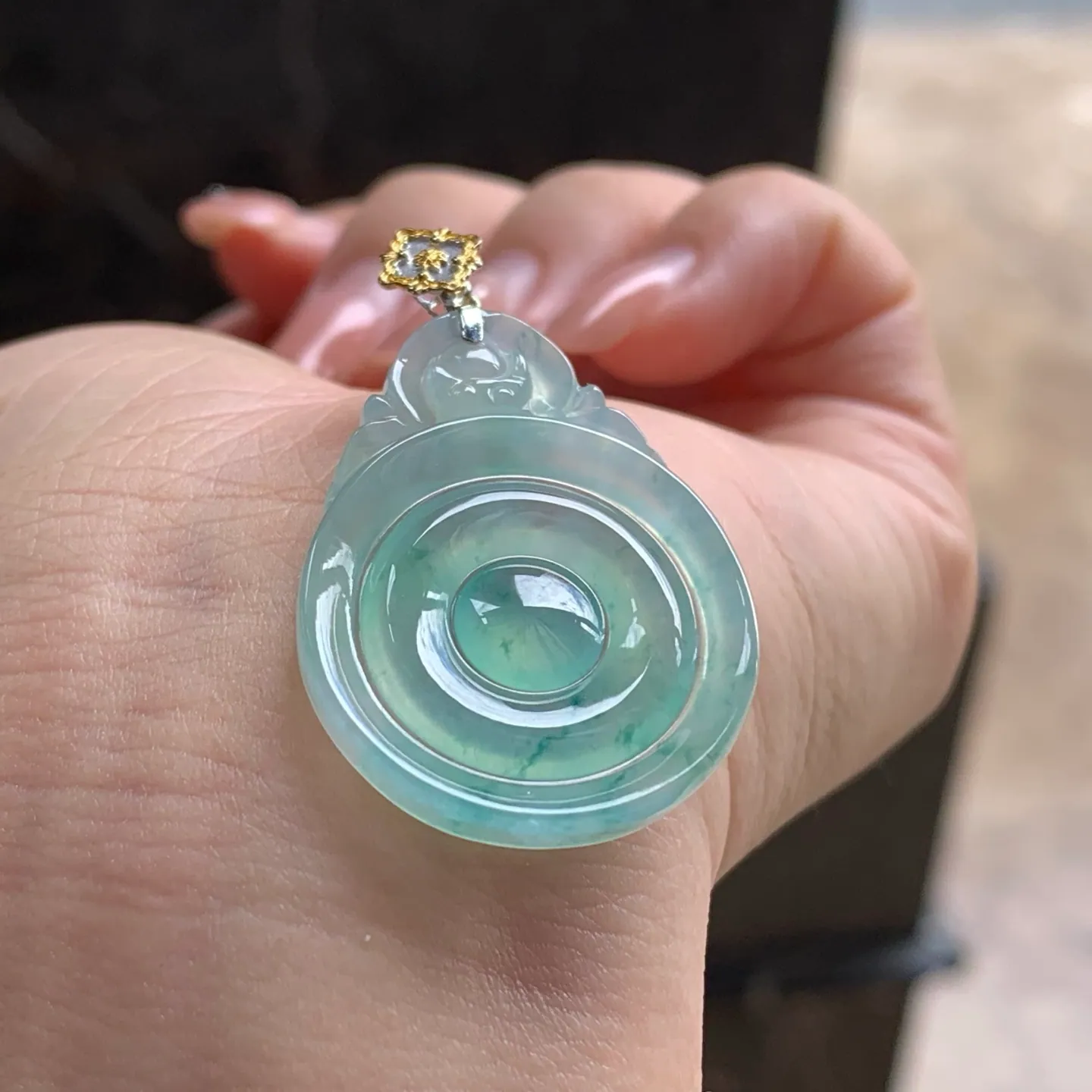
| Classic forms: round bangles, smooth cabochons, matched beads, plain pendants such as safety-buckle donuts | Trend shapes and fashion designs that date quickly |
| Hand-finished work of real quality | Mass-produced CNC carvings in identical designs |
| Sizes many people can wear, enough material and thickness | Very thin pieces, unusual bangle sizes |
| Receipt, certificate, clear history | No paperwork, unknown history |
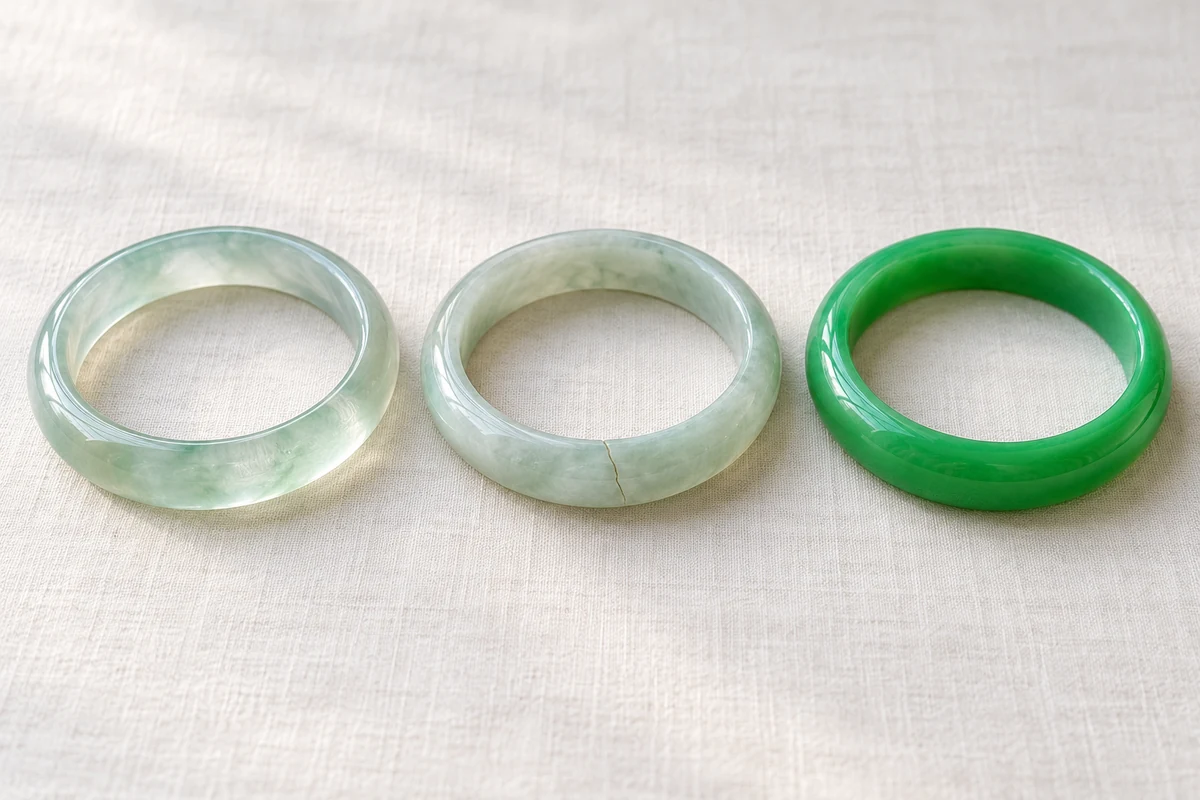
Type A versus treated comes first. Treated jadeite can look better than natural material when new, but it is valued at a small fraction of a natural piece and many buyers will not take it at all. If you are unsure what you own, start with Type A vs Type B vs Type C jadeite.
What loses value fastest?
- Treated jadeite. Dye can fade and polymer filling can age and yellow. Resale value is close to nothing.
- Cracks. A crack makes a bangle risky to wear, so buyers price that risk in. A natural growth line is different, but a buyer will still want to see it clearly.
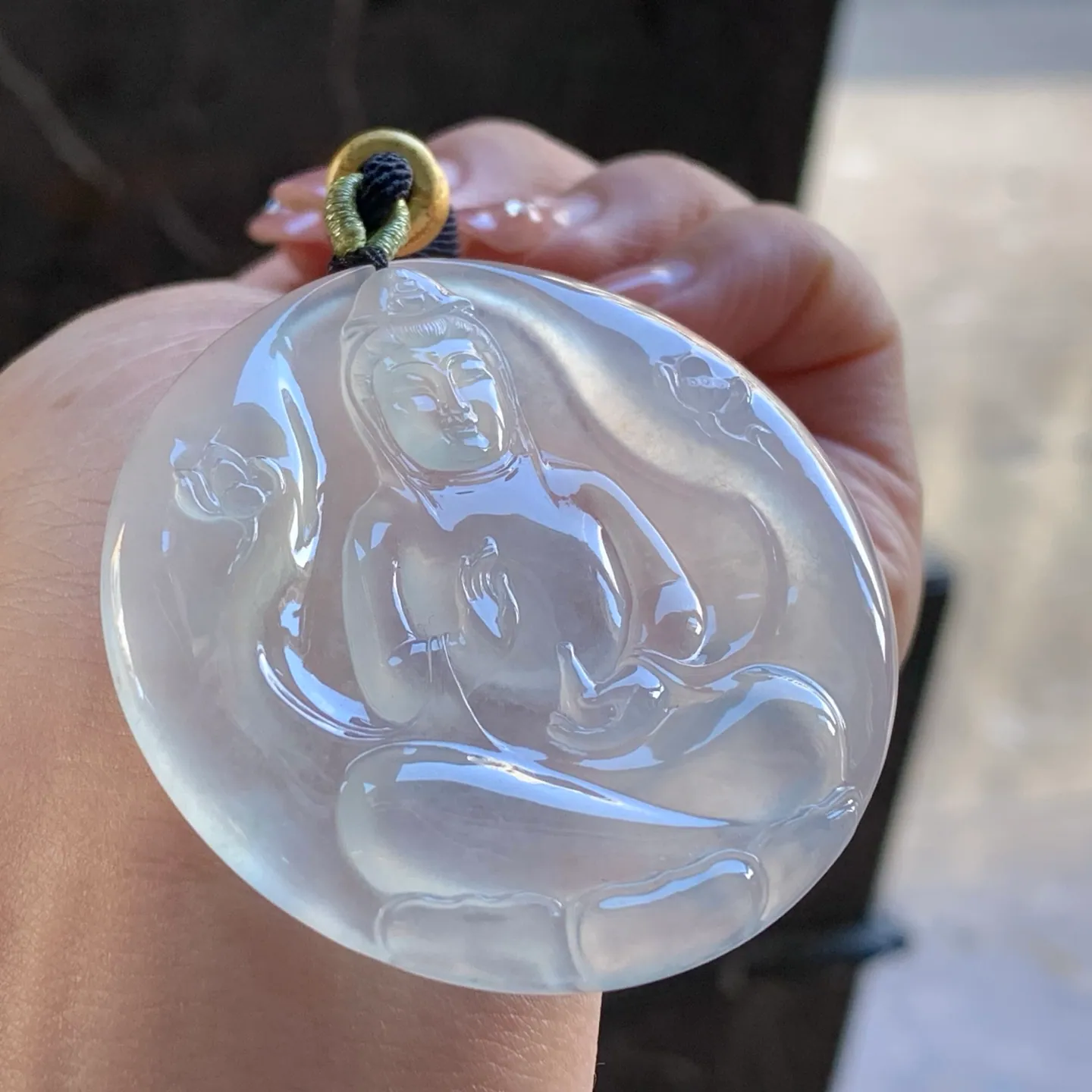
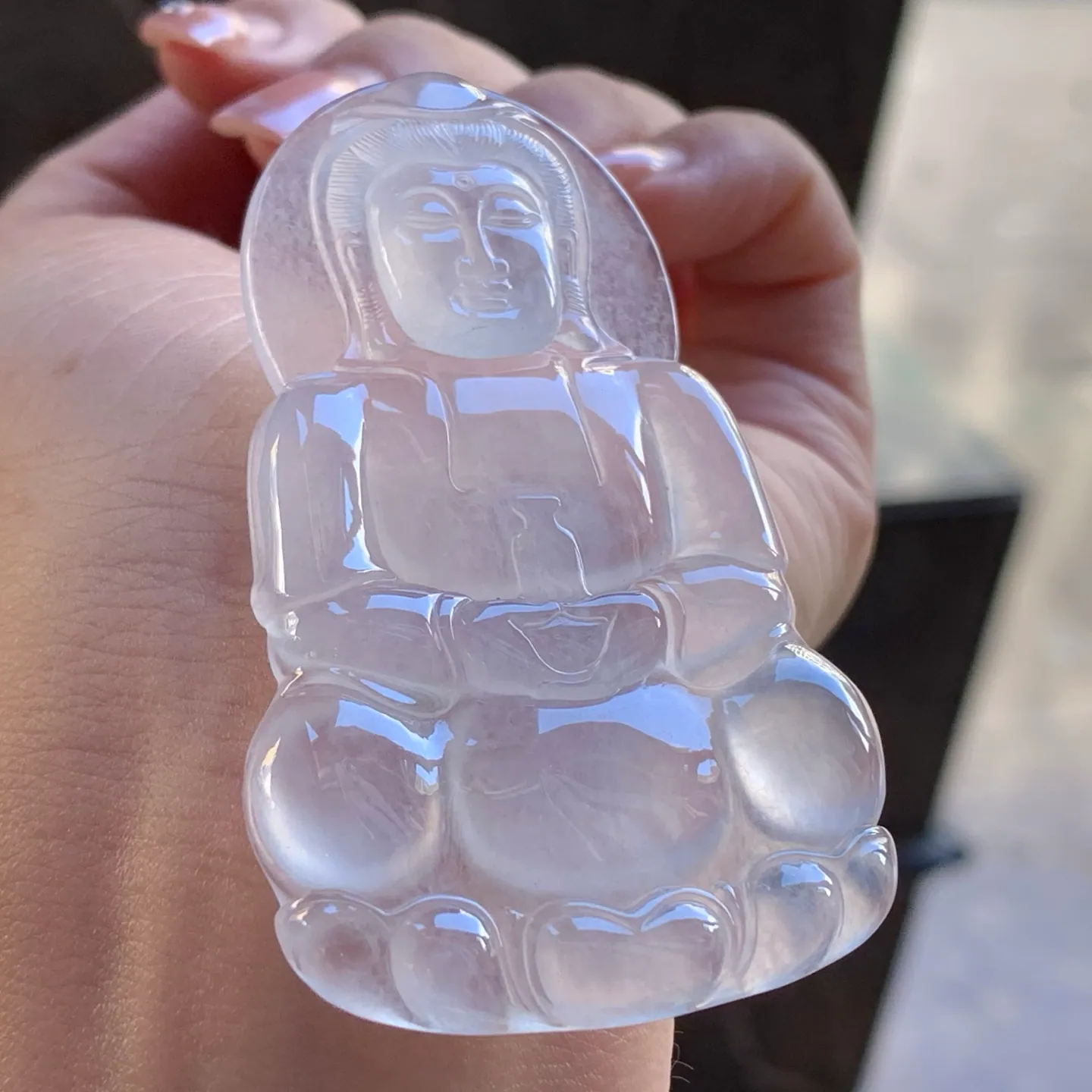
- Mass CNC carvings. When a Buddha or Guanyin pendant exists in thousands of identical copies, there is nothing rare to pay for beyond the material.
- Trend pieces. Whatever shape is fashionable on livestreams this year may be hard to sell in five.
- "Story" premiums. Extra money paid for a blessing, a famous-mine story or a "same boulder as the record necklace" claim does not come back when you sell.
Is a jade bangle a good investment?
A jade bangle is the most liquid form of jadeite, but it is still not an investment. Bangles are the piece buyers in China, Thailand and Vietnam know best, and a full bangle needs a large, clean, crack-free area of rough, so good bangles are always in demand. If any ordinary jadeite resells well, it is a natural, clean, well-proportioned round bangle in a common size.
Bangles also carry the biggest risk. They take knocks every day, and one crack changes the offer far more than a scratch on a pendant would. Size matters too: a very small or very large inner diameter has fewer possible buyers.
What do sellers mean when they talk about investment?
These lines come up again and again in shops, markets and livestreams.
| What you hear | What it usually means |
|---|---|
| "It will only go up in value" | A sales line. No one can promise this for a single piece |
| "Collector grade" / 收藏级 | No lab or standard defines it; ask for the certificate and judge the material |
| A certificate showing a "valuation" or "appraised value" | Usually the seller's own number. Lab reports identify material and treatment; they do not set a market value |
| "Same material as the record necklace" | Imperial green is trade language, not a lab grade, and no certificate links two pieces to one boulder |
| "The mine is closed, prices will double" | A real supply headline turned into a forecast |
| "We buy it back any time" | Ask for the terms in writing: at what price, deducting what, and for how long |
A buy-back promise is only as good as its written terms and the business behind it. Be cautious with any buy-back or price promise that comes without clear written terms.
How should I buy jade if value matters to me?
Buy for wearing, with value in mind:
- Insist on Type A with a lab certificate from a recognized lab, and check that it matches the piece. See how to verify a jadeite certificate.
- Pay for quality before size. Texture, translucency and clean material matter more than weight.
- Choose classic forms and sizes other people can also wear.
- Check for cracks with a flashlight from several angles before you pay.
- Keep the receipt and certificate, and look after the piece.
- Spend only what you would happily spend on jewelry you enjoy. If you would be upset to sell at a loss, you are spending investment money, not jewelry money.
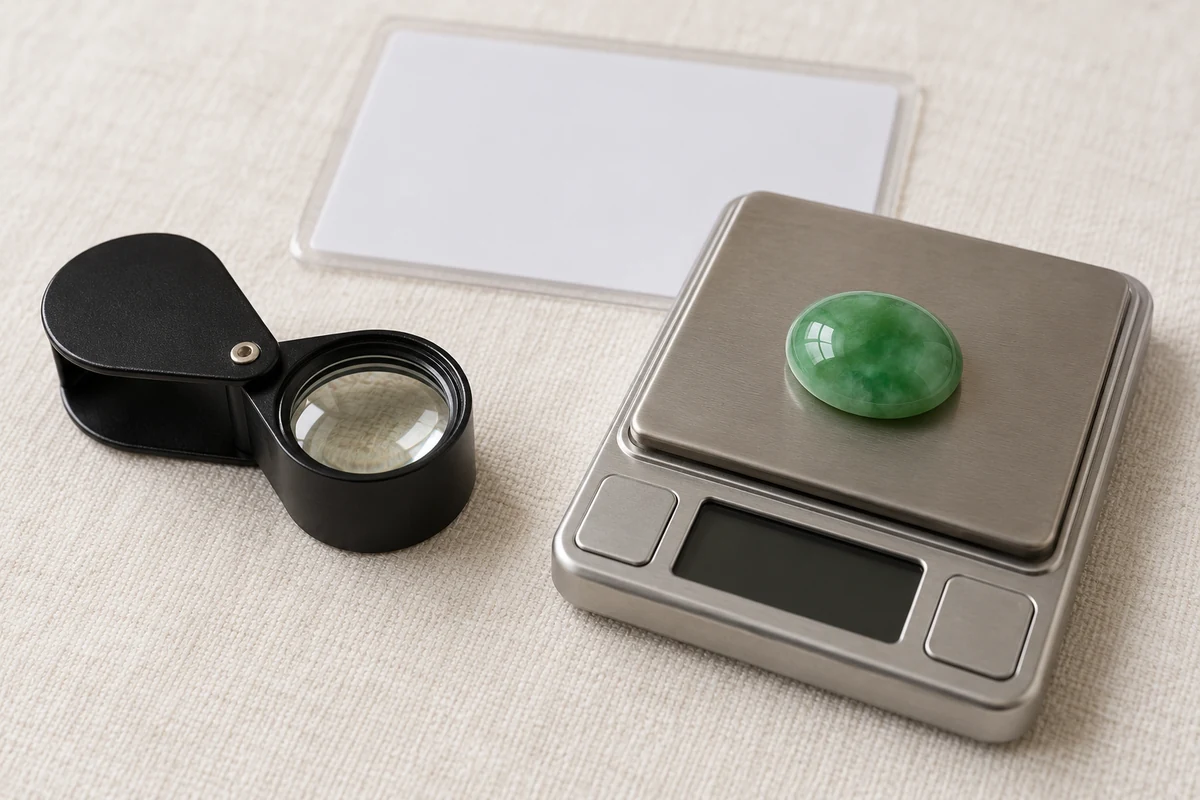
The best reason to buy jadeite is that you love wearing it. A clean, natural piece you wear for twenty years has given you something even if it never resells above its price.
On JadeiteHub we only list jadeite that comes with a lab certificate. Each sold piece is checked against its certificate at our inspection center before it ships, and if it is not as described you get a full refund. We do not promise that any piece will rise in value.
FAQ
Is jade a good investment?
For most people, no. Ordinary jadeite jewelry usually resells far below its retail price. Only a very small top tier, such as large imperial green or fine glassy pieces, has achieved record prices at major auctions. Buy jade to wear and enjoy. This is general information, not financial advice.
Does jade appreciate in value over time?
Top-quality jadeite has been in strong demand at auctions for years, but most commercial pieces do not rise in value in a way you can count on. Even if shop prices for similar pieces rise, a dealer buying from you still pays a trade buying price.
Is a jade bangle a good investment?
A natural, clean, crack-free round bangle in a common size is the easiest jadeite piece to resell, but it is still not an investment. One crack lowers the offer sharply, and unusual sizes have fewer buyers.
Can I sell jade for more than I paid?
Rarely, if you bought at retail. The retail price includes cutting, setting, shop costs and margin, and dealers buy at a trade price so they can resell. Exceptional pieces sold at auction are the main exception.
Is jade worth buying?
Yes, if you buy it to wear. Choose natural Type A jadeite with a lab certificate that matches the piece, check for cracks, and spend what you would happily spend on jewelry you enjoy.
Why is jade worth so much?
Fine jadeite is rare. Top material needs fine texture, high translucency and strong, even color together, mostly from one mining area in Myanmar, and large clean pieces for bangles or matched beads are rarer still. Ordinary jadeite is far more common and far cheaper.