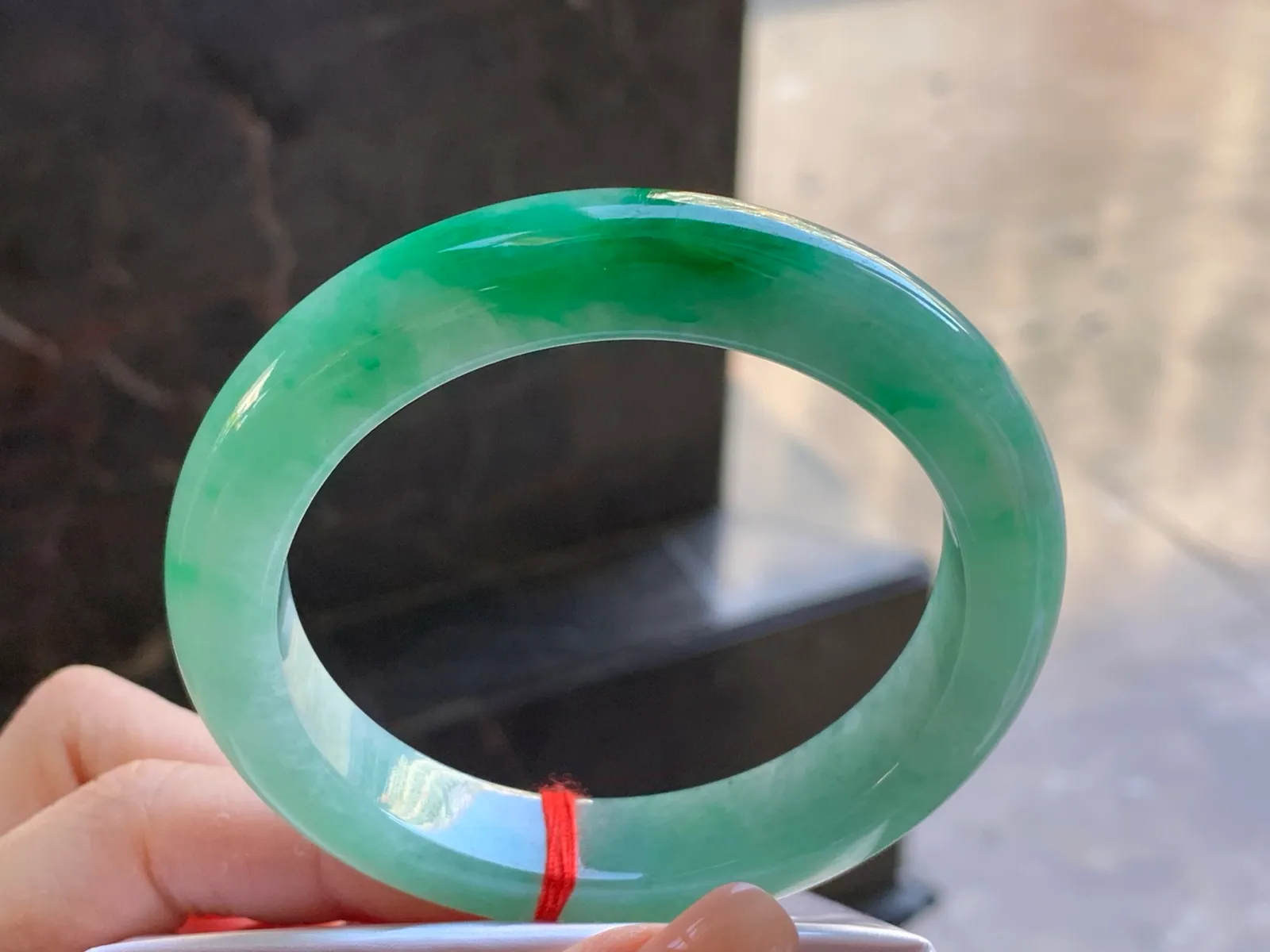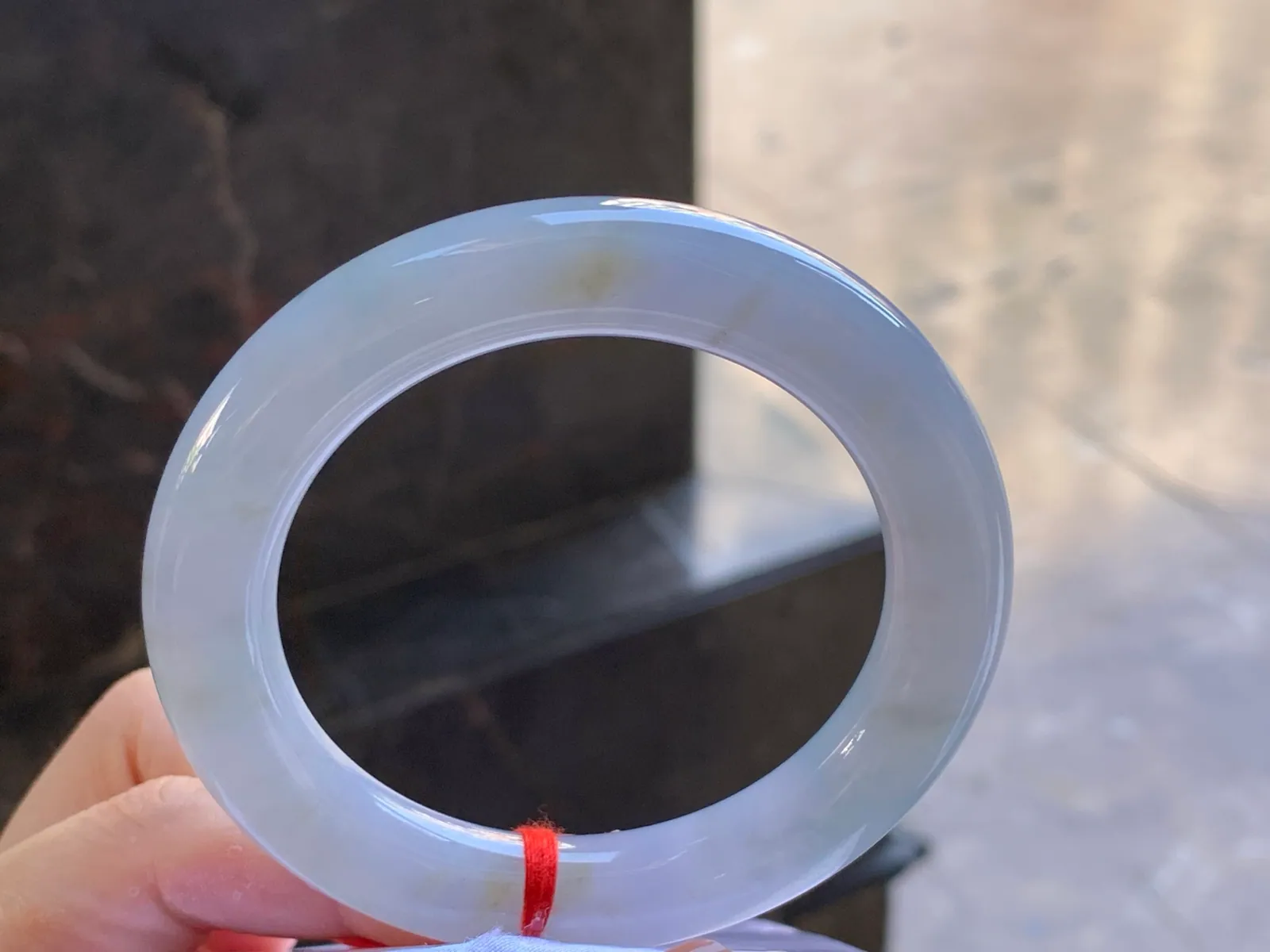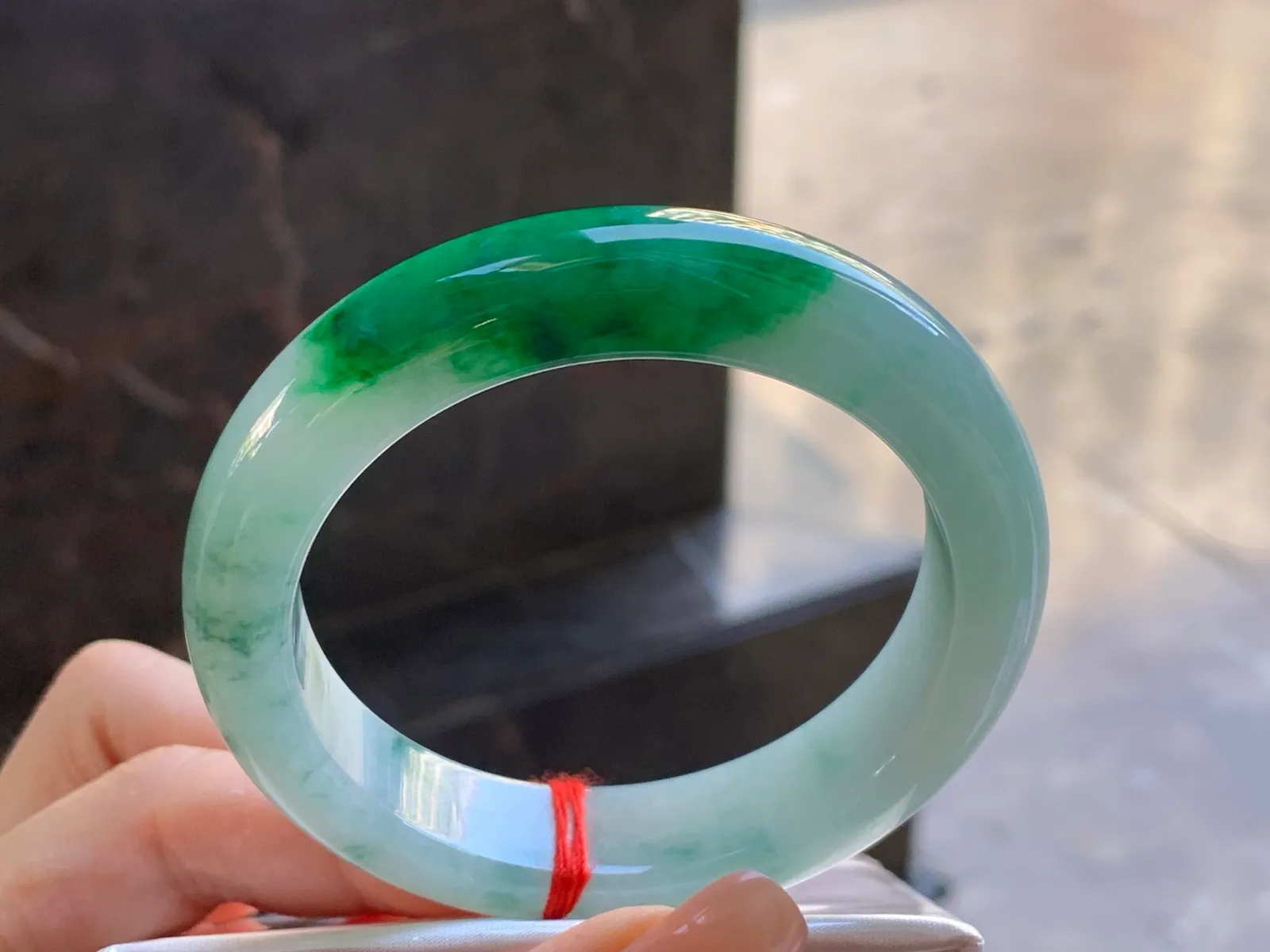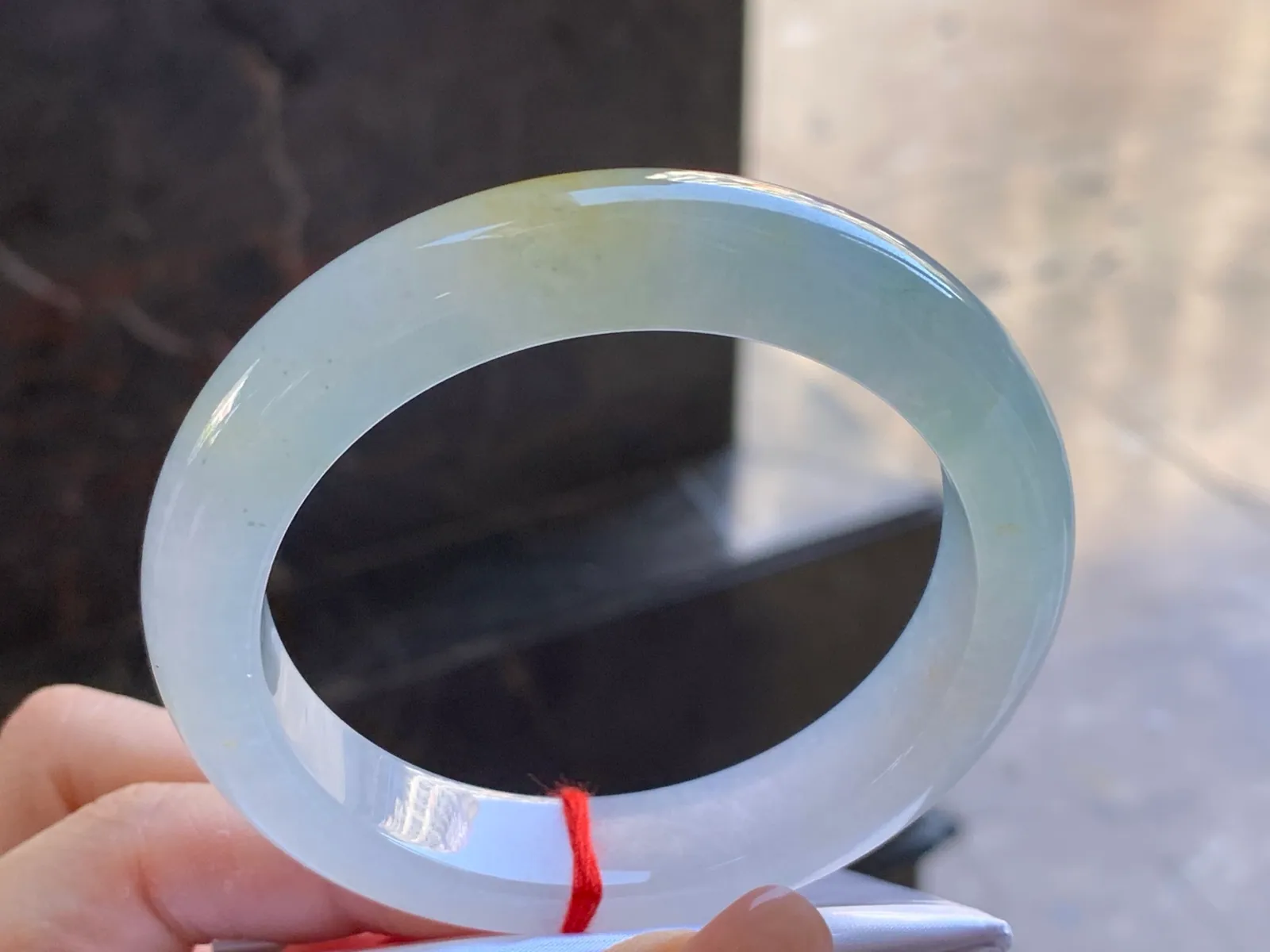
Jade Bangle Sound Test: Can Tapping Tell Real Jade?
Updated
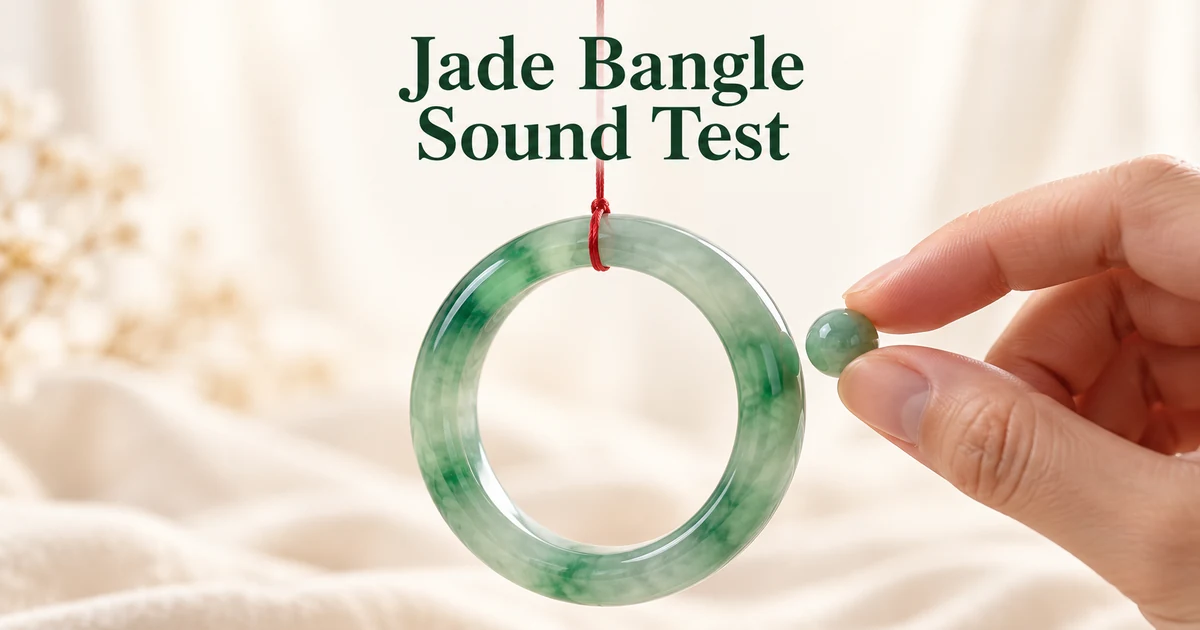
Tapping a jade bangle can hint at its condition but cannot prove it is real. A dense, uncracked jadeite bangle hung freely and tapped lightly tends to ring clearly; a cracked or resin-filled one tends to sound short and dull. But glass and quartzite ring too, shape and size change the note, and holding the bangle kills the sound. Tapping can also chip it. Only a lab certificate proves natural Type A jadeite.
What is the jade bangle sound test?
The sound test is one of the oldest tricks in the jade trade. You hang a bangle so it can vibrate freely, tap it lightly with something hard, and listen. The idea is that natural, dense jadeite rings with a clear, lingering note, while fake or damaged jade gives a short, dull "tock".
There is something to it. Sound is vibration travelling through the stone, and how well a bangle vibrates depends on what is inside it. The trouble is that many other things change the sound as well, so the test can mislead you in both directions. This guide explains what tapping can and cannot tell you, how to avoid damaging a bangle, and what to do instead.
What does real jade sound like?
A jadeite bangle that is dense, uncracked and hung freely usually gives a clear, bright ring that lasts a moment, a little like a small bell or a wine glass. Dealers describe it as crisp (清脆) with a lingering tail (余音).
Why: jadeite is made of tightly interlocking crystals, so vibration travels through it with little loss. Anything that interrupts or absorbs that vibration shortens and dulls the note:
| What is inside | Effect on sound | Why |
|---|---|---|
| Dense, fine texture, no cracks | Clear, ringing, lingers | Vibration travels freely |
| Resin filling (Type B) | Often shorter, duller | Resin absorbs vibration |
| A large crack | Often short, buzzing or dull | The crack interrupts the vibration |
| Coarse or loose texture | Can be duller | More grain boundaries absorb vibration |
| Plastic or resin imitation | Dead, flat thud | Soft material does not ring |
So far so good. The problem is everything else that changes the sound.
Why a crisp ring does not prove the bangle is real
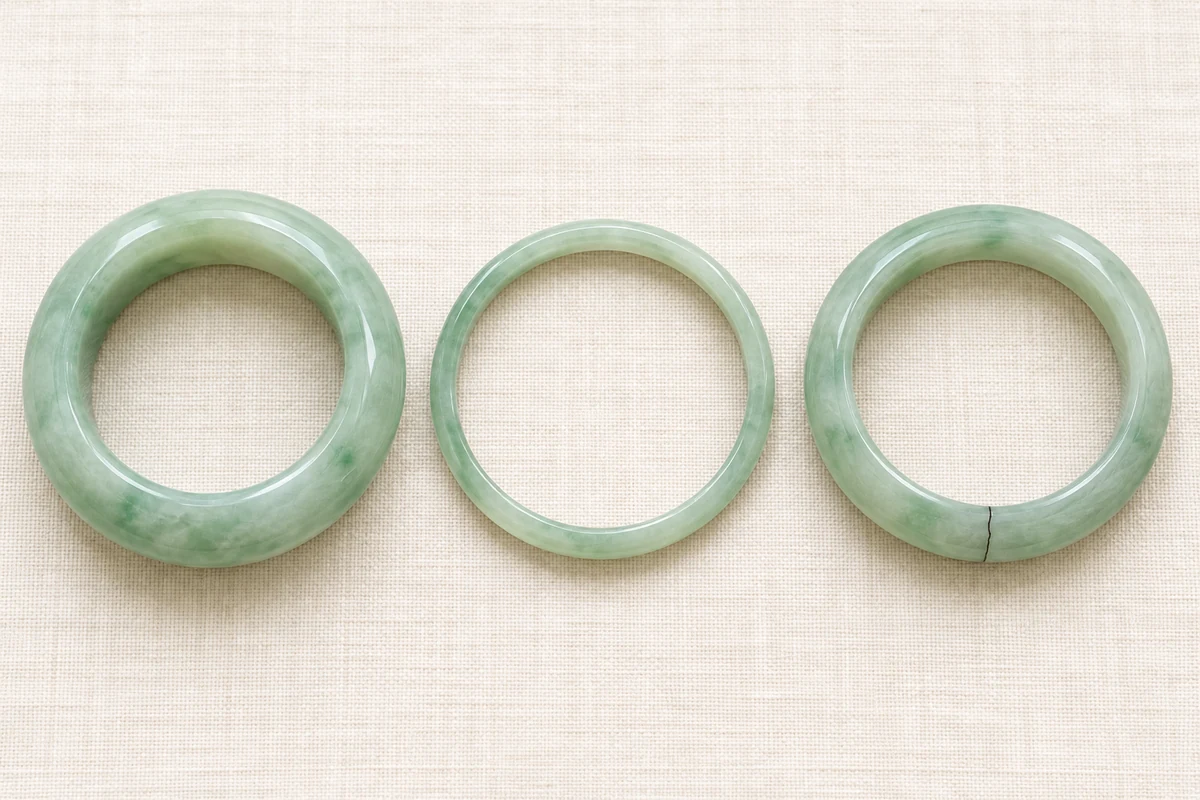
- Glass and quartzite ring too. Glass imitations and dyed quartzite (sometimes sold as "Malaysia jade") can sound as clear as jadeite. The test cannot separate them.
- Shape and size change the note. A thick round bangle, a slim flat bangle and a large oval bangle all ring at different pitches and for different lengths. Comparing two different bangles tells you little.
- How you hold it matters. A bangle held in the palm, resting on a table or worn on the wrist barely rings at all. Many "dull" results are just a damped bangle.
- What you tap with matters. Jade on jade, a coin, a fingernail and a pen all give different sounds.
- Natural bangles can sound dull. A Type A bangle with a coarser texture, a lot of cotton or a crack may sound dull while being completely natural.
- Type B is not always obvious. Resin-filled bangles often sound duller, but how much depends on how much resin and how it was done.
- Phones lie. In a livestream or video, the microphone, compression and background noise shape what you hear. A "ding" on a video proves nothing.
In short, a dull sound is a reason to look more closely, and a clear sound is not a guarantee. This matches what we say about the test in how to spot treated jadeite and jadeite look-alikes.
Can tapping damage a jade bangle?
Yes, and this is the main reason not to do it casually. Jadeite is very tough, but it is not unbreakable, and the edge of a bangle is where it chips. See is jadeite fragile?
- Never knock two bangles together hard. It is a common way to "test" in markets and a common way to chip both.
- Avoid coins, keys and rings. Metal can leave grey marks, and a hard knock with a small, hard point can chip the rim.
- Do not tap a bangle you already suspect is cracked. A tap can extend a crack.
- Do not test someone else's bangle without asking; a chip is yours to pay for.
If you want to try it, how do you do it gently?
If you still want to hear it, do it the way careful dealers do:
- Hang the bangle on a fingertip or a thin thread so it touches nothing else.
- Tap the outer rim very lightly with a small, smooth piece of jade, such as a bead.
- Listen for how long the note lasts, not how loud it is.
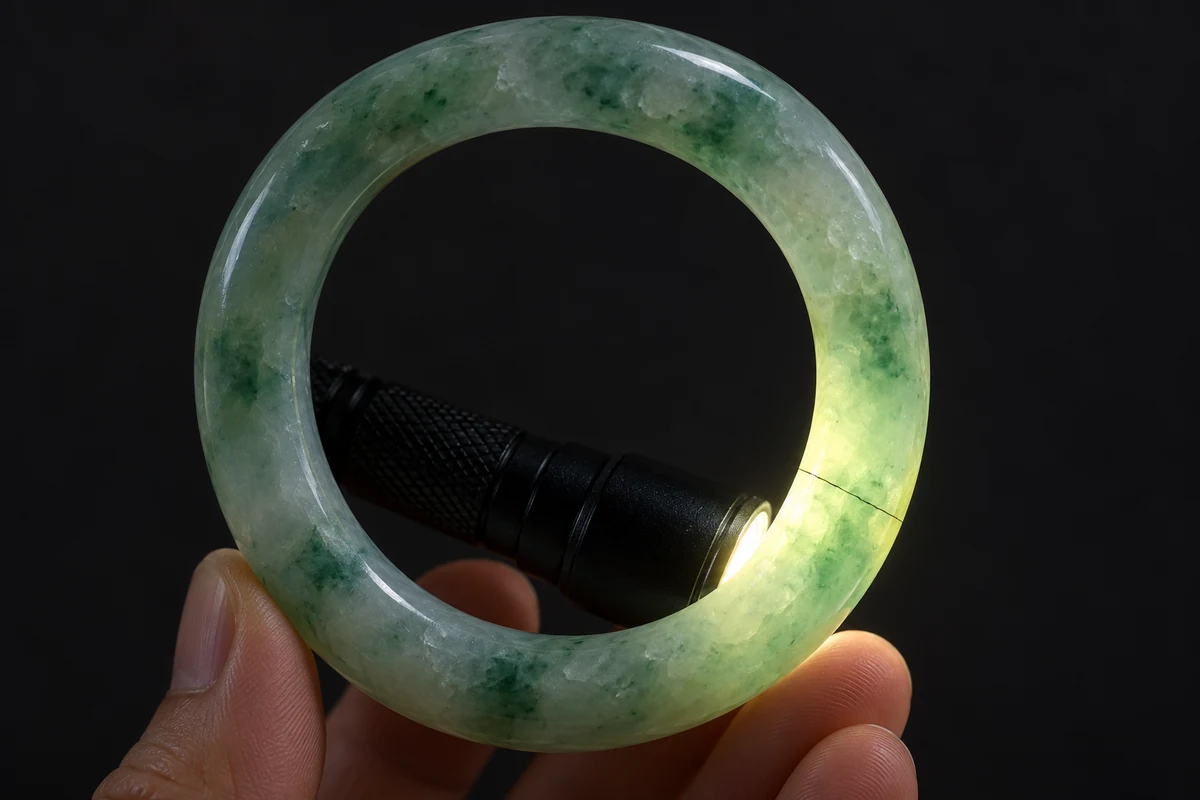
- Tap at two or three points around the bangle. A note that suddenly turns dull at one spot can point to a crack there, which you then check with a flashlight.
- Compare only with similar bangles: same shape, similar size.
Treat the result as one clue among several, never as proof.
What are better ways to check a jade bangle?
| Check | What it tells you | Reliability |
|---|---|---|
| Flashlight through the band | Cracks, cotton, texture | The best home check for cracks |
| 10x loupe on the surface | Acid-etched net texture (Type B), bubbles (glass), dye in cracks | Useful with practice |
| Density (weighing in water) | Jadeite is about 3.33; quartzite and albite are lighter | Rules out many look-alikes |
| UV flashlight | Strong blue-white glow can suggest resin or wax | A clue only, both ways |
| Gem lab with infrared spectroscopy | Detects resin and dye, names the material | Reliable; this is what a certificate is based on |
For the full method, see how to spot treated jadeite, cotton and cracks in jadeite and where to test jade. If you are buying online, ask for a daylight video and a flashlight video of the whole band; see judging jadeite from online photos.
What about two bangles clinking on the wrist?
Many people wear two bangles, or a bangle with a metal bracelet, and enjoy the soft clink. It is not dangerous in itself, but every knock wears the surface and the edges a little, and a hard knock against a metal bracelet or a table can chip a rim. If you wear two, choose a looser fit so they slide past each other rather than knocking, and take them off for sport and heavy work. See wearing jade every day.
How do you buy a jade bangle without relying on sound?
- Buy natural Type A with a certificate from a recognized lab, and check the certificate number on the lab's website. See how to verify a jadeite certificate.
- Ask for a flashlight video of the whole band and a daylight video.
- Measure your hand before choosing a size; see how to choose a jadeite bangle size.
- Be wary of any seller who uses a "ding" as proof instead of a certificate.
Every bangle on JadeiteHub is certified natural Type A jadeite and ships with its own certificate from an accredited Chinese national gem lab (国检). If it does not match its description, you get a full refund. Browse all JadeiteHub bangles.
FAQ
What does real jade sound like when tapped?
A dense, uncracked jadeite bangle, hung freely and tapped lightly, usually gives a clear, ringing note that lasts a moment. But glass, quartzite and many other hard materials ring too, so a clear sound does not prove the bangle is jade.
Does fake jade sound different?
Plastic and resin imitations sound dull and dead, so tapping can rule those out. Glass and dyed quartzite can ring as clearly as jadeite. Resin-filled Type B jadeite often sounds duller, but not always, and a natural bangle with cracks can sound dull too.
Can the sound test damage a jade bangle?
Yes. Knocking two bangles together, or tapping with a coin, key or ring, can chip the edge or leave marks. If you test at all, hang the bangle freely and tap very lightly with a small piece of jade.
Can I tell a cracked bangle by its sound?
A large crack often makes the sound short and dull, but a small or shallow crack may not change it. A flashlight shone through the bangle is a better way to find cracks.
What is a reliable way to test a jade bangle?
A gem lab. Labs use infrared spectroscopy to detect resin and dye and issue a certificate. At home, a flashlight, a loupe and a density test give useful clues.