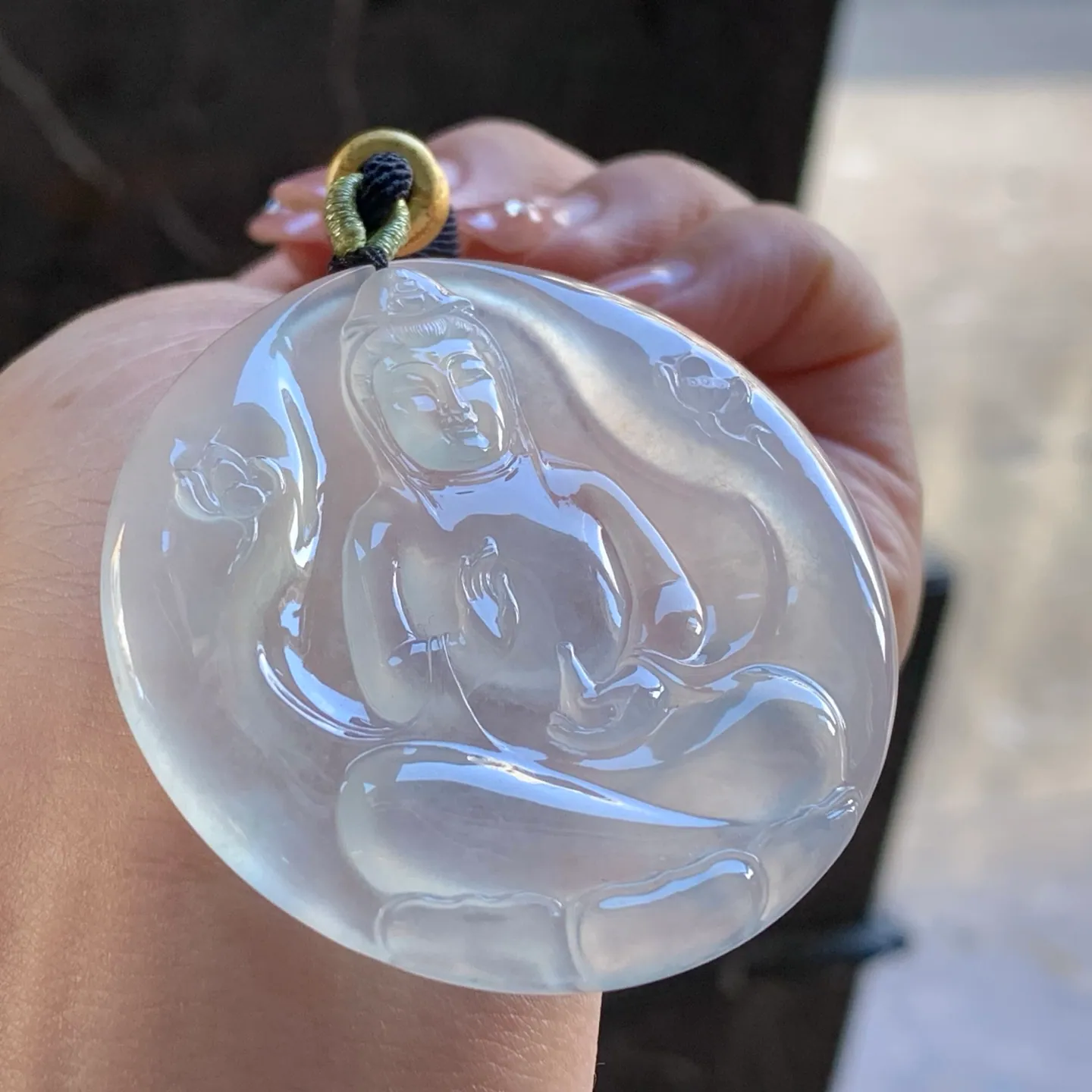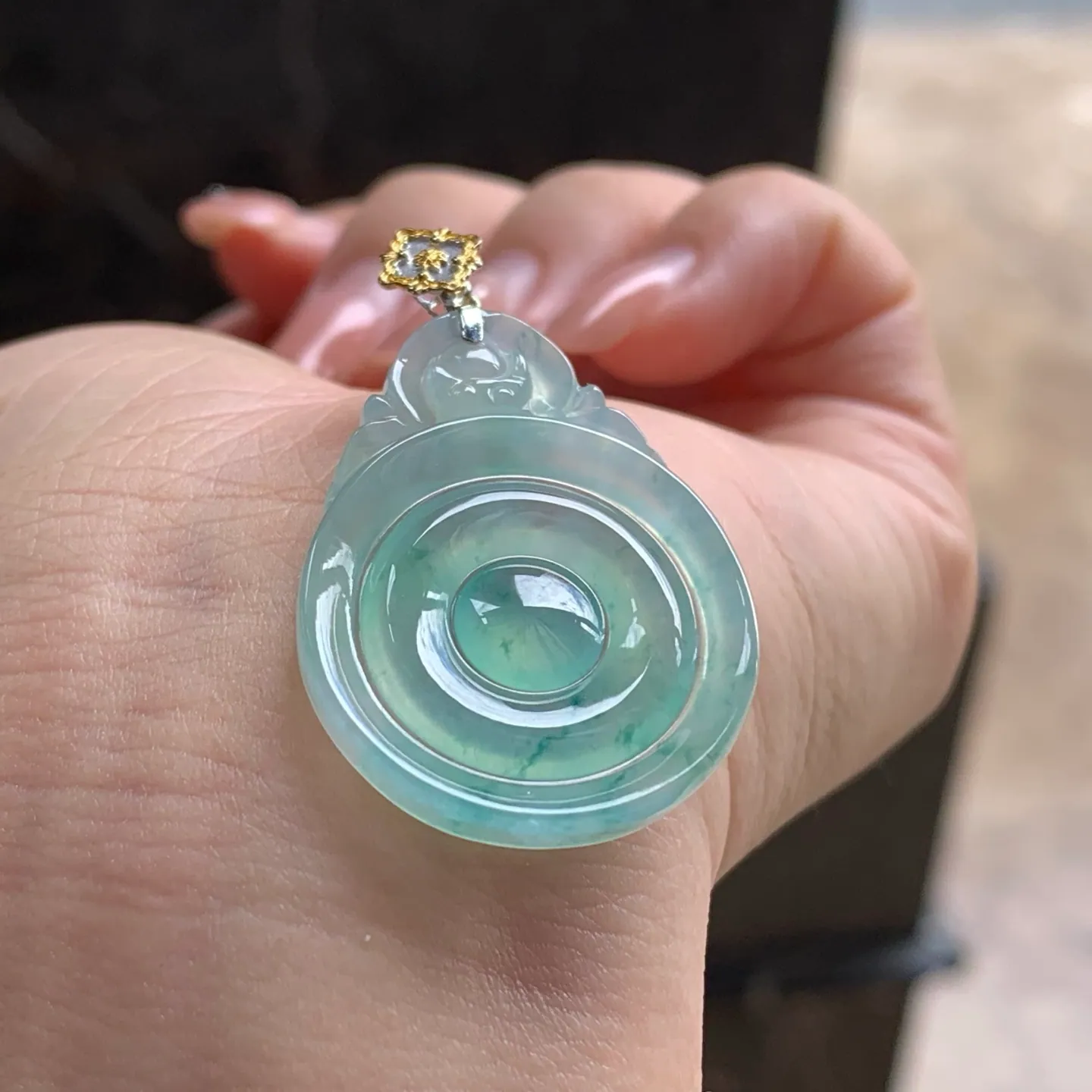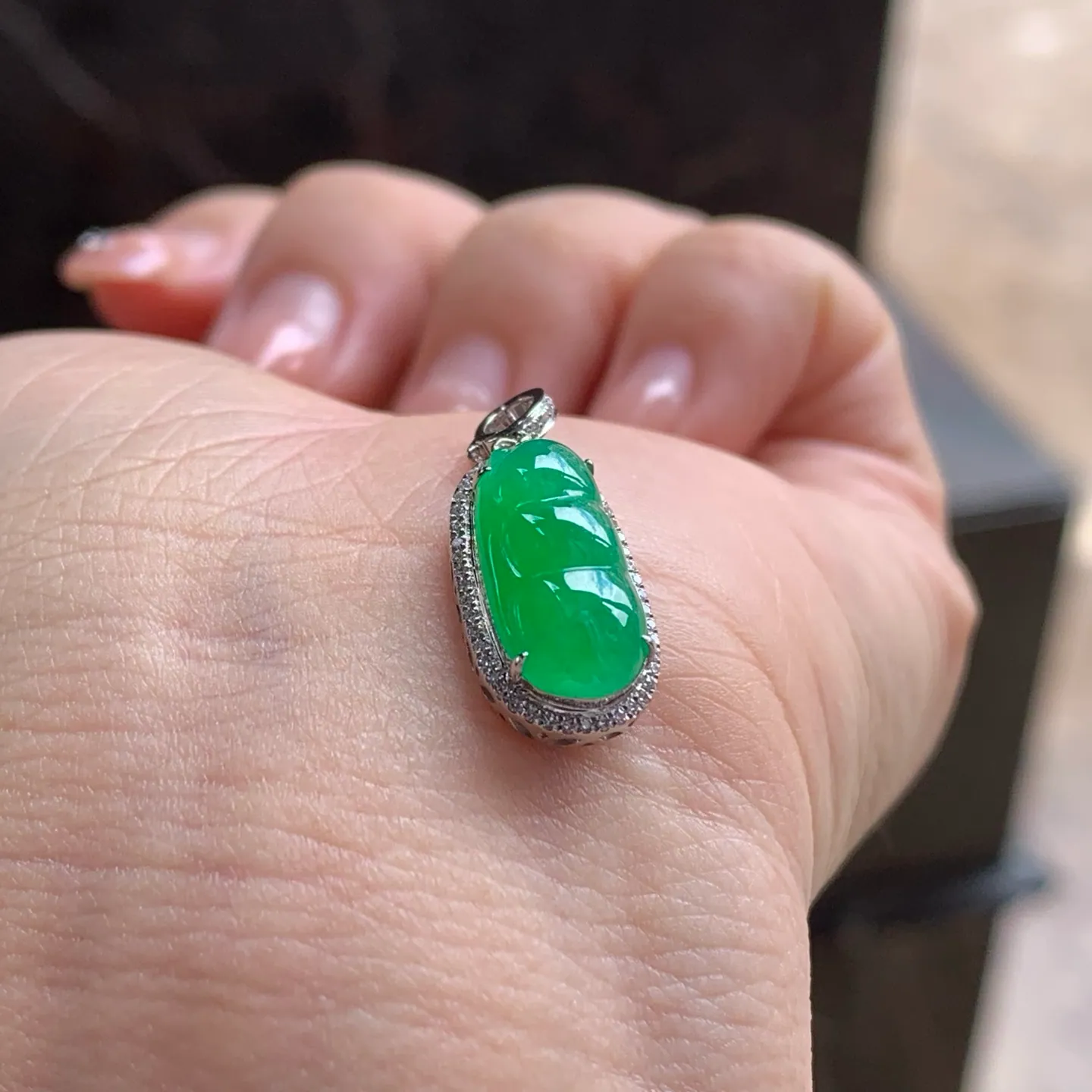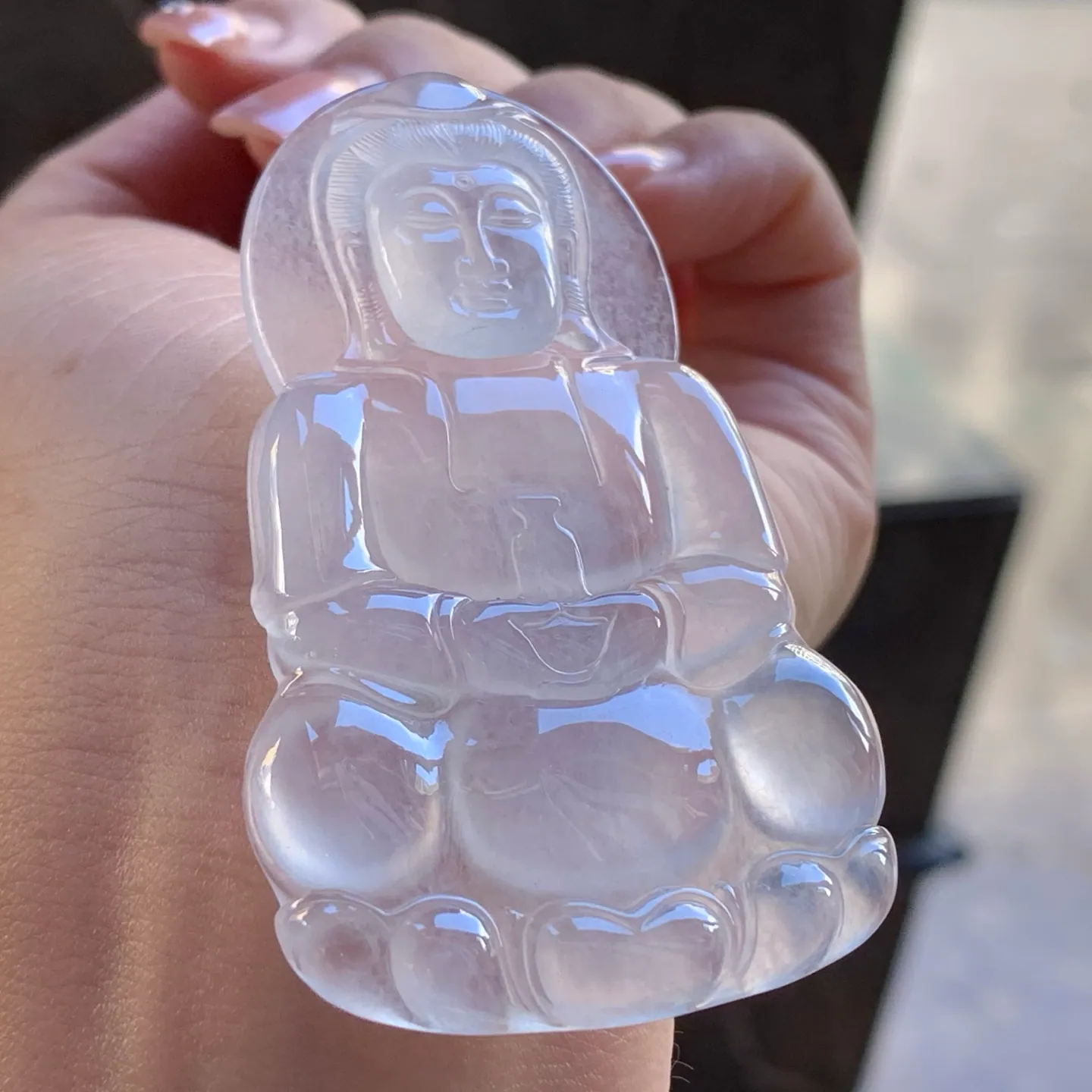
Wu Shi Pai Jade Pendant: Meaning, Shapes, How to Choose
Updated
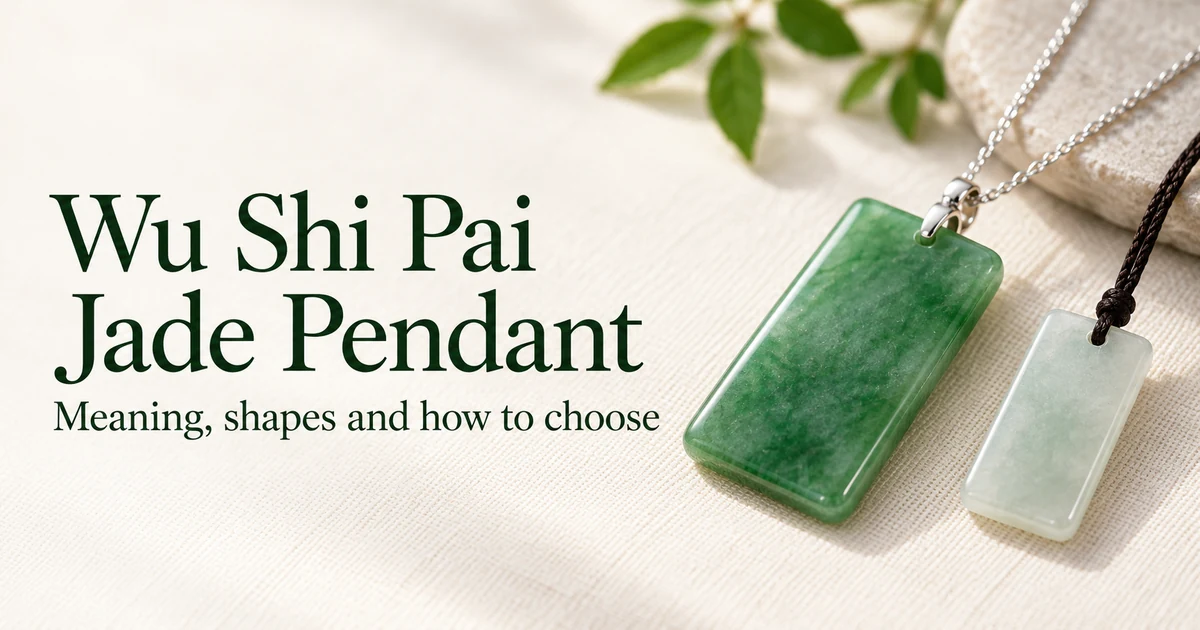
A wu shi pai (无事牌) is a plain, uncarved jade tablet worn as a pendant. The name means "no-trouble plaque" and comes from the saying 平安无事, "safe and sound, nothing gone wrong"; it is also read as 无事一身轻, "no troubles, a light heart". These are traditional wishes, not promises. With no carving to hide flaws, every crack, cotton patch and color change shows, which is why dealers say 无事牌最考料: the plain tablet is the hardest test of material. Choose it backlit for cracks, then by texture, translucency, color evenness, flat polish and thickness. On JadeiteHub, plain icy plaques run from US$299 in 925 silver to US$18,289 in 18K white gold (as of 21 October 2026), about a 60-fold range for the same motif.
What is a wu shi pai jade pendant?
A wu shi pai (无事牌) is a flat jade tablet worn as a pendant with no carving on its face at all. The name means "no-trouble plaque": 无事 (wu shi) is "nothing wrong, no trouble" and 牌 (pai) is a plaque or tablet. English sellers also call it a jade plaque pendant, a plain jade tablet, a blank plaque or a jade bar pendant, and you will often see it listed as "ping an wu shi pai" (平安无事牌), after the saying 平安无事, "safe and sound, with nothing gone wrong". Vietnamese buyers say vô sự bài or bài vô sự; in Thai it is ป้ายอู๋ซื่อ or simply a plain plaque.
Most wu shi pai are rectangles of jadeite with softened corners, a smooth domed or flat face and a small hole or metal bail at the top. Some are round or oval plaques. What they share is the empty face: no Buddha, no dragon, no leaf, nothing but the stone.
The name "wu shi pai" is also used by gold shops for plain plaques cast in solid gold. This guide is about jadeite tablets; when you search 无事牌金 or "gold wu shi pai" you will find both.
What does a wu shi pai mean?
Traditionally, a wu shi pai is a wish for a calm life without trouble. The most common reading is the saying 平安无事 (ping an wu shi): may you stay safe, with nothing going wrong. A second saying, 无事一身轻 (wu shi yi shen qing), means "with no troubles, you feel light", and sellers use it for a piece that suits someone who wants an easy, uncluttered life.
People also read the blank face in other ways. Some say "no carving means no worries" (无事 as "no matters weighing on you"). Some say the empty face leaves room for the wearer to fill in their own wish. Some simply like that it carries no religious figure. These are traditional sayings and personal readings, not promises: a pendant cannot keep trouble away.
Because the meaning is plain and the shape is neutral, the wu shi pai is a common gift:
| Occasion | Why a wu shi pai is chosen |
|---|---|
| A child leaving home for study or work | "Ping an wu shi": a wish for a smooth, safe time away |
| Graduation or a first job | A clean start; nothing religious to explain |
| Retirement or an elderly parent | "Wu shi yi shen qing": an easy life with no burdens (a wish, not a health claim) |
| Men who want something understated | No figure, no motif, wearable every day |
For how other pendant motifs get their meanings, often through wordplay, see jadeite pendant meanings.
Where does the wu shi pai come from?
Its exact origin is not well documented, so be wary of confident stories. Carved jade plaques (牌子) have a long history in China; the plain plaque as a named form is popular in today's jadeite trade, and most origin stories are folklore built around the saying 平安无事. The practical reason is simpler: when rough is fine and clean, leaving it plain shows it best.
Why do dealers say the wu shi pai "tests the material"?
Because there is nowhere to hide. The trade saying is 无事牌最考料: "the wu shi pai is the hardest test of material". On a carved pendant, a carver can follow a crack with a fold of a robe, cut away a cotton patch, or put a leaf vein over a stone line. On a plain tablet, every crack, cotton patch, spot and color change sits in full view on a broad, flat face.
That has two consequences in the market:
- Good tablets are cut from good rough. A cutter will only leave a piece plain if the material can stand on its own. Clean, fine, translucent or well-colored pieces are kept for tablets, cabochons, bangles and donuts. Material with problems is more often sent to be carved.
- A cheap wu shi pai usually shows why it is cheap. Coarse texture, cloudy body, patchy color or visible lines are all easy to see. That is a good thing for buyers: you can judge a plain tablet more honestly than almost any carved piece.
Workshops still have small tricks: a thin crack under the metal cap at the top, a cotton patch turned to the back, or a tablet cut thin to look more translucent. The checks below catch these.
What shapes and sizes do wu shi pai come in?
Four shapes cover most of what you will see: the rectangular tablet, the rounded-corner tablet, the round plaque and the oval plaque.
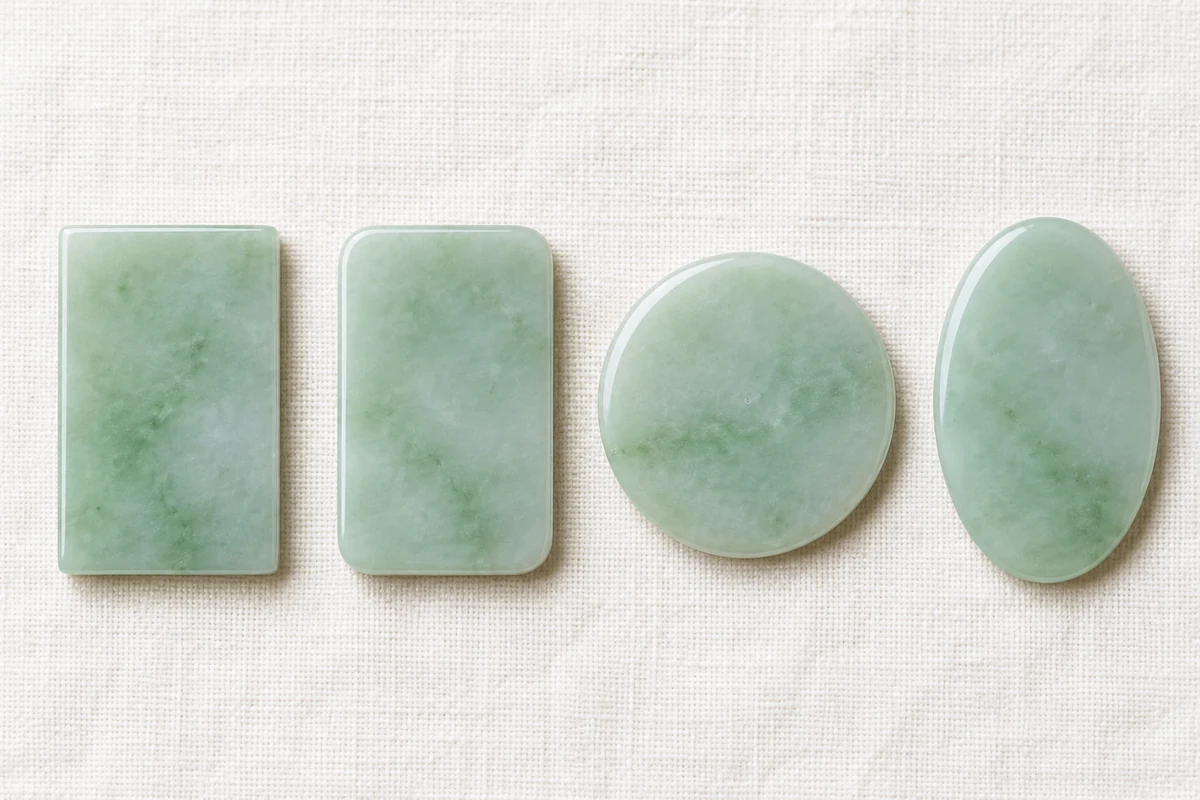
| Shape | What it looks like | How it wears |
|---|---|---|
| Rectangular tablet | Straight sides, crisp or slightly eased corners, taller than wide | The classic look; crisp corners can chip if knocked |
| Rounded-corner tablet | Rectangle with soft, rounded corners | The most common everyday form; corners are safer |
| Round plaque (圆牌) | A flat disc with no hole in the middle | Softer look; not the same as a donut, which has a hole |
| Oval plaque | An elongated round tablet | Slim on the neck; reads as gentle and modern |
Beyond the outline, look at the profile. A domed face (弧面) gathers light and makes the stone glow; a flat face (平面) looks cleaner and more architectural but shows polishing flaws more. Some tablets have a slight bevel at the edge to make them look thinner.
Size and thickness. There is no standard size. Tablets are sold by the length and width of the jade (usually not counting the bail), plus thickness. For reference, the two 18K white gold tablets in the price table below are listed at 26 mm and 27 mm. Choose by proportion rather than by any rule:
- On a fine chain, a smaller, slimmer tablet sits close to the collarbone and looks discreet.
- On a cord or a heavier chain, a longer, thicker tablet balances better and is easier to see.
- A tablet should look thick enough for its size. A large, thin plaque looks like a slice; a small, very thick one looks like a block.
Men often choose larger or darker tablets and women often choose slimmer or paler ones, but that is taste, not a rule. Hold a coin or a piece of card of the same size at your neck in a mirror before you decide.
Thickness and translucency. Light passes more easily through a thin tablet, so the same material looks more "watery" (水头好) when cut thin. Dealers know this. When you compare two tablets for translucency, compare pieces of similar thickness, or ask for the thickness in millimetres.
What is the difference between a wu shi pai and a ping an kou?
Both are plain and both carry the "ping an" (safe and sound) wish, but the shape and what they show are different.
| Wu shi pai (无事牌) | Ping an kou / jade donut (平安扣) | |
|---|---|---|
| Shape | Flat tablet, rectangle, round or oval | Round ring with a hole in the middle |
| Meaning | 平安无事: safe, no trouble; 无事一身轻 | 平安: peace, safety; the circle as completeness |
| Face | One broad face shows color and texture like a window | Rounded ring; light glows at the edges |
| Flaws | Show across a large flat area | Show across a narrow ring; a crack across the ring is a weak point |
| How it hangs | Hole or bail at the top, on a chain or cord | Usually a cord through the center hole, or center caps |
If you like a plain piece and want color to show as a broad field, choose the tablet. If you like a softer, rounder piece that glows, choose the donut. For the donut, see jade donut pendant.
How is a wu shi pai set: gold, silver or bail only?
There are three common ways, and the choice changes both the look and the price.
- Bail only. A small hole is drilled near the top and a gold or silver bail clips through it, or the tablet hangs on a cord. Nothing hides the stone. This is the "pure" look.
- Top cap. A metal cap wraps the top edge and carries the bail. It protects the top corners and can hide a small flaw there, so ask what is under it.
- Full frame. A metal frame around the whole edge, sometimes lined with small diamonds or rhinestones. It protects the edges from knocks and adds sparkle, but hides the edge of the stone.
Gold-set jadeite is mostly made in China in 18K (75%) gold, and both of the gold-set tablets in our table are 18K. Every silver setting sold on JadeiteHub is 925 sterling silver. Silver keeps a good stone affordable; gold adds weight, value and a frame that lasts. For a full comparison, see silver vs gold jadeite settings. When you buy a gold-set tablet, ask for the stone and the gold to be described separately, so you know what you are paying for.
Are there wu shi pai taboos?
There are no rules. What people call taboos (禁忌) are folk sayings, and they differ between families and regions. The ones you will hear most:
| Saying | What lies behind it |
|---|---|
| "Do not carve it later" | Carving adds "matters" (事) to a "no-matters" plaque, so some say it spoils the wish. Practically, re-carving also removes material and value. Others have a name or date engraved on the back and see no problem |
| "It is better received as a gift" | The wish feels stronger from someone else; buying your own is perfectly normal |
| "Do not lend it out" | A personal piece feels "yours"; practically, it avoids loss and knocks |
| "If it breaks, it took a blow for you" (碎了是挡灾) | A comforting saying; the practical point is to stop wearing a cracked tablet |
| "Wear it on a red cord" | A custom, especially for gifts and birth years; any cord or chain is fine |
A wu shi pai has no Buddha or other figure on it, so the etiquette some people follow for figure pendants does not come into it. If a seller uses a "taboo" to push you toward a pricier piece, treat it as sales talk.
How do you choose a good wu shi pai?
Start with light, then the surface, then the material. A plain tablet makes every step easy to see.
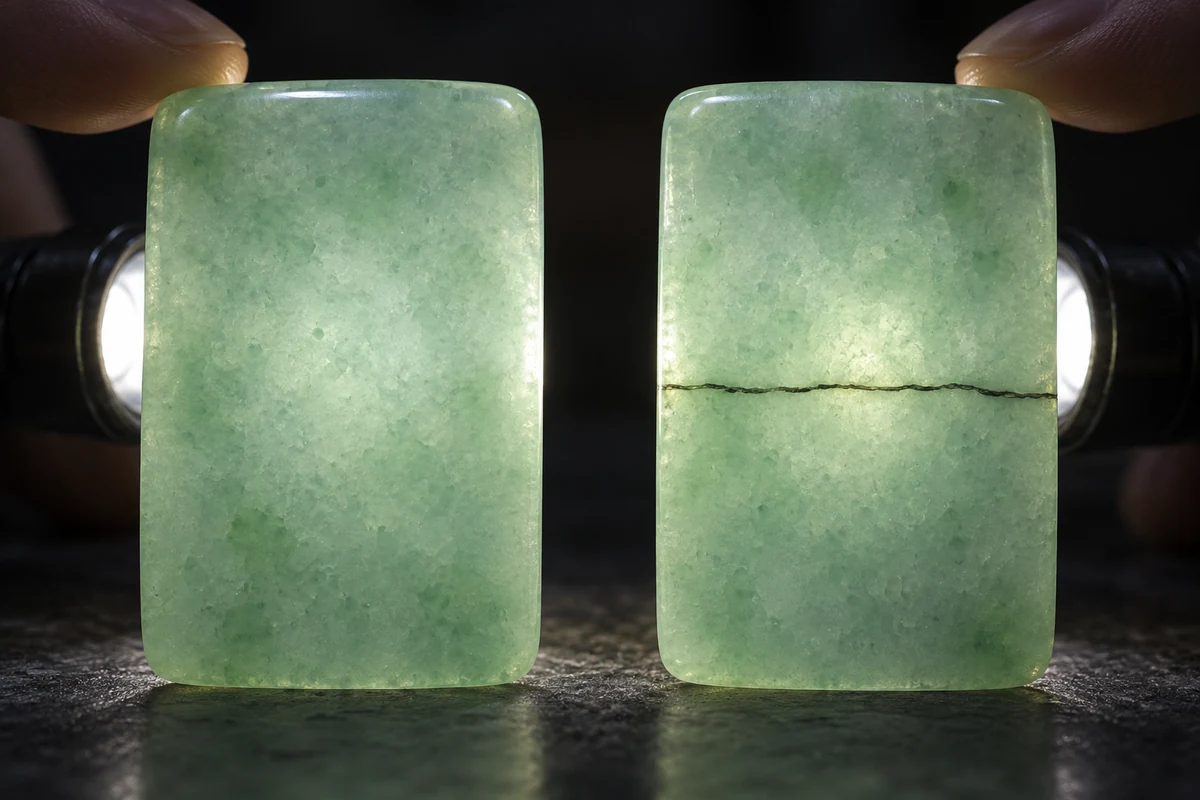
- Shine a flashlight through it. Hold a small white flashlight behind the tablet and turn it slowly. A crack shows as a sharp line that blocks or reflects light, often running straight across. A stone line (石纹) is a healed vein inside the stone: it looks softer and does not catch a fingernail on the surface. On a plain tablet both are visible, and a crack across the width is a real weakness. See cotton and cracks in jadeite.
- Check under the setting. Ask for photos or video of the top edge, and of the stone before setting if the seller has them. A cap or frame can hide a chip or crack.
- Look at the body. White cloudy patches (棉, cotton) and dark specks are normal in natural jadeite, but on a tablet they are in full view. A small, soft patch near an edge matters less than a large one in the middle of the face.
- Judge texture and translucency. Fine, even texture and good translucency decide most of the value. Look at how far light travels into the stone and how soft the glow is. Compare tablets at similar thickness. See texture, translucency and color.
- Check color evenness. Color on a tablet can be even across the face, a float of green on a clear body, or patches. Even color across the whole face is the rarest. Look in daylight too: warm light flatters green.
- Check the polish and flatness. Tilt the tablet so a window or lamp reflects in the face. On a well-polished tablet the reflection is a clean, unbroken shape. A wavy or broken reflection means an uneven surface, which a workshop may leave to save material.
- Check both faces and the edges. The back should be as well finished as the front. Edges should be even in thickness with no chips at the corners.
- Ask for the certificate. Bright, even green tablets at low prices are a classic sign of bleached and resin-filled (Type B) or dyed (Type C) jadeite. Buy natural Type A with a lab certificate.
The same checks apply to a black jadeite tablet (墨翠无事牌), which looks black in reflected light and shows green when backlit; see black jadeite.
How much does a wu shi pai cost?
From a few hundred to many thousands of US dollars, and the range comes from the material and the setting, not the shape. Here are the plain plaques listed on JadeiteHub. All are certified natural Type A jadeite; prices are as of 21 October 2026 and may change.
| Listing | Shape | Material | Setting | Size (jadeite) | Price |
|---|---|---|---|---|---|
| JH-000018 | Wu shi pai | Icy, apple green | 925 silver | – | US$299 |
| JH-000010 | Round plaque | Icy, apple green | 925 silver | – | US$679 |
| JH-000004 | Wu shi pai | Icy, bright green | 18K white gold | 26 mm | US$2,919 |
| JH-000022 | Wu shi pai | Icy, lavender with green (春带彩) | 18K gold | – | US$3,239 |
| JH-000006 | Wu shi pai | Icy, pale lavender | 18K white gold | 27 mm | US$18,289 |
What the table shows:
- Same motif, about a 60-fold range. All five are plain, uncarved plaques, all icy. The most expensive costs about 61 times the cheapest. With no carving to pay for, almost all of that difference is the stone and the metal.
- Setting is part of the step. The two silver pieces are at the bottom; the gold-set tablets start in the thousands. Brighter color and 18K gold come together here, so the table cannot split how much of the step is color and how much is gold.
- A color name does not set the price. The two 18K white gold tablets are almost the same size (26 mm and 27 mm), yet the pale lavender one costs about six times the bright green one. Labels like "icy" and "lavender" cover a wide range; fineness, clarity, cleanliness and evenness of the individual stone decide where it sits. That is what you judge in the photos, the video and the certificate.
For the full list of what moves jadeite prices, see what determines jadeite price. You can browse all certified pendants in the JadeiteHub pendants collection.
How do you care for a wu shi pai?
Take it off for sport, heavy work and sleep, since a corner that hits tile can chip. Wash it in lukewarm water with mild soap, dry it, and store it apart from harder stones that can scratch the flat face. Check the bail now and then.
On JadeiteHub we list only jadeite with a lab certificate. Every sold piece is checked against its certificate at our inspection center before it ships, and if it does not match its description you get a full refund.
FAQ
What does wu shi pai mean?
Wu shi pai (无事牌) means "no-trouble plaque". It comes from the saying 平安无事, "safe and sound, with nothing gone wrong", and is also linked to 无事一身轻, "no troubles, a light heart". These are traditional wishes, not promises.
Why is a wu shi pai left uncarved?
Because good material speaks for itself. Carving can hide cracks and cotton, so cutters leave clean, fine, well-colored pieces plain. The trade saying is 无事牌最考料: the plain tablet is the hardest test of material.
What is the difference between a wu shi pai and a ping an kou?
A wu shi pai is a flat tablet (rectangular, round or oval) with a broad face that shows color like a window. A ping an kou or jade donut is a round ring with a hole. Both are plain and both carry the "ping an" (safe and sound) wish.
What size wu shi pai should I choose?
There is no standard size. Choose by proportion and how you will wear it: a smaller, slimmer tablet suits a fine chain, a longer, thicker one suits a cord or heavier chain. For reference, two 18K tablets on JadeiteHub are listed at 26 mm and 27 mm.
Are there taboos for wearing a wu shi pai?
There are no rules, only folk sayings, such as not carving it later (it would "add matters" to a no-matters plaque) or that it is better received as a gift. Buying your own is perfectly normal.
Why do wu shi pai prices vary so much?
The shape is the same, so the price comes from the stone and the metal: texture, translucency, color, cleanliness, size and the setting. JadeiteHub's plain icy plaques ranged from US$299 to US$18,289 as of 21 October 2026.
How do I check a wu shi pai for cracks?
Shine a small white flashlight through it from behind and turn it slowly. A crack is a sharp line that cuts the light; a healed stone line is softer and does not catch a fingernail. Also ask for photos of the area under any cap or frame.