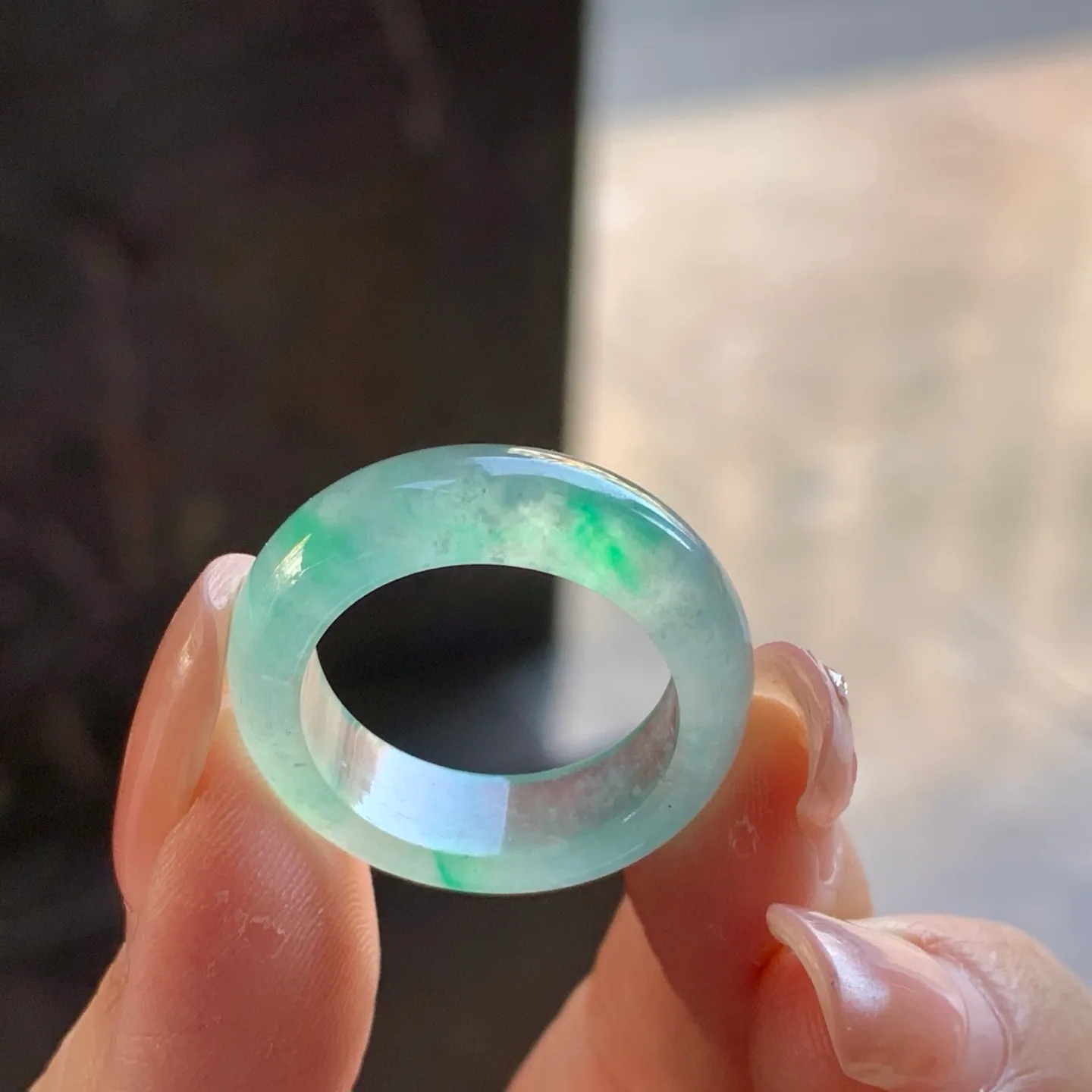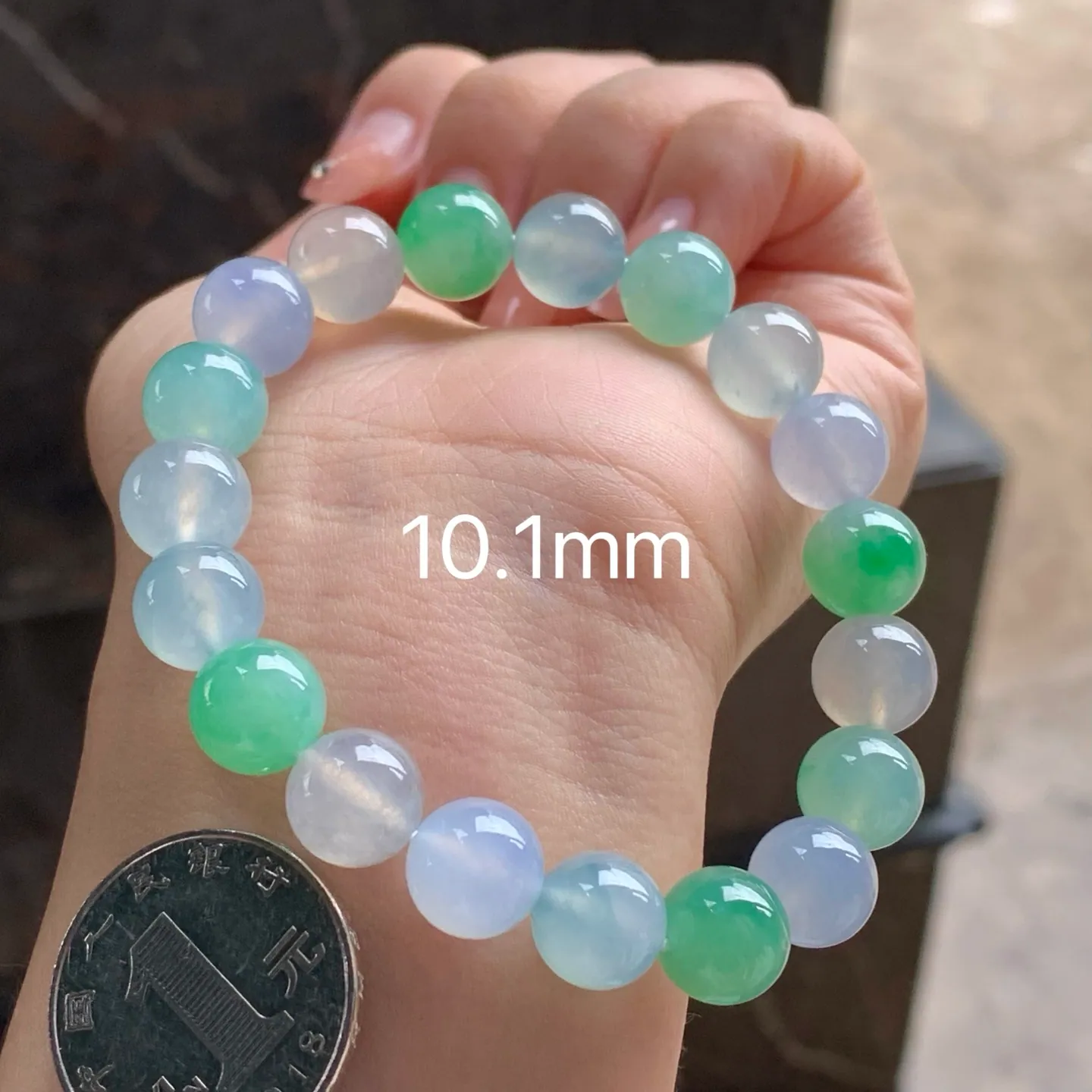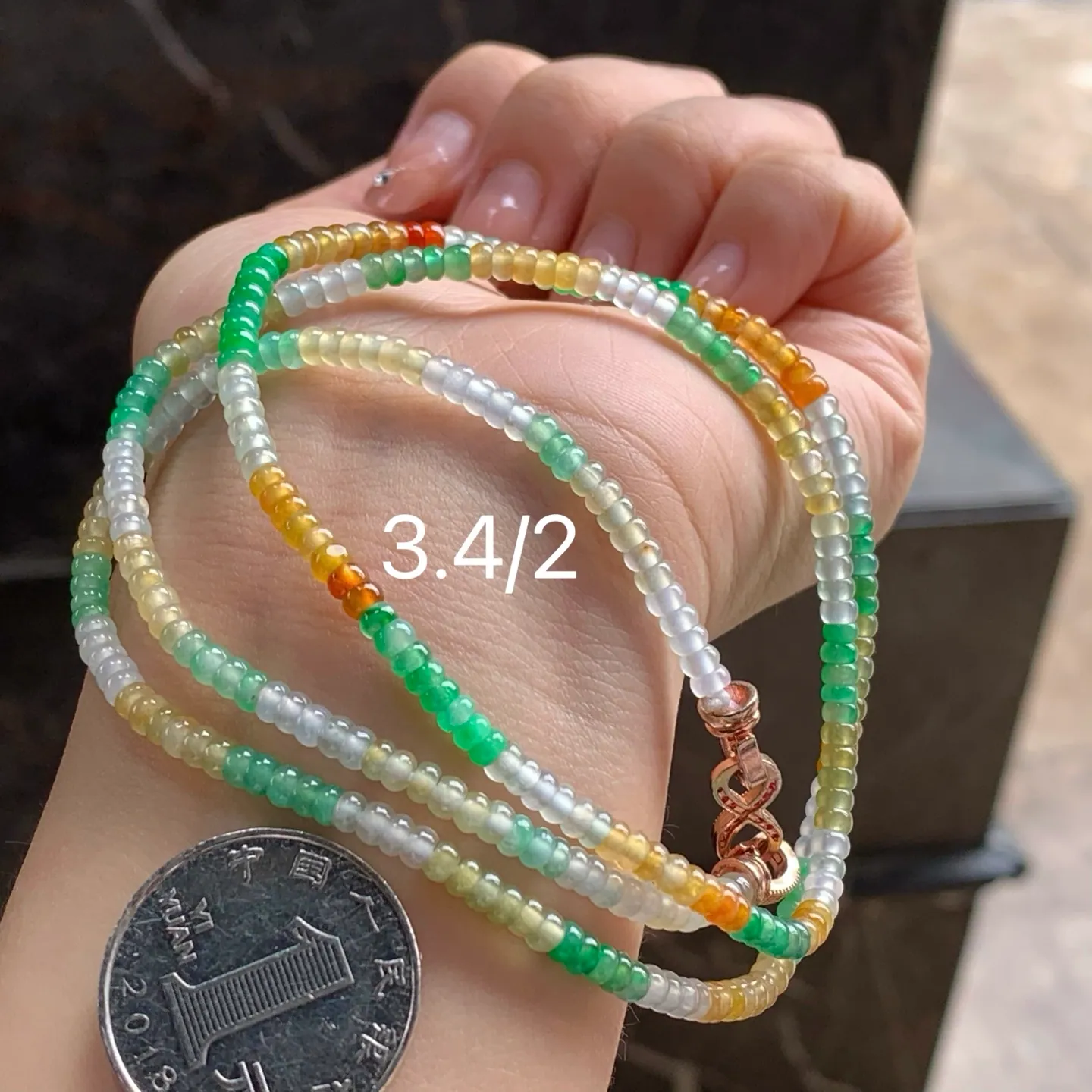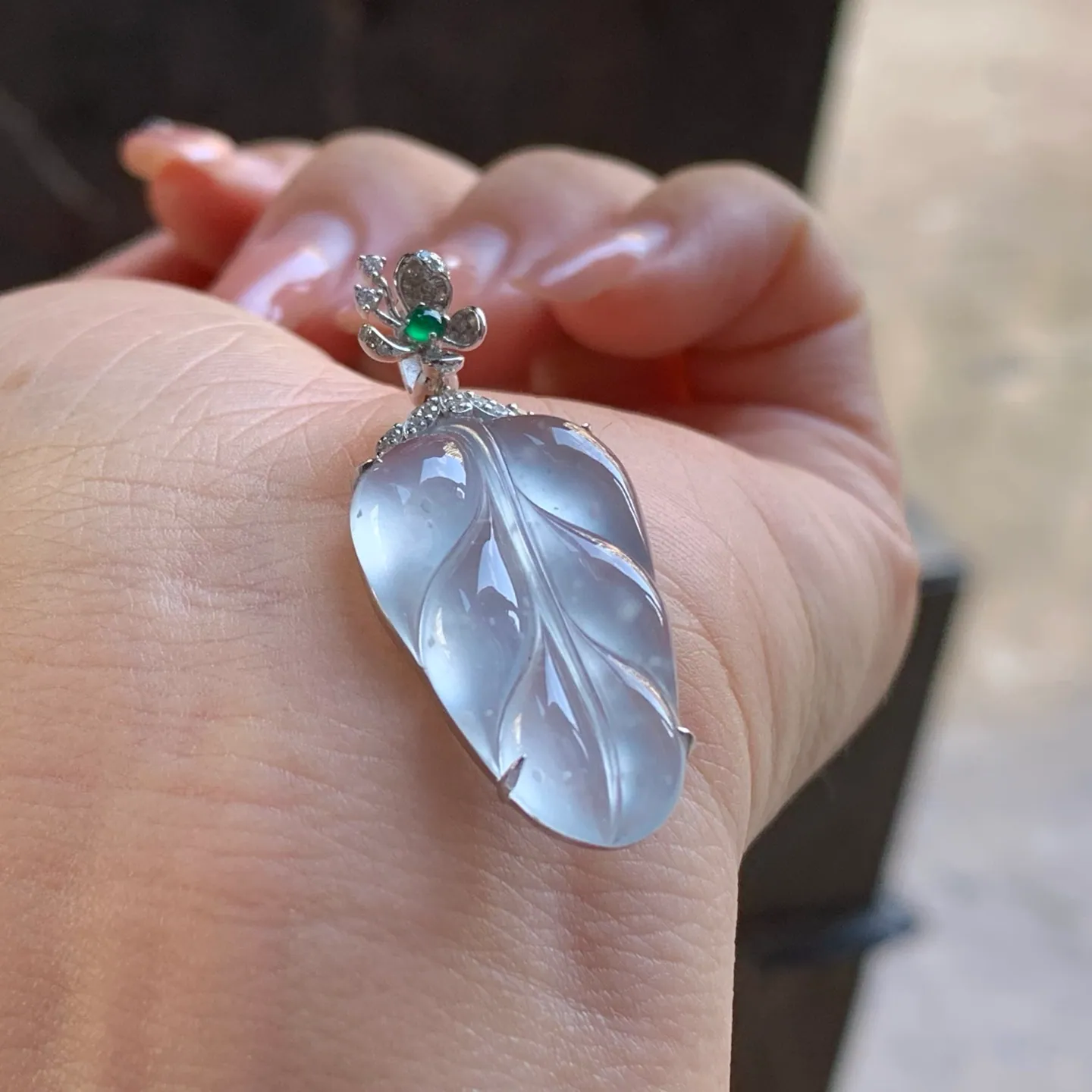
Why Is Jade So Important in Chinese Culture?
Updated
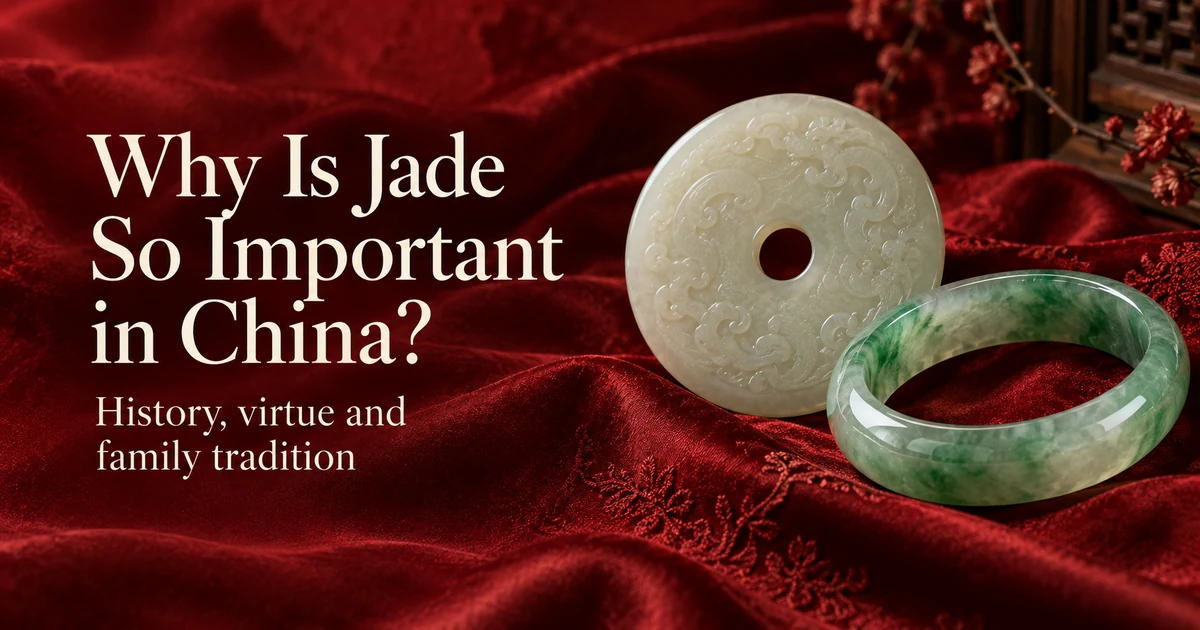
Jade has been the most respected material in China for about 8,000 years. Neolithic cultures carved it into ritual discs (bi) and tubes (cong); later it marked rank, sealed treaties and was buried with princes. Confucian scholars compared its qualities to a gentleman's virtues, so wearing jade came to mean having good character. Sayings such as "gold has a price, jade is priceless" grew from this. Classical Chinese jade was nephrite; Burmese jadeite (feicui) only became widely popular in the Qing dynasty, from the 18th century. Today jade bangles and pendants are family heirlooms, wedding and baby gifts, and protective charms by tradition.
Why is jade so important in China?
For most of Chinese history, jade (玉, yù) was valued above gold. Not because it was rarer, but because of what it stood for. Over about 8,000 years it has been a ritual object, a mark of rank, a symbol of moral character, a burial treasure and, today, the jewelry a grandmother hands down to a granddaughter.
Four ideas explain most of it:
| Idea | What it means | Where it comes from |
|---|---|---|
| Sacred | Jade was used to honor heaven, earth and ancestors | Neolithic cultures and early dynasties |
| Rank and trust | Jade objects showed status and served as tokens of authority | Bronze Age courts and the Zhou rites |
| Virtue | Jade's qualities were compared to a good person's character | Confucian texts such as the Book of Rites |
| Protection and family | Jade is worn for luck, given at life events and passed down | Folk tradition, still alive today |
The Chinese language shows how deep this goes. Many words for beautiful or precious things contain 玉: 亭亭玉立 (graceful as jade), 冰清玉洁 (pure as ice and jade), 金玉良缘 (a match of gold and jade, a perfect marriage). The character also appears in countless personal names.
How old is jade culture in China?
Jade carving in China goes back to the Neolithic period. Some of the earliest known jade objects come from the Xinglongwa culture in the northeast, about 8,000 years ago. Two later cultures made jade central to their world:
- Hongshan culture (northeast China, roughly 4700–2900 BCE) is known for curled "pig-dragons" (玉猪龙) and other carved ornaments found in tombs.
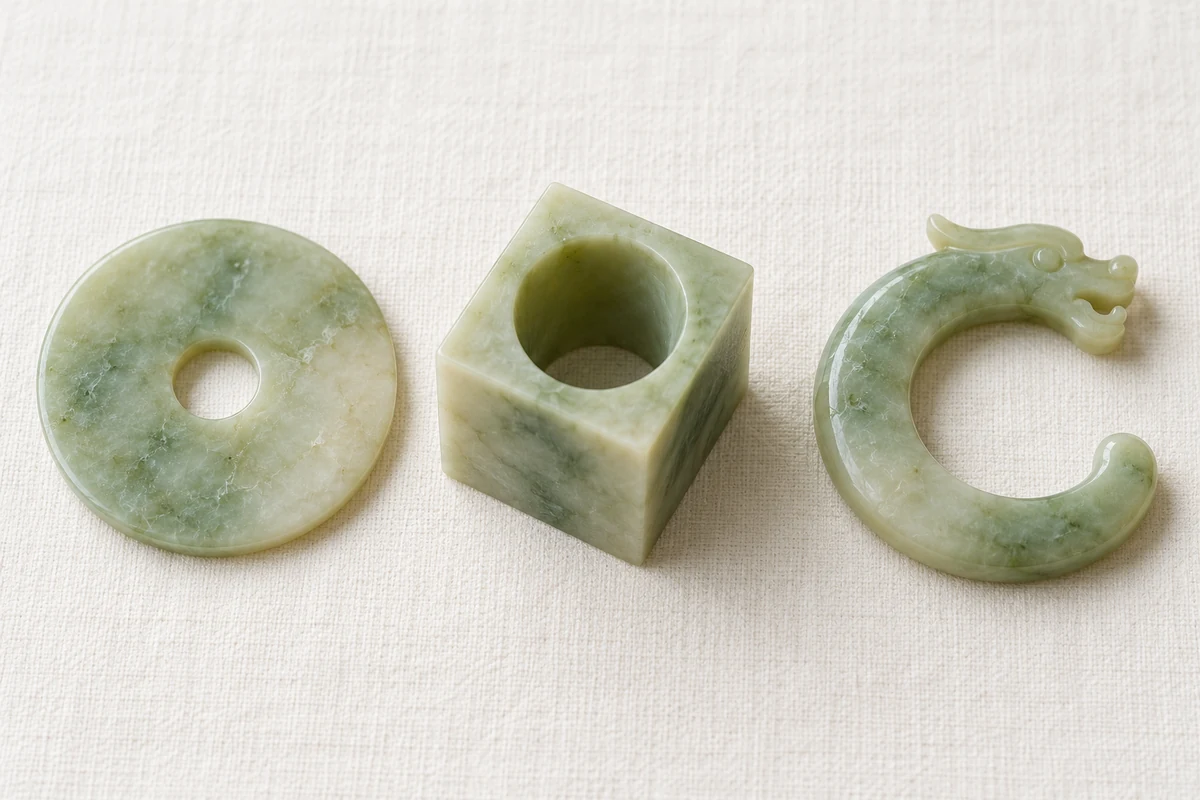
- Liangzhu culture (around Lake Tai near today's Shanghai and Hangzhou, roughly 3300–2300 BCE) buried its elite with large numbers of jade discs called bi (璧) and square tubes called cong (琮), many carved with a mask-like face.
Nobody knows exactly how these objects were used, but later Chinese texts link the round bi with heaven and the square cong with earth. The Rites of Zhou (周礼) lists six jade ritual objects and says a blue-green bi is used to honor heaven and a yellow cong to honor earth (以苍璧礼天,以黄琮礼地).
Working jade was slow. Jade is too tough to chip like flint, so it had to be ground with sand and abrasives, sometimes over months. A finished piece represented enormous labor, which helps explain why it belonged to the powerful.
Why did Confucius compare jade to virtue?
This is the idea that turned jade from a ritual object into a personal one. In the Book of Rites (礼记), Confucius is recorded as saying that in ancient times the gentleman compared his virtue to jade (君子比德于玉). The passage then matches jade's qualities to virtues: its warm, moist sheen to benevolence (温润而泽,仁也), its fine, dense texture to wisdom (缜密以栗,知也), its edges that are sharp but do not cut to integrity (廉而不刿,义也), and so on through a long list.
A few centuries later, the dictionary Shuowen Jiezi (说文解字) defined jade as "the most beautiful of stones" with five virtues (玉,石之美者,有五德).
The Book of Rites also says that a gentleman does not part with his jade without good reason (君子无故,玉不去身). Scholars wore jade pendants that chimed as they walked, a reminder to move with dignity. Wearing jade became a statement: I try to be the kind of person jade represents. That is the root of the modern belief that jade suits a person of good character.
What do the famous Chinese jade sayings mean?
| Saying | Literal meaning | How it is used |
|---|---|---|
| 黄金有价玉无价 | Gold has a price, jade is priceless | Good jade is valued for more than its material |
| 宁为玉碎,不为瓦全 | Better to be broken jade than an intact roof tile | Better to die with honor than live in disgrace |
| 玉不琢,不成器 | Uncut jade does not become a vessel | People need education and discipline to reach their potential (Book of Rites) |
| 价值连城 | Worth several cities | Priceless; from the story of the He Shi Bi (和氏璧), a jade disc for which, the Records of the Grand Historian says, the state of Qin offered fifteen cities |
| 人养玉,玉养人 | People nurture jade, jade nurtures people | A folk saying: wearing jade makes it look better, and caring for it is good for you |
The last saying is behind the popular belief that jade "gets greener" with wear. In fact, wearing and handling mostly improve the polish and luster; the color itself does not change. See does jade change color when you wear it?
Why were princes buried in jade suits?
During the Han dynasty (206 BCE–220 CE), many believed jade could protect the body after death. The most famous examples were found in 1968 at Mancheng in Hebei province: the tombs of Liu Sheng, Prince Jing of Zhongshan, and his wife Dou Wan. Each was buried in a full suit made of more than 2,000 small jade plates sewn together with gold wire.
Jade was also placed on and in the body of the deceased, including carved cicadas placed in the mouth, a symbol of rebirth. Jade suits were later banned, but the link between jade and protection stayed in folk belief.
Is the jade in Chinese history the same as jadeite?
Mostly not, and this surprises many people. Almost all jade in ancient China was nephrite, the mineral that includes Hetian jade (和田玉) from Xinjiang. The bi discs, cong tubes, burial suits and scholar's pendants were nephrite.
Jadeite, the mineral traded as 翡翠 (feicui), came from northern Burma (Myanmar). The word 翡翠 originally meant the kingfisher, a bird with bright red and green feathers, and was later borrowed for the colorful stone. Jadeite reached China in small amounts through Yunnan earlier, but it only became widely popular in the Qing dynasty, especially from the 18th century, when the court took a strong interest in vivid green jadeite. The Empress Dowager Cixi is said to have prized it above other jade, and fine green jadeite became a fashion that has lasted ever since.
| Nephrite (e.g. Hetian jade) | Jadeite (翡翠) | |
|---|---|---|
| Main use in China | From the Neolithic period onward | Widely popular from the Qing dynasty |
| Main source | Xinjiang and other regions | Northern Myanmar |
| Typical look | Oily, waxy luster; white, green, grey | Glassy luster; green, white, lavender, red, black and more |
| Today | Still prized, especially white Hetian jade | The most valuable jade in the market |
Both are genuine jade. For how to tell them apart, see jadeite vs nephrite. For how jadeite travels from Myanmar to China today, see the jadeite supply chain.
What does jade mean in Chinese families today?
Jade is no longer reserved for emperors, but it has kept much of its meaning. In many Chinese families:
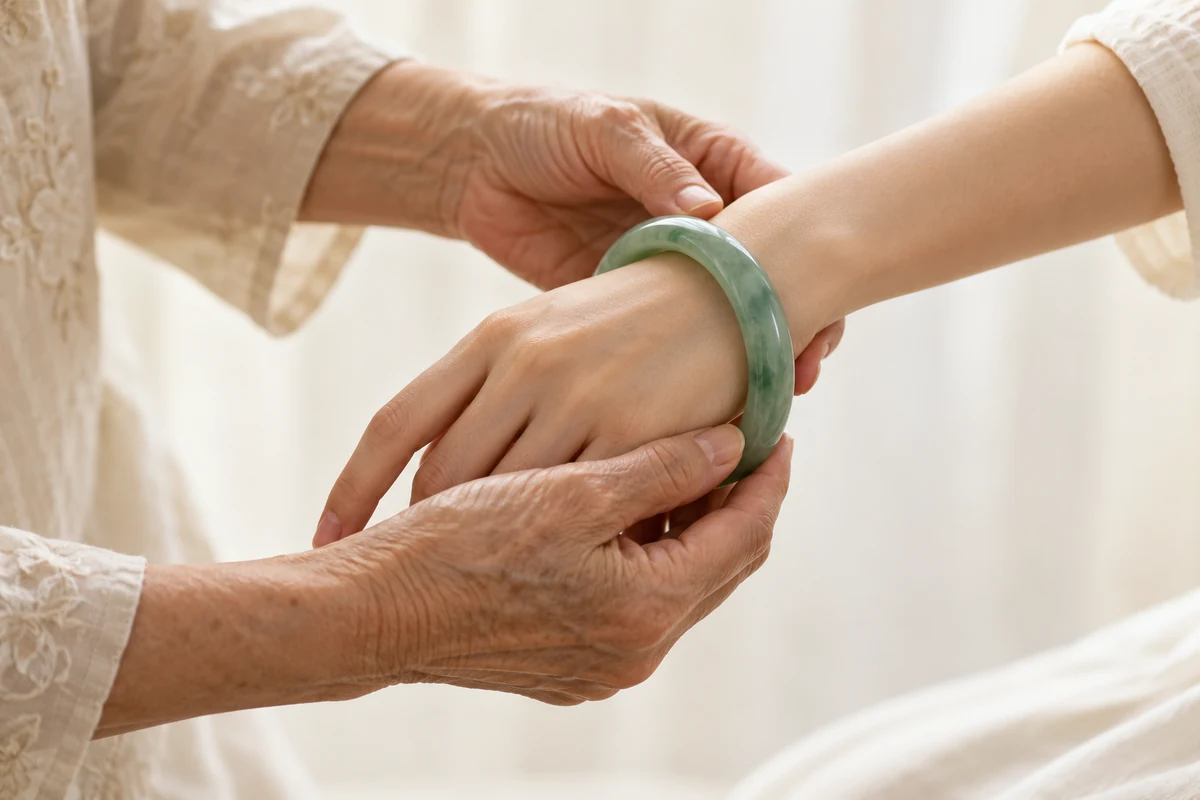
- A jade bangle is an heirloom. A mother or grandmother gives her bangle to a daughter or granddaughter, and the piece carries the family's history. See old jade heirlooms.
- Jade marks life events. Babies may receive a small jade pendant or a peace buckle (平安扣); brides often receive a bangle from the groom's family. See jade for babies and jade wedding jewelry.
- Jade is worn for protection and luck. Pendant designs carry wishes: a Guanyin or laughing Buddha for protection, a gourd for good fortune, a pixiu for wealth. See jadeite pendant meanings.
- A broken bangle "took the hit". A common belief is that when a jade bangle breaks in an accident, it has blocked misfortune meant for the wearer. See jade bangle cracked or broken?
These are traditions and beliefs, not proven effects. We describe them because they explain why people choose jade, not because jade can promise any outcome. More in jade meaning and beliefs.
Why is jade so valuable?
Part of jade's value is cultural: thousands of years of meaning make people willing to pay more for it. The rest is practical. Fine jadeite is rare: gem-quality material comes almost entirely from one area of northern Myanmar, and only a small part of what is mined has strong, even color and good translucency. A bangle needs a large, crack-free block, and much of the block is lost in cutting.
So "jade" covers a huge range, from inexpensive everyday pieces to some of the most expensive gems in the world. Translucency, color, cracks, size and treatment decide where a piece falls. See what determines jadeite price.
How did Chinese jade culture spread to Vietnam and Thailand?
Jade traditions travelled with trade and with Chinese communities across Southeast Asia.
- In Vietnam, centuries of shared culture with China mean many of the same ideas are familiar: jade as a stone of protection and family, bangles given to mothers and brides, and the five elements (ngũ hành) used to choose a color. Vietnamese usually call jadeite cẩm thạch or phỉ thúy.
- In Thailand, Thai-Chinese families brought jade customs with them, and Bangkok's Chinatown (Yaowarat) has long been known for gold and jade shops. Thais usually call jadeite หยกพม่า (Burmese jade), and often choose jade colors by birth day.
Each place has added its own beliefs on top of the Chinese ones. See jade five elements and buying jade in Thailand.
Buying jadeite on JadeiteHub
JadeiteHub sells finished natural jadeite (Type A) only. We operate in Ruili, the Chinese border town where most of Myanmar's jadeite enters China. Sellers post real photos of each piece, some with video. Every sold piece is checked against its listing and ships with its own certificate from an accredited Chinese national gem lab (国检). If it does not match its description, you get a full refund. Shipping is insured; import duties are paid by the buyer. Browse the shop.
FAQ
Why is jade so important in Chinese culture?
For about 8,000 years jade has been used for rituals, as a mark of rank and as a symbol of moral character. Confucian texts compared jade's qualities to a gentleman's virtues, so wearing jade came to mean having good character. Today it is an heirloom and a gift for life events.
What does jade symbolize in China?
Traditionally jade symbolizes virtue, purity, protection, long life and family continuity. Sayings such as "gold has a price, jade is priceless" and "better to be broken jade than an intact tile" show how highly it is regarded.
Is Chinese jade nephrite or jadeite?
Ancient Chinese jade was almost all nephrite, including Hetian jade. Jadeite (feicui) from Myanmar only became widely popular in the Qing dynasty, from the 18th century, and is now the most valuable jade on the market.
What does a jade bangle mean in Chinese culture?
A jade bangle is often an heirloom passed from mother to daughter, a wedding gift from the groom's family or a protective piece. By tradition, a bangle that breaks in an accident is said to have taken a misfortune meant for the wearer.
Why is jade more valuable than gold in China?
The saying "gold has a price, jade is priceless" reflects jade's cultural meaning, not a rule about price. Ordinary jade can be inexpensive, while fine jadeite is rare and can cost far more than gold of the same weight.