Blue Water Jadeite: Meaning, Price, Real or Fake
Updated
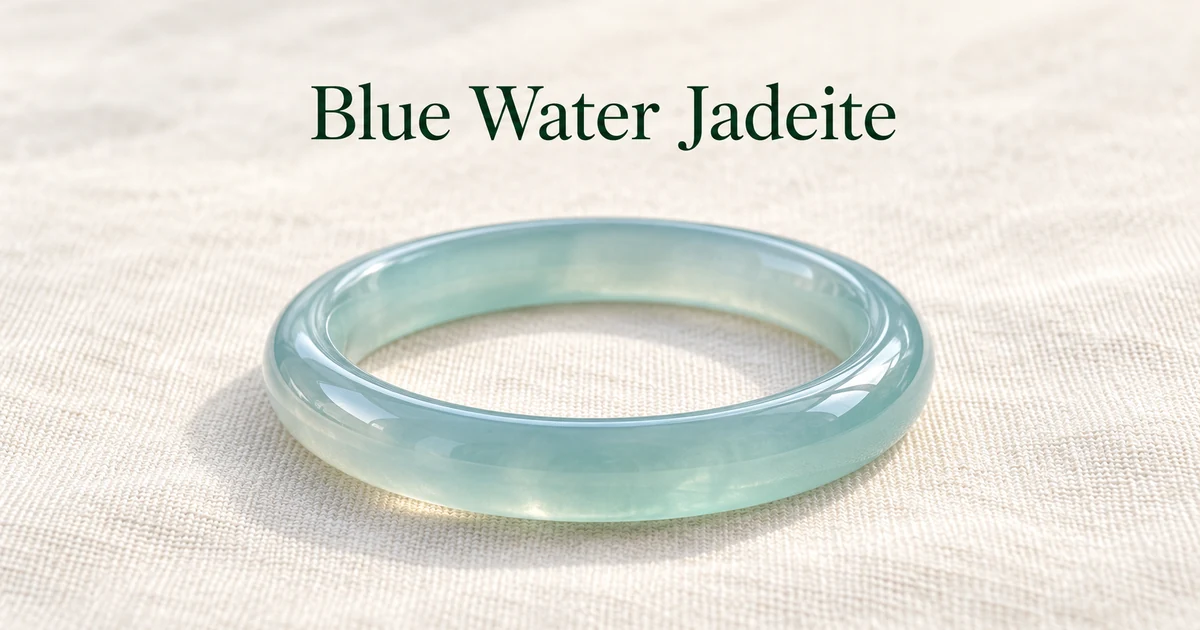
Blue water (蓝水, lán shuǐ) is natural jadeite that is icy or more transparent and carries a pale, cool blue or blue-green tone. Qingshui (晴水) is its close cousin: a pale, even green spread through the whole piece. Both are real jadeite, not a separate stone. Value depends first on transparency, then on how clean the color is: a clear blue beats a grey one. Certificates write only "jadeite", not the color name or the origin.
What is blue water jadeite?
Blue water (蓝水, lán shuǐ, literally "blue water") is a trade name for natural jadeite that is icy or more transparent and carries a pale, cool blue or blue-green tone. The color is light and spread evenly through the stone, so a good piece looks like a glass of clear water with a hint of blue.
It is not a separate gemstone. Blue water is the same mineral as green, lavender or white jadeite; the name only describes a combination of transparency and color. The blue-green tint is generally linked to traces of iron in the stone, while the bright greens come mainly from chromium. Type A blue water is natural color, not dyed.
In English you will see it sold as "blue water jade", "blue jadeite" or "icy blue jade". The Chinese names below are the ones dealers actually use, and they matter because they are how pieces are graded and priced.
Blue water, qingshui, blue qingshui and oily green: what is the difference?
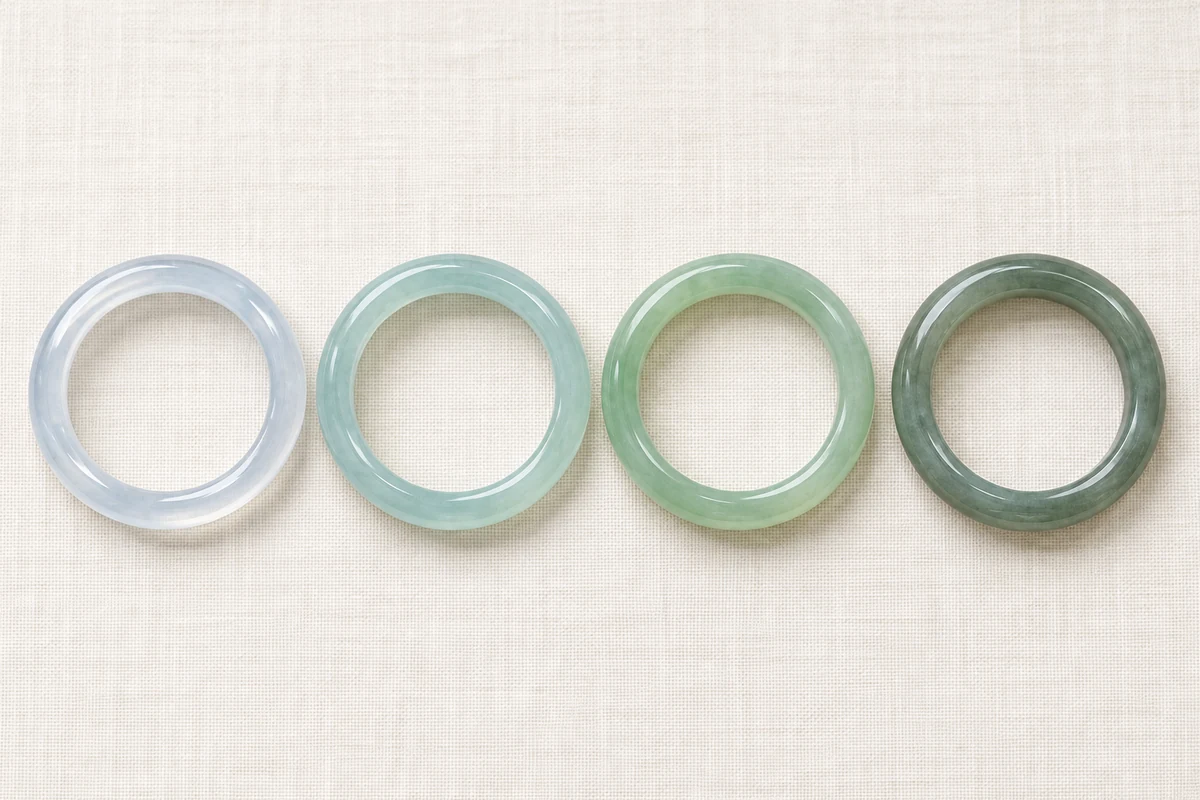
| Name | Chinese | What it looks like | What to check |
|---|---|---|---|
| Blue water | 蓝水 | Icy or glassy, pale cool blue or blue-green | Is the blue clean, or grey and dull? |
| Blue qingshui | 蓝晴水 | Pale, even blue-green through the whole piece | Even color, no patches, good transparency |
| Green qingshui | 绿晴水 | Pale, even green through the whole piece | Freshness of the green, no grey or yellow cast |
| Light qingshui | 淡晴水 | A very faint, even green or blue-green | Easy to confuse with plain white icy jadeite |
| Sky blue | 天空蓝 | A glassy blue water with a clear, bright blue | Rare; check transparency in normal light |
| Oily green | 油青 | Darker green with a grey or blue cast, oily luster, usually semi-translucent | Lower value than blue water; not the same thing |
Qingshui (晴水) means "clear-sky water". It describes a pale, even color that fills the whole piece, with no floating flowers or patches. The trade name is used most often for icy pieces; you will also see semi-icy and glutinous pieces with an even light green sold as light qingshui. Blue water is the cooler, bluer end of the same family, and the name normally implies a higher transparency.
Oily green (油青) is often confused with blue water because both have a cool tone. Oily green is deeper and duller, with a greasy-looking luster, and it is valued much lower. If a seller calls a dark greyish bangle "blue water", look again in daylight.
For transparency grades from glutinous to glassy, see icy jadeite and glass jadeite.
Is blue jadeite from Guatemala or Myanmar?
Both. Guatemala is known for cool blue-green and grey-blue jadeite, and much blue water on the market today is Guatemalan material cut in China. Myanmar also produces blue water, and many dealers price Burmese material higher than Guatemalan pieces that look similar.
Two points matter more than the origin story:
- Certificates do not state the origin. A standard lab report names the material "jadeite" whether it came from Myanmar or Guatemala, and it does not write "blue water" either.
- Telling origin by eye is unreliable. Experienced dealers use clues such as a greyer tone, but both countries produce pieces that look like each other.
So judge the piece itself: transparency, color, flaws and size. For more on Guatemalan material, see Guatemalan jade vs Burmese jade.
What makes a blue water jade valuable?
In rough order of importance:
| Factor | Higher value | Lower value |
|---|---|---|
| Transparency | Glassy or high icy; light passes through cleanly | Semi-icy or glutinous; misty |
| Color | Clean blue or blue-green, even through the piece | Grey, dull, yellowish or patchy |
| Clarity | Few cotton spots, no cracks | Large cotton patches, black spots, cracks |
| Size and form | Bangles and large pieces cut from one block | Small pendants and offcuts |
| Finish | Even, glassy polish | Dull polish, uneven shape |
Transparency carries most of the price. A semi-icy bangle with a misty blue tone and an icy bangle with a clean blue qingshui can look similar in a small photo and differ in price many times over.
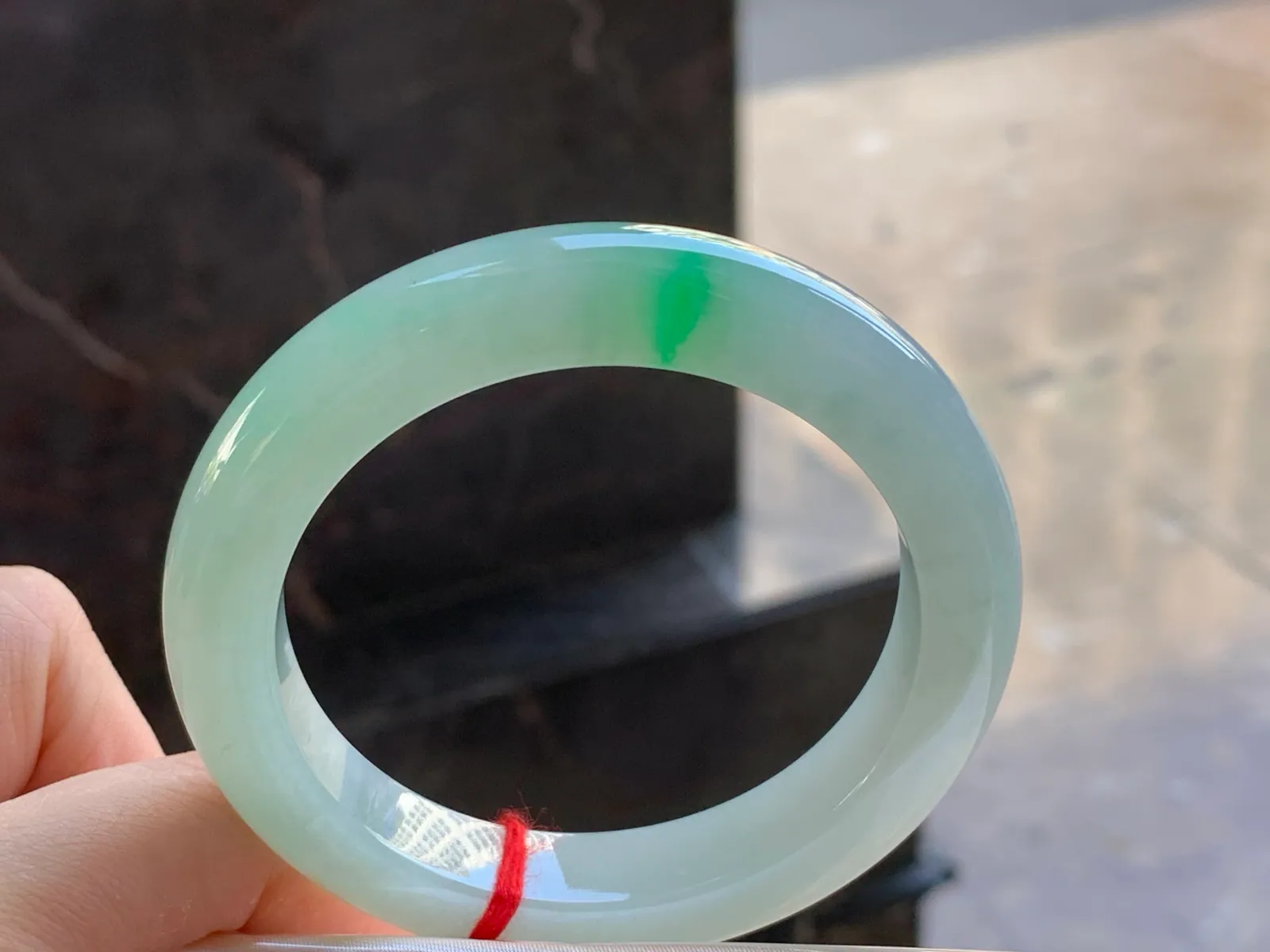
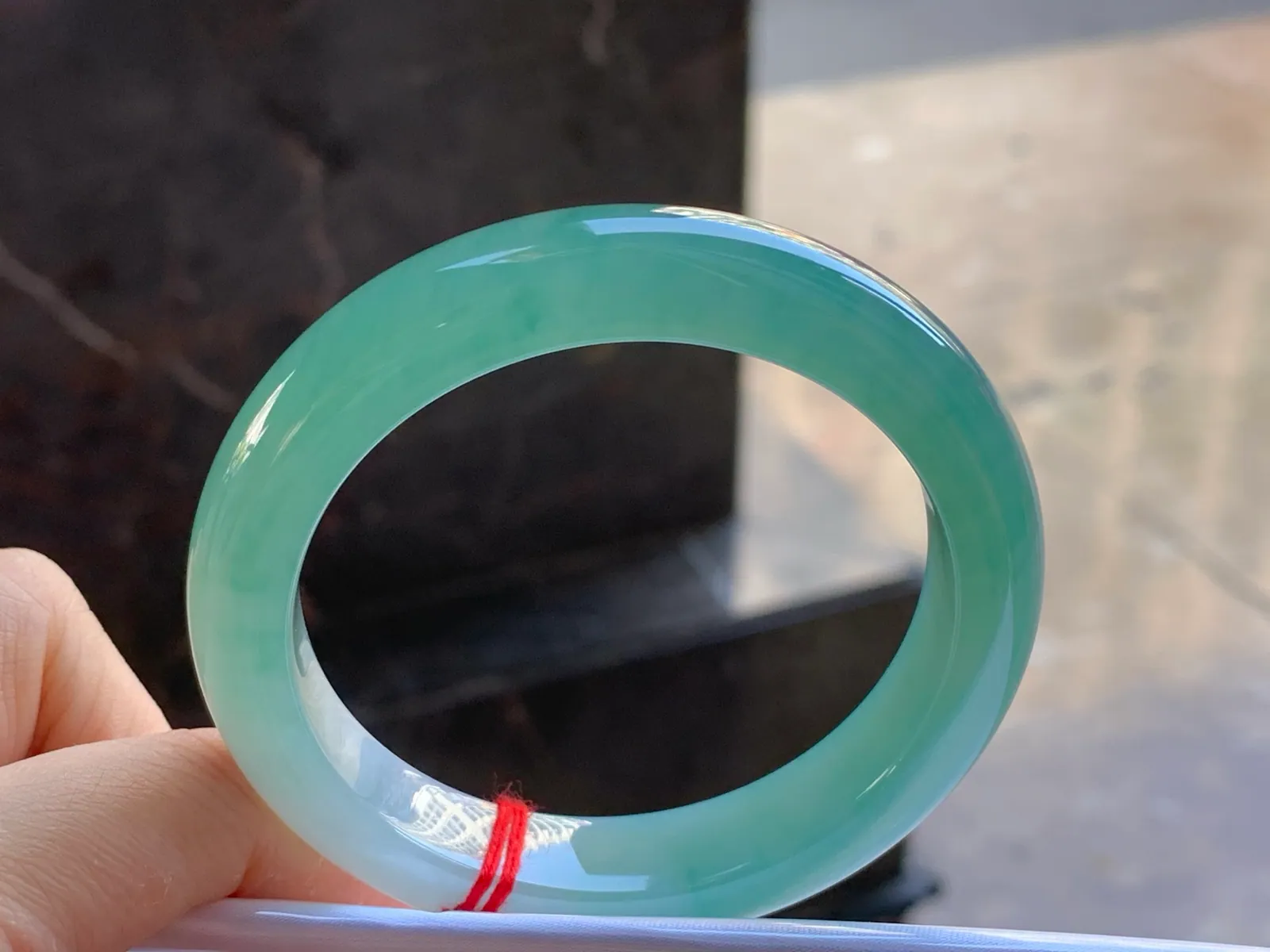
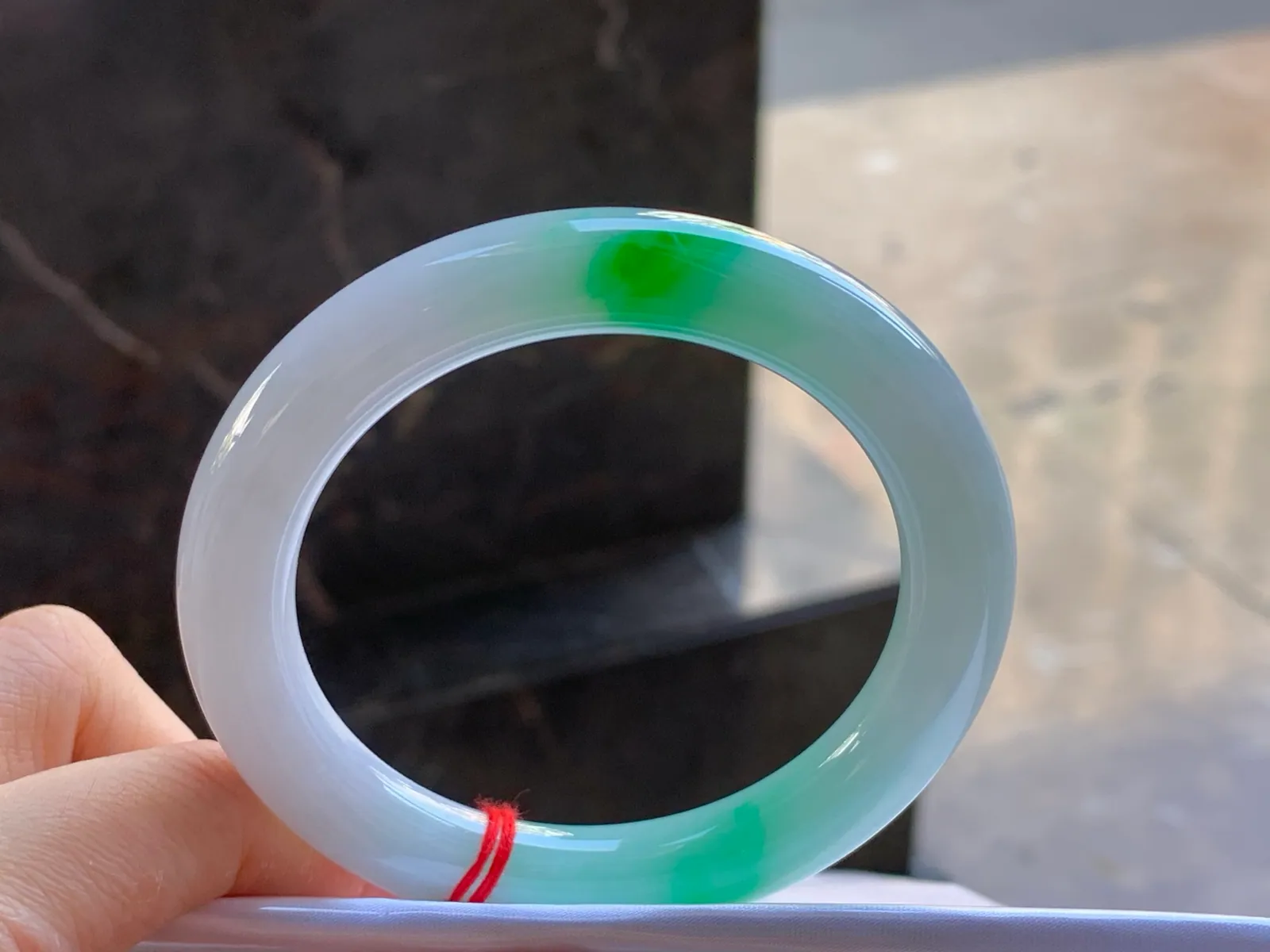
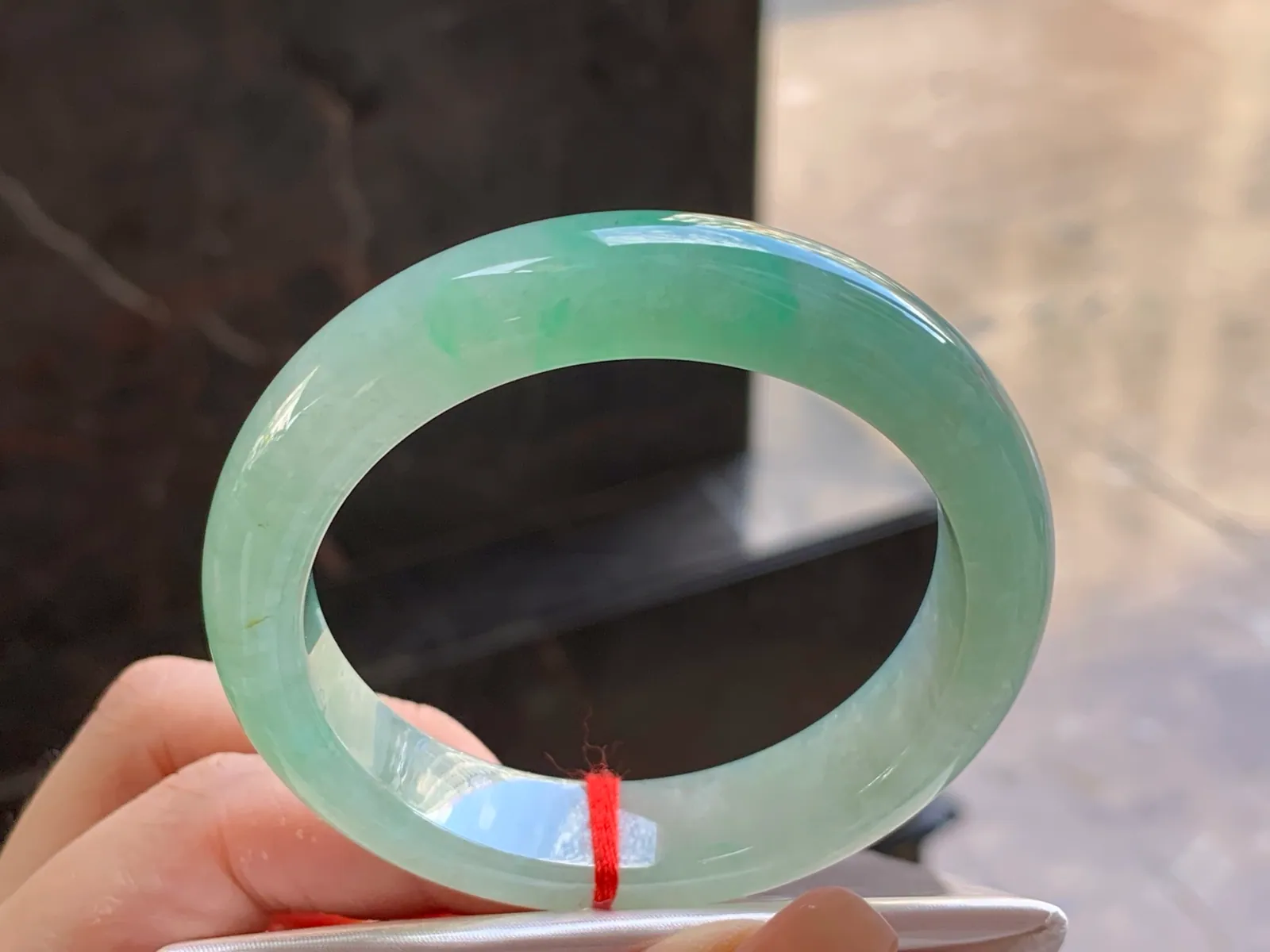
Here are three bangles from our current stock, prices as of 2026-10-31:
| Piece | Texture | Color | Inner size | Price |
|---|---|---|---|---|
| JH-000254 flat bangle | Icy | Blue qingshui, even through the bangle | 55 mm | US$24,179 |
| JH-000257 round bangle | Icy | Full green qingshui | 55.5 mm | US$12,089 |
| JH-000085 round bangle | Semi-icy (icy glutinous) | Misty blue | 60 mm | US$1,759 |
The color names are similar; the gap in price comes mainly from transparency and how clean the color is. For the wider picture, see jade bangle price and what determines jadeite price.
How do you check the color in photos and under different light?
Blue water is the color most changed by lighting, and that is where most disappointment comes from.
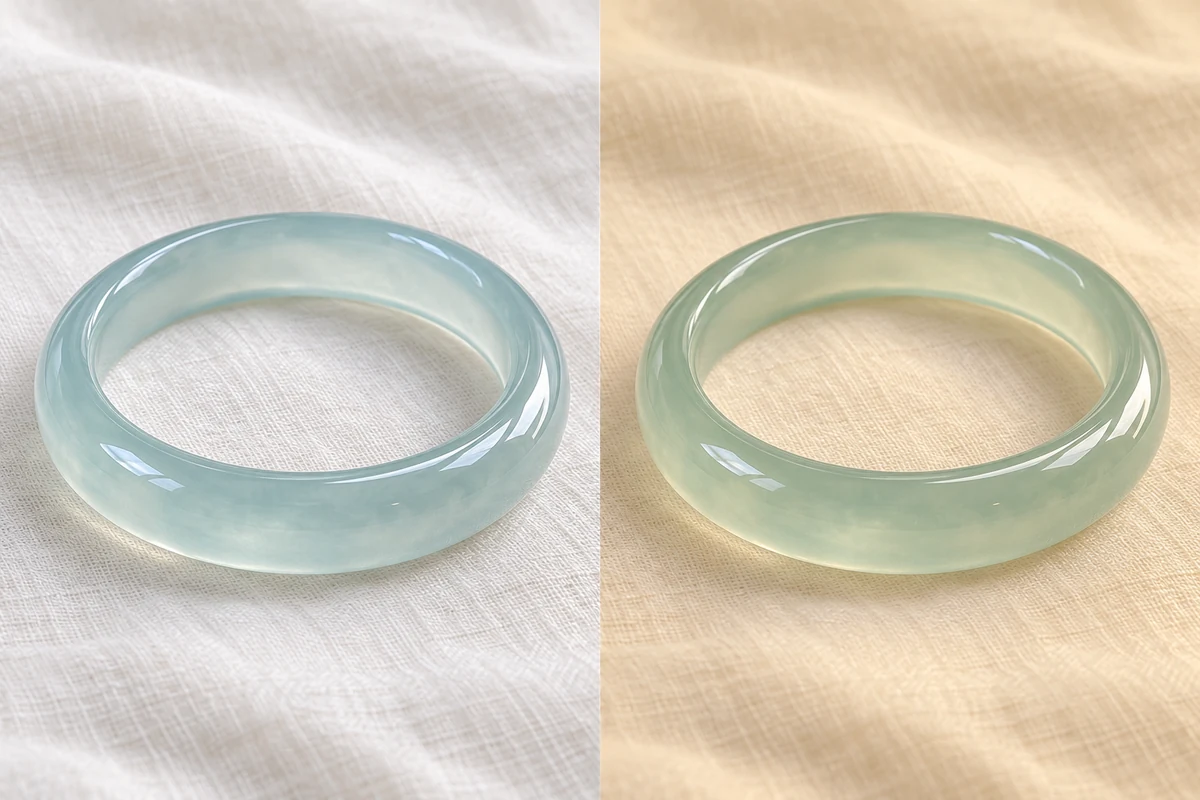
- Cool white LEDs make it look bluer. Livestream trays and white backgrounds can turn a greyish bangle into "blue water".
- Warm light pushes it toward green and can hide a grey cast.
- A flashlight makes almost anything look icy. Judge transparency in normal light too.
- Filters and white balance change blue more than any other color.
Ask the seller for a video by a window in daylight, with the piece on plain white paper, then a flashlight video for cracks. See judging jadeite from online photos.
Is my blue water jade real or fake?
The pale, transparent look of blue water is also what several cheaper materials imitate:
| Sold as | May actually be | Clues |
|---|---|---|
| "Blue water", very cheap | Glass | Round bubbles under a loupe, swirl marks, no grain at all |
| "Icy blue water with flowers" | Albite jade (水沫子) | Looks similar but feels noticeably lighter; soft luster; white snowflake-like inclusions |
| "Blue jade", bright and even sky blue | Dyed quartzite or chalcedony | Color too vivid and even; dye sits in cracks; lighter in the hand |
| "Clean blue water", low price | Bleached and resin-filled (Type B) | Waxy luster, acid-etched net texture on the surface; a lab sees the resin |
| "Blue water" | Oily green or a grey icy piece | Dull and grey in daylight; only looks blue under LEDs |
Real jadeite is dense (about 3.33), so albite, quartzite and chalcedony of the same size feel lighter. But the only reliable answer is a lab report naming the material "jadeite" with no treatment. See jadeite look-alikes, how to spot treated jadeite and how to verify a jadeite certificate.
What does blue water jade mean, and are there taboos?
Blue water has no separate traditional meaning of its own; it shares the general meanings of jade, such as purity and protection. Many people simply like its calm, cool look, and in five-element thinking blue and dark colors are linked with water. These are cultural ideas, not effects: there is no evidence that any jadeite color heals or brings luck. See jadeite meaning and beliefs and jade and the five elements.
There are no real taboos either. The practical "rules" are about care: avoid knocks, heat and strong chemicals. Which wrist to wear a bangle on is a matter of custom and comfort; see which hand to wear a jade bangle.
How do you wear and care for blue water jadeite?
- It suits cool and neutral outfits, silver and white gold, and everyday wear; the color is quiet enough for work.
- Keep it clean. Transparent pieces show soap film and skin oil more than opaque ones. Wash in lukewarm water with mild soap and dry with a soft cloth.
- Take it off for sport, heavy work and cooking near flames.
- Store it apart from harder stones and other jewelry.
Every piece on JadeiteHub is certified natural Type A jadeite and ships with its own certificate from an accredited Chinese national gem lab (国检). If it does not match its description, you get a full refund. Browse all JadeiteHub bangles.
FAQ
Is blue water jade real jade?
Yes. Blue water is a trade name for natural jadeite that is icy or more transparent with a pale blue or blue-green tone. As long as it is Type A, the color is natural. A certificate will simply say jadeite.
What is the difference between blue water and qingshui jadeite?
Both are pale and evenly colored. Blue water leans cool and blue, and the name usually implies icy or glassy transparency. Qingshui (晴水) is a pale, even green or blue-green spread through the whole piece; blue-leaning qingshui is often called blue qingshui (蓝晴水).
Is blue jadeite from Guatemala or Myanmar?
Both. Guatemala is known for blue and grey-blue jadeite, and Myanmar also produces blue water material. Standard certificates do not state the origin, and telling the two apart by eye is unreliable.
Does blue water jade have benefits?
There is no evidence that any jadeite color has health or luck effects. People choose blue water for its calm, cool look and for the meaning they give it.
How much does a blue water jade bangle cost?
It depends mostly on transparency, color and flaws. At JadeiteHub, as of 2026-10-31, blue and qingshui bangles range from US$1,759 for a misty, semi-icy round bangle to US$24,179 for an icy blue qingshui flat bangle.