Glass Jadeite: What Glassy Jade Is, Price and Fakes
Updated
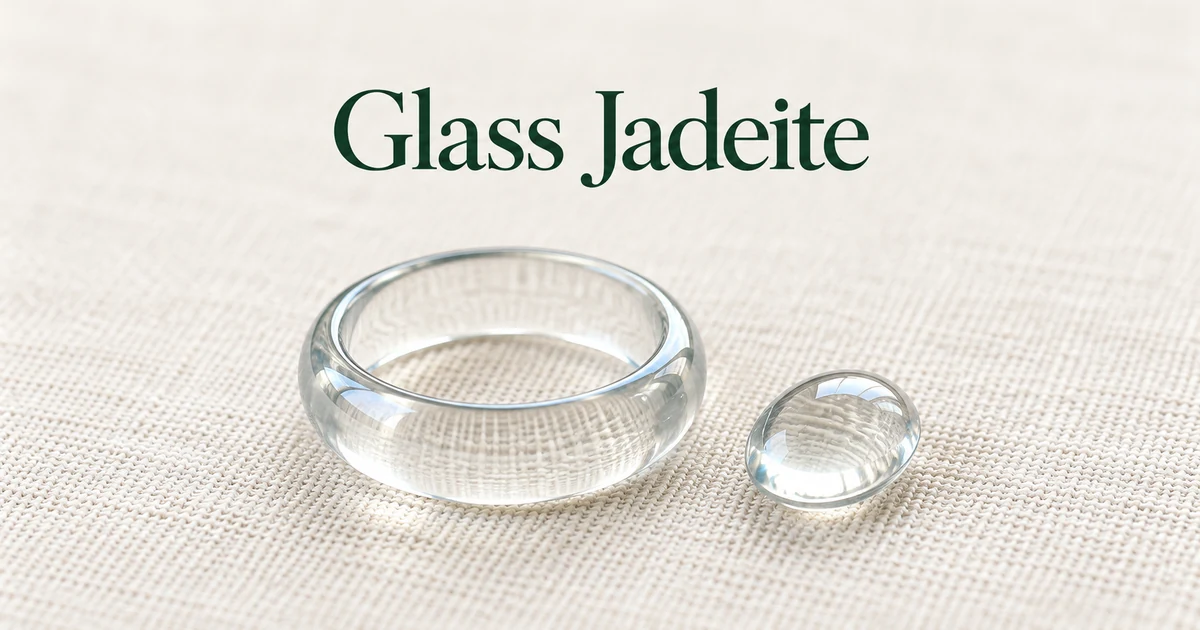
Glass jadeite (玻璃种, glassy jadeite) is natural jadeite with the finest texture and highest transparency: water-clear, no visible grain, a crisp luster and usually a strong floating glow (起光). It is a texture grade, not a color; glassy imperial green combines it with the top color. It is rare because clean, fine rough is rare. It is a trade term, so check it in daylight and get a certificate: glass, albite and Type B are sold as "glassy". US "jadeite" milk-glass dishes are not jade.
What is glass jadeite (玻璃种)?
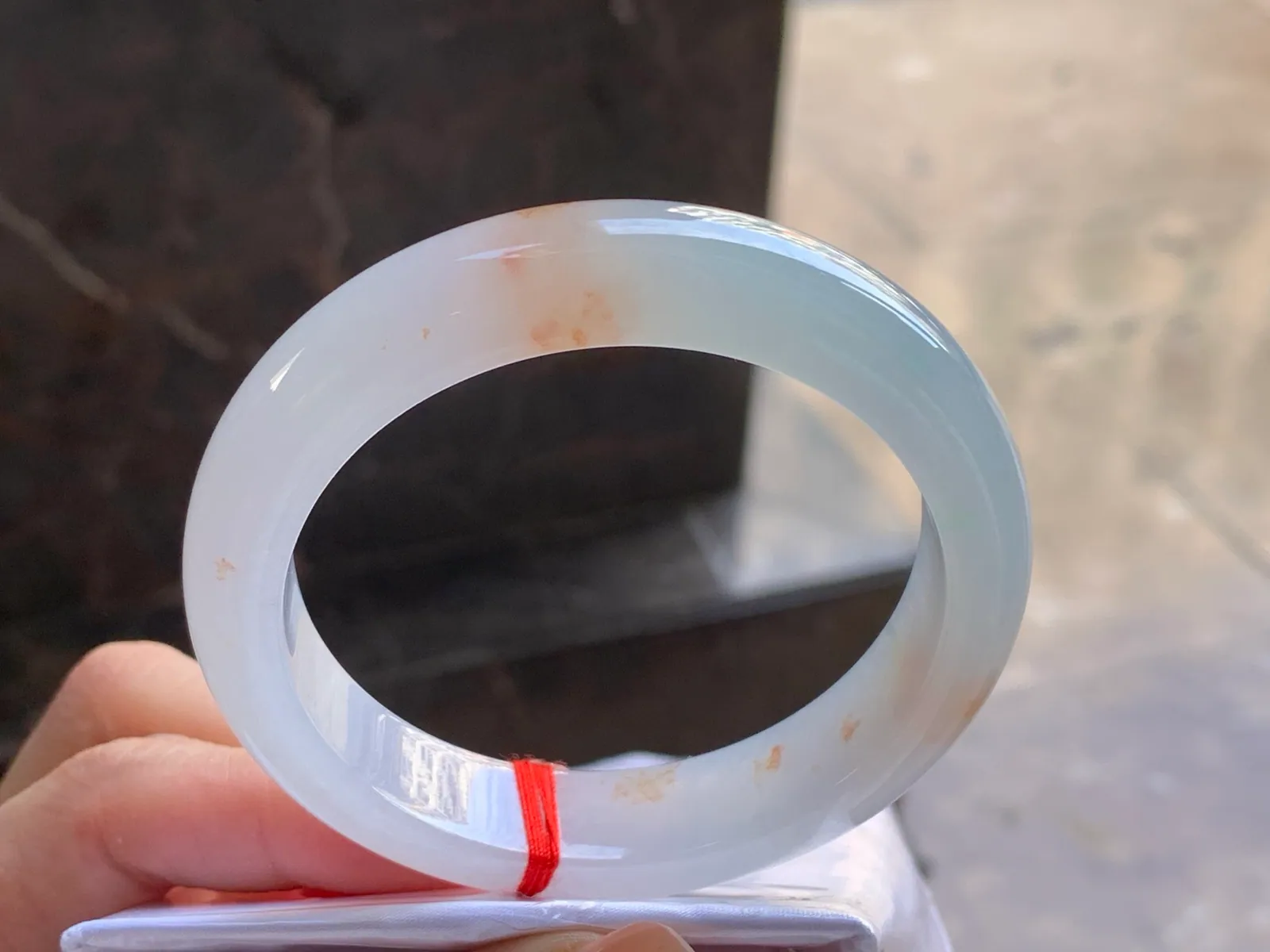
Glass jadeite, or glassy jadeite (玻璃种, boli zhong, "glass type"), is natural jadeite with the finest texture and the highest transparency on the trade's scale. It looks clear like glass or still water, shows no visible grain, has a crisp, hard luster and usually a strong glow that seems to float on the surface.
"Glass" here describes how the jadeite looks. It is not glass. Glass jadeite is the same mineral as any other jadeite (Burmese jade); only the crystals are much finer and more tightly packed, so light passes through with almost no scattering.
Four points to know before reading listings:
- Glassy is a texture grade, not a color. A glassy piece can be colorless, faintly blue, lavender, green or have floating flowers.
- It is the top step of the ladder. Below it come high-icy (高冰), icy (冰种), glutinous-icy (糯冰种) and glutinous (糯种). The full ladder and how to read it are in what is icy jadeite; the three-word system behind it is in zhong, shui and se explained.
- It is trade language. A gem lab certificate names the material and any treatment. It does not normally say "glassy".
- "Glass jade" in a listing can mean actual glass. Many sellers use "glass jade" or "jade glass" for glass imitations. The trade term for the real thing is glassy jadeite or glass-type jadeite, and the proof is a certificate that says jadeite, natural.
What makes jadeite "glassy"?
Dealers do not call a piece glassy just because it is clear. They look for several things together:
| Feature | Trade word | What you see |
|---|---|---|
| No visible grain | 结构细腻, 无颗粒感 | Even under a 10x loupe, crystal grains are hard or impossible to make out |
| Clear body | 通透, 清澈 | Light passes straight through; a thin part laid on printed text lets you read it |
| Hard, crisp luster | 刚性, 玻璃光泽 | Reflections on the surface look sharp, like on polished glass, not soft or waxy |
| Glow | 起光, 起荧 | A bluish-white sheen floats on the surface and moves when you turn the piece |
| Clean | 纯净, 干净 | Little or no cotton, dark specks or cloudiness |
The glow deserves a word. 起光 or 起荧 ("glow coming up") is an effect of very fine, dense texture on a well-polished curve: light scatters just under the surface and gives a soft halo. It is strongest on rings, cabochons and bangles of glassy material. It has nothing to do with fluorescence under a UV lamp; see jadeite fluorescence and glow for the difference.
A piece can be very transparent and still not be called glassy. If the grain shows, the luster looks soft, or there is a light mist through the body, most dealers would call it high-icy.
Glassy or high-icy: who decides?
Nobody, officially. There is no lab line between high-icy (高冰) and glassy, and this boundary causes more arguments than any other step.
- Sellers lean upward. A top high-icy piece is often listed as glassy, because the word adds value.
- Size and thickness change the look. A thin ring or small cabochon looks clearer than a thick bangle of the same rough. Some dealers judge glassy only on thicker pieces for that reason.
- Lighting changes the look. A strong flashlight or a backlit tray makes high-icy material look glassy. Judge it in plain daylight too.
- Experienced dealers still disagree. For the same piece you may hear 高冰, 高冰玻璃 or 玻璃种. Treat the word as the seller's opinion and judge the piece itself.
Glass jadeite vs imperial green: what is the difference?
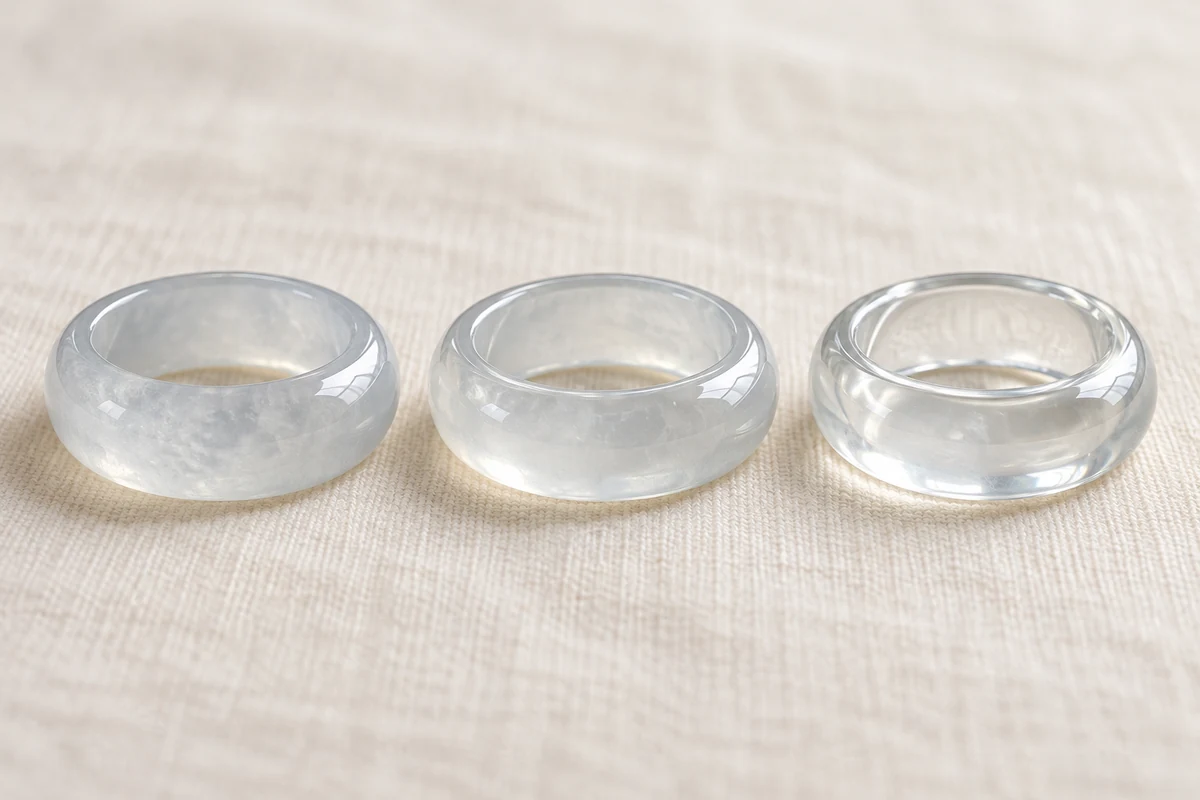
They answer two different questions. Glassy describes the texture (how fine and clear the material is). Imperial green (帝王绿) describes the color (a saturated, even, pure green). A piece can be one, the other, both or neither.
| Combination | Trade name | What it looks like |
|---|---|---|
| Glassy, colorless | 玻璃种, 白玻璃, 无色玻璃种 | Water-clear, often with a strong glow; the "classic" glassy look |
| Glassy, faintly blue | 玻璃种蓝水, sometimes called 天空蓝 by sellers | Clear with a cool blue tint |
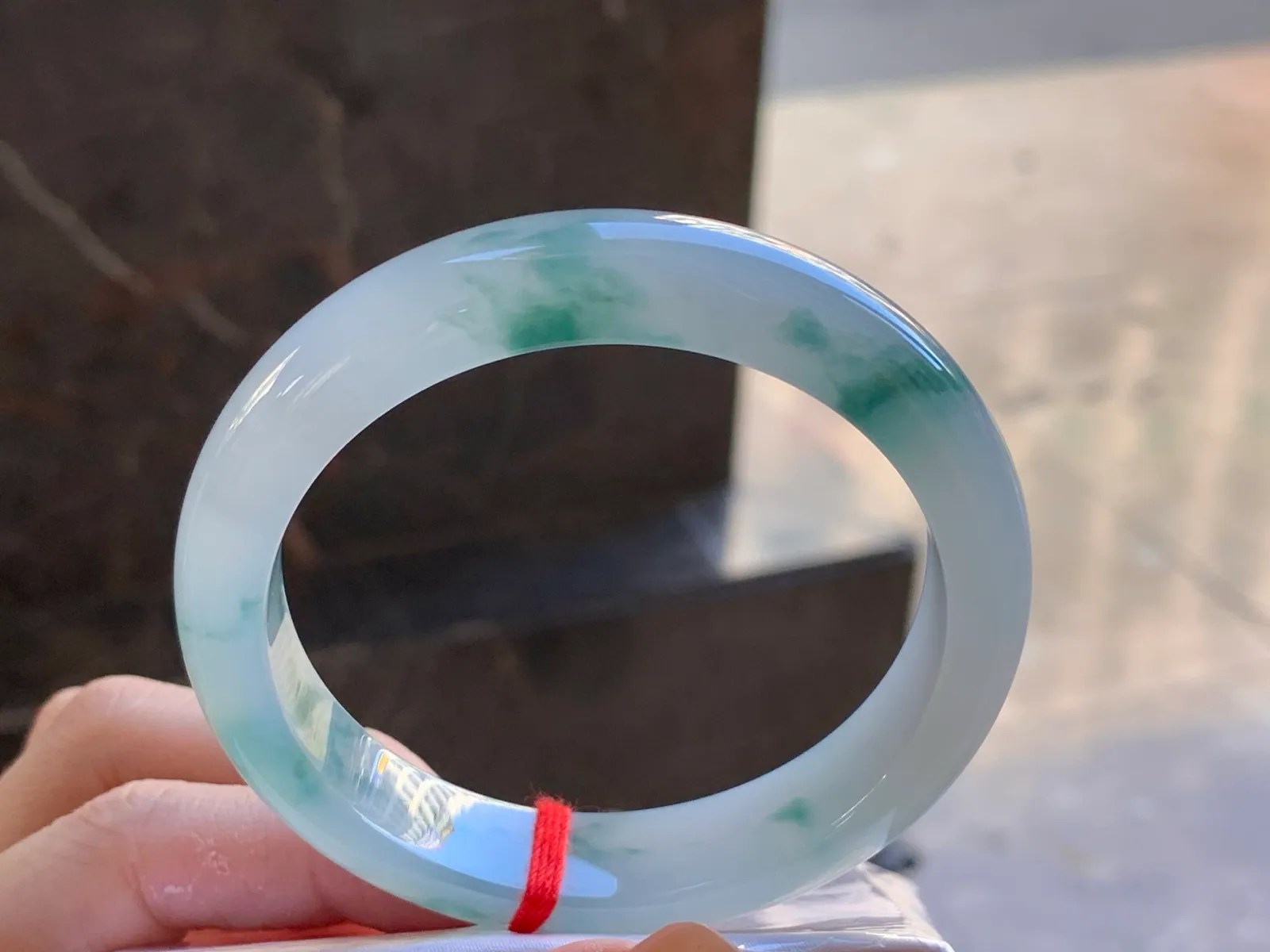
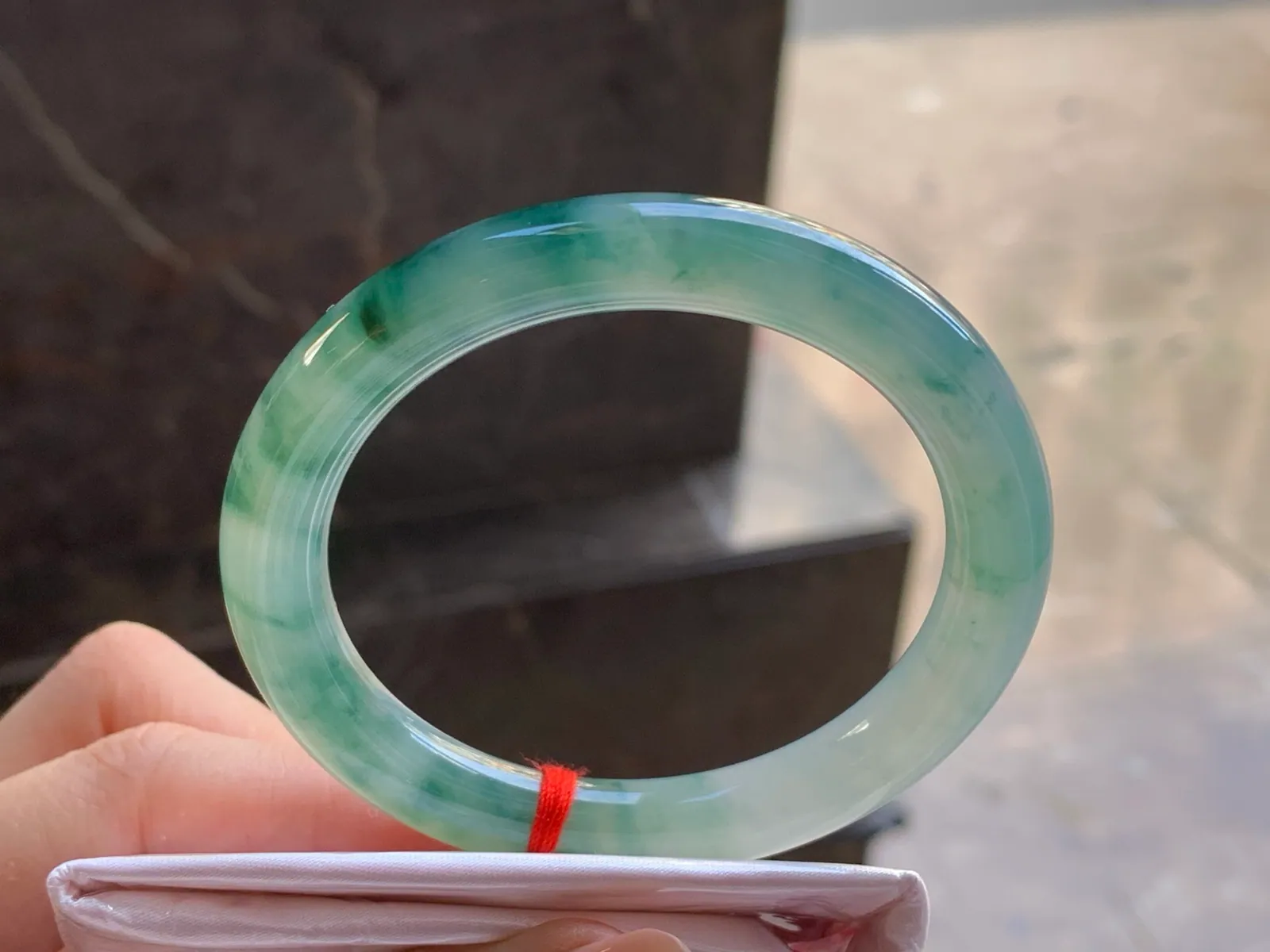
| Glassy with floating flowers | 玻璃种飘花 | Green or blue-green wisps inside a water-clear body; see floating flower jadeite |
| Glassy lavender | 玻璃种紫罗兰 | Clear, light purple; true glassy lavender is rare, because purple jadeite is usually coarser; see lavender jadeite |
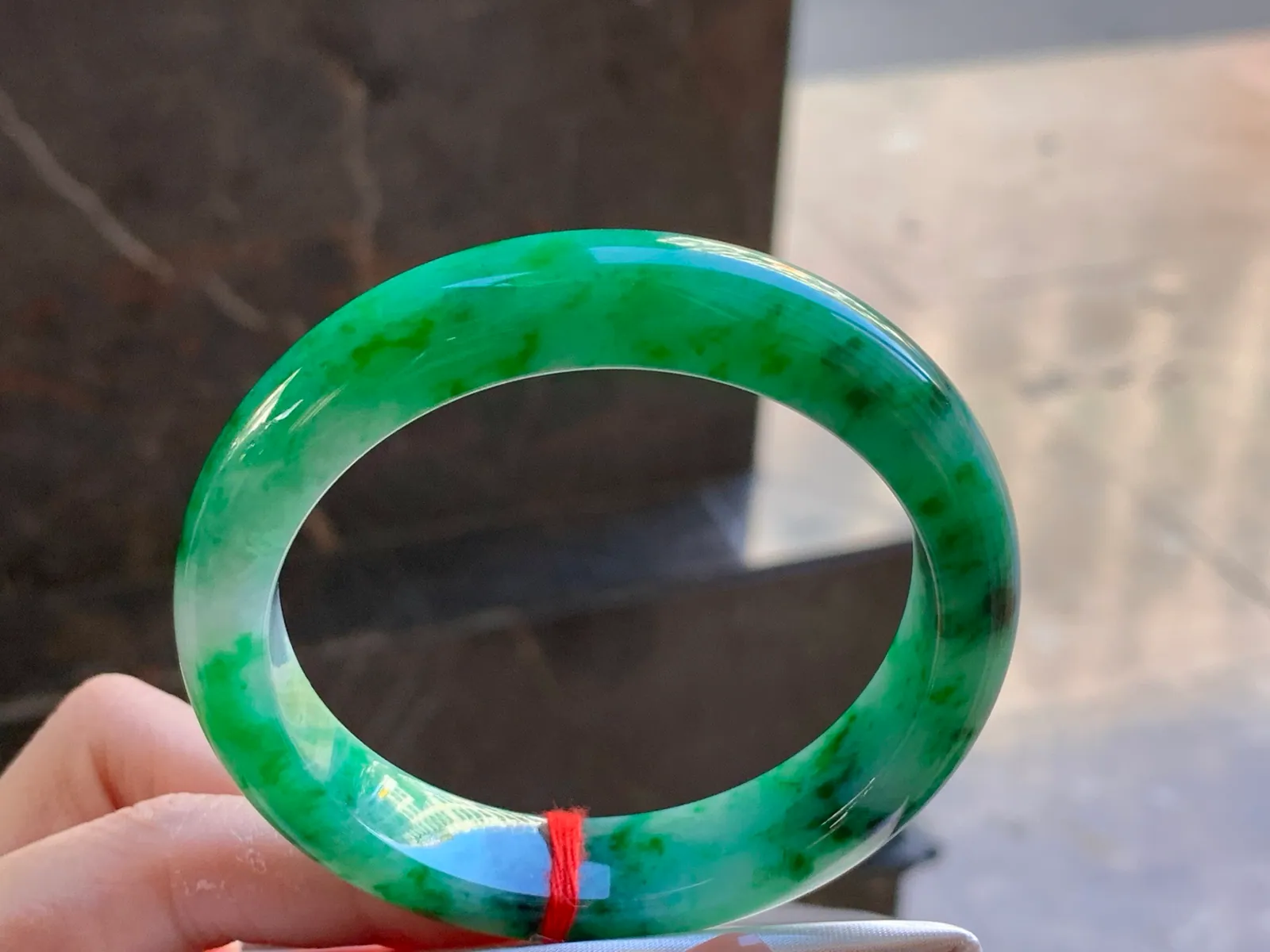
| Glassy imperial green | 玻璃种帝王绿 | Saturated pure green in a fully clear body; the top of the whole jadeite market |
| Opaque or glutinous imperial green | 糯种帝王绿 etc. | Strong green, but less clear; worth much less than glassy imperial green |
Strong color also changes how clarity looks: deep green absorbs light, so a glassy imperial green piece looks less "glassy" than a colorless one of the same texture. For more on the color itself, see what is imperial green jade. The record auction pieces in the most expensive jade ever sold are almost all fine, highly translucent material with top green.
Why is glass jadeite so rare and expensive?
Jadeite forms as a rock made of many small interlocking crystals. In most rough, the crystals are large enough to see, or the rock is clouded by other minerals. Rough that is fine, clean and clear all the way through is a small fraction of what is mined.
Then the cutter loses more:
- Big, clean blocks are rarer still. A bangle needs a large piece with no cracks. That is why most glassy jadeite on the market is rings, cabochons, beads and small pendants, and a full glassy bangle is a top-tier item.
- Thickness costs clarity. A bangle is thick, so material that is glassy in a thin slice can look high-icy as a bangle.
- Cracks and cotton cost more on glassy material. In a clear body every flaw shows, so the same small crack lowers value more than it would in glutinous jade.
Price depends on texture, color, size, cleanliness, cut and the seller, so a single "glass jadeite price" does not exist. To show the spread with real numbers, here are three near-colorless band rings and earrings on JadeiteHub (prices as of 2026-10-22, free insured shipping included):
| Piece | Texture and color | Size | Price |
|---|---|---|---|
| JH-000041 band ring | Glassy, colorless with a faint blue tint, strong glow | Inner diameter 17.1 mm, width 5.6 mm | US$14,859 |
| JH-000039 band ring | Icy, with a section of vivid green (辣绿) | Inner diameter 16.3 mm, width 5.2 mm | US$5,939 |
| JH-000008 peapod earrings, pair | High-icy, near colorless, 18K white gold | 27.5 × 6.5 mm | US$2,109 |
The glassy ring costs about 2.5 times the icy ring of almost the same size, even though the icy ring has strong green and the glassy one has none. That is how much the texture step counts. For the other factors, see what determines jadeite price.
What can be sold as "glass jadeite"?
Because the word sells, glassy is one of the most imitated looks.
| What you are told | What it may be | Clues |
|---|---|---|
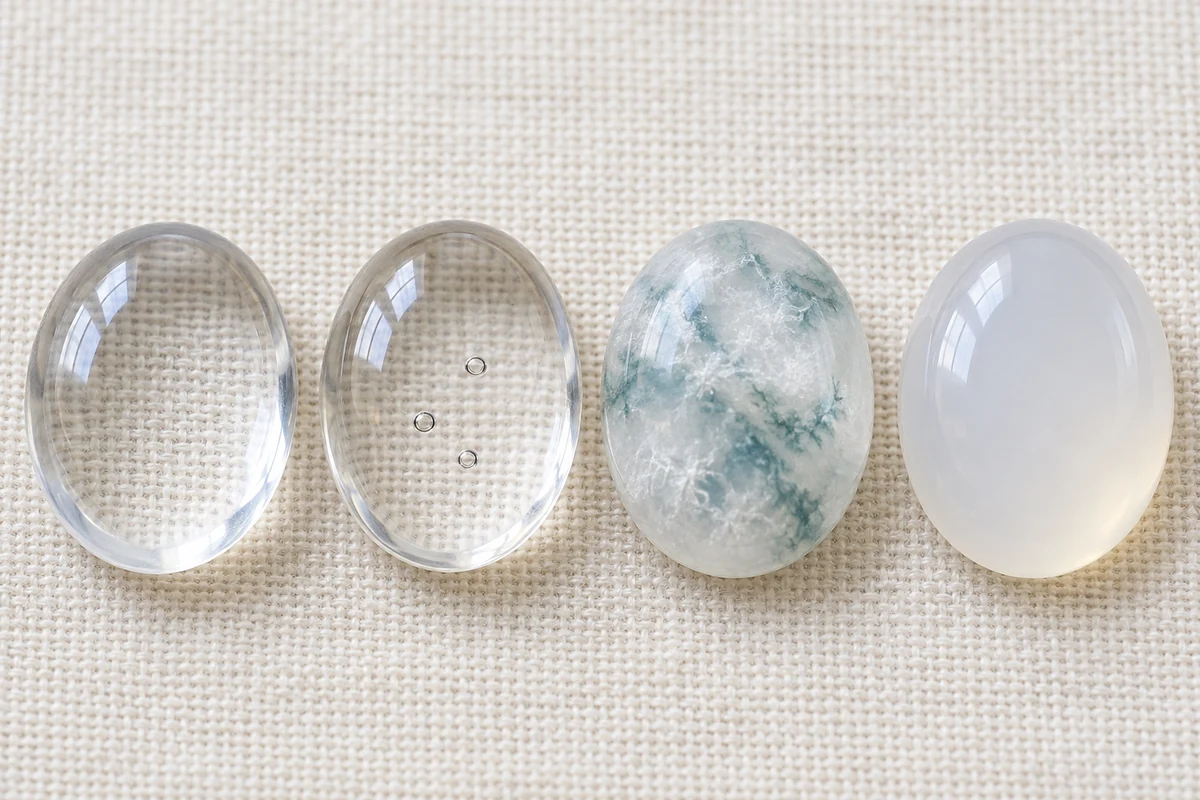
| "Glass jade", cheap | Glass | Round gas bubbles and swirl lines under a loupe, perfectly even look, no grain at all, small shell-shaped chips on edges |
| "Glassy", very white and clean, low price | Type B: acid-bleached and resin-filled jadeite | Softer, slightly waxy luster; etched net-like lines on the surface under reflected light; a certificate will state treatment |
| "Glassy floating flowers" | Albite jade (水沫子) | Clear with blue-green flowers, but noticeably lighter in the hand, softer luster, white snowflake-like specks (雪花棉), little or no glow |
| "Glassy" | Quartzite or chalcedony | Lighter in the hand; chalcedony has a waxy, featureless body with no grain |
| "Glassy" | High-icy or icy jadeite | Looks glassy only with the flashlight on or on thin edges |
Albite is the most common trap for glassy floating-flower pieces: it is a different mineral, sold in the trade as 水沫子, and is worth far less than jadeite. Glass is the most common trap in cheap listings. For the full list of look-alikes and home tests, see how to tell if jade is real, and for treatment, how to spot treated jadeite.
How do you check a glassy piece yourself?
Use three kinds of light, in this order:
- Daylight by a window, over white paper. Look at the body: clear and clean, or with a slight mist or a gray tone? Real glassy material looks clear without any help.
- Reflected lamp light. Tilt the piece. The reflection should look sharp and hard, and the glow should slide across the curve. A soft, waxy reflection is a warning sign.
- A small flashlight behind or inside the piece. Move it slowly around. Look for cotton, cracks (lines that break the light) and, on glass, round bubbles.
- A 10x loupe on the surface. On glassy jadeite you should see little or no grain. Bubbles mean glass; a net of fine etched lines suggests Type B.
- Weight in the hand. Jadeite is dense. Albite, quartzite and chalcedony of the same size feel lighter.
Then ask for proof. If buying online, ask for an unedited video in daylight with the piece dry, not wet or oiled, and close-ups of any cotton or lines. See how to judge jadeite from online photos.
What does a certificate say about glass jadeite?
A standard identification certificate states the material (jadeite), whether it is natural or treated, and measurements, weight and sometimes refractive index and density. It normally does not state "glassy", "icy" or "imperial green". Those grades come from the seller.
Some Chinese labs also issue grading reports under the national jadeite grading standard (GB/T 23885). These describe transparency and texture in the standard's own levels rather than in trade words like 玻璃种. Either way, what the certificate protects you against is the big risk: glass, albite, quartzite or treated jadeite sold as natural jadeite. See how to verify a jadeite certificate.
Is "jadeite glass" the same thing? (Fire-King and milk glass)
No. In the United States, "jadeite" (often written Jade-ite) is also the name of opaque, pale green milk-glass kitchenware, made from the 1940s by brands such as Fire-King (Anchor Hocking) and McKee and now collected as vintage dishes. It is glass colored to look like jade. It is not jadeite the gemstone, and questions about that glassware, such as what it is made of or whether it is safe to eat from, are about the glass, not about jade.
Glass jadeite (玻璃种) in this article is the opposite: real jadeite so clear that it looks like glass.
How do I buy glass jadeite safely?
- Decide what you are paying for: texture (glassy), color, or both. Do not pay a glassy price for a piece whose clarity only shows under a flashlight.
- Ask for video in daylight, reflected light and with a flashlight, with the piece dry.
- Ask for exact size and thickness. Compare thin pieces with thin pieces.
- Expect natural features. Even glassy material may show a fine stone line or a few specks of cotton. Ask where they are.
- Get a certificate stating natural jadeite (Type A) and check it online. If it says glass, albite, quartzite or treated, it is not what you were told.
- Be wary of "glassy" at a low price. Real glassy jadeite is rare; a cheap one is almost always something else.
On JadeiteHub, listings show the seller's own photos, and some include video. Every sold piece is checked against its certificate before it ships, and if it does not match the description, you get a full refund.
FAQ
What is glass jadeite?
Glass jadeite (玻璃种) is natural jadeite with the finest texture and highest transparency: clear like glass, with no visible grain, a crisp luster and usually a strong glow. It is real jadeite, not glass; "glass" describes the look.
Is glass jadeite the same as imperial green?
No. Glassy describes texture and transparency; imperial green describes color. A piece can be glassy and colorless, or imperial green but not glassy. Glassy imperial green has both and is the top of the jadeite market.
How much is glass jadeite worth?
There is no single price: texture, color, size, cleanliness and cut all matter. As one real example, a colorless glassy band ring on JadeiteHub is US$14,859, about 2.5 times an icy vivid-green ring of almost the same size (prices as of 2026-10-22).
Does a certificate say glassy?
Usually not. An identification certificate states jadeite and whether it is natural or treated. Texture words like glassy or icy come from the seller. Some Chinese grading reports describe transparency and texture in the standard's own levels.
Is jadeite glass (Fire-King) real jade?
No. Fire-King and similar "jadeite" or Jade-ite dishes are opaque green milk glass made in the US from the 1940s. They are named after jade's color but are glass, not the gemstone.