Jade vs Emerald: Color, Price and Toughness Compared
Updated
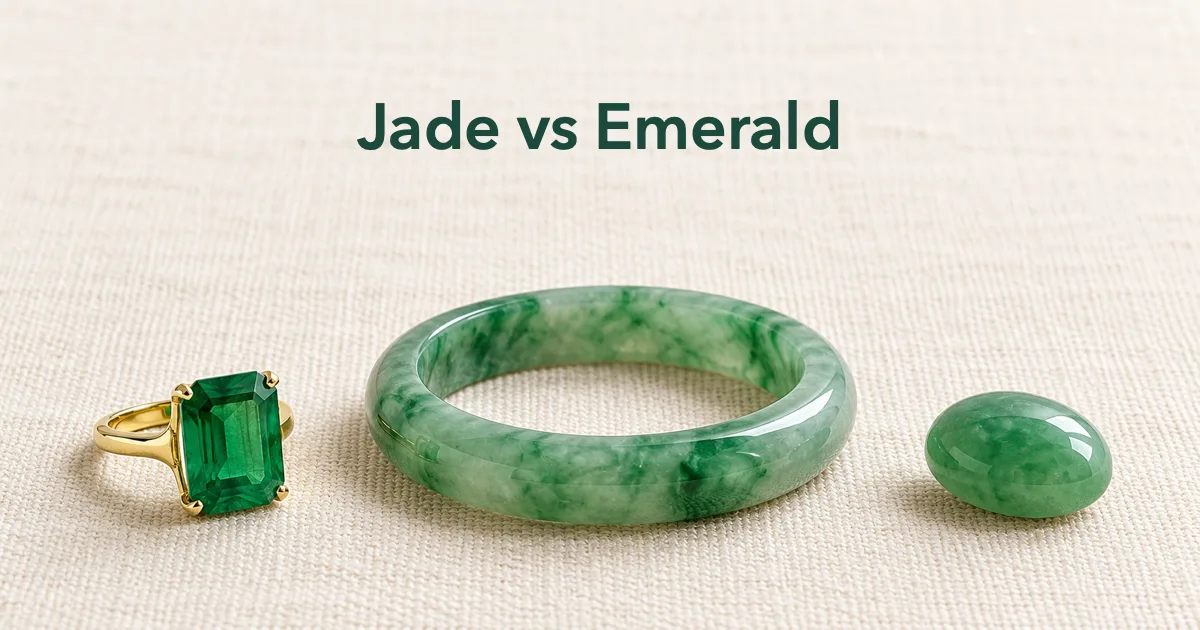
Jade and emerald are different minerals. Emerald is a transparent, faceted single crystal of beryl: harder (Mohs 7.5–8) but brittle, and usually oil- or resin-filled. Jadeite is a translucent aggregate of interlocking crystals: slightly softer (6.5–7) but far tougher, which is why it can be worn as a bangle, and fine jadeite should be untreated (Type A). Imperial green jadeite can match a fine emerald for color and can cost more. Emerald sparkles; jadeite glows. A lab certificate settles which is which.
Is jade the same as emerald?
No. Jade and emerald are two different minerals that can share a similar green. Emerald is a green variety of beryl: a single transparent crystal, usually faceted, hard but brittle, and almost always full of tiny inclusions. Jadeite, the more valuable of the two jade minerals, is a pyroxene made of countless tiny crystals locked together: translucent to opaque, slightly softer, but far tougher. That one difference in structure explains almost everything else: how they look, how they are cut, how they are treated, how they wear and how they are priced.
"Jade" is also a broad word. It covers jadeite and nephrite (Hetian jade). This article compares emerald with jadeite, the jade sold on JadeiteHub. For the two jade minerals, see jadeite vs nephrite.
What is the difference between jade and emerald?
| Jadeite (翡翠) | Emerald (祖母绿) | |
|---|---|---|
| Mineral | Jadeite, a pyroxene | Beryl |
| Structure | Aggregate: many tiny interlocking crystals | One single crystal |
| Look | Translucent to opaque; soft, inner glow | Transparent; sharp sparkle from facets |
| Colors | Green, white, lavender, red, yellow, black and more | Green only (other beryl colors have other names) |
| Hardness (Mohs) | About 6.5–7 | About 7.5–8 |
| Toughness | Exceptional; resists chipping and breaking | Poor to fair; chips and cracks easily |
| Density | About 3.33, feels heavy in the hand | About 2.72, noticeably lighter for its size |
| Usual cuts | Cabochons, carvings, bangles, beads | Faceted, often the step-cut "emerald cut" |
| Usual treatment | Type A has none; Type B is bleached and filled, Type C is dyed | Oil or resin in surface-reaching fissures is common |
| Main sources | Myanmar (Burma) for gem jadeite | Colombia, Zambia, Brazil and others |
| How it is priced | By the whole piece | Mostly per carat |
Why does jadeite look so different from emerald?
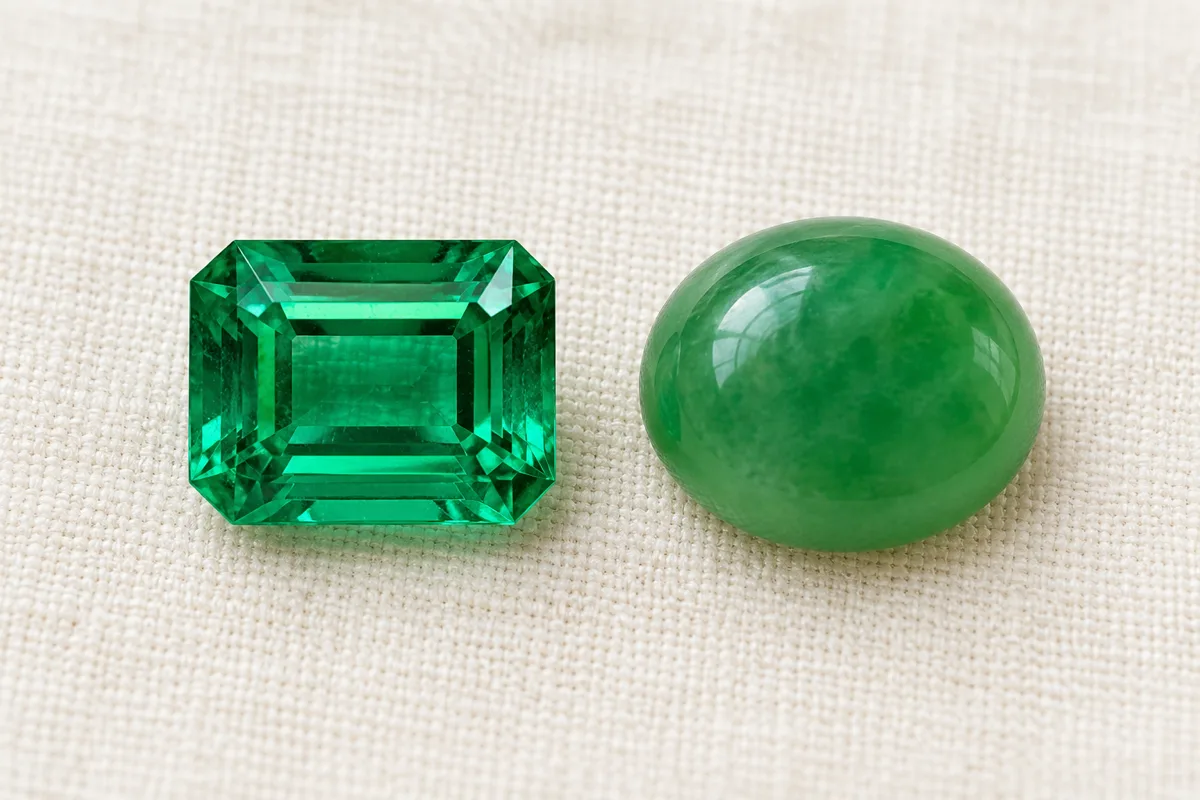
Emerald is a single crystal, so light passes straight through it. A cutter adds facets so the stone throws back flashes of light, and you look into an emerald as if through colored glass.
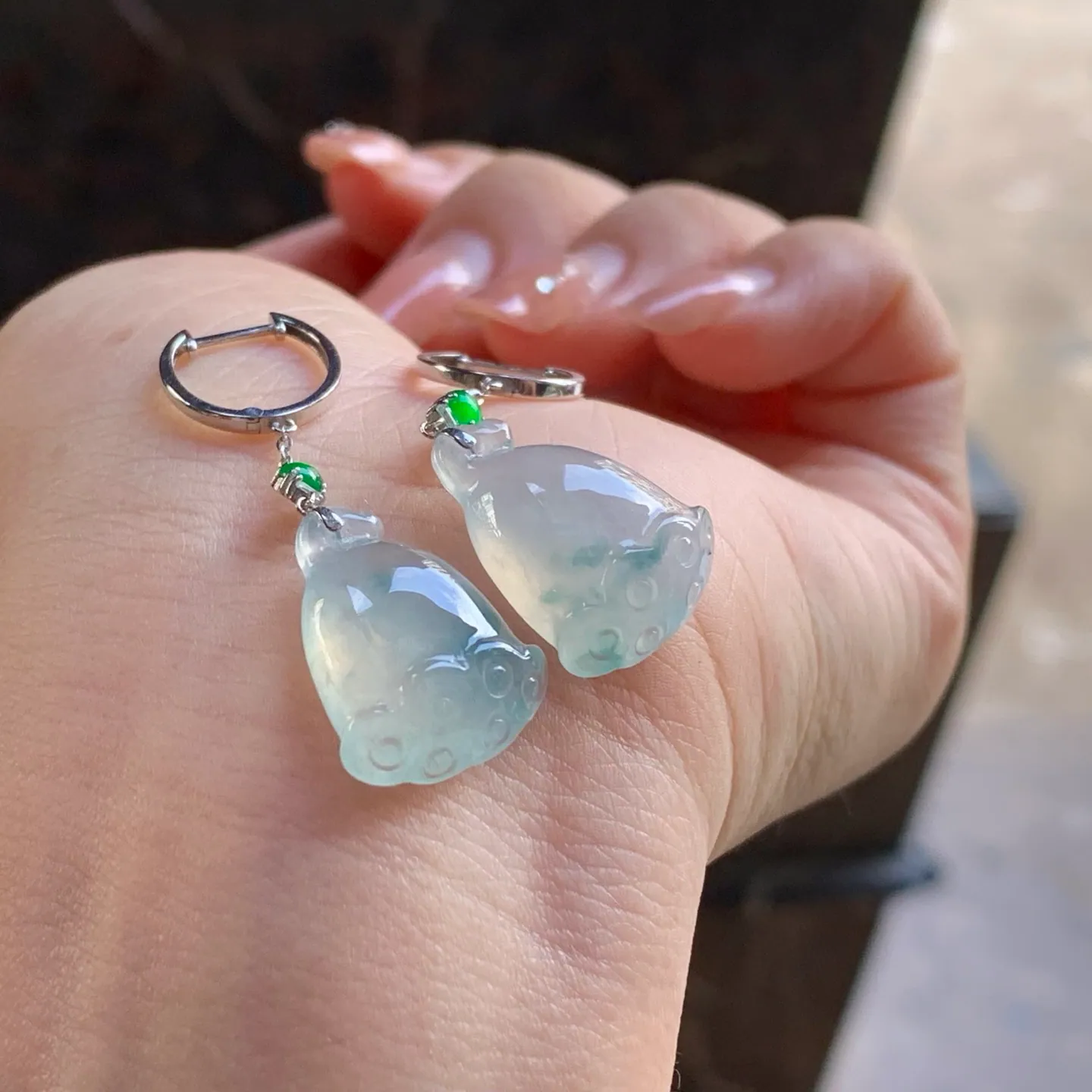
Jadeite is made of interlocking grains, so light is scattered on its way through. Even the finest glassy jadeite (玻璃种) looks as if the light is held inside: traders say it "glows" (起光) rather than sparkles. Coarser jadeite looks milky, and much jadeite is nearly opaque. How translucent a piece is matters a great deal to its value; see zhong, shui and se explained.
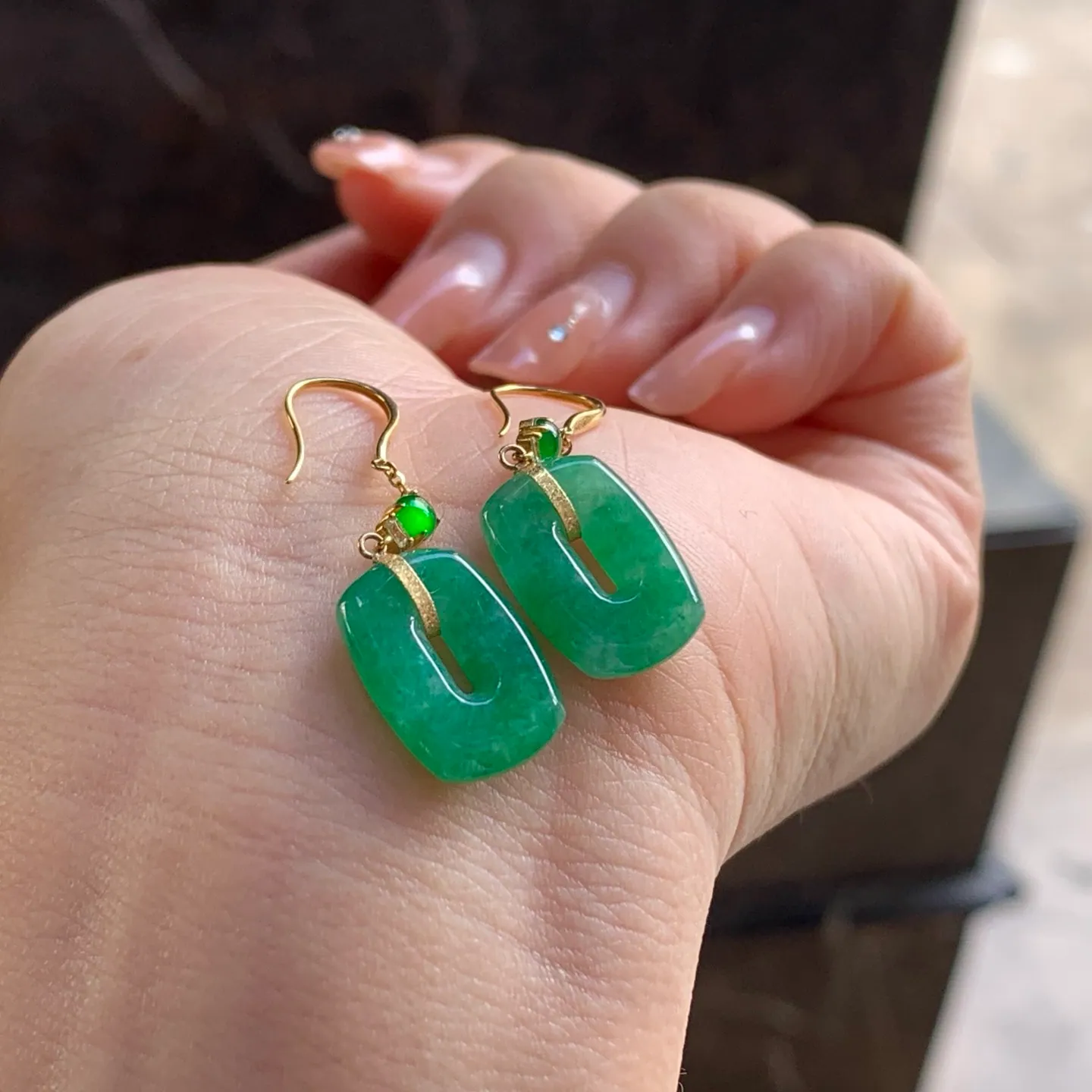
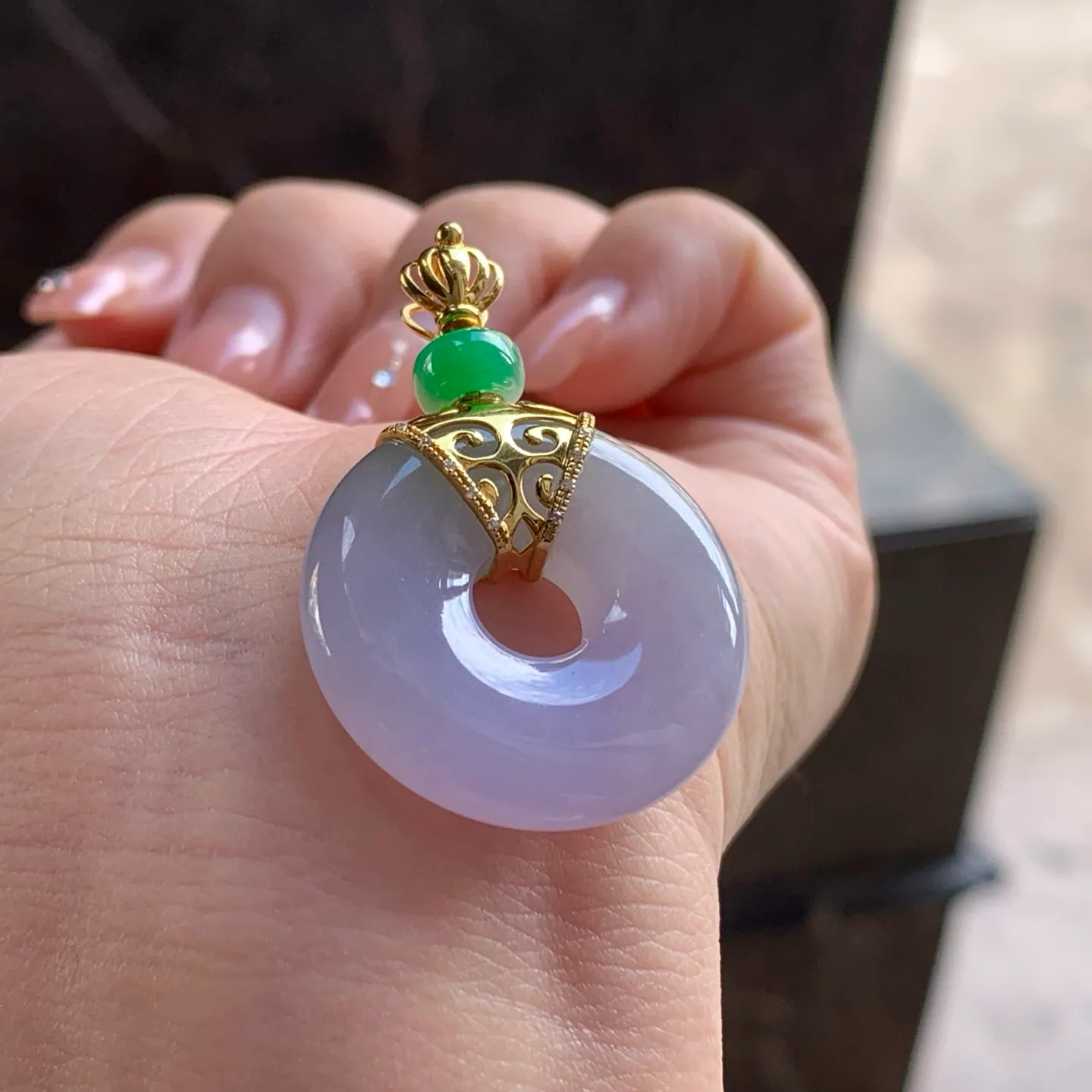
Color behaves differently too. In emerald the green comes from chromium and vanadium and is usually a slightly bluish green, spread through the crystal. Jadeite green comes mainly from chromium, ranges from yellowish to bluish, and often sits in patches, veins or floating streaks rather than evenly. Jadeite also comes in many other colors; emerald is only green. See the jadeite colors guide.
Is imperial green jade the same color as emerald?
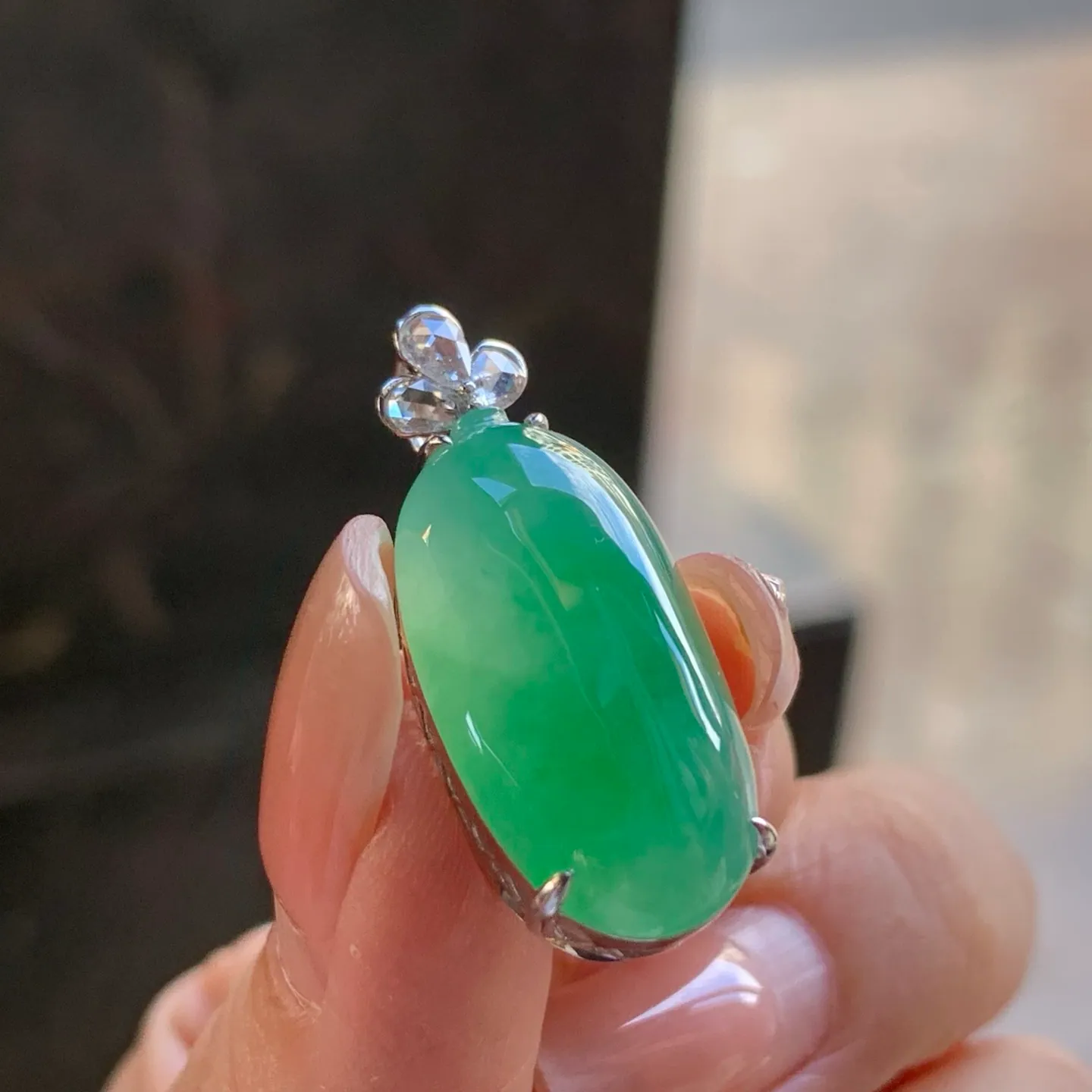
They can look close, which is why "emerald green" is sometimes used to describe fine jadeite. Imperial green jadeite (帝王绿) is an intense, pure, even green in very fine, translucent material, and at its best it rivals a top emerald for color. The two still look different side by side: the emerald sparkles from its facets, while imperial jadeite glows softly from within, with a slightly "oily" or gel-like depth.
The trade names do not cross over. An emerald is never "imperial green", and a jadeite is never an emerald, however green it is. For how imperial green is judged and faked, see what is imperial green jade.
Which is harder, and which is tougher?
Emerald is harder; jadeite is tougher. These are different things.
- Hardness is resistance to scratching. Emerald (7.5–8) resists scratches better than jadeite (6.5–7). Neither scratches easily in normal wear, but both should be stored apart from diamonds and sapphires.
- Toughness is resistance to chipping and breaking. Here jadeite is one of the toughest gems there is, because its interlocking grains stop a crack from running. Emerald is brittle, and most emeralds already contain fissures, so a sharp knock or a sudden change in temperature can chip or crack one.
That is why jadeite is carved into thin bangles worn every day, while solid emerald bangles are almost unheard of. Emerald rings are usually set with protective prongs or bezels, and many jewelers advise taking them off for manual work. Jadeite is tough, not unbreakable: a bangle can still crack on a hard floor. See is jadeite fragile?
How are jade and emerald treated?
The two markets accept very different things.
Emerald: most emeralds have surface-reaching fissures, and it is standard practice to fill them with oil (traditionally cedarwood oil) or resin so they show less. This clarity enhancement is widely accepted if it is disclosed, and lab reports usually grade it as none, minor, moderate or significant. Unfilled emeralds of fine color are rare and command a premium. Lab-grown (synthetic) emeralds are also common and must be sold as such.
Jadeite: the only accepted treatment is a surface wax. Jadeite that has been bleached with acid and filled with polymer (Type B), dyed (Type C) or both (B+C) is not considered natural, loses much of its value and can yellow or weaken over time. Fine jadeite is expected to be untreated, Type A. See Type A vs B vs C jadeite.
So "treated" means something different for each stone. A filled emerald can be a fine, honest stone; a filled jadeite is treated jade.
Which is more expensive, jade or emerald?
Neither is always more expensive. Both run from inexpensive to museum prices.
- Emerald is priced mostly per carat. Color, clarity, the amount of filling and the origin (Colombian stones are especially sought after) set the price, and it rises steeply with size.
- Jadeite is priced by the whole piece. Translucency, color, evenness, cracks and the size of the piece set the price, and a bangle needs a large block of clean material, which is why a fine bangle can cost far more than a ring stone. See what determines jadeite price.
At the very top, glassy imperial green jadeite is one of the most expensive gem materials in the world, and a top jadeite bangle or bead necklace can sell for more than most emeralds. At the everyday end, ordinary green jadeite and commercial-quality emerald both sell at modest prices. Compare like with like: the quality of each stone matters far more than which mineral it is.
How can you tell jade from emerald?
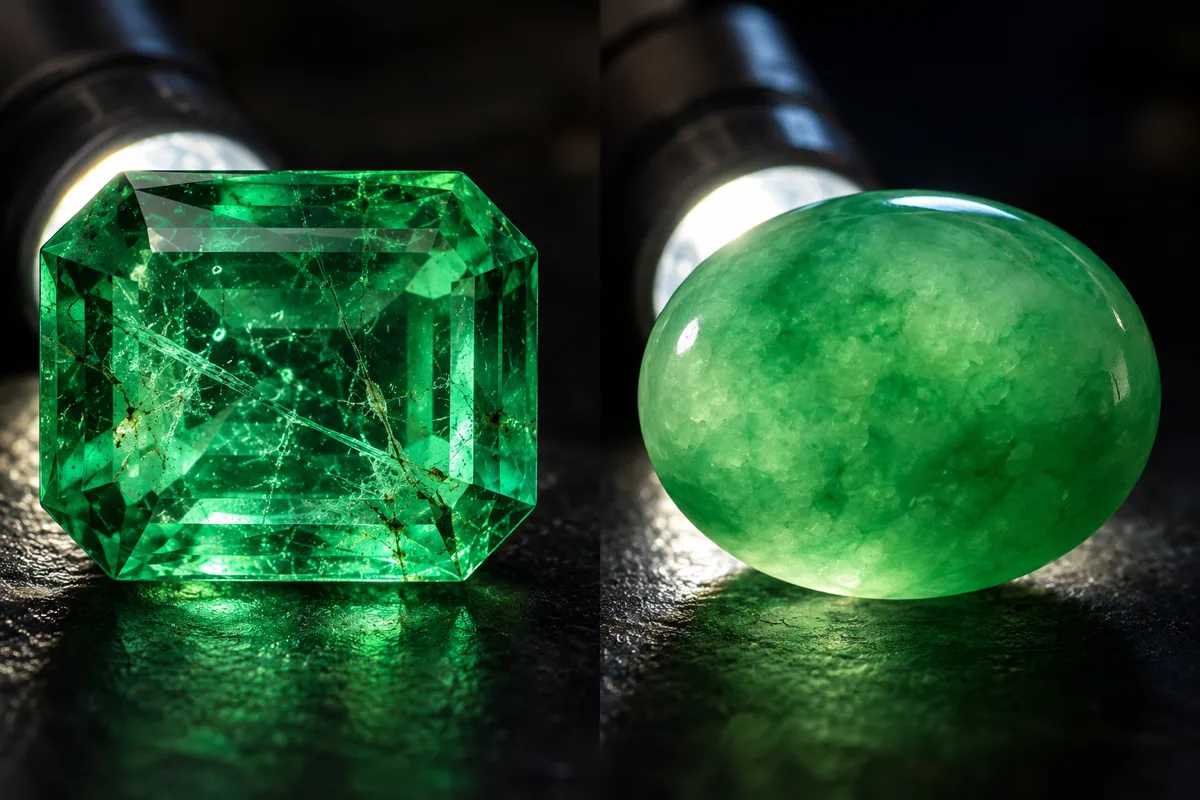
These clues help at home, but they are clues, not proof:
- Transparency. Emerald is transparent; you see through it. Jadeite is translucent at best, and most is cloudy or opaque.
- Cut. Faceted green stones are usually emerald (or glass, or another faceted gem). Jadeite is almost always a cabochon, a carving, a bangle or a bead.
- Sparkle or glow. Facets make emerald flash as it moves. Jadeite shows a soft sheen that moves across the surface.
- Inside, with a flashlight. Shine a small light through the stone. Emerald shows inclusions: wisps, tiny crystals, fissures, sometimes the reflective surfaces of filled cracks. Jadeite shows a grainy or fibrous structure, and the light spreads into a glow.
- Weight. Jadeite is about 20% denser than emerald, so a jadeite piece feels heavier than an emerald of the same size.
Glass, dyed quartzite and other green stones imitate both, so a green stone that looks too clean and too cheap is a warning sign. See fake jade look-alikes. Only a gem lab can say for sure what a stone is and whether it is natural or treated; see how to verify a jadeite certificate.
Jade or emerald: which should you buy?
It depends on what you want to wear and why.
- For a bangle or something you wear every day, choose jadeite. Its toughness is the reason jade bangles exist at all. See jadeite bangle styles.
- For sparkle in a ring or earrings, emerald gives the bright, faceted look; jadeite gives a softer, glowing cabochon. See the jadeite cabochon guide.
- For meaning and tradition, jade has a long place in China, Vietnam and Thailand as a stone of protection, family and good fortune, often handed down. Emerald carries Western traditions instead: it is the May birthstone and is linked with renewal and love.
- For more than green, only jadeite comes in lavender, white, red, yellow and black as well.
A Thai note: Bangkok's revered Emerald Buddha (พระแก้วมรกต) is not carved from emerald. It is generally described as green jade or jasper; in Thai, มรกต (emerald) here describes the deep green color.
Whichever you choose, buy from a seller who states the mineral and the treatment in writing and backs it with a certificate from a recognized lab.
On JadeiteHub we sell only natural, untreated Type A jadeite, never emerald. Listings use the seller's own photos, every sold piece is checked against its certificate before it ships, and if a piece does not match its description you get a full refund.
FAQ
Is jade the same as emerald?
No. Emerald is a green variety of the mineral beryl, a single transparent crystal. Jadeite jade is a pyroxene made of many tiny interlocking crystals. They can share a similar green but differ in look, toughness, treatment and price.
Which is more expensive, jade or emerald?
Neither is always more expensive. Emerald is priced mostly per carat, jadeite by the whole piece. Top imperial green jadeite, especially bangles and bead necklaces, can cost more than most emeralds, while everyday green jade and commercial emerald are both affordable.
Is jade harder than emerald?
No. Emerald is harder (Mohs 7.5–8 vs about 6.5–7 for jadeite), so it resists scratches better. But jadeite is much tougher: it resists chipping and breaking, while emerald is brittle.
Can you wear an emerald bangle every day like a jade bangle?
Solid emerald bangles are very rare, because emerald is brittle and usually contains fissures. Jadeite is tough enough to be carved into bangles worn daily, though it can still crack if dropped on a hard floor.
Is "emerald green jade" a real emerald?
No. The phrase describes a green color. A jadeite is jadeite however green it is; check the certificate for the mineral name and whether it is natural, untreated (Type A) jadeite.
How can I tell jade from emerald at home?
Emerald is transparent, usually faceted and sparkles, with visible inclusions under a flashlight. Jadeite is translucent to opaque, usually a cabochon, carving or bangle, glows softly and feels heavier for its size. Only a gem lab can confirm.